What survives when worlds collide?
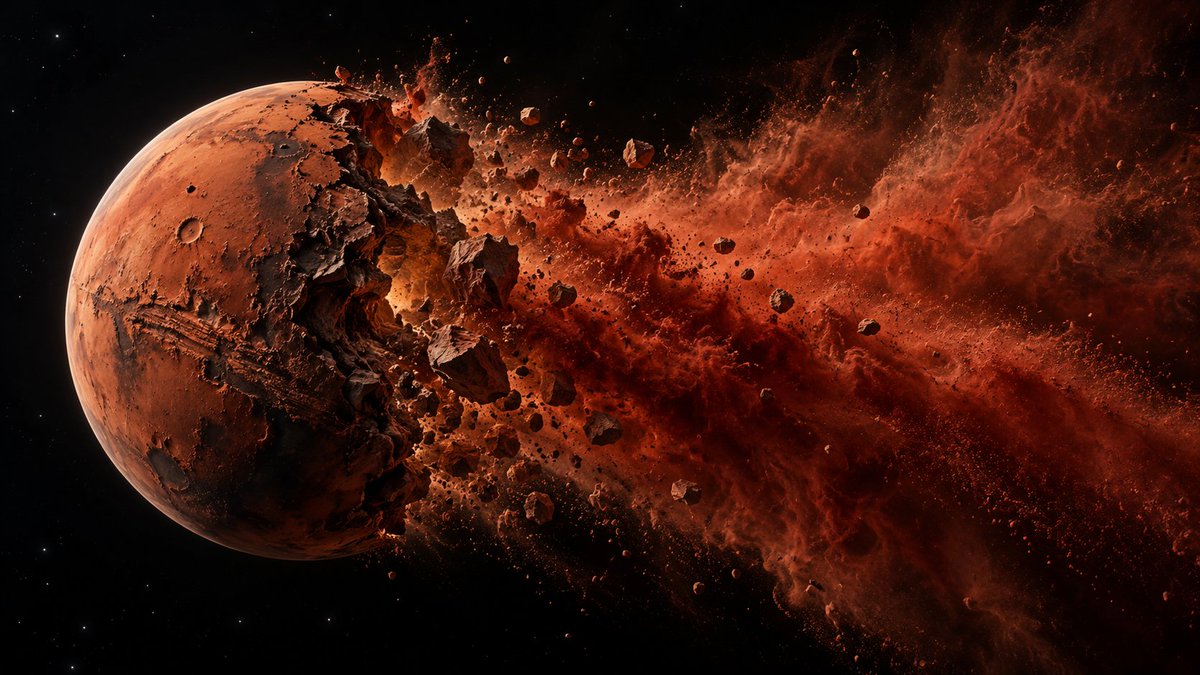
Around distant stars, astronomers found dust that may trace collisions between worlds the size of Mars.
James Webb and Spitzer data offer a clue to what happened - but how can dust reveal an impact nobody witnessed?
Different minerals leave distinctive patterns in infrared light. By studying those patterns across 21 dusty star systems, researchers could identify what the debris was made of.
Many of the grains are smaller than a micrometer. Their silica and crystalline silicate content suggests that the material experienced intense heating.
A giant impact can vaporize part of the colliding rock. As that vapor cools, it can condense into fresh dust. Heat can also rearrange the structure of existing silicate grains, turning them crystalline.
The dust’s changing infrared brightness adds another clue: these systems contain debris that is being produced and dispersed over time.
Together, the observations support collisions involving rocky bodies roughly the size of the Moon or Mars. Those sizes are inferred, not measured from an impact caught on camera.
The surviving dust could help astronomers reconstruct a violent stage of rocky planet formation that is otherwise difficult to observe.
Humans drove an electric car on the Moon in 1971.
Apollo 15's battery-powered rover carried astronauts roughly 17 miles across the lunar surface.
Its tire tracks lead toward Falcon, the lunar module visible in this photograph
AI designed this walking robot in 26 seconds.
In a 2023 study, Northwestern-led researchers used an algorithm to reshape a simulated block into a body that could walk.
The design had three legs and holes through its body.
Would it work outside the simulation?
To find out, researchers cast the design in silicone using a 3D-printed mold.
Pumping air into the body made its legs expand and contract, moving the physical robot forward.
The 26 seconds covered the computer’s design process. Building the real robot took longer.
Its strange-looking holes mattered, too: removing them impaired or prevented walking, although their exact role remained unclear.
Image credit: Northwestern University.
Source: Matthews et al. (2023), PNAS — an algorithm optimized robot bodies in simulation, and a silicone version retained the ability to move when physically tested.
See those ripples in Saturn’s rings? One tiny moon is doing that.
It’s called Daphnis, and it’s only 5 miles (8 km) wide.
As it moves through the gap, its gravity pulls nearby ring particles into waves.
Cassini captured this incredible shot in 2017.
Tiny pieces of metal were in multiple places at once.
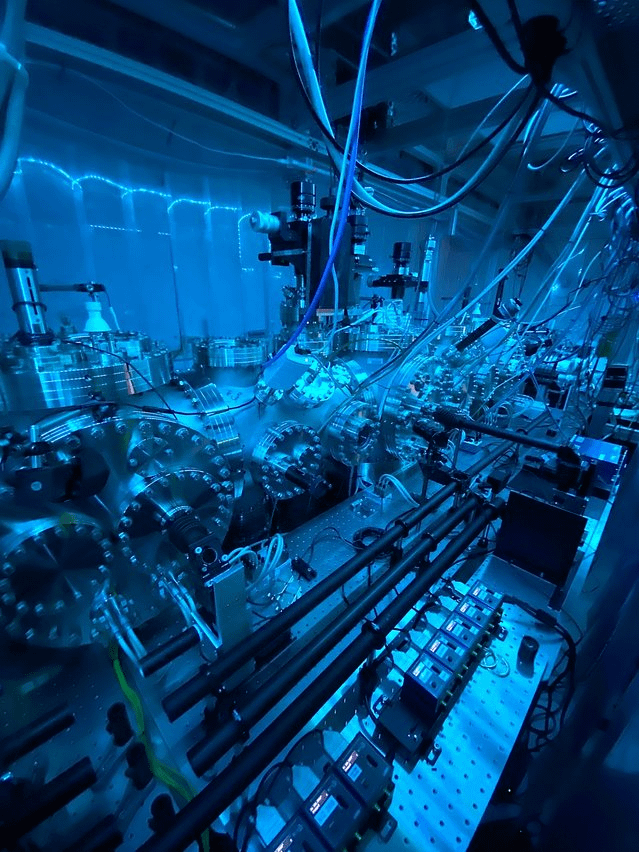
Physicists put particles containing over 7,000 atoms into a quantum state spread across different locations.
How did they test this? 👇🧵
4/4
Each particle’s quantum state extended over about 133 nanometers - more than 10 times its diameter.
This tests how far quantum superposition extends as objects get larger. At this scale, quantum mechanics still matched the results.
3/4
A striped pattern alone would not prove it. Classical particles can produce similar patterns.
The team varied the laser power. The resulting changes matched quantum predictions and differed from the classical model.
2/4
Those paths produced an interference pattern: a repeating rise and fall in the number of particles detected.
This is matter behaving like a wave. The quantum behavior involved each entire nanoparticle.
1/4
The January 2026 study used sodium nanoparticles about 8 nanometers wide.
Researchers sent them through three grids made from ultraviolet laser light, creating overlapping quantum paths through the apparatus.
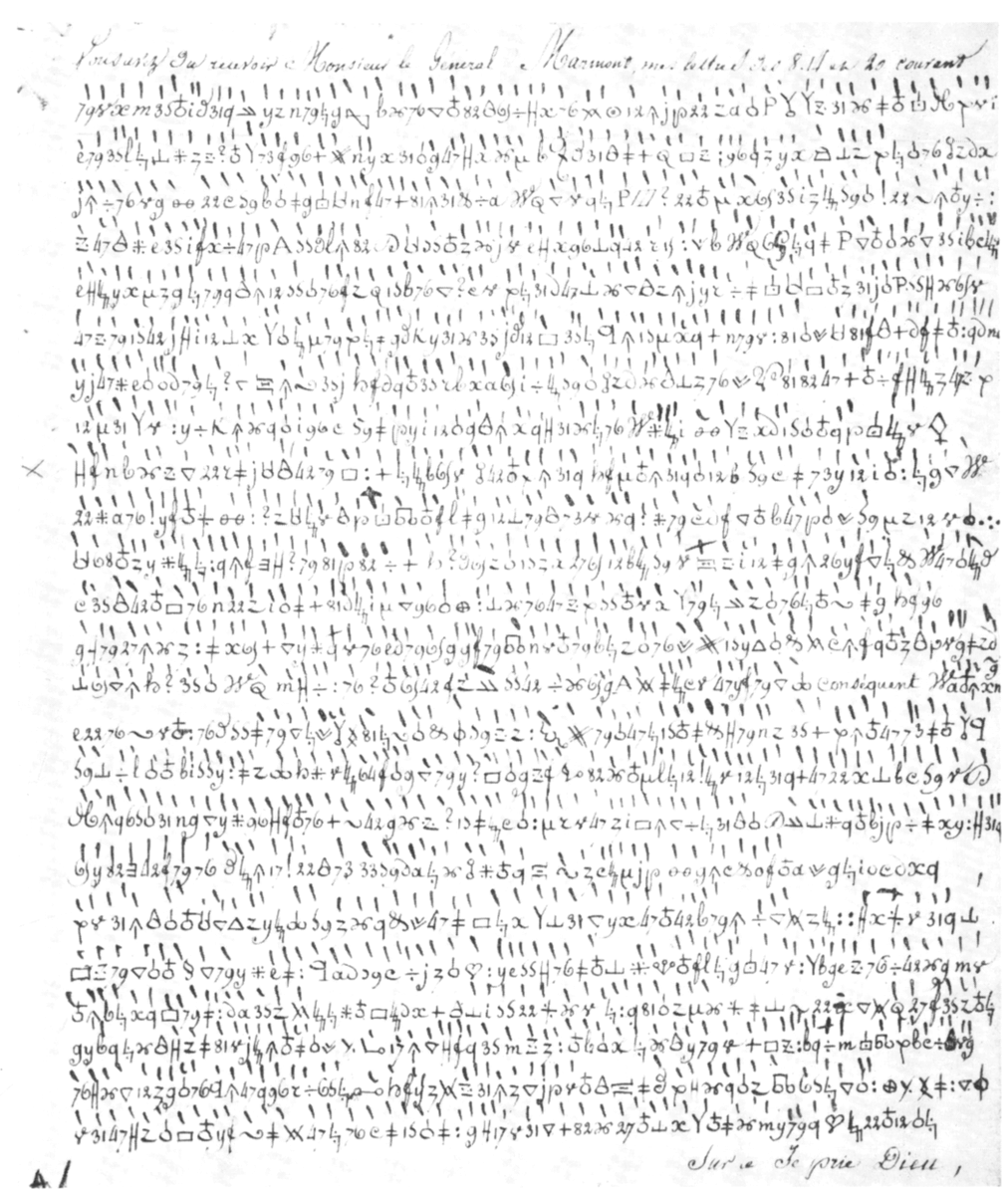
Source: Carter Church – „Breaking the Marmont Cipher, 1809�� (2026).
Image Credits: J. Vilcoq, Revue historique des Armées (1969), digitized by Persée; via Carter Church.
AI helped crack a 217-year-old Napoleonic cipher in about 6 hours.
Carter Church reports using GPT-6 Astra, a scanned letter and a partial key to recover an 1809 troop briefing.
He published a reproducible decoder. Five symbols remain uncertain.
@poatomik Ancient descriptions of the lighthouse don’t always agree, so tiny images like this help fill in the gaps. Funny that a ring can tell us something about a building that huge
@PhysInHistory The tricky part was ruling out every weird alternative, including curved edges. Hexagons still win even when you let the other shapes get creative