Think of facing the rapist in court while pregnant from rape, a security guard outside your hospital room while giving birth, the custody battle where you’ll have to prove rape in order to protect the baby. Now a nightmare for everyone in abortion ban states. Vote. #YesOn4
I took a hearing test for the first time at 28.
The results came back showing damage typical of a 45-year-old.
The doctor asked one question: "How many hours a day do you wear AirPods?"
I said 6.
She nodded slowly. "Open your iPhone. We need to change 2 settings right now before you leave this office."
Save this. I'm sharing exactly what she showed me:
@ThePOTSPostman@AshleighRogers_ I put a few ice cubes in the center of the cool towel, twist the ends to keep them in, and put the ice on my neck. As the ice melts it keeps the towel cooler. Without ice cool towels don’t do anything for me.
@ThePOTSPostman Yes! I will add that it feels awful to wake up & not be able to simply sit up & stand right up. Must take low blood pressure meds & elevate feet before actually getting up. I’m working on not feeling defeated first thing in the morning when my pressure is too low to register.
I'm a cardiologist. For months I've been telling you that inflammation is the fire behind heart disease — not just cholesterol. That we've been treating the smoke while the fire kept burning.
Penn Medicine just built the fire extinguisher.
They took the most powerful immune technology in cancer medicine — CAR T-cell therapy — and flipped it. Instead of engineering killer cells to destroy tumors, they engineered regulatory T cells to suppress the chronic arterial inflammation that causes heart attacks.
Published in Circulation. The results stopped me cold.
In CAR T cancer therapy, doctors extract your T cells, genetically engineer them to recognize a specific target, and infuse them back into your body as precision-guided missiles. It has cured previously terminal blood cancers. The technology won its developers a Nobel Prize.
The Penn team asked a question no one had asked before: what if we aimed this at the arteries?
They engineered regulatory T cells — Tregs, the immune cells whose job is to calm inflammation rather than cause it — to specifically target oxidized LDL. OxLDL is the molecule that starts the entire atherosclerotic cascade. It infiltrates your artery wall, triggers macrophages to gorge on it and become foam cells, releases inflammatory cytokines, recruits more immune cells, and builds the plaque that eventually ruptures and causes a heart attack.
OxLDL is the match that lights the fire. These engineered CAR Tregs are designed to find that match and snuff it out — at the arterial wall itself.
The results in mouse models of atherosclerosis:
Blocked macrophage foam cell formation — the cellular process that builds plaque. Dramatically reduced arterial wall inflammation. Prevented over 70% of plaque buildup compared to untreated controls. And critically — preserved normal immune function everywhere else.
That last point is essential. Previous anti-inflammatory approaches to atherosclerosis failed because they suppressed the entire immune system — leaving patients vulnerable to infections and other complications. Colchicine works modestly. Canakinumab in the CANTOS trial reduced events but increased fatal infections. The immune system is a sledgehammer. You can't just turn it down globally.
CAR Tregs solve this by being targeted. They don't suppress your whole immune system. They patrol your arteries specifically, calming the inflammation at the exact site where it's causing damage — and leaving the rest of your immunity intact.
One infusion. Targeted. Precise. The cells do the work.
Lead author Robert Schwab of Penn Medicine put it directly: "If we can get the immune system to see OxLDL and provoke an anti-inflammatory response, it would reduce inflammation and essentially stop the pathogenesis in its tracks."
Senior author Avery Posey: "Our study shows for the first time how CAR T cell technology could be used to treat the underlying cause of the most common form of heart disease — the leading cause of death worldwide."
As a cardiologist who has spent twenty years treating the downstream consequences of arterial inflammation — the stents, the bypasses, the cardiac rehab, the second heart attacks — I need you to understand what this represents.
Every treatment I currently have manages the damage after the fire has burned. Statins lower the fuel supply. Blood pressure meds reduce the mechanical stress. Stents prop open arteries that have already narrowed. These save lives. I use them daily.
But none of them put out the fire itself.
CAR Tregs are engineered to extinguish the inflammation at its source — inside the artery wall — before the plaque builds, before the vessel narrows, before the rupture, before the heart attack.
This is the shift from managing disease to correcting the biological process that causes it. At the cellular level. With living medicine.
This was demonstrated in mice, not humans. The leap from mouse models to human cardiovascular trials is enormous and filled with failures. Manufacturing CAR T cells is currently expensive — roughly $400,000 per treatment in cancer. Scaling this for a disease that affects billions would require a manufacturing revolution. Long-term safety of engineered immune cells patrolling human arteries for years or decades is completely unknown. Human trials are likely years away.
But 70% plaque reduction. With preserved immune function. Targeting the exact inflammatory mechanism I've been writing about for months. Published in Circulation — the flagship journal of the American Heart Association.
The trajectory is unmistakable.
Gene editing to permanently lower cholesterol. Personalized mRNA vaccines to hunt cancer. GLP-1 drugs rewiring metabolism. Cellular reprogramming to reverse aging. And now — living immune cells engineered to extinguish the inflammation that causes the number one killer on earth.
Every one of these treats the root cause instead of managing the downstream damage. Every one of them was impossible a decade ago. Every one of them is in trials or approaching trials right now.
I've held dying hearts in my hands in the cath lab at 3 AM. Hearts that were destroyed by inflammation I could see but couldn't stop.
The day I can infuse a patient with cells engineered to stop that inflammation before it ever builds the plaque — that's the day cardiology changes forever.
We're not there yet. But the fire extinguisher just passed its first test.
This is why we tell folks to NEVER seek shelter inside a vehicle.
This car near Effingham, Illinois was thrown into a fields, rolled and impaled.
As a last resort, seek shelter inside a ditch and cover your head — but never stay inside the car.
I'm a cardiologist. A 42-year-old mother of two came to my office complaining of jaw pain and crushing fatigue. She ran half-marathons. Her EKG was normal. Another doctor had sent her home with anxiety medication.
When I got her into the cath lab, I found severe microvascular disease — plaque choking the tiniest vessels of her heart, the ones standard angiograms routinely miss.
Her heart had been starving in silence while everyone told her she was stressed.
She is alive today. Too many women like her are not.
Heart disease kills more women than every cancer combined. And medicine is still diagnosing it through a male lens.
84% of cardiologists report having patients in the past year whose heart disease was misdiagnosed by another physician. Women with a STEMI heart attack have a 59% greater chance of being misdiagnosed compared to men. Women with an NSTEMI — 41% greater chance.
The reason is structural. For decades, we screened, tested, and treated women using a template built for men.
Men's heart attacks announce themselves — the crushing chest pain, the clutched fist, the Hollywood collapse. Women's hearts whisper. Crushing fatigue that feels like wearing a lead vest. Jaw pain written off as TMJ. Nausea blamed on a stomach bug. An ache between the shoulder blades blamed on a long week. Shortness of breath blamed on being out of shape.
For years, medicine called these "atypical" symptoms. They are not atypical. They are female-typical. Half of humanity is not a variant.
And the biology runs deeper than symptoms.
Women have smaller hearts and narrower coronary arteries. Plaque doesn't only clog the big highway vessels — it hides in the microvasculature, the tiny branches feeding the heart muscle itself. A woman can have a heart attack with a completely "clean" standard angiogram.
SCAD — spontaneous coronary artery dissection — occurs 90% of the time in women. Often young, fit women with zero traditional risk factors. It's the leading cause of heart attack in women under 50, accounting for roughly one quarter of all cases in that age group. Most doctors have never diagnosed one.
And some of the most dangerous cardiac risk factors are hidden in women's medical histories where no one thinks to look:
Preeclampsia or gestational hypertension doubles to quadruples lifetime heart disease and stroke risk. Pregnancy is the body's first cardiac stress test — and these complications are early warning sirens, not closed chapters.
Autoimmune disease — lupus, rheumatoid arthritis, psoriasis — far more common in women, turbocharges inflammation and plaque formation at any age.
Cardiovascular disease in women aged 20-44 is projected to surge nearly 50% by 2050.
The youngest patients in my practice keep getting younger.
What every woman should ask her doctor — and what every doctor should be asking:
"Given my pregnancy history, autoimmune status, and family history — what is my full cardiovascular risk?" If they don't ask about preeclampsia or gestational diabetes, volunteer it.
"Should I have an Lp(a) test and a coronary calcium score?" Standard cholesterol panels miss too much. Lp(a) is genetic, one-time, and most women have never been tested.
"My tests came back normal but my symptoms haven't stopped — what's next?" Normal stress tests and angiograms can miss microvascular disease, spasm, and SCAD. Persistent symptoms warrant coronary CT angiography or cardiac MRI.
And if something feels wrong — say these exact words to your doctor: "I am concerned this could be my heart."
That single sentence changes the workup. Do not soften it. Do not apologize for it.
80% of heart disease is preventable. But the playbook has to be built for female biology.
Two decades ago, I wrote one of the first books warning that heart disease was the number one killer of women and that medicine was diagnosing it through a male lens. It was recognized by First Lady Laura Bush at the White House during the early years of the national conversation about women's heart health.
I'm haunted by how much of that book I could republish today unchanged.
The science has advanced. The awareness has grown. But the gap between what we know and what happens in the exam room is still costing women their lives.
Share this with every woman you love — and every doctor who treats them. READ MORE: https://t.co/4LRugiY8q2
ANOTHER DAGGER for the Trump $1.7 billion slush fund
Former Vice President Mike Pence trashed the fund on NBC
Pence:
“The weaponization fund is .. it’s a bad idea from the start… I’d encourage the Administration just to drop it”
“It’s deeply offensive to me” that Jan 6 rioters would get the $$
I woke up to a message from New Hampshire. A bill had made it to the state Senate — one that Representative Julie Miles championed after watching me do peer-to-peer calls with insurance reviewers who weren't qualified to be making decisions about my patients. I'm a surgeon in Texas. I had no idea this had traveled that far.
Between cases at Redbud today, I fired off emails to NH Senate members, logged into a YouTube Live, and watched HB 1554 pass.
Here's what it does:
✅ Requires peer reviewers to be actual peers — credentialed, named, with their NPI number and specialty certification on the line
✅ Allows physicians to communicate with that peer reviewer at any point in the prior auth process — not just after a denial or on appeal
This is a patient-centered, common-sense reform. And it happened because someone posted something. Told the truth. Did the right thing.
Thank you, Representative Julie Miles and Senator Tim McGough. New Hampshire just set a standard. I hope other states are paying attention.
Get involved. Speak up. You never know what good it might do.
In 1935, two American doctors examined seven women's ovaries and saw small lumps. They called them cysts and named the disease after them. They were wrong. It took 91 years to fix.
What we called PCOS is now Polyendocrine Metabolic Ovarian Syndrome (PMOS), announced today in The Lancet by an international panel of doctors and patients. The renaming followed more than a decade of consensus work and 22,000 patient and clinician survey responses.
The lumps Stein and Leventhal saw were never cysts. Modern imaging shows they were follicles, the tiny sacs inside the ovary that grow and release an egg each month, frozen partway through by a hormonal imbalance. PMOS is a multi-system disorder centered in the endocrine system, the body's network of glands that produces hormones like insulin (controls blood sugar), cortisol (the stress hormone), and thyroid hormones (set the body's metabolism). The ovary trouble flows downstream from there.
The naming choice is not academic. When doctors hear "ovary" in a diagnosis, they look at the ovary. "Metabolic" and "endocrine" send them to the whole body.
PMOS affects roughly 1 in 8 women worldwide, more than 170 million people. The WHO estimates 70% have never been diagnosed. Among those who do, 1 in 3 wait more than 2 years, and nearly half see 3 or more doctors first. The CDC reports more than half of women with PMOS develop type 2 diabetes by age 40, a risk 5 to 10 times higher than women without the condition. Around 37% have clinically significant depression, compared with 14% in women without it. Anxiety runs at 42% versus 8.5%.
A label born from a 1935 look at seven ovaries is finally going away. The new diagnostic guidelines roll out fully in 2028. By then, a woman walking into a clinic with these symptoms should hear questions about her blood sugar and her mood alongside her cycle. Those are the parts of the disease the old name hid for 91 years.
@OccupyDemocrats Sates forcing pregnancy rape victims to go through pregnancy is State inflicted trauma & puts little girls and women at high risk for more abuse by the rapist. States don’t pay to protect the mother & child either. Listen below to hear what it’s like to live with this. I did.
There's a rape.
There's conception.
Now you have to talk about the rape.
There's court.
There's birth.
There's hiding in fear.
There's your child finding out.
Now there are two victims.
Emma shares her story.
For full show https://t.co/HX9EAjGaPY
#DemsUnited #TheQuestShow
#AbortionIsHealthcare
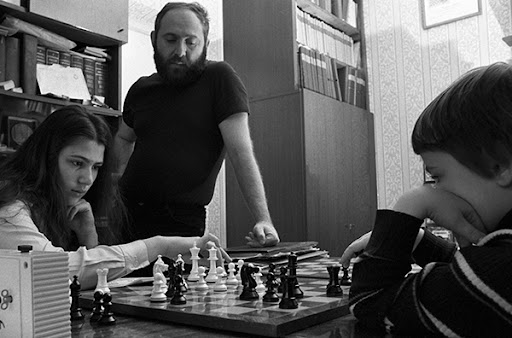
A Hungarian psychologist raised three daughters to prove that any child could become a chess grandmaster through early specialization. He succeeded. Two of them became grandmasters. One became the greatest female chess player who ever lived.
Then a sports scientist looked at the data and found something nobody wanted to hear.
His name is David Epstein. The book is called "Range."
The Polgar experiment is one of the most famous case studies in the history of deliberate practice. Laszlo Polgar wrote a book before his daughters were even born arguing that geniuses are made, not born. He homeschooled all three girls in chess from age four. By their teens, Susan, Sofia, and Judit were dominating tournaments against grown men. Judit became the youngest grandmaster in history at the time, breaking Bobby Fischer's record. The story became the gospel of early specialization. Pick a domain young, drill it hard, and you can manufacture excellence.
Epstein opens his book by telling that story honestly and then quietly demolishing the conclusion most people drew from it.
Chess works that way. Most things do not.
Here is the distinction that took him four years of research to articulate, and that almost nobody who quotes the 10,000 hour rule has ever read.
There are two kinds of environments in which humans develop expertise. Psychologists call them kind and wicked. A kind environment has clear rules, immediate feedback, and patterns that repeat reliably. Chess is the cleanest example. Every game ends with a winner and a loser. Every move is recorded. The board never changes shape. The pieces never invent new ways to move. A child who plays ten thousand games will see most of the patterns that exist in the game, and pattern recognition is exactly what chess mastery is built on.
A wicked environment is the opposite. Feedback is delayed or misleading. Rules shift. The patterns that worked yesterday may be exactly the wrong patterns to apply tomorrow. Most of the real world looks like this. Medicine is wicked. Investing is wicked. Building a company is wicked. Scientific research is wicked. Almost every job that involves a complex changing system with humans in it is wicked.
The Polgar sisters trained in the kindest environment any human can train in. Their success was real and the method was correct. The mistake was generalizing the method to fields where the underlying structure of the environment is completely different.
Epstein's research is what made the implication impossible to ignore.
He looked at the careers of elite athletes outside of chess and golf and found that the pattern was almost the inverse of what people assumed. The athletes who reached the very top of their sports were overwhelmingly people who had played multiple sports as children, specialized late, and often switched disciplines well into their teens. Roger Federer played squash, badminton, basketball, handball, tennis, table tennis, and soccer before tennis became his focus. The kids who specialized in tennis at age six and trained year-round for a decade mostly burned out, got injured, or topped out at lower levels of the sport.
The same pattern showed up everywhere he looked outside of kind environments. Inventors with the most patents had worked in multiple unrelated fields before their breakthrough work. Comic book creators with the longest careers had drawn for the most different genres before settling. Scientists who won Nobel Prizes were dramatically more likely than their peers to be serious amateur musicians, painters, sculptors, or writers.
The skill that mattered in wicked environments was not depth in one pattern. It was the ability to recognize when a pattern from one domain applied unexpectedly in another. That kind of thinking cannot be built by drilling a single subject. It can only be built by accumulating mental models from many subjects and learning to move between them.
The deeper finding is the one that should change how you think about your own career.
Specialists in wicked environments often get worse with experience, not better. Epstein cites studies of doctors, financial analysts, intelligence officers, and forecasters showing that years of experience in a narrow domain frequently produce more confident judgments without producing more accurate ones. The expert builds elaborate mental models that feel comprehensive and turn out to be increasingly disconnected from the actual structure of the problem. They stop noticing what does not fit their framework. They mistake fluency for understanding.
Generalists do better in wicked domains for a reason that sounds almost mystical until you understand the mechanism. They have less invested in any single mental model, so they abandon broken models faster. They are used to being a beginner, so they are not threatened by the discomfort of not knowing. They have seen enough different domains that they can usually find an analogy from one field that unlocks a problem in another. The technical name for this is analogical thinking, and the research on it is one of the most underrated bodies of work in cognitive science.
The single most useful sentence in the entire book is the one Epstein puts almost as a throwaway.
Match quality matters more than head start.
A person who tries six different fields in their twenties and finds the one that genuinely fits them will outperform a person who picked one field at fourteen and stuck to it on willpower alone. The lost years were not lost. They were the search process that produced the match. Every field they walked away from taught them something they later imported into the field they finally chose.
The reason this is so hard to accept is cultural, not empirical. We tell children to pick a path early. We reward the prodigy who knew at six. We treat the late bloomer as someone who failed to launch on time, when the data suggests they were running an entirely different and often more effective optimization process underneath.
The Polgar sisters were not wrong. The conclusion the world drew from them was.
If your environment is genuinely kind, specialize early and drill hard. If it is wicked, and almost every interesting human problem is, then the people who win are the ones who refused to specialize until they had seen enough to know what was actually worth specializing in.
You are not behind. You were running the right experiment all along.