Get ready… AAA is back and bigger than ever! 😱
Welcome to Ancient Animal Absurdity: newly renamed and ready to rumble. Now drawing from the entire animal fossil record, this year the oceans will take over. It's MARINE MADNESS! 🌊
Coming this April...
https://t.co/YlZ38ChwqB
It's official, Palaeo Palooza returns August 8–9!
Step into discovery with guided bonebed tours, interactive science booths, carnival games, meet a palaeontologist, plus food, drinks, and full weekend of fun!
Tickets are live now: https://t.co/5kD3IfSBd3
#palaeopalooza2026
#FossilFriday Did you know Alberta’s provincial rock is actually a fossil?
Petrified wood forms when ancient trees turn to stone over time, often preserving wood grain made of coal.
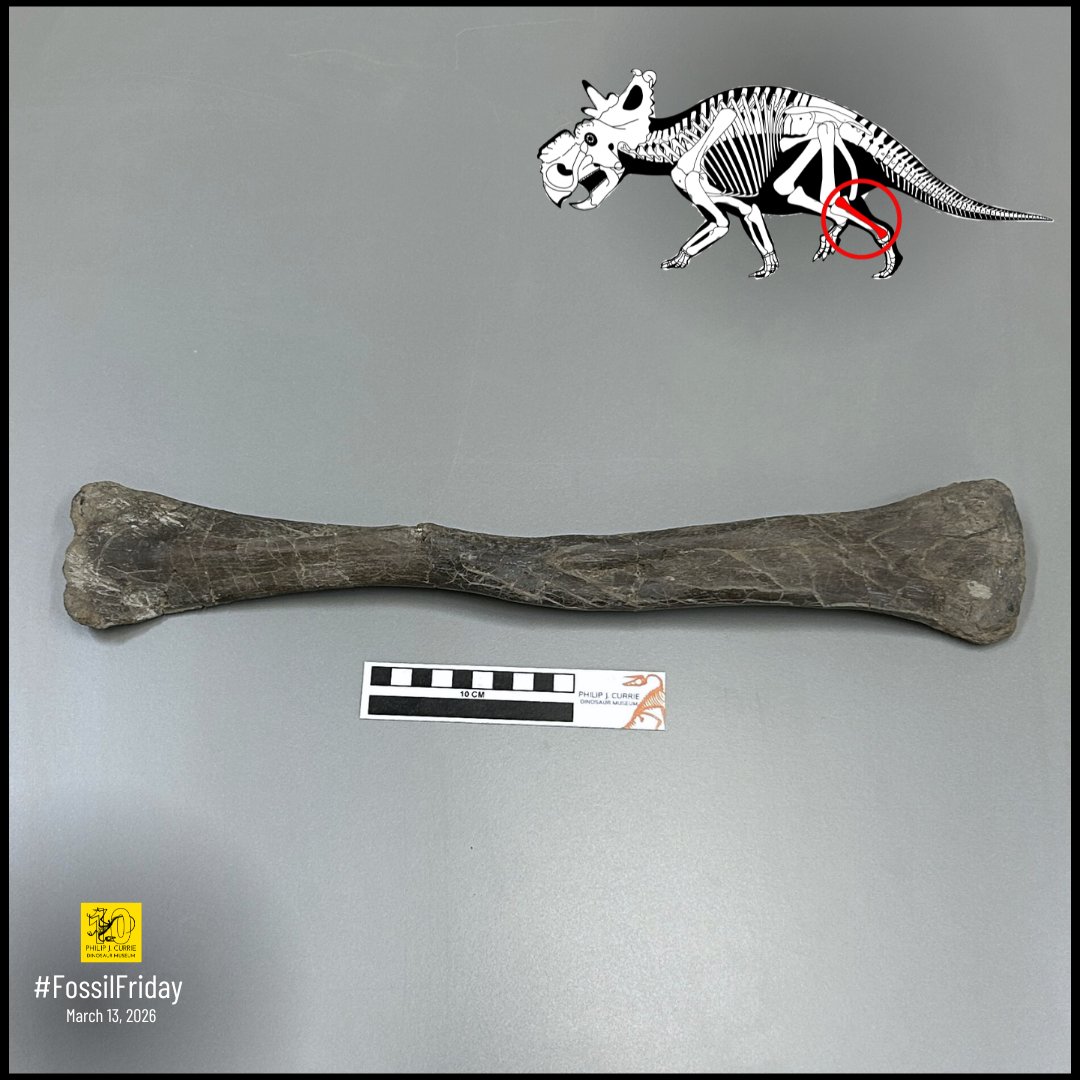
New from the lab: a Pachyrhinosaurus jugal (cheekbone!)
More than just a dino cheek, this bone helped anchor the jaw and reveals:
• Grooves where blood vessels entered the bone
• A bumpy edge that may have supported a small horn
Yes! Their cheeks had a horn! 🦴🦖
Think fossils are just bones? Think again.
Trace fossils like this hadrosaur footprint give us a "living" look at the past. By studying trackways, palaeontologists can calculate animal speed, gait, and even social behavior—all without a single bone in sight.
#FossilFriday
#FossilFriday! It’s Easter, which means bunnies! The
fossil history of #rabbits goes back to the Eocene period, around 35-million-years ago. In #Canada, rabbit fossils are best known from southern #Saskatchewan. Fossils include Palaeolagus, one of the best-known fossil bunnies.
🦴 #FossilFriday This Pachyrhinosaurus lakustai fibula shows a fascinating story of taphonomy- the changes that happen to an organism after death. Buried for 72 million years, the bone developed a wave and bend. When this dinosaur was alive, this bone would have been straighter!
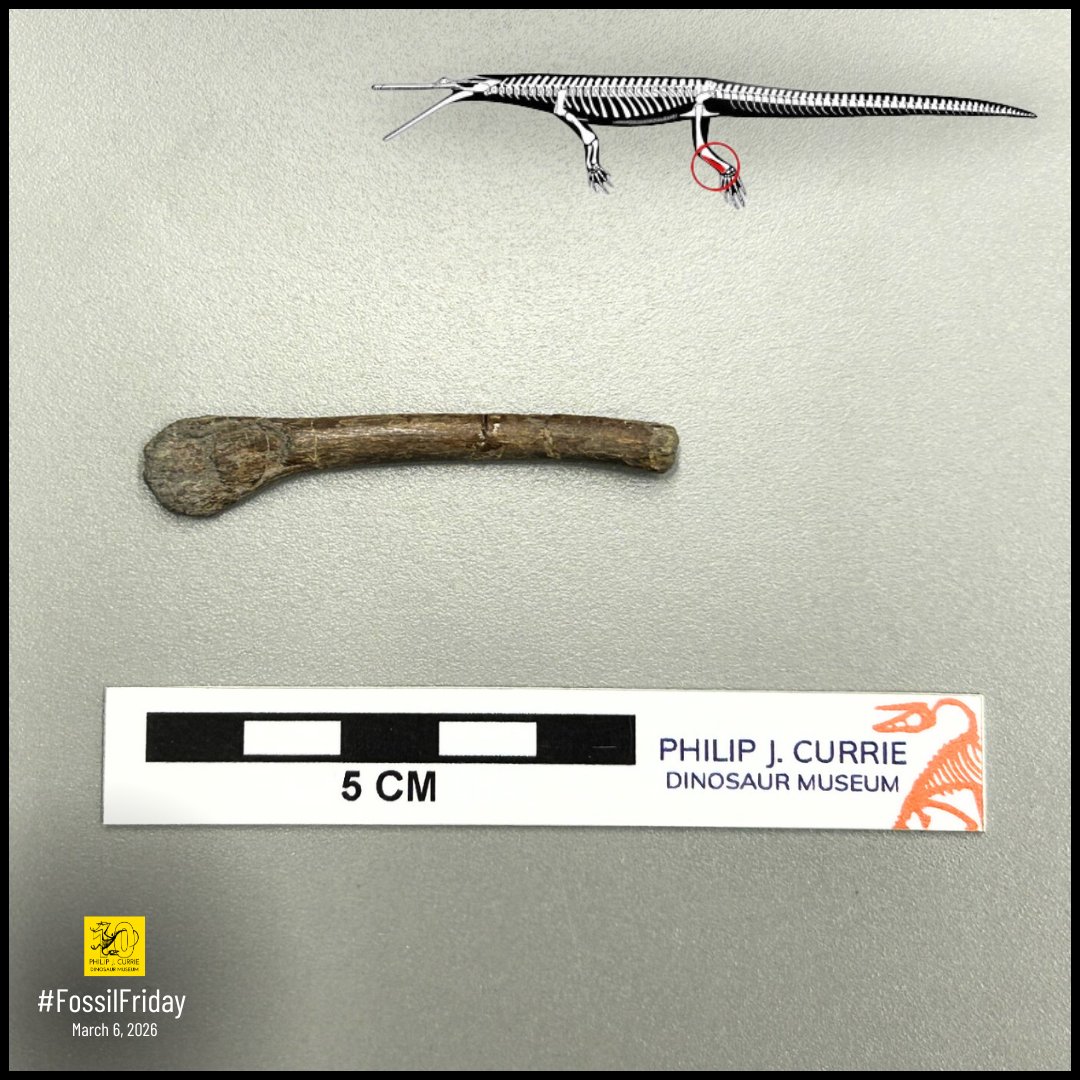
#FossilFriday! This bone is one of the most exciting we have found at Pipestone Creek. This fibula is a shin bone from an animal called a #champsosaur. These reptiles closely resembled crocodiles and had a similar lifestyle, but they were better adapted to colder environments.
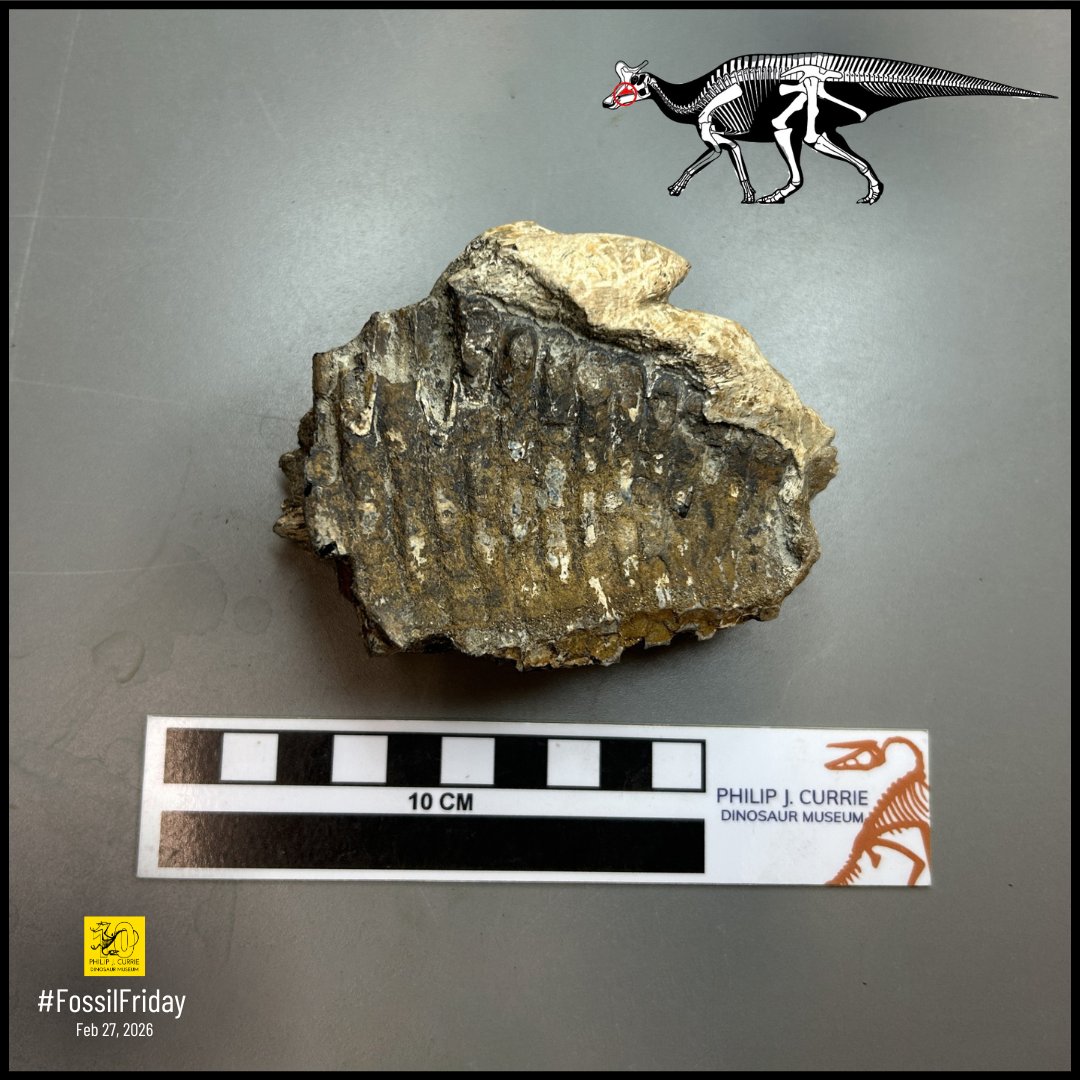
#FossilFriday! This partial upper jaw of a #hadrosaur shows an incredible feature of these dinosaurs. The inner surface of the bone has eroded, exposing the roots of the tooth row. Up to 90% of the tooth was root, demonstrating that these teeth were firmly set in the jaw!
#FossilFriday! #Ornithomimid caudal (tail) #vertebra, like this one, have long neural spines that interlock to stiffen up the tail of the dinosaur. These rod-like tails give Ornithomimids an excellent sense of balance, as well as increased agility and speed.
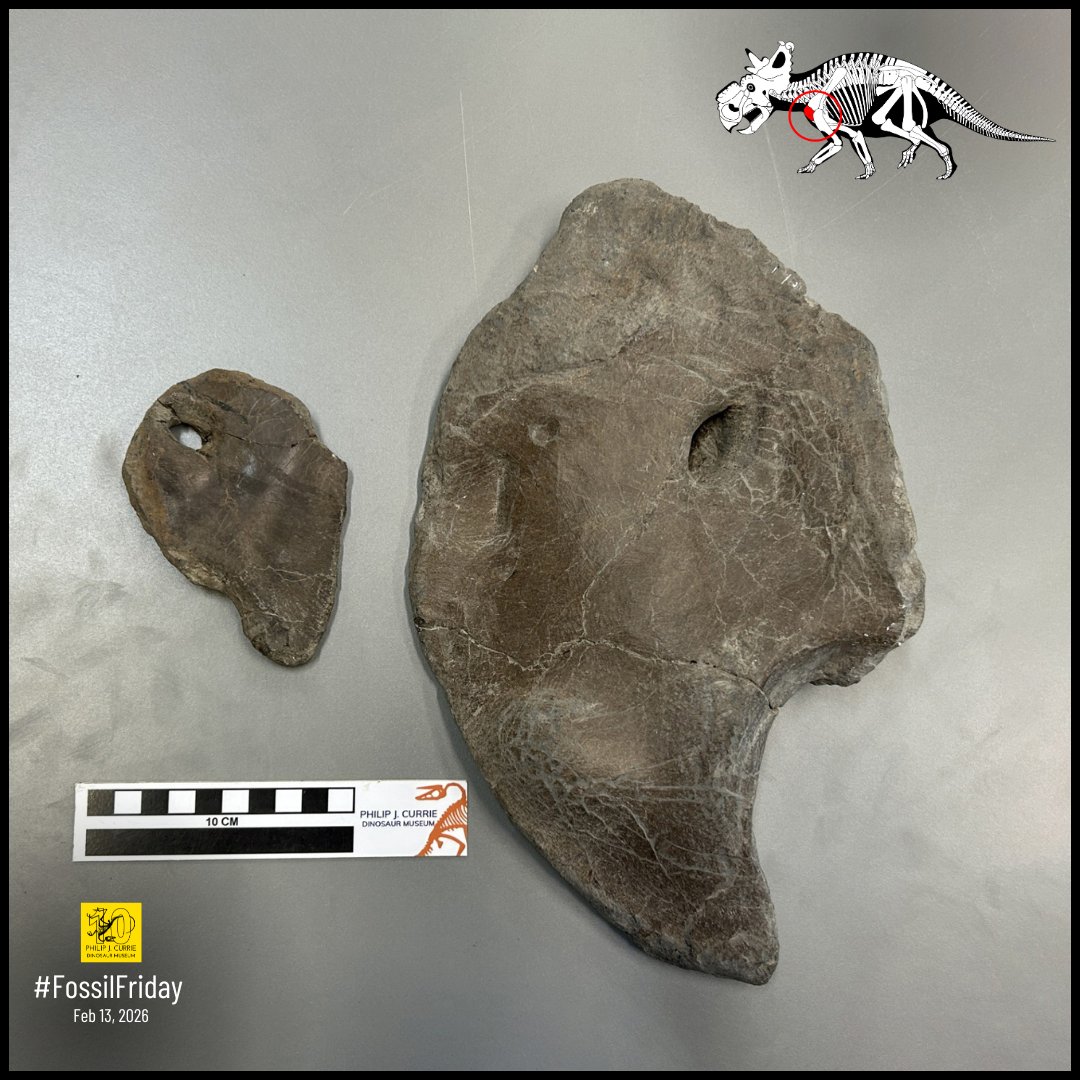
#FossilFriday! These two Pachyrhinosaurus coracoids are from the Pipestone Creek Bonebed. The coracoid forms part of the shoulder socket. These fossils span the size spectrum: the smallest we’ve found and one of the largest, an adult the size of a bison!
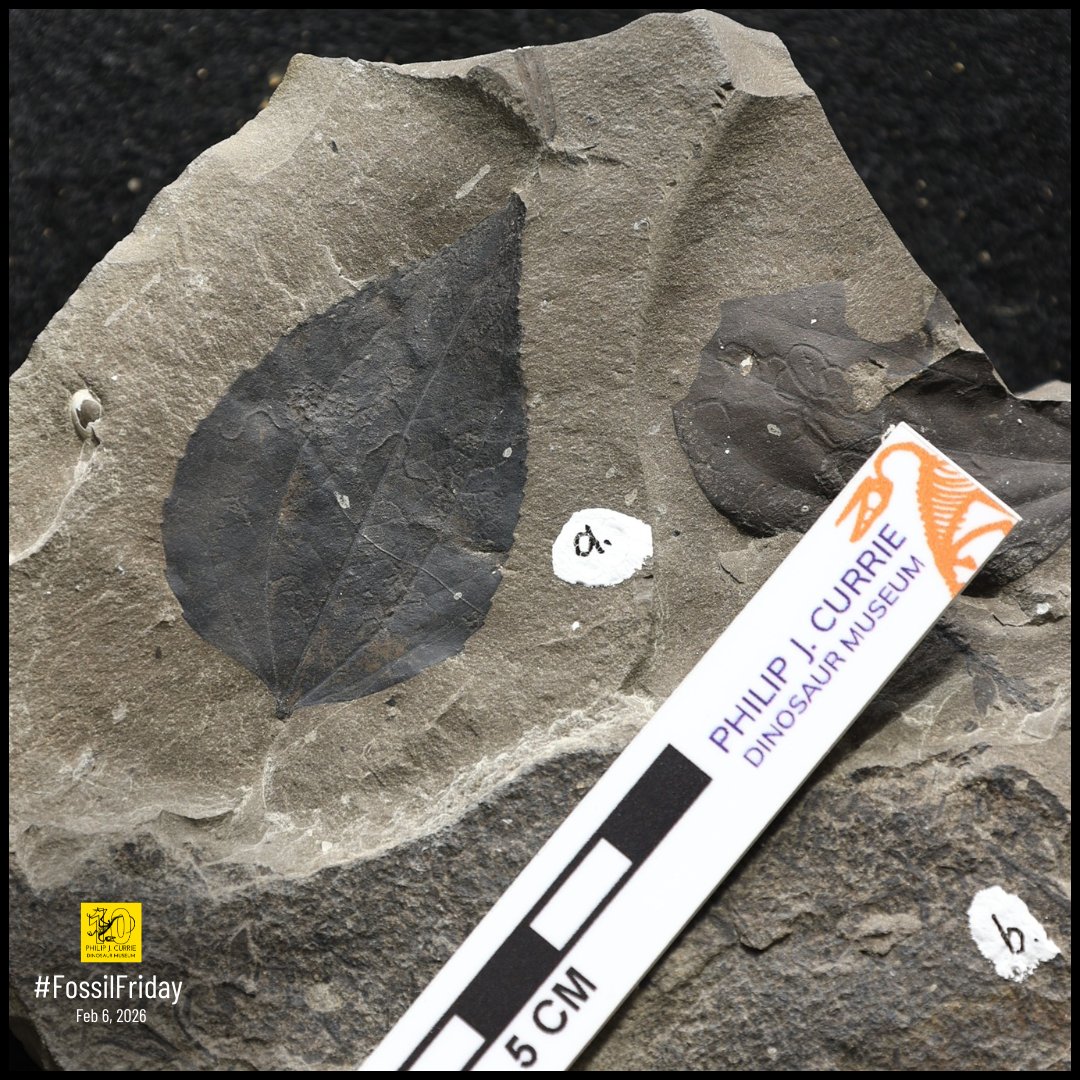
#FossilFriday! This leaf fell from a tree growing in one of the first forests in Alberta that arose following the K-Pg bolide event. The animals living in these central Albertan forests would have, for the first time in millions of years, experienced sub 0 winter temperatures.
#FossilFriday! This Elrathia trilobite dates back to the Cambrian Period, over 500 million years ago. Though only distantly related, trilobites closely resemble modern horseshoe crabs. Trilobites went extinct at the end of the Permian Period, about 252 million years ago.
#FossilFriday Dinosaur teeth, like this hadrosaur one, are common fossils because dinosaurs shed worn-out teeth during their lives. Occasionally, we find teeth with the root still attached, like this one, which typically means the tooth fell out of the jaw after the animal died.
We have big news! 😀
On behalf of the Currie Museum, we are very proud to announce that we have been named a Recognized Museum Leader by @AlbertaMuseums for the 2026–2034 period.
Here’s to many more years of science, education, and discovery 🦖👏
https://t.co/EyrRmLR5i7