A boxer who can make good decisions while tired has a huge advantage.
Conditioning isn't just about lasting longer.
It's about keeping your technique, discipline, and composure when fatigue starts to set in.
Winning a sparring round isn't the goal.
Becoming a better boxer is.
Use sparring to solve problems, test skills, and improve your decision-making.
Leave your ego outside the ropes.
Your opponent isn't your biggest obstacle.
Your bad habits are.
Every dropped hand, every lazy step, and every mental lapse eventually gets exposed.
Fix them in the gym before an opponent finds them.
Your Opponent Is Studying You Too
Film study isn't just about finding your opponent's weaknesses.
It's about understanding your own habits.
Do you always exit to the same side?
Do you drop your lead hand after the jab?
Do you square up when throwing hooks?
Patterns become predictable.
Predictability becomes opportunity.
The smartest fighters spend as much time studying themselves as they do their opponents.
If you don't know your own tendencies, someone else eventually will.
Self-awareness is one of the most underrated skills in boxing.
Confidence isn't telling everyone you're ready.
Confidence is knowing you've done the work when nobody was watching.
Preparation creates belief.
Belief creates composure under pressure.
Every boxer loves learning new combinations.
Fewer love mastering the basics.
The truth is simple:
fundamentals win far more rounds than flashy techniques ever will.
Never outgrow the basics.
The best defensive fighters don't rely on reflexes alone.
They control range, angles, and positioning so opponents struggle to find clean openings.
Smart defense starts long before the first punch is thrown.
Don't rush combinations.
Fast hands mean nothing if your feet can't keep up. Good boxing is built from the ground up.
Let your feet put you in position, then let your hands do the work.
Learn to Win the Quiet Moments
Everyone trains for combinations.
Not enough people train for the seconds between them.
How do you reset after an exchange?
Can you control your breathing?
Can you recover your stance?
Can you make your opponent hesitate before the next attack?
Those quiet moments decide close fights.
Great boxers don't waste movement.
Every step has a purpose.
Every pause creates another opportunity.
The fighter who controls the space between exchanges usually controls the fight itself.
You don't have to throw more punches to win exchanges.
Sometimes the smartest boxer is the one who throws less, wastes less energy, and makes every shot count.
Power gets attention, but balance wins exchanges.
If you're off balance after throwing, you're vulnerable whether you landed or missed.
Stay under control, finish in position, and you'll be ready to attack again or defend immediately.
The fighters who improve the fastest aren't always the most talented.
They're the ones who show up with a purpose.
Every round should have one lesson, one adjustment, and one goal. Intentional training always beats mindless volume.
A great jab isn't measured by how many times it lands. It's measured by what it creates.
It breaks rhythm, controls distance, forces reactions, and opens every other punch.
Build your offense around a quality jab and everything else becomes easier.
The Gym Doesn't Lie
Your confidence on fight night is built long before the opening bell.
It comes from the mornings you didn't want to run.
The rounds you finished while exhausted.
The sparring where you fixed mistakes instead of making excuses.
The discipline to show up when nobody was watching.
That's why experienced fighters stay calm under pressure.
They're not hoping they're prepared.
They know they are.
The gym has already answered the question.
Fight night simply reveals the results.
@BigAlToYou That's why a lot of people aren't excited.
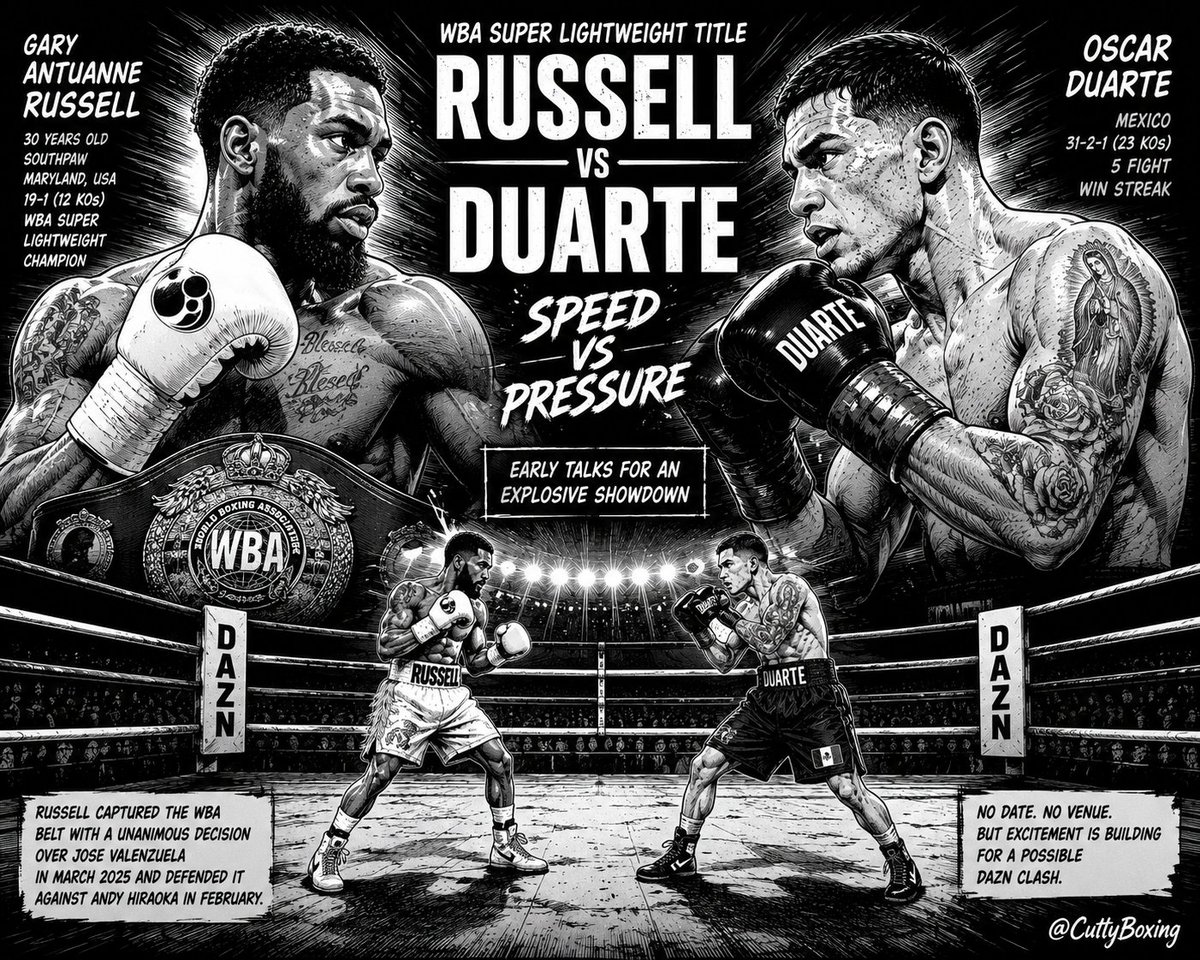
Duarte is coming off a loss many people thought he deserved, so it doesn't feel like the kind of opponent you'd expect for a first title defense.
Hopefully the bigger fights come next.
@UnderCo56515875 I mostly agree.
Pressure fighters usually play right into Russell's strengths because he can set his feet and let his hands go.
The disciplined movers with sharp fundamentals are the ones most likely to make him think and take away his rhythm.