3/3
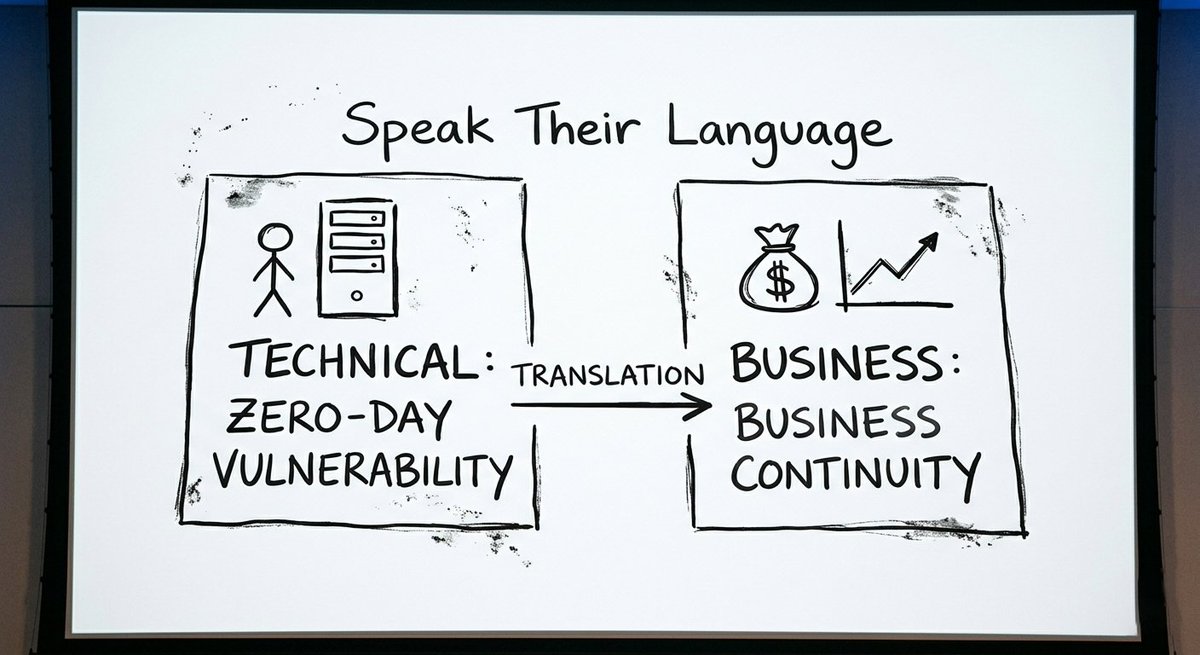
You must learn to translate.
Security is not an IT cost; it is risk mitigation.
Uptime is not a statistic; it is business continuity.
If you want buy-in, you need to speak their language.
#SysAdmin#InfoSec#TechStrategy
2/3
Your CFO will never understand a zero-day vulnerability until they see how much it could cost them.
Your CEO will never truly care about uptime until it impacts the quarterly revenue target.
If you can't document your setup in 30 minutes, your infrastructure is too complex.
Complexity puts you at security risk
Simplicity improves maintainability
Maintainability leads to better security
Over-engineering is the enemy of security. Avoid it.
#DevOps#SysAdmin
@royajrichardson Habits > Tools.
Strong passwords + MFA + regular training = foundation. Everything else builds on that. Most breaches happen because teams skip these fundamentals.
@EnzoicSecurity Exactly. CMMC L2 flips the script checking against breach databases (HaveIBeenPwned, etc.) catches passwords attackers already have.
Most teams are still stuck on complexity requirements. Checking known breaches is the actual shift that matters.
Password managers are a must. 🔑
If you're managing 50+ passwords manually, you're doing it wrong.
If your team shares passwords, you're definitely doing it wrong.
Pick one: Bitwarden, 1Password, or LastPass. Enforce adoption across your team.
#PasswordSecurity#SysAdmin
5 Security Habits For #SysAdmin
1. Enable MFA everywhere. Not optional, non-negotiable
2. Monitor logs actively. Not reactively
3. Update on schedule. Not on emergency
4. Document your processes. Future will thank you
5. Assume breach. Not "it won't happen to us"
#InfoSec