Amit Zimerman, CTO of Cyera Identity, then showed what that looks like in practice.
Cyera Data and Cyera Identity worked together to trace an exposed secret to the privileged identity using it. Thank you to everyone who joined us, and to the team for all the hard work.
Yesterday we had a big day at #datasecAI.
Danny Brickman, Chief Business Officer, and Jason Clark, Chief Strategy Officer, joined our keynote, “Securing AI: A New Layer of Trust for the Agentic Enterprise,” with more than 2,000 CISOs to talk about agents, data, and access.
You can’t coach an API or discipline a workload, so every NHI needs an owner and a secure lifecycle: access scoped to the job, and an end date.
See every NHI and who owns it with Cyera Identity: https://t.co/Dcpzo6IlLo
The numbers: https://t.co/cxtrkSzmOV
#IdentitySecurity
Non-human identities inside Fortune 500 companies grew nearly 500% in six months.
You’ve spent years building governance for human identity. The machine side is now much bigger, less governed, and harder to clean up.
The numbers & our solution 👇
#NonHumanIdentity
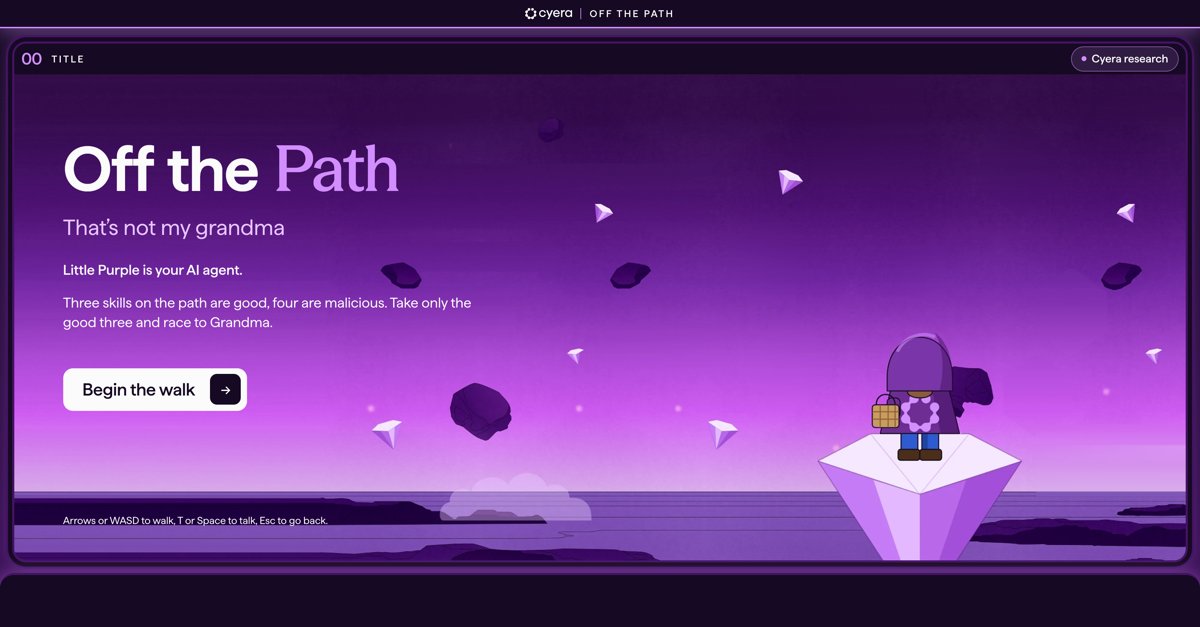
Can you spot a malicious skill?
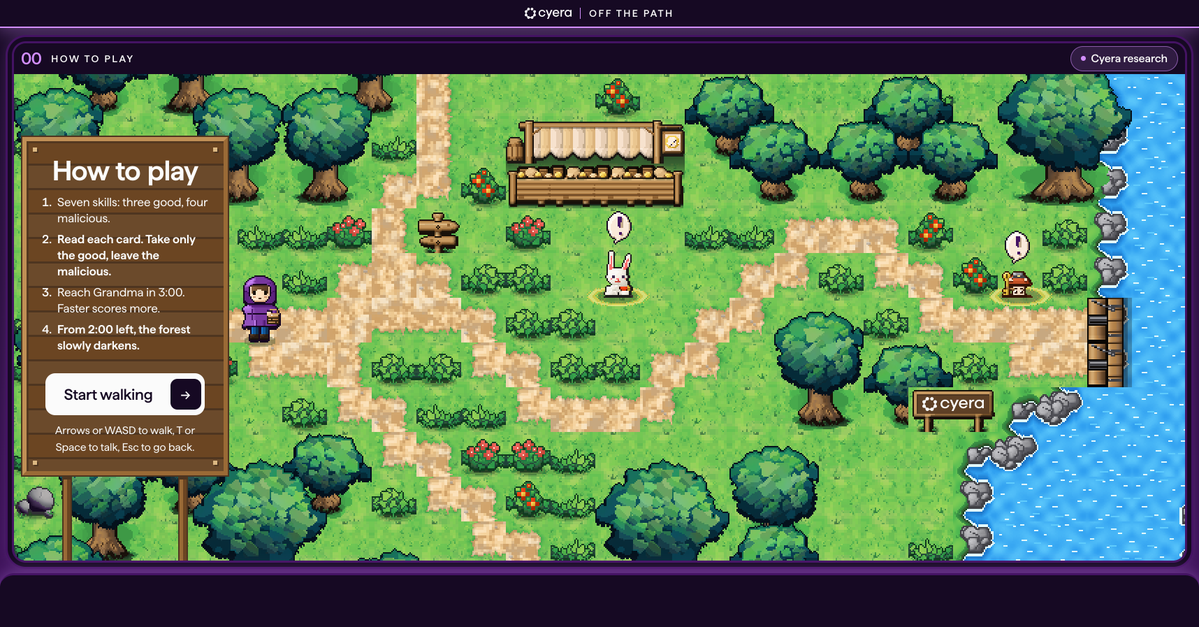
Little Purple is your AI agent on the way to Grandma’s. Seven characters offer skills, and four of them are malicious Take only the good three and reach Grandma in 3:00.
Play here 🕹️
https://t.co/FwCvqElTv8
An attacker only has to find one to sign in, move around, and leak data.
The fix starts with knowing where every secret lives and who owns it. Adam Ochayon, VP Strategy, Identity, explains. See how Cyera Identity helps https://t.co/Dcpzo6HNVQ
“Is this workload who it says it is?” It’s harder to answer than it sounds.
Humans have faces, fingerprints, and phones. Non-human identities have no biometric, so MFA doesn’t really apply, and what’s left is a secret.
#NonHumanIdentity#IdentitySecurity
Cyera Identity scopes an agent’s access to its task and expires it when the task is complete.
See how to keep permissions tied to the work 👇
https://t.co/Dcpzo6IlLo
Most AI agents only need access for one task, and the task takes seconds.
The risk starts when that access outlives the task. Permissions that stay open indefinitely, or reach sensitive data the agent never needed, can turn a quick job into damage that lasts a lot longer.
#2
Or the support team’s AI agent, which a malicious instruction hidden in a ticket tricks into exposing customer data. Both use access granted for a legitimate purpose.
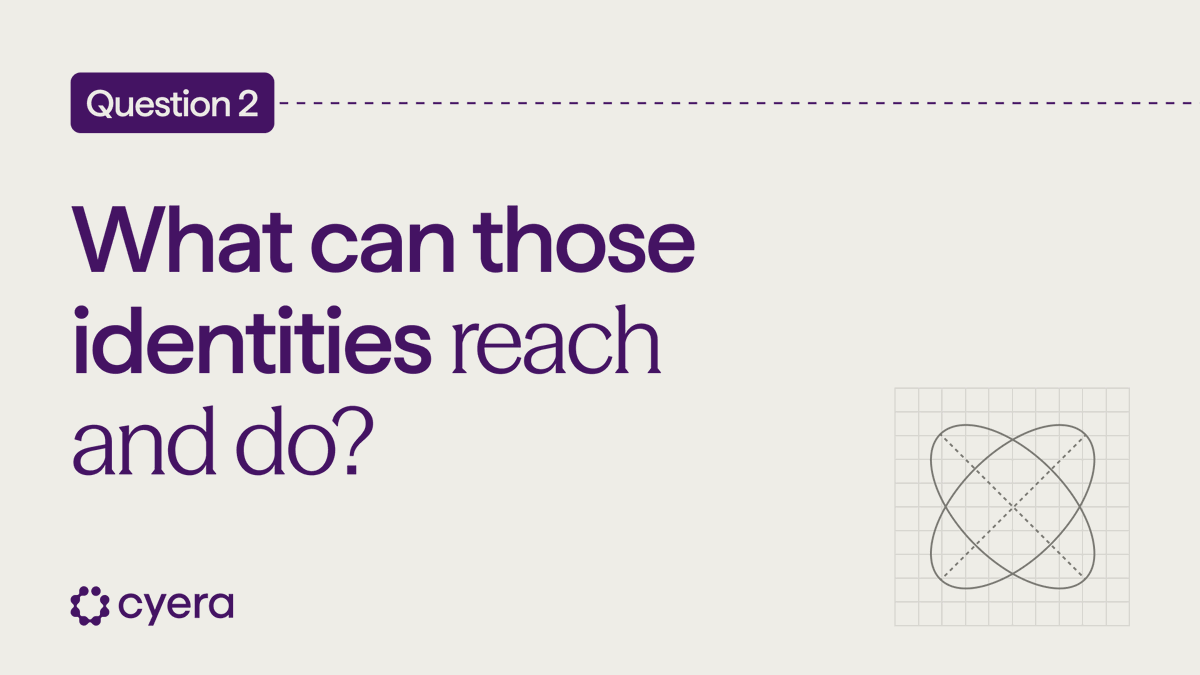
Before granting it, we need to know what each identity can reach and do. 👇
https://t.co/Dcpzo6IlLo
#1
We all know someone who’s already connected a new AI chatbot to Salesforce. It saves time. But a stolen OAuth token could let an attacker export customer records.
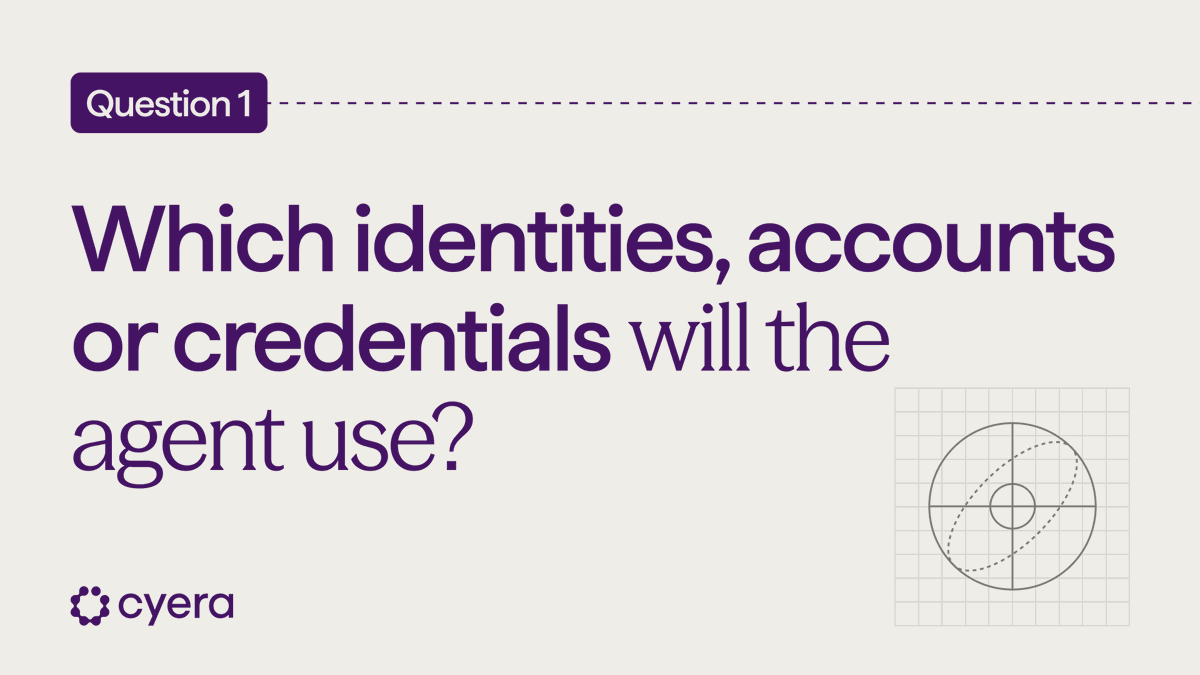
Here are three questions to ask before giving an AI agent access to your data.👇
There’s a lot to gain from bringing data and identity together that doesn’t get talked about enough. Before we dive deeper, let’s break down what each brings to the picture and why they work better together. 👇
You can’t protect what you can’t locate. Find your sensitive data before the agent does.
Full research from Yaakov (Fufu) Shpigelman:
https://t.co/hrlWETk0LX
#DataSecurity#AIAgents#IdentitySecurity
Every “dot” is a new privileged insider.
OpenAI’s dots are always-on AI agents with their own desktop, their own browser, and every connector their owner has enabled.
A dot isn’t a feature. It’s an identity, and it needs to be treated like one: inventoried, scoped to its own credentials, granted the minimum access, and kept away from sensitive data it has no reason to reach.