Pi Sign-in allows supported third-party websites and apps to offer Pi accounts as a sign-in or sign-up option.
It helps provide the infrastructure that allows applications and services to recognize, connect, and serve users across and outside the ecosystem.
This means Pioneers can access supported services with their Pi account instead of creating a new account or password for every app.
Why would third-party services or websites want to integrate Pi Sign-in? Pi Sign-in creates a simpler way to connect them with Pi’s large user base and bring Pi users into their own product experiences. It also gives Pi more presence in third-party contexts while offering a way to tap into the additional benefits and resources of Pi Network, besides user traffic.
Learn more about the Pi2Day 2026 release at https://t.co/lMgJBEMbYj
PiVerify is a KYC identity verification service available to third-party companies, making Pi’s real-human verification capabilities available outside the Pi ecosystem.
With PiVerify, external platforms can verify their users, reduce fake or duplicate accounts, and support compliance-related identity workflows.
For businesses and platforms, the need is straightforward: many digital services need to know whether users are real people. Verified identities are needed for any meaningful transactions, especially in real-world economies.
PiVerify services are also paid for in Pi, which increases Pi utility.
By making this infrastructure available to third parties, the Pi2Day 2026 PiVerify release extends the utility of Pi’s verified identity technology and resources beyond Pi’s own apps and services.
Learn more at https://t.co/azUeoeGENF
Does anyone else feel that running AI models and agents locally, on your own computer, should be much easier?
The privacy benefits are clear: your data stays with you. But while there are many open-source models and projects out there, turning them into a usable local AI agent is still far too hard for non-engineers.
One of the purposes of the Pi Launchpad test token launches is to introduce Pioneers to new ecosystem token mechanics and educate the community on how to participate with DeFi mechanisms.
The first test token provided useful data and highlighted areas where the Launchpad experience needed improvement.
The updated participation flow is simpler and clearer. Participation is now centered around the commitment amount, which has the direct effect on token acquisition. A Pioneer chooses how much Test-Pi they want to commit, and the Launchpad automatically calculates the related “fair-access hold,” and then shows the commitment amount, hold amount, and total together before confirmation.
The goal is to make it easier to understand and use the Pi Launchpad, and preserve the intended fair-access effect of the hold.
Learn more and test the second SLICE token on Testnet today! The SLICE test token launch will be open for participation until Pi2Day, June 28, 2026.
https://t.co/iTiuc93uFq
Want to help grow the Pi ecosystem? Invite vibe coders to bring their AI-created apps to Pi’s real distribution network and utility ecosystem through Pi App Studio!
Here’s how to participate:
1. Identify communities of active vibe coders such as a Subreddit, X Communities, Facebook group, or developer forum.
2. Join and contribute to the specific vibe coder community. Engage with community members on topics around vibe coding and app creation.
3. Introduce Pi Network as a distribution network to vibe coders looking for users for their app.
4. Submit the link to your post through the “Vibe Coder” button in the Pi mining app.
Spread the word: Vibe coders can easily bring their AI-created apps to the Pi ecosystem, where those apps can be discovered, used, supported, and improved by real people!
Any creator can benefit from what Pi ecosystem has to offer: a large, engaged community of 60M+ Engaged Pioneers, plus infrastructure including global payments, Pi Wallet, Pi Ad Network, and social network access.
Learn more https://t.co/euwz9BMwll
Attention #VibeCoders! 💻🤖@meta_alchemist@sairahul1@viktoroddy
[If you're building apps with Cursor or Replit, the hardest part isn't the code—it's distribution and KYC.
Pi Network just launched an easy way to tap into 60 Million+ users. Their new AI prompt studio lets you integrate Pi SDK and payments in 2 minutes.
Check it out: https://t.co/vpY2cTZFsm (https://t.co/pfsnM70zhW)/ #Web3 #PiWeb3 #AI
Network Update: Upgrade to protocol 24 has been completed successfully.
Great job to all Nodes! This was one of the most challenging migrations.
Next up will be v25, deadline June 18.
The Pi Mainnet is upgrading to Protocol 24 – Deadline: June 2.
The Pi Mainnet has successfully upgraded to Protocol 23. All Mainnet nodes are required to complete this step before the deadline to remain connected to the network.
Details here: https://t.co/9VehO7hhj1
Big kudos to Mainnet Node operators for upgrading to v23.
Most major Nodes have now been upgraded, and the protocol is expected to move to v23 soon.
This was one of the most challenging upgrades to date, as it involved multiple subsystem upgrades and optimizations that required internal data reprocessing.
Protocol 22 -> 23, Ubuntu 20 -> 24, PostgreSQL 12 -> 16
I tried topping up CidiCoin, and the speed was impressive, taking just a few seconds! This truly highlights Pi Network's TPS advantage. Meanwhile, CiDi Games demonstrates that integrating Pi into external ecosystems is incredibly seamless. @asher_cidigames@PlayCiDi@PiCoreTeam #CiDiGames
AI is creating a new wave of builders.
People are turning ideas into apps faster than ever before.
But most creators still face the same problem after building:
How do you actually reach users?
Pi App Studio can now help close that gap.
Creators can now take apps built with external AI coding tools and connect them directly into an ecosystem with:
60M+ engaged users
Integrated payments
Decentralized human workforce
Platform-level infrastructure
If you know builders, vibe coders, indie creators, or AI communities looking for distribution and real users, share this with them.
The next generation of apps will come from more people than ever before.
Now they need places where those apps can actually be used.
Read more: https://t.co/xyfArx1SJp
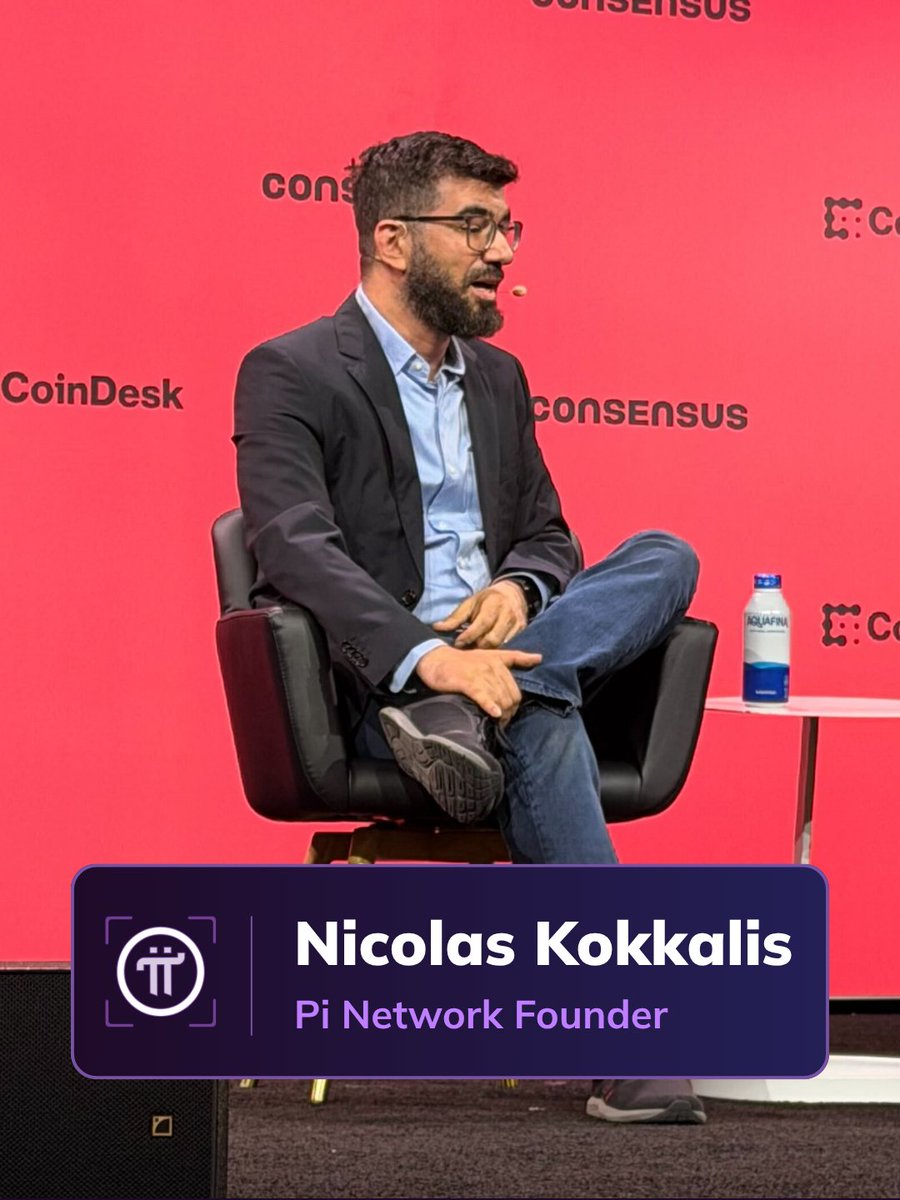
Pi Founder Nicolas Kokkalis spoke today at Consensus 2026 Miami on the panel, “How to Prove You’re Human in an AI World (Without Doxing Yourself).”
The discussion focused on one of the most urgent challenges in the AI era: how to maintain trust and verify real human identity as AI systems become capable of generating convincing bots, profiles, and interactions at scale.
Stay tuned for the full video!
Pi Founder Chengdiao Fan spoke today at Consensus 2026 Miami in her session, “Aligning Web3, AI, and Blockchain for Utility.”
Dr. Fan shared how Pi’s blockchain infrastructure, identity verification, and a globally engaged network can support utility-driven products and businesses in the AI era.
Her talk built on a central challenge in the broader crypto industry: the frequent misalignment between token design and real innovation. While tokens in the industry have often been used primarily as capital-raising tools or quick exits, Dr. Fan discussed Pi’s approach to treat tokens as tools that can support growth, engagement, and long-term utility.
Pi’s approach to ecosystem tokens and launch mechanisms focuses on tokens for user acquisition and integrating token design into the product innovation process. By using tokens to help products acquire real users who can engage, provide feedback, and use those tokens within actual product experiences, this approach connects token design more directly to utility and product development.
More broadly, Dr. Fan’s talk invited discussion on how blockchain can help shape AI-era business models, financial literacy, ownership, and socioeconomic participation. As AI lowers the barrier to building, the focus shifts toward something harder to replicate: real users, real participation, and trusted human input at scale.
Stay tuned for the full session video!
The Pi Founders are featured speakers at Consensus 2026 in Miami this week.
Chengdiao Fan will speak on Wednesday, May 6 (11:15–11:35 AM EDT, Convergence Stage) on “Aligning Web3, AI, and Blockchain for Utility,” exploring how Pi’s blockchain infrastructure, verified identity, and globally engaged network can support utility‑driven products and AI‑era business models.
Nicolas Kokkalis will join a panel on Thursday, May 7 (10:15–10:45 AM EDT, Convergence Stage) titled “How to Prove You’re Human in an AI World (Without Doxing Yourself),” exploring how the internet’s trust model is breaking as AI systems become capable of creating bots that can generate profiles and interact like real users.
Together, these sessions highlight Pi’s approach to the AI era: supporting utility-driven products and sustainable business models through blockchain, verified identity, and a globally engaged network, while enabling global identity verification and providing authenticity solutions through Pi’s native KYC solution.
See you there, Pioneers!
AI companies can access Pi’s human input infrastructure through the network’s over 18 million identity-verified Pioneers to improve models, tune inference quality, and scale data labeling and evaluation.
Read the announcement to learn more about how Pi can provide such services for AI companies, and share it with AI companies that may be interested!
https://t.co/uB1vllCkzs
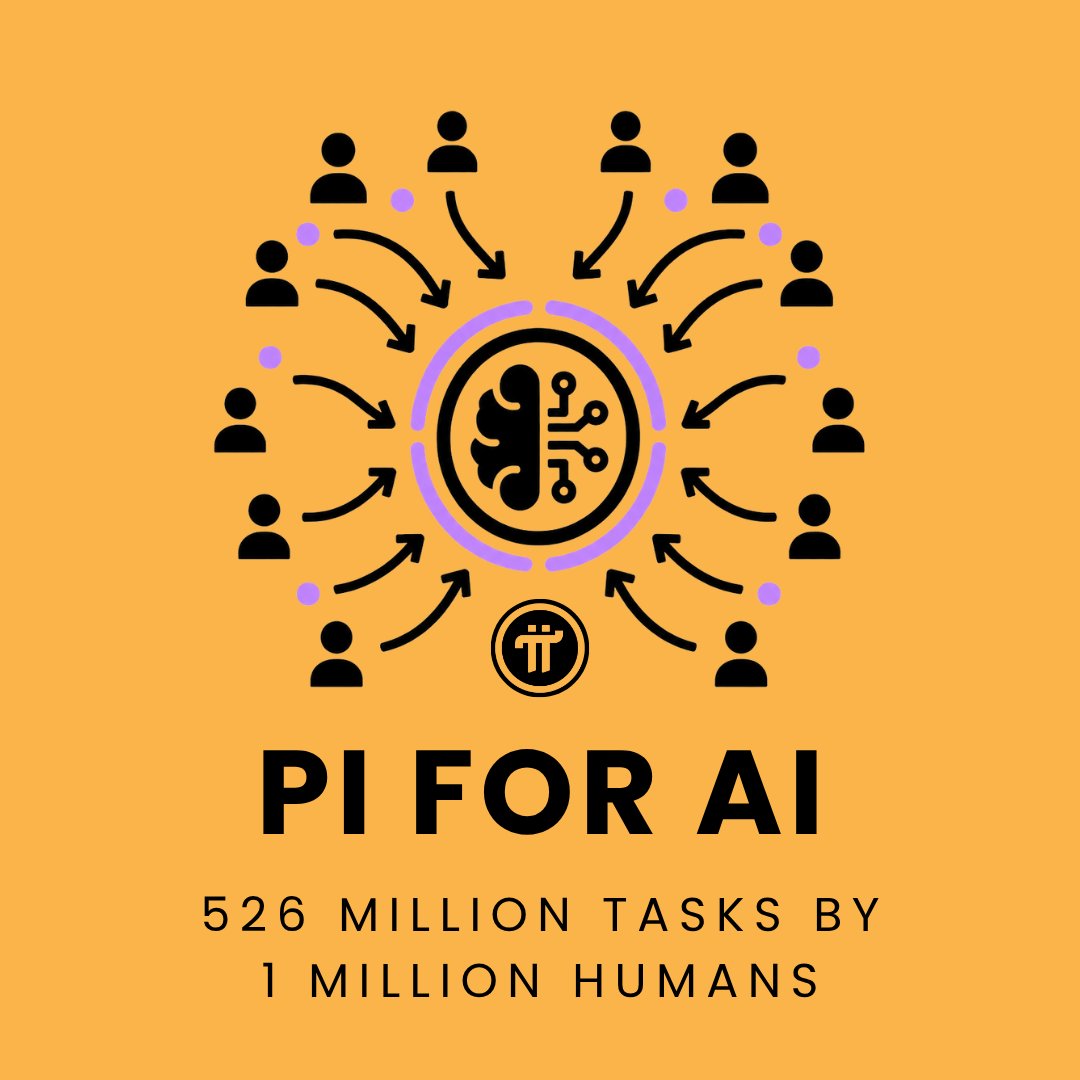
526 million human KYC validation tasks have already been completed on Pi.
By over 1 million verified people.
AI is advancing quickly.
But the hardest part of building reliable systems is still deeply human.
Models don’t improve from compute alone.
They improve from:
Judgment
Correction
Context
Nuance
Pi represents something different.
A globally distributed, identity-verified human workforce that has already demonstrated coordination at scale, already active in the Pi ecosystem.
This is real infrastructure, it’s already been used to process hundreds of millions of real tasks.
For AI systems, that changes what’s possible.
Go to the Pi mining app home screen to learn more.
The Pi Founders will both take the stage as speakers at the Consensus 2026 conference!
Dr. Chengdiao Fan will deliver a presentation exploring how Pi’s blockchain infrastructure, verified identity, and globally engaged network can support utility-driven products and AI-era business models.
Dr. Nicolas Kokkalis will join a panel discussion on human identity and authenticity in an AI World.
Don’t miss the Founders at Consensus Miami to learn more!
https://t.co/SutNgAMsvF