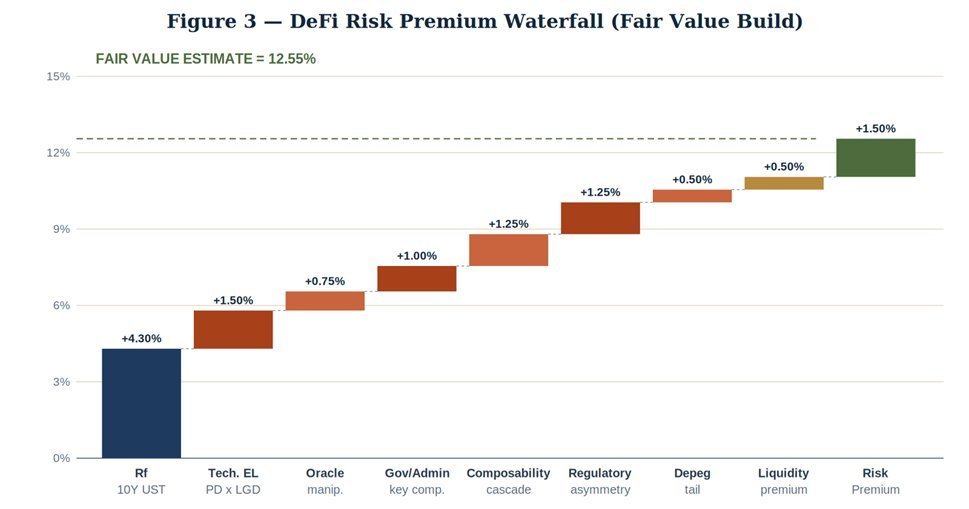
Rates in DeFi are too low for the level of risk
$11.7B sitting in Morpho vaults today at 2-4% APY. retail is funding these markets via exchanges thinking it's a savings account. it's not. they're taking real credit risk on crypto-collateralized lending
no institution accepts near risk-free rates to come on-chain
not all vaults are created equal. same 2-4% yield but completely different risk profile (different curators, collateral, LLTVs). retail picks the highest number. farmers will farm
back in the day >100% APYs in DeFi made sense. you were compensated for the risk you were taking.
DeFi is a different animal today but vol, historical dislocations, and looping strategies on crypto collateral still demand at least 300-400 bps above risk-free. we're nowhere near that.
@LucaProsperi ran the math (see below). tldr - fair value spread on ETH/BTC-collateralized lending is 250-400 bps above risk-free. observed rates are a fraction of that
last cycle we saw a lot of retail pour savings into algo stablecoins promising "risk free" yield. this cycle vaults have a lot of demand but they are mispriced for the level of risk. you're trusting someone to LP into vaults and trust the manager will manage position
at least private credit earned you 12-16%
go read this: https://t.co/TpzY7yOLJo
This is an interesting new DeFi primitive.
3Jane earns yield by lending capital via credit facilities to fintech firms.
But the issue is that 3Jane lends this capital only when these firms need it, and keeping money idle in the meantime is not capital efficient.
Its new Levered Callable Capital (LCC) mechanism solves this by turning a small margin into a much larger capital commitment.
Here’s how it works:
• An USDC holder deposits a small amount of margin into 3Jane and commits to provide a much larger amount of capital if needed (e.g. a $75K margin can back a $1M commitment)
• The margin provided earns a 20% yield while the capital commitment is not needed
• If 3Jane needs additional capital to fund an eligible deployment, it issues a capital call
• The USDC holder then has a defined window to provide their committed USDC, on which he will earn an 8% USD3 yield plus a funding bonus
• If they fail to fund the call, their margin can be slashed and auctioned to backstop bidders who fill the shortfall
This makes a lot of sense for 3Jane because it provides funding certainty without requiring the protocol to keep capital idle for every potential future credit deployment.
Instead of $1M sitting idle to guarantee $1M of future funding, 3Jane can secure that $1M commitment with a fraction of that capital.
I think this is a really interesting idea for on-chain credit.
Note: I collaborated with 3Jane on this post.
I don’t often do content partnerships, but I’ve been using 3Jane for several months, so I was happy to work with them when they approached me.
DeFi becoming the breakout vertical on @Aptos isn’t random — it’s what happens when product, liquidity and composability start reinforcing each other.
@sachitakamura and @averyching unpack where that momentum is coming from on the @BeaconLayerHQ Podcast.
“We focused on four core areas: finance, gaming, social, and entertainment — but DeFi on @Aptos has seen the strongest traction.”
@sachitakamura sits down with @averyching to unpack Aptos’ real-world use cases and why DeFi has emerged as the breakout category: the safety of Move, the composability that allows products to plug into larger protocols, and an ecosystem that is now beginning to hit meaningful momentum.
“Tokens are the key to internet finance”
- @TheiaResearch
Best presentation to convince you and your colleagues the 5-year “token bear market” was well warranted but is coming to a close / already over.
There is a lot of well-deserved skepticism around tokens right now.
I believe we are close to the end of the long token bear market. The conditions that made this long bear market inevitable are obvious in hindsight, and all of them are getting better.
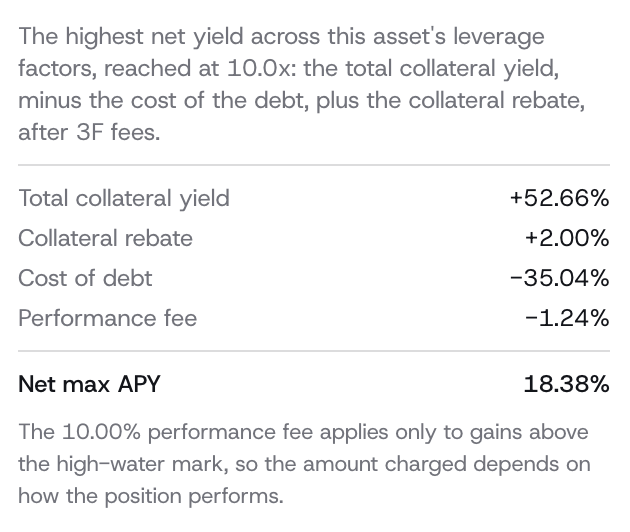
This will be a major upgrade for the looper UX once @3f_xyz comes out of private beta (currently $29M).
Leveraged yield strategies that settle asynchronously for investments that normally require more red tape, more delays, and more coordination to build leverage.
Loop RWA funds, tokenized treasuries, private credit.
3F gives you one-click access onchain to coordinated bridge loans and position management.
Max yield, powered by Ethereum.
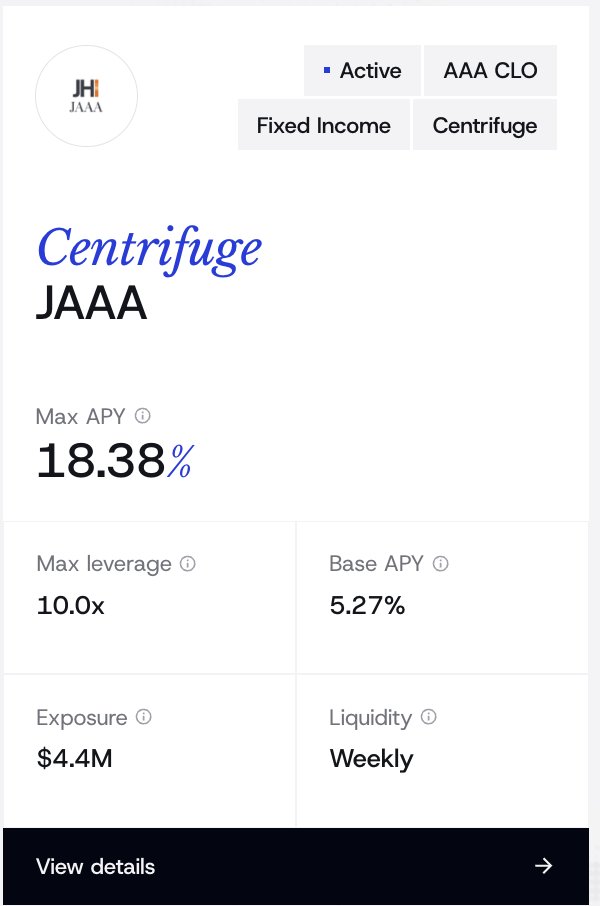
@centrifuge JAAA with max 10x leverage = 18.38% APY
@michaelh_0g on what AI actually changes for DA is exactly that.
@sachitakamura asked the right question - now I want to see where the market lands on the answer.
HOLY SHIT
Out of the $480B total volume traded on @tradexyz, this wallet 0xf5d81a135f756ca16544e53c20fc20643ec3ad53 (linked to Jump Crypto) has made $89.1B volume on Tradexyz accross his 20 sub accounts
Thats 18.5% of the Total Volume
With @RobinhoodApp and @coinbase both supporting DeFi and stock trading, we must be approaching some feature where you can transfer stocks, mint tokenized stocks 1:1, and move everthing onchain?
Am I missing this? Not possible yet right?
Let's say you hold GOOG in a brokerage account, there's no easy way to transfer GOOG to Robinhood/Coinbase but then mint tokenized stocks 1:1 to move your liquidity onchain to RH Chain or Base?
For now, you'd have to sell liquidity offchain, swap for stablecoins like USDC or USDG and then swap/buy tokenized stocks onchain.
Few of the ways I'm using my @ether_fi Cash card:
1⃣ Spend stablecoins offchain with a Visa debit
2⃣ Borrow stables at 4% to spend offchain via Visa
3⃣ Earn 2.45% APY with weETH I can borrow against
4⃣ Buy, hold, and borrow against RWAs like PAXG
5⃣ Book with https://t.co/FuR21bjW42 Travel (save 40-50% on hotels)
I don't use my https://t.co/FuR21bjW42 account to borrow USDC regularly and then go farm with it like maybe on Aave or Fludi. It's more about what I spend in Borrow Mode at 4% APY and then pay back in full like a monthly credit card, but borrowing against ETH or staked ETH.
However, I just noticed you can borrow USDC around 3.37%, not sure exactly how much liquidity is available there but that's lower compared with 4% on Aave.
The next generation of the https://t.co/WT8phhoIdx crypto neobank is live.
Earn, trade, borrow, spend. One app to replace your traditional bank.
What’s new:
→ Tokenized stocks and metals trading
→ An integrated @Aave market on @Optimism, borrowing against your full portfolio at ~4%
→ New on and off-ramps support over 30 new currencies
→ New payment methods: Cash App, Apple Pay, LemonPay, and more
→ Programmatic ETHFI buybacks from every product and revenue line
I keep finding more ways to use my @ether_fi Cash card.
Now I can buy tokenized RWAs (stocks, gold, tbills) in my account, then spend/borrow against them at these LTVs.
The next generation of the https://t.co/WT8phhoIdx crypto neobank is live.
Earn, trade, borrow, spend. One app to replace your traditional bank.
What’s new:
→ Tokenized stocks and metals trading
→ An integrated @Aave market on @Optimism, borrowing against your full portfolio at ~4%
→ New on and off-ramps support over 30 new currencies
→ New payment methods: Cash App, Apple Pay, LemonPay, and more
→ Programmatic ETHFI buybacks from every product and revenue line
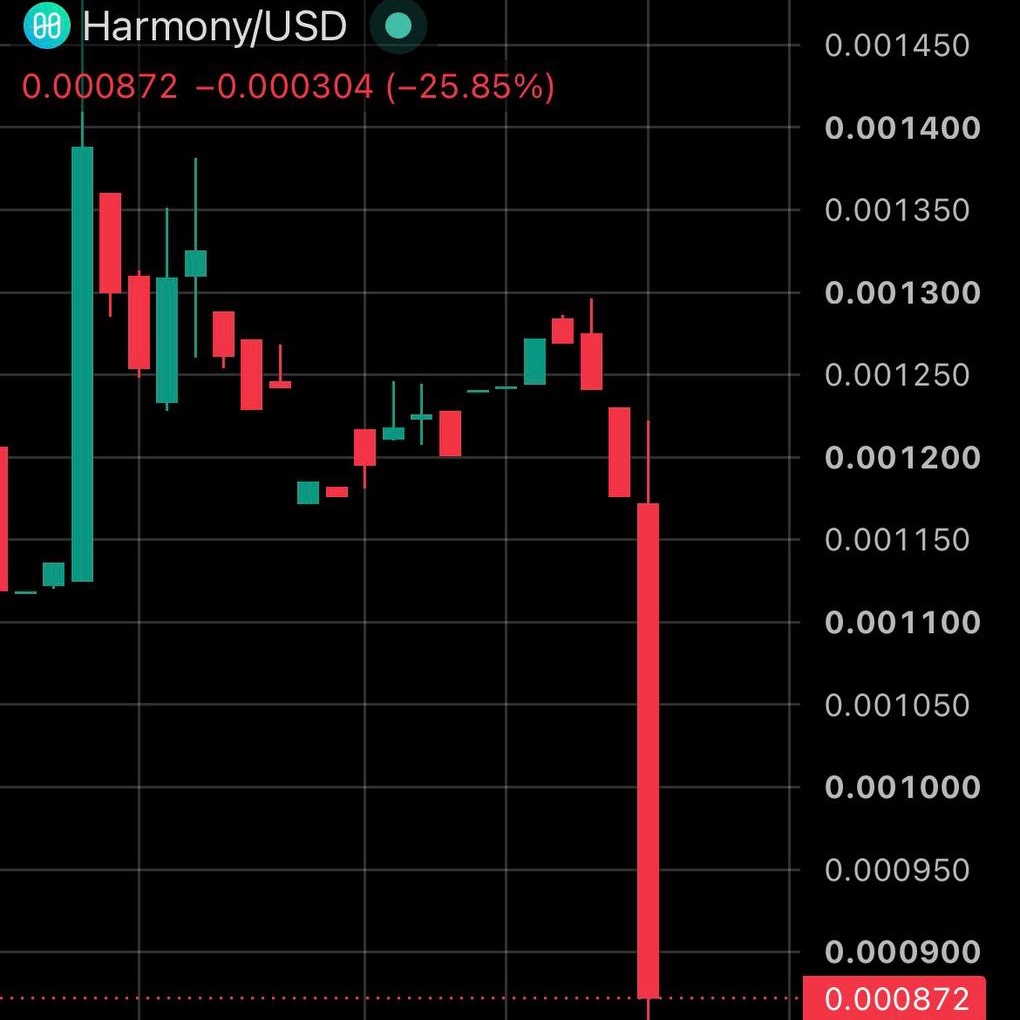
🚨 BREAKING: Harmony hit by a MASSIVE 4 BILLION $ONE exploit, token crashes -30%.
The unauthorized mint was equal to roughly 26% of the total supply, with the attacker already moving 2.8B ONE to exchanges, per Juiceberg.
Only 115M ONE remains onchain, while the overwhelming majority has already been sold or is sitting in exchange wallets, potentially ready for further selling.
Harmony has confirmed the exploit and says it is working with exchanges to freeze the funds, while preparing a patch and possible chain rollback.
Great move on the side of EF
- reduces the strain on the market
- without doing any kind of bailout or backstop in the situation EF had no role in creating
0/ Today, the Ethereum Foundation completed a bilateral swap of ~21,269 aWETH to wstETH, coordinated with @LidoFinance and @mellowprotocol as part of their ongoing deleveraging work.
Aave is my life's work and we're working nonstop to find the best possible outcome for users.
I’m personally contributing 5000 ETH to DeFi United as we continue working together with partners on formalizing more commitments. I’m working to see this resolved and market conditions normalized as soon as possible.
DeFi United.
holy fuck, a hair dryer at a Paris airport broke Polymarket weather markets & made someone $34,000 richer
- polymarket was settling Paris temperature bets on a single Météo France sensor sitting near the Charles de Gaulle runway perimeter - basically unguarded
- the guy bought the long-shot outcome (like "22°C" when everyone expected 18°C) for pennies, since nobody thought it'd hit
- then he walked up to the probe and briefly heated the air around it with a portable heat source, spiking the reading just long enough to register as the daily max
- temperature snapped back to normal in minutes, the market resolved in his favor, and he cashed out - twice, on April 6 and April 15, before Météo France caught on and filed charges
hyperstitions.
Very sad to see the recent Drift and KelpDAO security incidents. These were hard blows for DeFi.
In the last 2 days alone, DeFi TVL shrank by almost $15 billion.
But it makes me relate even more to what @santiagoroel has been preaching over the last few weeks:
The risk reward ratio of DeFi simply isn't attractive enough anymore.
Don't get me wrong, I am a big DeFi fan and a strong advocate for the entire financial industry moving onchain. But what you get right now from DeFi are unexciting yields for an insane risk profile. And the cherry on top is just horrible UX.
Not much can be done on the yield side in my opinion. UX is already being worked on. But personally, I think where we are lacking the most is making the risk profile more attractive.
DeFi was actually supposed to eliminate the risk of a middleman and make finance more secure by letting you take control of your own assets. But it feels like we've achieved the exact opposite.
The main reason for this, in my opinion, is that we have always massively neglected security in this industry. Most people ignore it and everything is fine, just until it's too late and the damage is done. We've seen this countless times already.
At the same time, security is probably one of the most underfunded and least exciting verticals to work in. And there is massive discouragement for teams like the @ethereumfndn itself, who choose the slow but secure path instead of quick iterations with the corresponding tradeoffs.
I noticed it myself recently when I was thinking about putting aside some of my fiat savings to put them to work. I chose TradFi bonds over DeFi yields. For those exact reasons.
If I as a crypto native already think this way, how can we expect conservative investors and retail to bring their assets onchain?
We need more support, funding and in general incentives for security again, so more top tier talent starts working on these problems and we can build a reliable foundation to truly bring the financial world onchain.
As long as this doesn't change, the majority of people will always choose banks instead.
We need to do better.
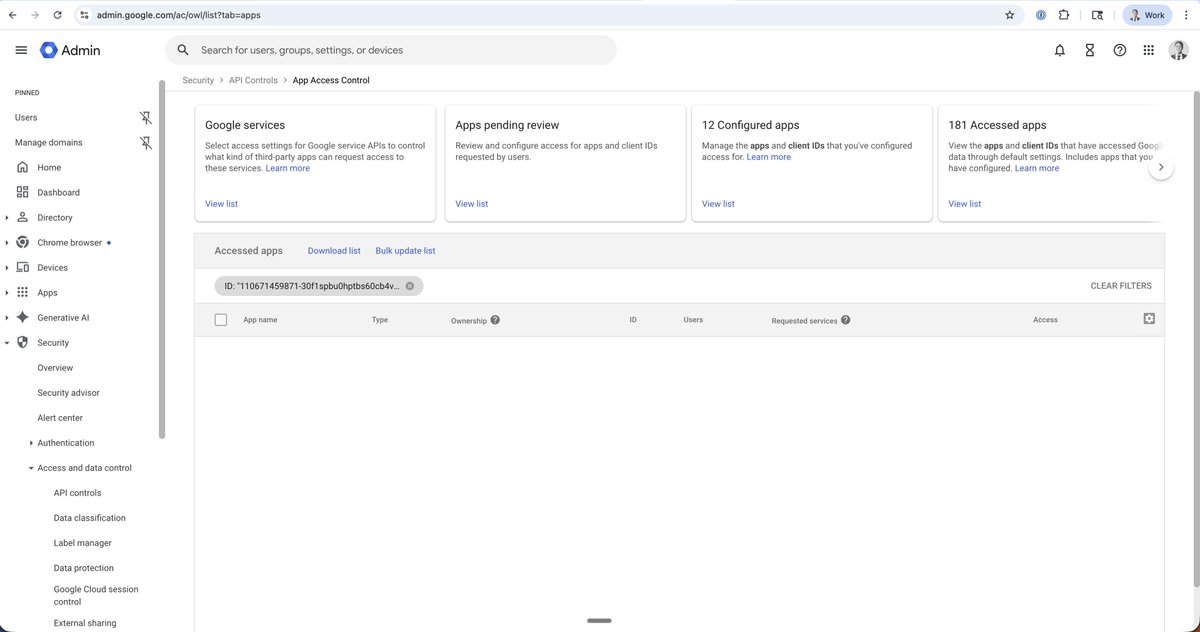
To check if your Google Workspace has been compromised by the same tool that compromised Vercel:
1. Go to https://t.co/TpuIOW5Fwg
- This is Google Admin Console > Security > Access and Data Control > API Controls > Manage app access > Accessed Apps
2. Filter by ID = https://t.co/uqJnCqp5Ah
- This is the ID of the compromised OAuth app
If you see an app after filtering, you have potentially been compromised
My biggest takeaways from @rabois:
1. The team you build is the company you build. Founders get distracted by markets, customers, and technology. If you have the right people, those problems get easier. If you have the wrong people, none of those things save you.
2. Build your company on undiscovered talent. The only way to scale an organization against incumbents with infinite budgets is to find talent that large companies’ hiring machines will misprocess. In practice, this often means skewing younger—not because young people are inherently better but because they have fewer data points, which means typical evaluation systems can’t categorize them accurately. This is where the alpha often is.
3. Hire more “barrels,” not “ammunition.” A “barrel” is someone who can take an idea from zero to outcome without hand-holding. Most companies have only a handful of these people. Hiring more people without expanding the number of barrels doesn’t increase output; it increases coordination tax and creates drag. The ratio of barrels to ammunition is what determines the number of important things a company can pursue simultaneously.
4. CMOs are becoming the #1 consumer of AI tokens. At a few of Keith’s top portfolio companies, the heaviest user of AI is the chief marketing officer. These CMOs are running analytics, shipping campaigns, and generating insights that previously required entire teams of deputies.
5. The three signs a company will win: operating tempo, internal talent development, and “the relentless application of force” from the top. Keith identifies a consistent pattern across his best portfolio companies. First, operating tempo: Ramp shipped physical cards in three months when the industry standard was 9 to 12. Second, talent development through internal promotion rather than senior external hires; the CMO at one of his top companies was the previous chief of staff. Third, the CEO’s willingness to push harder as things improve, not less. Mike Moritz told a friend of Keith’s that the most common trait of the best CEOs is “the relentless application of force.” Complacency is the natural by-product of success, and the CEO’s job is to offset it.
6. For consumer products, talking to customers is not just unhelpful; it’s actively harmful. Keith refuses to let companies he advises conduct consumer research. His argument: Consumer decisions are subconscious. Ask any Porsche owner why they bought the car, and 99% will cite every reason except the real one. Once misleading customer feedback enters the organization, it locks into people’s brains and distorts every subsequent decision.
7. Keith believes the PM role may not survive the AI era. Taking customer inputs, building a sequential year-long roadmap, and coordinating between teams are structurally incoherent when AI capabilities change weekly. The skill that matters now across all three roles—PM, designer, engineer—is business acumen: understanding the company’s equation and knowing what to build next.
8. Great hiring comes from great referencing. Run at least 20 references, and keep going until you hit negative feedback. Ask specific, forward-looking questions (e.g. “Would you start a company with them?”). If every reference is positive, you haven’t gone deep enough.
9. Use a 30-day feedback loop to sharpen your hiring instinct. Thirty days after every hire, ask: would I hire this person again? This is as predictive as waiting years, and dramatically faster for improving your judgment. Make this a habit, and your hiring quality will compound.
10. Criticize in public, not private—it optimizes for the system. Keith endorses a management practice that most people find confrontational: delivering negative feedback in front of the team, not behind closed doors. Private criticism optimizes for the individual, but the rest of the company doesn’t know the issue is being addressed, which breeds anxiety and suspicion. Public criticism lets colleagues see that leadership is aware, creates opportunities for others to volunteer help, and turns feedback into a team-building exercise.
Full conversation: https://t.co/5MI134kdx5