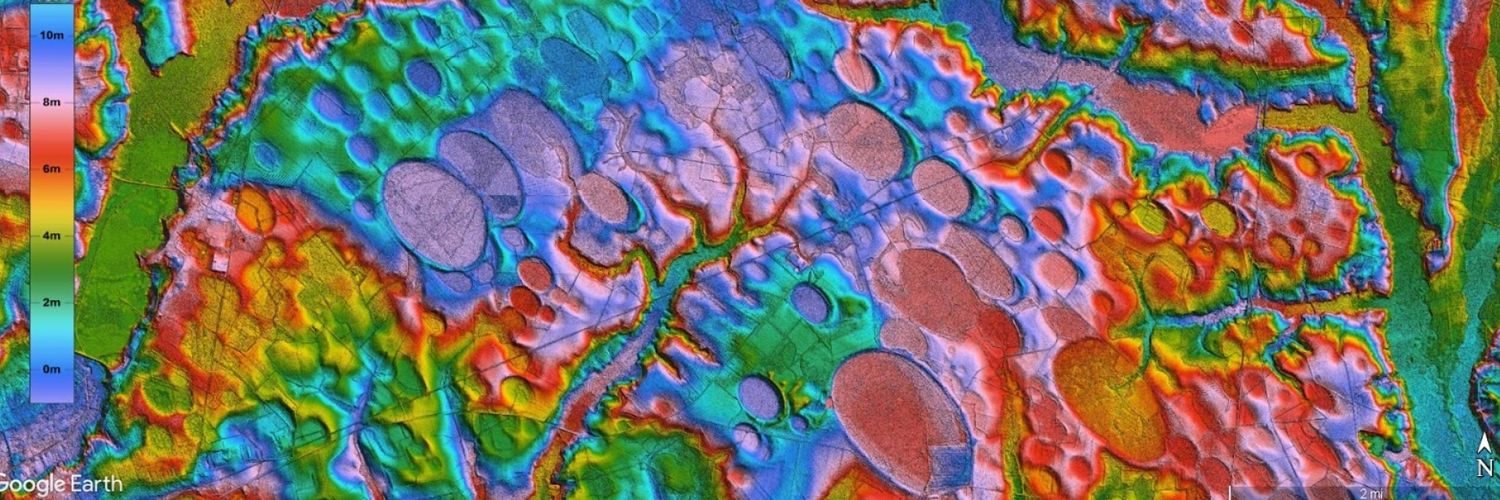
And I'm being serious, Ralph. This isn't a gaff. The only thing that could have erased Bays from areas that we should find them is the ocean (repetitive wave and tidal action, long shore drift, ect.). If you're honest with yourself, you'll see that I'm correct. It's depressing when you've invested so much time and energy into something... but evidence is evidence.
@Edessagospels@Davidliberty002@Megalithic12000 Ralph, you are here. I know, I was there 5 1/2 years ago. It sucks. Feel free to DM me when you move on to the next step. I'll help you through it.
@Edessagospels@Davidliberty002@Megalithic12000 What you do see is lots of evidence for the transgressions and regressions of the pliestocene interglacials that had sea levels higher than today (~400,000 years ago, and again ~125,000 years ago during our last interglacial, the Eemian).
I've already explained this...the Delmarva Penisula, into New Jersey, is experiencing elevated rates of subsidence. The ground is sinking. As far as terrain erasing hurricanes (and tsunamis) up to the pliestocene aged beaches, there is no evidence for those either.
https://t.co/9oYQH7gd8V
@Edessagospels@Davidliberty002@Megalithic12000 Here's a paper describing the shell rings being inundated with seawater that were made 5,000 years ago, after the sea levels stabilized. People were thriving on the coast at the end of the Holocene Maximum. https://t.co/oTV5Ug6GB8
@Edessagospels@Davidliberty002@Megalithic12000 They didn't. Sea levels stabilize themselves at our current level around 6,000 years ago. Both the archaeological and geological record does not support your claim. During the time of the YDB, they were still well east of their current shorelines.
@Edessagospels@Davidliberty002@Megalithic12000 It didn't happen. There's a difference. Isostatic rebound has an effect, of course, but those effects are minimal along the Atlantic Coastal Plain. If the Carolina Bays were created 13,000 years ago, we should see them all the way to the current beach. We don't.