1/ NOOSE is in Vice City 🚨
Armed officers raid a building in a brand-new shot. One masked guy in short sleeves looks a LOT like Jason...
Fan theory for now. Undercover or just a look alike?
Coverage calls her a luxury liner turned reef. Her own records tell a more military story.
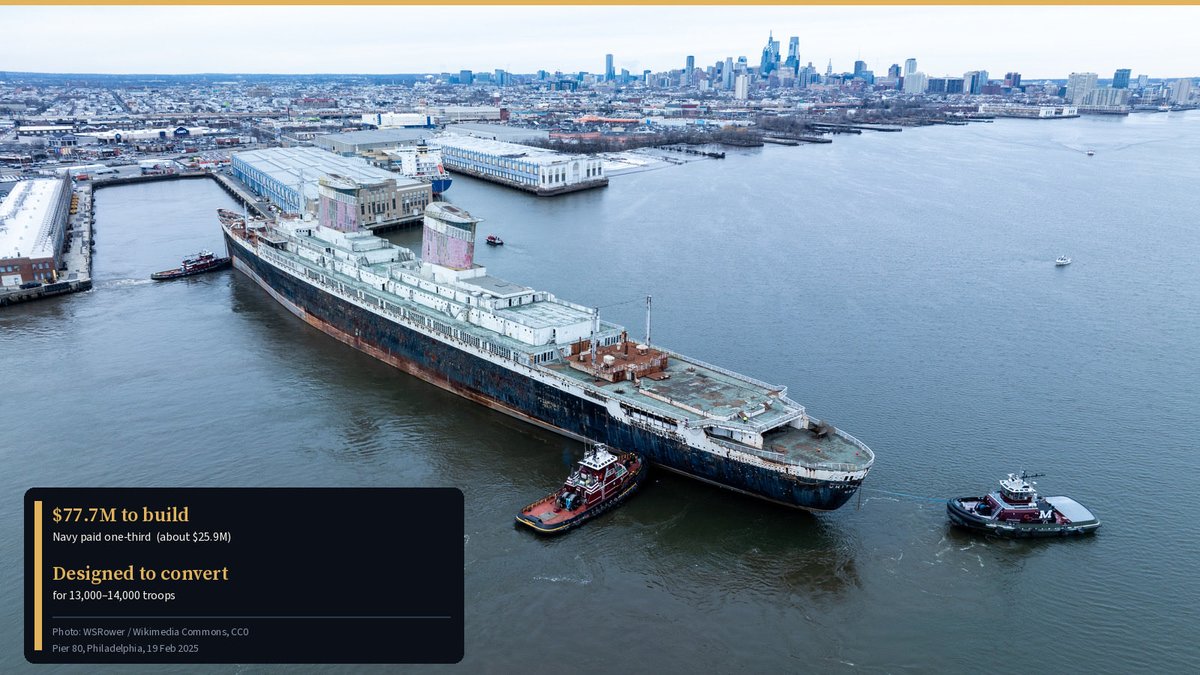
The money: she cost $77.7 million to build. The Navy paid one-third, about $25.9M, to cover "national defense features," and the Maritime Administration added an $18.6M construction subsidy (Naval Historical Foundation).
What the Navy's share bought (NHF):
- High speed
- Extra compartmentation
- The ability to use the Panama Canal. She was built just 101 ft wide (SS United States Conservancy).
- More unrefueled range than commercial service needed
- Quick conversion to carry 13,000-14,000 troops. The Conservancy puts it at 14,000 troops, 10,000 miles without refueling.
She was designed to convert, and that's as far as it went. When the Korean War broke out, the government considered taking over six liners under construction, including her, as troopships. Only three were taken (NHF).
The secrecy: many design details were classified on national security grounds and only declassified in the late 1960s (NHF). She was built almost entirely in a graving dock, out of public view (Conservancy). In her trials she hit 38.32 knots, about 44 mph, a figure that stayed under wraps for years.
The dock itself was Navy history too. Newport News built her in a dock first slated for the supercarrier USS United States (CVA-58), freed up when that ship was cancelled (NHF).
She set the 1952 transatlantic speed record on her maiden voyage (Guardian, Conservancy). Then jets ended both jobs she was built for. NHF says jet transports killed the transatlantic passenger trade and the movement of troops by ship. She retired in 1969.
Why it matters: she was a Cold War hedge that looked like a luxury liner, and she became obsolete before the Navy ever needed her. Now she sits about 180 ft down off Destin as the world's largest artificial reef, and WHOI scientists are using her to study how a reef ecosystem forms from day one. 🐠
The SS United States, sunk off Florida last night, was partly a Navy project. ⚓
The Navy paid a third of her $77.7M cost, and she was designed to convert to a troopship for 13,000-14,000 troops
The SS United States, sunk off Florida last night, was partly a Navy project. ⚓
The Navy paid a third of her $77.7M cost, and she was designed to convert to a troopship for 13,000-14,000 troops
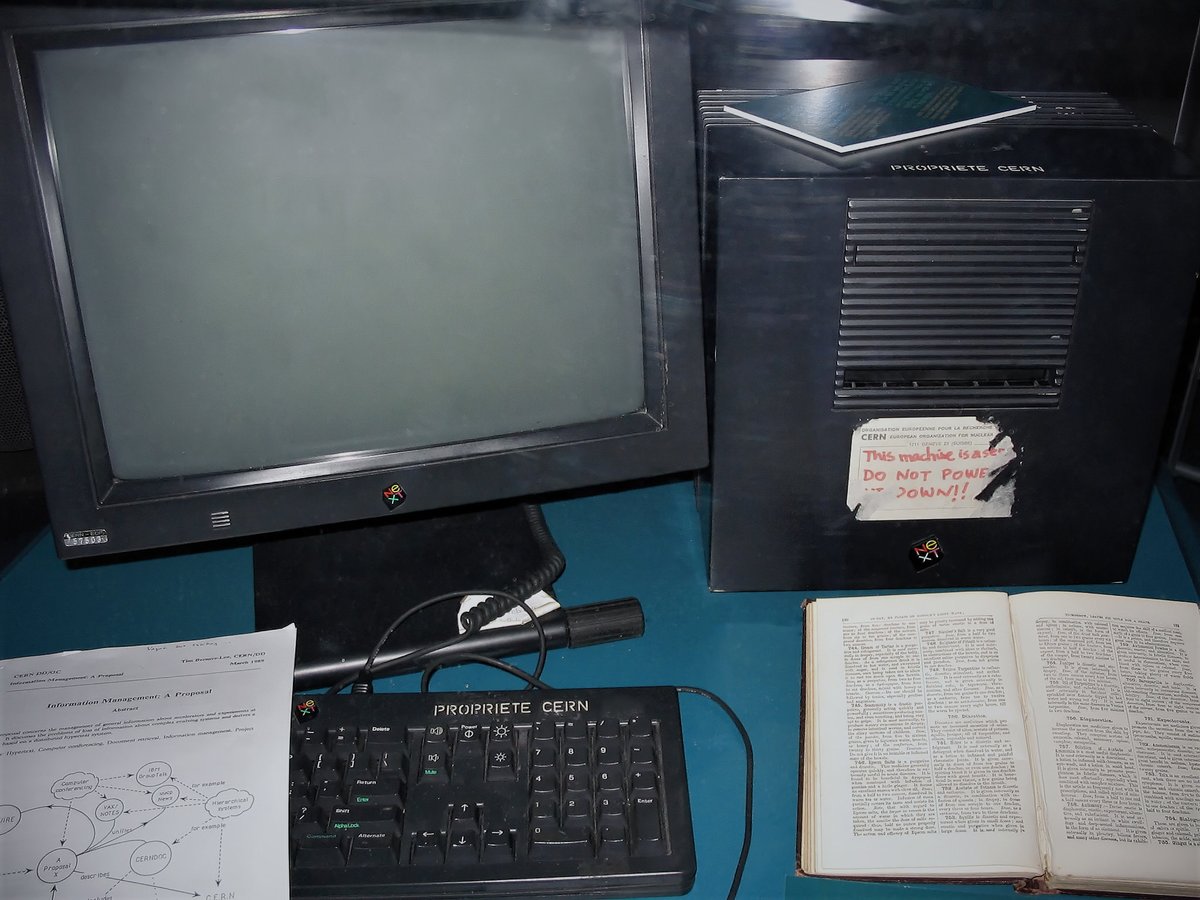
The World Wide Web got its name in a staffing request. 💻
36 years ago today, Tim Berners-Lee and Robert Cailliau asked CERN for 5 people and 6 months to build it
ESA's own timeline for Nov 12, 2014 (comet time, GMT):
15:34 first touchdown, inside the planned landing zone at Agilkia
17:25 second touchdown
17:32 third and final touchdown
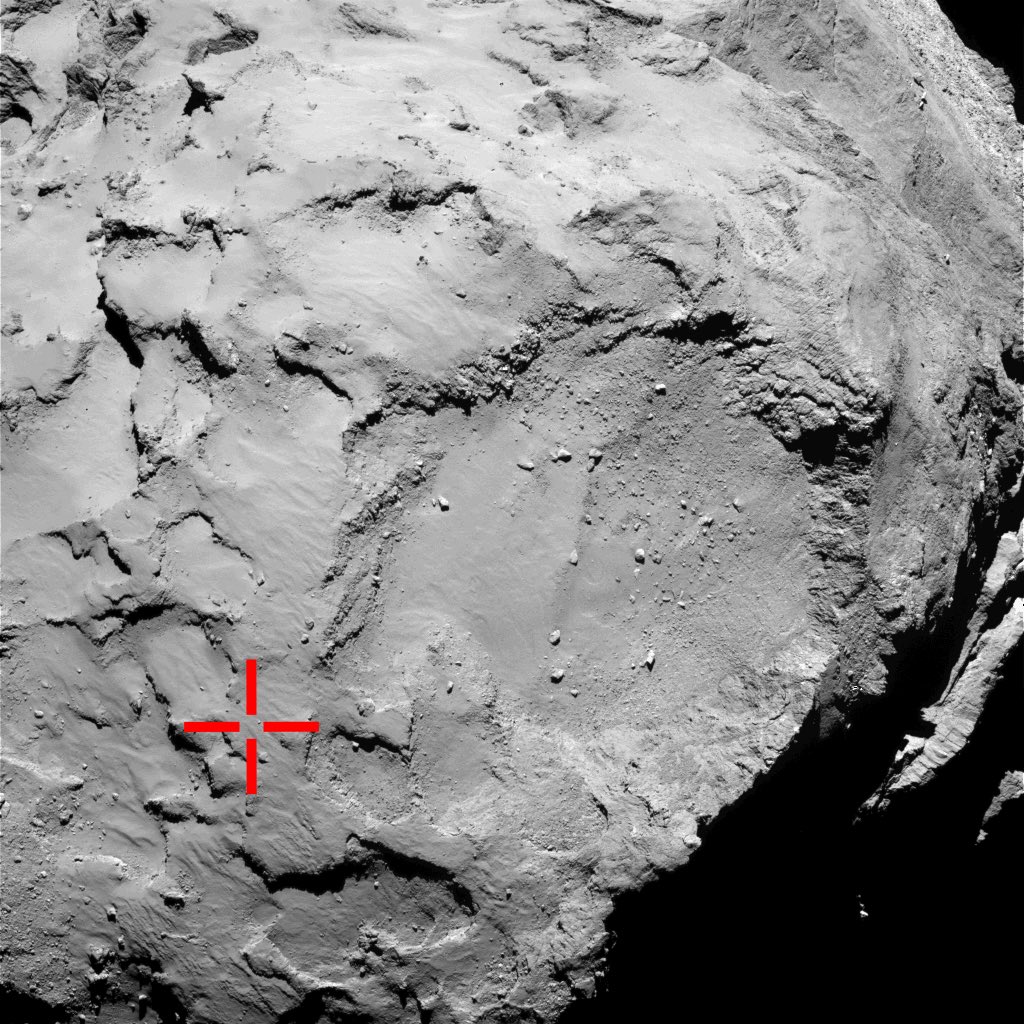
The two harpoons meant to anchor Philae didn't fire. After first contact it lifted off again for 1 hour 50 minutes, drifting about 1 km at 38 cm/s, then made a smaller hop at about 3 cm/s before it finally stopped (ESA).
Mission control in Darmstadt confirmed touchdown at 16:03 GMT, because each signal took over 28 minutes to reach Earth via Rosetta.
Where it stopped was the real problem. The planned site got nearly 7 hours of sunlight per 12.4-hour comet day. The final spot got about 1.5 hours, which starved the solar-charged battery.
Philae ran its core science on its main battery, went quiet, and last made contact on July 9, 2015. Rosetta's camera only spotted it on Sept 2, 2016, wedged in a dark crack in the Abydos region (ESA).
Why it matters: it was still the first touchdown on a comet in history, and the instruments logged every bounce, which is how scientists reconstructed the whole flight. 🛰️
Image: ESA/Rosetta/OSIRIS, CC BY-SA 4.0
Philae didn't land on a comet 12 years ago today. It landed three times. ☄️
The harpoons never fired, and the little lander bounced across the surface for almost 2 hours
@VGC_News Fun bit of history: Black Forest was built from another studio's team. It was founded in 2012 in Offenburg by the Spellbound Entertainment crew, and it's been inside THQ Nordic since 2017. Owner-run again now 👀
@Reuters For scale: EIA puts Hormuz flows at about 20.9M barrels a day in the first half of 2025, roughly a fifth of world oil use and a quarter of all seaborne oil trade. The Saudi and UAE bypass pipelines can carry only about 4.7M b/d 🛢️
Here's how it actually worked.
Passenger lists weren't made at Ellis Island. Steamship clerks filled out the ship's manifest abroad, starting when the immigrant bought a ticket, often close to home. That list crossed the ocean with them.
At Ellis Island, an inspector sat at a high desk in the Registry Room with the manifest open and checked each person's answers against it, per the National Park Service. USCIS says inspectors were under orders not to change a name unless the immigrant asked or the original entry was shown to be wrong.
Language wasn't the barrier people picture either. From about 1892 to 1924, a third of inspectors were foreign-born, they spoke an average of three languages, and the station kept a staff of interpreters (USCIS).
So where did names change? Usually later, and usually by choice. Immigrants often changed their own names within about five years of arriving, and the Naturalization Act of 1906 started requiring those changes to be documented for that reason (USCIS).
The station ran from 1892 until Nov 12, 1954, when the last detainee, Norwegian seaman Arne Peterssen, was released (NPS).
Why it matters: if you're hunting for an ancestor, search for the name as it was written on the departure manifest, not the one your family used later. That's where the record is. 🔎
Photo: Library of Congress
Your family's name almost certainly wasn't changed at Ellis Island. 🗽
The station closed 72 years ago today, and its own records show inspectors never wrote names down in the first place.
For seven years, America's Veterans Day wasn't on November 11. 🇺🇸
It feels like it's always been locked to the moment WWI's guns stopped. But the 1968 Uniform Monday Holiday Act literally reads: "Veterans Day, the fourth Monday in October."
The idea was three-day weekends for federal workers. VA's own history says the first October version, on October 25, 1971, was observed "with much confusion."
A lot of states never went along with it. By the time Congress reversed course in 1975, 46 states had either kept November 11 or gone back to it, per the Congressional Research Service and the Army's Center of Military History.
The fix, Public Law 94-97, is basically one sentence: strike "the fourth Monday in October," insert "November 11." It took effect in 1978, so the federal holiday sat in October from 1971 through 1977.
There's an older layer too. The 1938 law created "Armistice Day," and a 1954 amendment swapped exactly one word, "Armistice" for "Veterans," making it a day for veterans of all wars.
Why it matters: the date isn't just a convenient day off. Most state legislatures and all the major veterans groups pushed to keep it tied to the 11th hour of the 11th day of the 11th month. 📜