Saving people and animals, it's my purpose! We must advocate for those without a voice! I have a special place in my ❤ for K9's! God-fearing animal lover!
Researchers have identified a consistent chemical difference in the brains of people with anxiety disorders: significantly lower levels of choline-containing compounds. A groundbreaking 2025 meta-analysis by UC Davis Health scientists revealed this biological marker through proton magnetic resonance spectroscopy (1H-MRS) data. The study found an average 8% reduction in total choline (tCho) in the prefrontal cortex, a key region for emotional regulation, decision-making, and cognitive control, as well as across broader cortical areas.
Analyzing 25 datasets involving 370 individuals with anxiety disorders (including generalized anxiety disorder, panic disorder, and social anxiety disorder) and 342 healthy controls, the researchers documented this reduction as a transdiagnostic feature consistent across different anxiety conditions. This represents the first meta-analysis to identify a reliable chemical pattern in the brains of people with anxiety, pointing to measurable neurochemical alterations rather than purely psychological factors.
Choline, an essential nutrient obtained from foods such as eggs, salmon, and soybeans, plays a vital role in brain cell membrane integrity and neurotransmitter synthesis. The authors suggest that heightened arousal and chronic stress in anxiety disorders may increase choline demand, depleting levels faster than dietary intake can replenish them and potentially impairing the brain’s ability to regulate the fight-or-flight response. While the findings open promising avenues for nutritional interventions, experts stress that dietary or supplemental approaches should complement, not replace, established treatments.
[Maddock RJ, Smucny J. Transdiagnostic reduction in cortical choline-containing compounds in anxiety disorders: a 1H-magnetic resonance spectroscopy meta-analysis. Molecular Psychiatry. 2025. DOI: 10.1038/s41380-025-03206-7]
Attn: Industry partners — FDA heard you. We're extending the comment period on the Real-Time Clinical Trials Pilot Program Request for Information to June 29. Help shape the future of clinical research. Submit today!
🔗 https://t.co/AUuhLnrAPM
#RealTimeClinicalTrials
Dogs are suffering inside a slaughterhouse in Indonesia right now.
We can step in, save lives and close these doors forever.
Your donation helps rescue these dogs from immediate danger and end the cycle of cruelty at its source. Donate now and support all our lifesaving work: https://t.co/qRDyKzKzKW
Meet Dusty 🤎
He stood quietly, exhausted, his little body worn from a life of hard labour. No voice. No complaint. Just tired eyes asking for kindness.
Now he is safe at Second Chance, where no one will overload him again. Here, he will rest, heal, and finally feel what gentle hands mean.
Working donkeys suffer silently every day. We cannot save them without support. Please help us continue rescuing souls like Dusty and give them the dignity they deserve.
💳 PayPal: https://t.co/96bi1QLbXd | ❤️ Construction GoFundMe: https://t.co/2bquGktrGU | 🔗 Linktree: https://t.co/pqKrHi2wQ2 |
We’re so happy to share an update on sweet Lillian, our gentle senior poodle mix rescued from a dog butcher now living in Germany. (The black pug Bobby was saved too and is happily adopted in the UK.) #DogMeatTrade#DogMeatTradeSurvivor
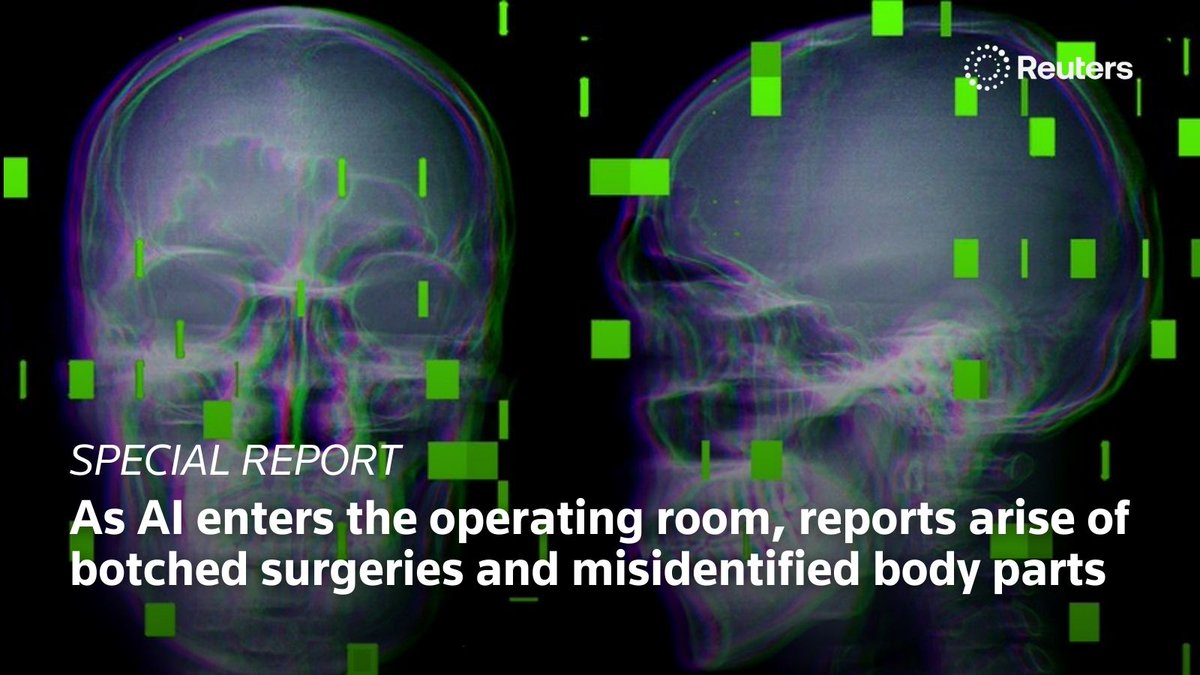
Researchers found 60 FDA-authorized medical devices using AI were linked to 182 product recalls, a letter in the JAMA Health Forum shows. Reuters documents the hazards as device makers, tech giants and software developers race to roll out AI in medicine https://t.co/2om7OUwGqf





![Rainmaker1973's tweet photo. Researchers have identified a consistent chemical difference in the brains of people with anxiety disorders: significantly lower levels of choline-containing compounds. A groundbreaking 2025 meta-analysis by UC Davis Health scientists revealed this biological marker through proton magnetic resonance spectroscopy (1H-MRS) data. The study found an average 8% reduction in total choline (tCho) in the prefrontal cortex, a key region for emotional regulation, decision-making, and cognitive control, as well as across broader cortical areas.
Analyzing 25 datasets involving 370 individuals with anxiety disorders (including generalized anxiety disorder, panic disorder, and social anxiety disorder) and 342 healthy controls, the researchers documented this reduction as a transdiagnostic feature consistent across different anxiety conditions. This represents the first meta-analysis to identify a reliable chemical pattern in the brains of people with anxiety, pointing to measurable neurochemical alterations rather than purely psychological factors.
Choline, an essential nutrient obtained from foods such as eggs, salmon, and soybeans, plays a vital role in brain cell membrane integrity and neurotransmitter synthesis. The authors suggest that heightened arousal and chronic stress in anxiety disorders may increase choline demand, depleting levels faster than dietary intake can replenish them and potentially impairing the brain’s ability to regulate the fight-or-flight response. While the findings open promising avenues for nutritional interventions, experts stress that dietary or supplemental approaches should complement, not replace, established treatments.
[Maddock RJ, Smucny J. Transdiagnostic reduction in cortical choline-containing compounds in anxiety disorders: a 1H-magnetic resonance spectroscopy meta-analysis. Molecular Psychiatry. 2025. DOI: 10.1038/s41380-025-03206-7]](https://pbs.twimg.com/media/HM21vn0WYAAauIK.jpg)