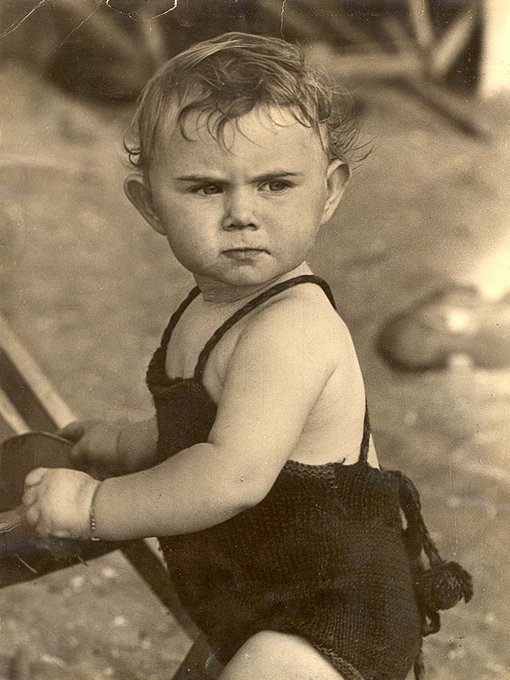
1 July 1936 | A Belgian Jewish boy, Andre Hartstein, was born in Antwerp. He emigrated with his family to France.
In December 1943 he was deported from Drancy to #Auschwitz. After the selection we was murdered in a gas chamber. He was 7.
26 June 1939 | Dutch Jewish girl, Helena Wilhelmina Polak, was born in Groningen.
In Febuary 1943 she was deported to #Auschwitz from #Westerbork and murdered in a gas chamber after arrival selection together with her younger brother Abraham.
---
▶ The first two gas chambers near Auschwitz II-Birkenau: https://t.co/KArryHBbea
24 June 1942 | Janina Nowak escaped from the Kommando consisting of 200 Polish women working near the Soła river drying hay. After she was reported missing, the SS men started the pursuit, which was, however, unsuccessful. Other female prisoners from the Kommando were led back to the camp. Late in the evening, they had their hair cut up to that point, as non-Jewish prisoners, they did not have to have their heads shaved.
On the next day, the entire Kommando was transformed into a penal company and sent to the SS farm called Budy, at the distance of about 6 km from the main camp. They were accommodated in a former school building and a wooden barracks, which together with a small kitchen and latrines were surrounded by barbed wire fencing. The women had to work in extremely harsh conditions cleaning nearby ponds, cutting bulrush, and digging drainage ditches. After a few days, the camp authorities sent another 200 female prisoners to the penal company-Slovakian and French Jews together with several German women to work as Kapos.
After escaping Auschwitz, Janina Nowak managed to reach Łódz. She evaded the authorities until March 1943 when she was arrested. On 8 May 1943, Nowak was brought to Auschwitz once again, where she received a new prisoner number – 31592. In 1943, she was transferred to KL Ravensbrück where she was liberated at the end of April 1945.
In the spring of 2014, inside a hospital dialysis unit in Montreal, a sixteen-year-old student named Anya Pogharian began a volunteer shift expecting to help with simple tasks.
Instead, she noticed the patients.
They sat for hours in reclining chairs, connected to large machines by tubes carrying blood in and out of their bodies. The treatment lasted four hours at a time and had to be repeated several times each week.
Their schedules, careers, travel plans, and daily lives revolved around those machines.
Anya couldn't stop thinking about it.
That evening, she went home, opened her laptop, and started reading dialysis machine manuals.
At the time, she had just been assigned a high school science fair project. The requirement was only ten hours of work.
She ended up spending more than three hundred.
As she researched, she learned that the dialysis machines used in hospitals cost roughly thirty thousand dollars each. What surprised her most was that many of the components didn't seem especially rare or complicated.
So she asked a simple question.
Did they really need to cost that much?
Anya studied engineering diagrams, technical documents, and equipment manuals. She broke the machine down into its essential parts: pumps, filters, valves, tubing, and an electronic controller.
The more she learned, the more convinced she became that a cheaper version could be built.
So she decided to try.
Working from a bench in her parents' home, she ordered parts and assembled a prototype herself.
The total component cost was about five hundred dollars.
And it worked.
She entered the project into the 2014 Google Science Fair, earning scholarships and awards. A Canadian science competition awarded her a bronze medal, and news of her invention quickly began spreading.
Soon, messages arrived from around the world.
Patients, families, and medical professionals from countries across several continents wanted to know more about the teenager trying to make dialysis affordable.
Support followed.
Medical companies offered assistance. Research organizations opened their doors. In 2015, Anya joined a laboratory internship where she could test and improve her design using real human blood under controlled conditions.
There, researchers set a goal.
The prototype needed to filter four liters of blood in two and a half hours, matching the performance of standard hospital machines.
Anya's machine, which she named Dialysave, completed the task in just twenty-five minutes.
It was not yet approved for patient use. It was not yet mass-produced. Many years of testing and certification still stood ahead.
But the most important question had already been answered.
Could a dialysis machine be built for a fraction of the traditional cost using readily available parts and determination?
The prototype answered for itself.
Yes.
Sometimes a breakthrough doesn't begin inside a billion-dollar corporation.
Sometimes it begins with a teenager who sees a problem, refuses to accept it, and spends three hundred hours proving that a better solution is possible.
@SamCKx Starmer failed purely and simply by punishing his own people for being fed up. Instead of explaining the tactics being used to fix the issues, he jailed people for social media posts. It was entirely the wrong decision and it is that which signed his downfall.
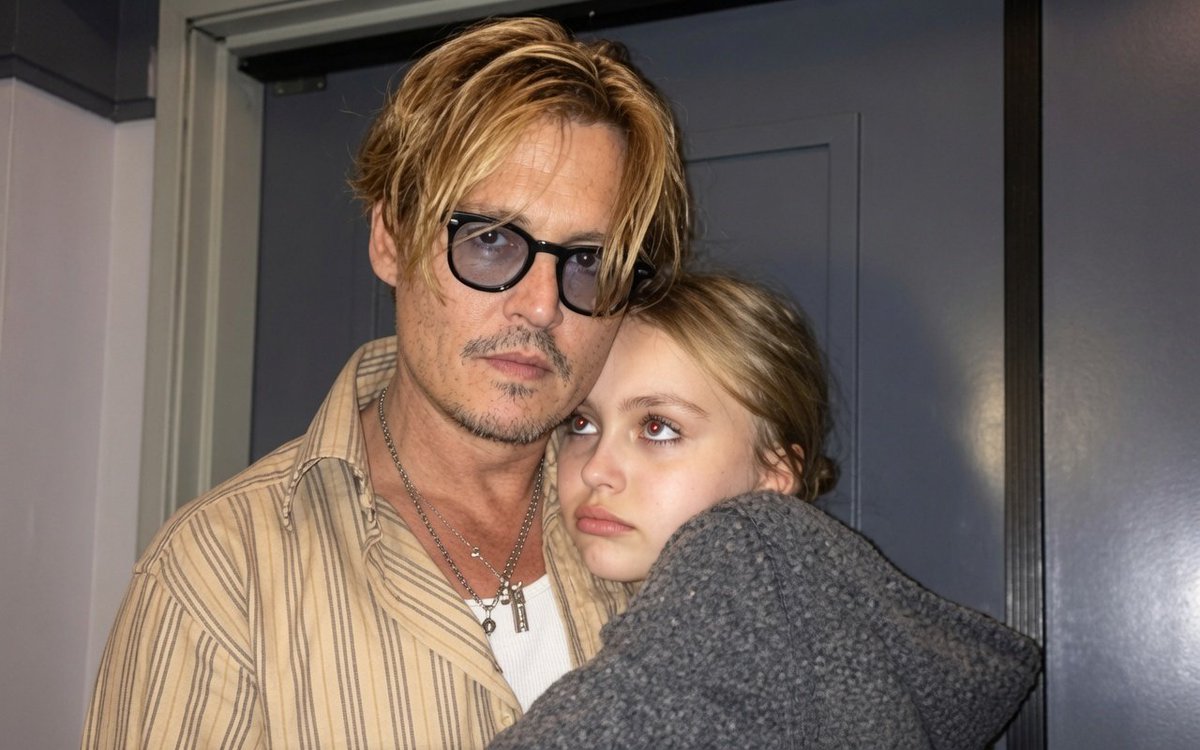
In 2007, actor Johnny Depp endured what he later described as the darkest period of his life when his seven-year-old daughter, Lily-Rose Depp, became critically ill after contracting an E. coli infection that caused acute kidney failure.
While Depp was filming Sweeney Todd in London, Lily-Rose spent about nine days receiving intensive treatment at Great Ormond Street Hospital, eventually making a full recovery.
Deeply moved by the care his daughter received, Depp developed a lasting connection with the renowned children's hospital.
In the months that followed, he returned dressed as Captain Jack Sparrow, bringing smiles to young patients, reading stories, joking with families, and spending hours visiting children undergoing treatment.
Reports also state that he donated approximately $2 million to support the hospital and its work.
Years later, Depp would reflect that his daughter's recovery changed his outlook on life forever.
20 June 1895 | A Czech Jewish woman, Anna Kleinerová, was born in Prostějov.
She was deported to #Auschwitz from #Theresienstadt Ghetto on 15 May 1944. She did not survive.
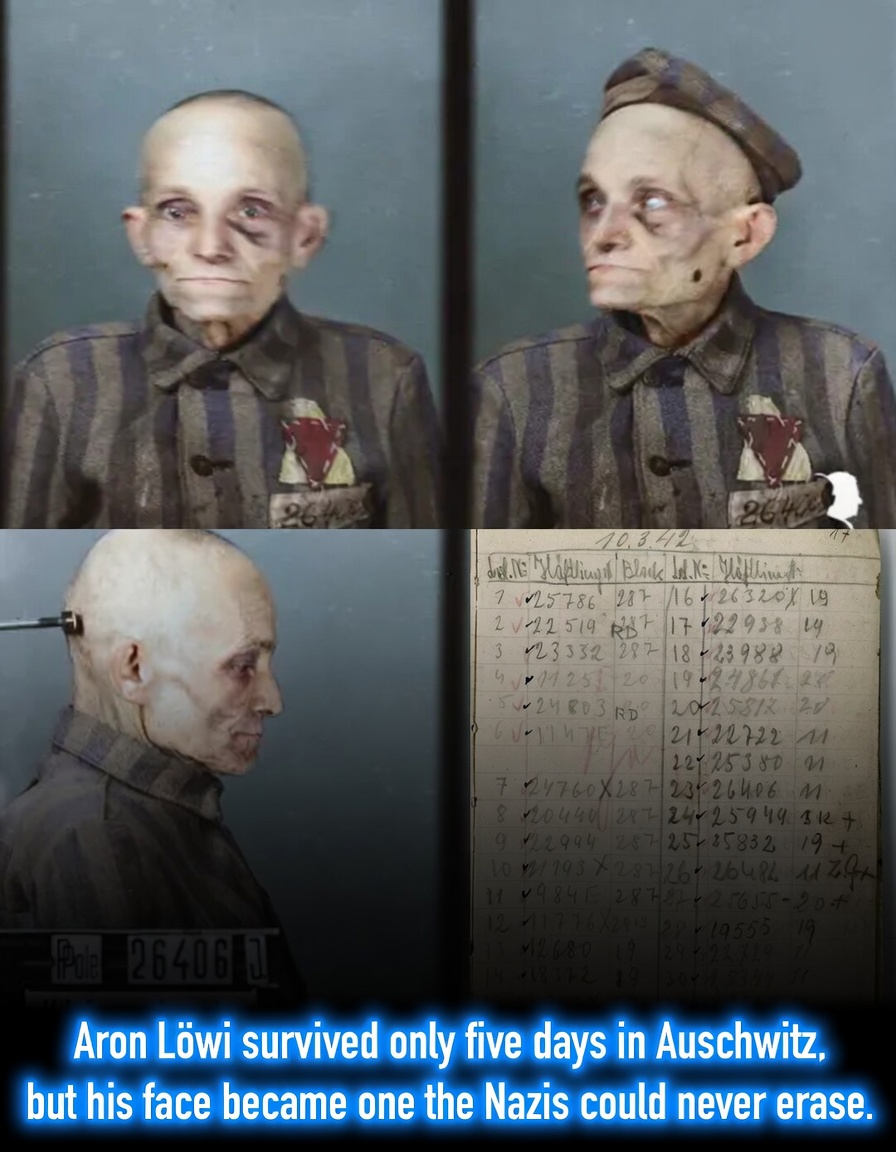
This is Aron Löwi, a 62-year-old Polish Jewish merchant from the small town of Zator. A husband, a neighbor, a man with a name, a family, and a life of his own.
On March 5, 1942, that life was brutally stripped away.
Upon arriving at Auschwitz, Aron was no longer seen as a human being. He became prisoner number 26406.
The haunting mugshots taken that day show a man already bruised, starved, and hollow-eyed, clear evidence of abuse even before he entered the camp. On his striped uniform were the badges of Nazi classification: a yellow star marking him as Jewish, and a red triangle labeling him a political prisoner.
Aron Löwi survived just five days in Auschwitz. He arrived on March 5 and was dead by March 10, 1942. His cause of death was never officially recorded, just one of millions dismissed as “unfit for labor.”
In five short days, the Nazis tried to erase a lifetime.
But they failed.
His face, his photograph, and his prisoner number remain. Every time we speak his name, we push back against the oblivion they sought to impose.
To remember even one is to resist forgetting them all.
Today was the day I was invited to Windsor Castle to receive my MBE from His Majesty King Charles III, what an amazing honour, I still can't believe it but now I can sit and look at it and feel such a sense of achievement Thank you @mariecurieuk you are all absolutely fabulous♥️
The hair started falling out first.
Then came the blackouts.
The crushing exhaustion.
The unexplained pain.
For years, Gisèle Pelicot knew something was terribly wrong with her body.
One day, she looked at her husband and asked directly:
“Are you drugging me?”
Dominique Pelicot looked offended.
He denied everything.
After nearly fifty years of marriage, she believed him.
Why wouldn’t she?
They had raised children together.
Built a life together.
Retired to a quiet village in southern France where people saw them as the perfect couple.
But in 2020, everything shattered.
Police arrested Dominique for secretly filming women under their skirts in a supermarket.
When investigators searched his computer, they uncovered something horrifying:
Thousands of videos showing Gisèle unconscious in her own bed while men assaulted her.
For nearly a decade, Dominique had allegedly crushed sedatives into her food and drinks before inviting strangers into their home to rape her while she was unconscious.
He filmed everything.
The men came from all walks of life:
firefighters, nurses, journalists, soldiers,prison guards, husbands and fathers
Many later claimed they thought she was pretending to sleep.
Others argued that because her husband allowed it, it must have been consensual.
But an unconscious person cannot consent.
Gisèle remembered none of it.
She only knew she was constantly sick, confused, exhausted, and slowly losing herself while the man she trusted most manipulated her reality.
Then came the trial.
French law would have allowed Gisèle to remain anonymous.
She refused.
At 72 years old, she chose to reveal her identity publicly and demanded an open trial.
Her reason was simple:
“Shame must change sides.”
For months, she sat through testimony and watched evidence of what had been done to her.
She listened while men tried to excuse the inexcusable.
And she never backed down.
In December 2024, all 51 defendants were convicted.
Dominique Pelicot received the maximum sentence:
20 years in prison.
Outside the courthouse, Gisèle said:
“I wanted society to see what was happening. I never regretted this decision.”
Her courage transformed the conversation in France around drug-facilitated assault, consent, and victim shame.
Because what made her story so powerful was not only the horror of what happened.
It was what she refused to carry afterward.
Silence.
Embarrassment.
Shame.
She handed those back to the people who deserved them.
Gisèle Pelicot showed millions of survivors something the world too often forgets:
The shame does not belong to the victim.
It belongs to those who chose to harm them.
28 May 1933 | A French Jewish girl, Simone Kastenbaum, was born in Paris.
She arrived at #Auschwitz on 31 August 1942 in a transport from Drancy. After the selection she was murdered in a gas chamber.
In 2005, a young Harry Kane posed for a photo with David Beckham alongside a female teammate. Thirteen years later, Kane had become captain of the England national team, and the girl standing beside him had become his wife.
She Was 37. Broke. Dying. And She Made 30 Million People Laugh Every Week. Erma Bombeck didn’t have an office. She had a typewriter on a wood plank in her bedroom. She didn’t have time. She had three kids and a disease that was killing her.
Ohio. 1965.
Erma was 37, a mom in Centerville, Ohio. Laundry never ended. Kids destroyed the house daily. Dishes reappeared like magic. Everyone said motherhood was “sacred.” “The highest calling.”
Erma thought it was also messy. Loud. And funny as heck.
So she walked into a tiny local paper and asked to write the truth. Not the perfect mom version. The real one. They said, “We’ll pay you three dollars per column.”
She said yes.
She went home, put a typewriter on a plank between two cinder blocks, and got to work. No desk. No fancy setup. Just her and the chaos.
She wrote about the septic tank exploding during dinner. About trying to get three kids to school without losing her mind. About “the beautiful absurdity of a life spent making other people's lunches”.
Three weeks after a bigger paper found her, she went national. Soon, “At Wit's End” ran in 900 newspapers. “Thirty million readers. Twice a week. Every week.”
Erma became the most-read humor writer in America.
Why? Because she said what no one else would. “She told the truth about motherhood when polite society insisted it must remain perfect.” She joked about selling her kids. Told moms to “lock the bathroom door and hide from their families for five minutes of peace.”
Thirty million women read it and thought: “Oh my God. Someone finally said it.”
Phil Donahue was her neighbor. He said, “Motherhood was sacred. Mothers were put on pedestals. Then Erma wrote, 'I'm going to sell my kids.' She punctured that pretense and was suddenly speaking for millions.”
But here’s the part nobody knew: Erma was dying the whole time.
At 20, doctors told her she had polycystic kidney disease. Incurable. They said she’d never have kids. She adopted a daughter. Then somehow had two sons.
For decades, she did dialysis and came home to write. “She made America laugh while quietly fighting to stay alive.” She never complained. Never asked for pity. “She just kept writing.”
She grew up poor in Dayton. Dad died when she was nine. At 13, she wrote for her school paper. At 15, she got a job at the Dayton Herald. A professor told her: “You can write.” So she did. For 31 years. Over 4,000 columns. 15 books. Nine bestsellers. 15 million copies sold. Eleven years on Good Morning America.
She wrote survival guides disguised as jokes. Titles like The Grass is Always Greener Over the Septic Tank. If Life is a Bowl of Cherries, What Am I Doing in the Pits?
She beat breast cancer in 1992. Finally told the world about her kidney disease in 1993. Got a transplant on April 3, 1996. Wrote her last column 14 days later. Died five days after that. April 22, 1996. She was 69.
She’s buried in Dayton under a 29,000-pound boulder from Arizona. Big as the laughs she gave us.
Think about it. She started at 37 — when the world says women are done. For three dollars a week. On a plank. While on dialysis. While dying. “And she never stopped being funny.”
Because “humor isn't the opposite of pain. It's how you survive it.”
She once wrote, “Success is outliving your failures.” She did.
Not because she got famous. But because 30 million people picked up a paper and felt less alone. She told them: Motherhood is hard. You’re tired. You’re not failing. You’re human.
“Before Erma, mothers were supposed to be saints. After Erma, they were allowed to be people.”
She was 37 when she started. Dying the whole time. Wrote till five days before she died.
Erma Bombeck (1927-1996). A housewife. A typewriter. Three dollars. Thirty million readers. And the belief that ordinary lives are worth writing about.
“Not despite their ordinariness. Because of it.”......................
Happy 95th birthday to Holocaust survivor Julia Wallach!! Julia was born in Paris, France on June 14, 1925. Nazi troops entered the city on that same day in 1940. Julia hid with her father until they were arrested in 1943 and sent to the Drancy internment camp. She survived Auschwitz-Birkenau and a death march to Malchow and Ravensbrück before being liberated in April 1945. Today, Julia lives in Paris where she and her granddaughter Frankie have made short films, including one that premiered at yad vashem last spring. The amazing duo never fails to make us smile with their lively spirit and infectious sense of humor. ❤️ Joyeux anniversaire, Julia! Ad 120!
@creepydotorg It’s disturbing that a non-essential procedure could end in strokes, paralysis, and lifelong damage. People deserve to know the real risks before trusting anyone with their spine and neck.
Prayers for Caitlin and strength to her family through everything they’ve endured.