TODAY'S LESSON IN IRONY…
THE FOOD STAMP PROGRAM IS ADMINISTERED BY THE U.S. DEPARTMENT OF AGRICULTURE. THEY PROUDLY REPORT THAT THEY DISTRIBUTE 40 BILLION FREE MEALS & FOOD STAMPS TO OVER 37 MILLION PEOPLE ON AN ANNUAL BASIS.
MEANWHILE, THE NATIONAL PARK SERVICE, RUN BY THE U.S. DEPARTMENT OF THE INTERIOR, ASKS US, "PLEASE DO NOT FEED THE ANIMALS". THEIR STATED REASON FOR THIS POLICY BEING THAT..
"THE ANIMALS WILL GROW DEPENDENT ON THE HANDOUTS, AND THEN THEY WILL NEVER LEARN TO TAKE CARE OF THEMSELVES".
THIS CONCLUDES TODAY'S LESSON.
ANY QUESTIONS?
I'm participating in Bike MS: MS 150 MN 2026 to raise money for the National MS Society. The Society is the best investment to solve the challenges of multiple sclerosis and to ultimately find a cure. Cheer me on — donate today! https://t.co/CNlzHufPWl via @DonorDrive
A gentle waterfall. Warm sunlight on your face. The sound of your own footsteps. A deep breath of fresh air.
Gratitude isn’t loud. It’s quiet. It’s choosing to see the good even when the outside world feels heavy.
What small thing are you grateful for today?
In a world that constantly pressures us with deadlines, notifications, expectations, noise; it’s easy to forget how much beauty and peace is hiding in the ordinary.
Today I’m reminding myself (and you): Pause. Breathe. Notice the small things.
30 eventos canónicos en la vida de un hombre:
1.Ver a tu papá empezar a envejecer
2.Intentar cambiar a una chica fiestera
3.Darte cuenta de que formaste a una mujer para el siguiente hombre
4.Perder a una buena mujer porque no estabas listo
5.Ver a tus amigos avanzar mientras tú sigues estancado
6.Aprender por las malas que la lealtad no siempre es recíproca
7.Tu primer corazón roto que termina llevándote al gimnasio
8.Entender que nadie viene a salvarte
9.Tu primer golpe fuerte de la vida real
10.Trabajar en algo que odias solo para pagar cuentas
11.Descubrir que la disciplina vale más que la motivación
12.Que un amigo en quien confiabas te traicione
13.Entender que la paz vale más que la atención
14.Aprender que el dinero sí importa
15.Ver a tus padres envejecer y sentir que el tiempo se acelera
16.Perder amigos que creías que eran para toda la vida
17.Que la mujer que querías elija a otro
18.Entender que el respeto no se pide, se gana
19.Descubrir que la soledad también puede ser tranquilidad
20.Aprender a quedarte callado cuando antes habrías reaccionado
21.Intentar construir algo grande… y fracasar
22.Descubrir que algunas personas solo te quieren por lo que das
23.Entender que el tiempo es lo único que no vuelve
24.Aceptar que la vida no es justa
25.Aprender a irte sin dar explicaciones
26.Convertirte en el hombre que necesitabas cuando eras joven
27.Dejar de vivir para la aprobación de otros
28.Cambiar placer inmediato por crecimiento real
29.Entender que el éxito tarda más de lo que creías
30.Finalmente entender a tu padre
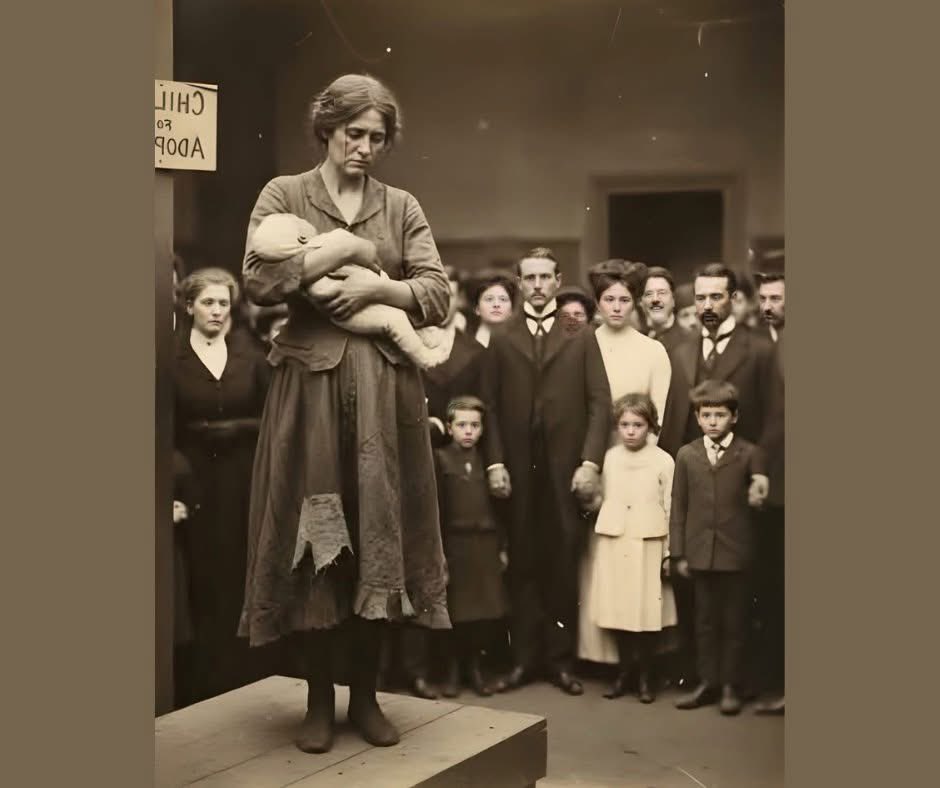
“On March 15, 1907, Anna Kowalski stood in a foundling home holding her three-month-old son, Josef.
Around her stood dozens of strangers — couples with hopeful eyes and steady means — all waiting to choose a child.
Anna had no real choice of her own.
Her husband had been killed in a factory accident. She was left with five children, no income, no relatives to help, and eviction looming. If she kept Josef, all of them would starve. If she gave him away, at least one of them might live.
The institution called these gatherings placements.
In truth, they were quiet rooms of survival — where desperation was dressed up as charity and love was forced to look like surrender.
People asked questions about her baby as if he were an object:
Was he healthy?
Did he sleep well?
Any illness in the family?
Anna answered softly, clutching Josef tighter with every word.
Then a wealthy couple from the Upper East Side stepped forward. They had no children. They promised security, education, a future Anna knew she could never provide. She looked at the woman’s clean dress, her hopeful smile, her open arms — and then down at Josef’s sleeping face.
She knew the truth.
Once she let him go, she would never see him again.
There would be no letters.
No visits.
No proof he was alive.
When the photographer captured the moment, Anna stood frozen — holding her baby for the last time. Behind her, other mothers waited their turn. In front of her, strangers waited to take her child.
And then she handed Josef over.
Afterward, Anna stood in that room with empty arms, sobbing so violently she had to be led outside. She went home to her remaining children and worked herself to exhaustion to keep them alive. She never spoke Josef’s name aloud again.
Anna Kowalski died in 1943 at the age of 61, worn down by years of labor and loss.
At her funeral, a well-dressed man stood quietly in the back. He was 36 years old. His name was Joseph Lawrence — born Josef Kowalski.
Adopted as an infant.
Raised in comfort.
Loved deeply.
At twenty, he learned the truth. And for decades, he searched for the woman who had given him life.
He arrived three months too late.
At the funeral, he held a photograph of a young woman clutching a baby — his mother, holding him on the day she gave him away.
“She didn’t abandon me,” he said softly.
“She saved me.”
“She chose hunger for herself so I could live. She gave me away not because she didn’t love me… but because she loved me more than herself.”
He paused.
“I would give anything,” he whispered,
“to tell her that I understand now.”
I got a piece of mail last month that didn't belong to me. It had my address, but the name was "Sarah Jenkins."
It looked official, so I didn't throw it away. I asked the landlord, and he sighed. "Sarah was the tenant before you. Single mom. She got laid off and evicted. Left no forwarding address."
I looked down at the letter. The envelope was slightly torn, and I could see the words: Final Notice - Storage Unit Auction. All her worldly possessions, her kids' baby photos, her memories, were going to be auctioned off on Friday for a $300 unpaid bill. It was Wednesday.
I don't know why, but I couldn't let it go. I posted on our neighborhood Facebook group, asking if anyone knew her. Within an hour, someone messaged me. They had seen her working the drive-thru at a fast-food place a few towns over.
I drove there. I ordered a coffee, pulled up to the window, and there she was. She looked exhausted.
"Sarah?" I asked.
She looked startled. "Yes?"
I handed her the letter. She looked at it, and the color completely drained from her face. She covered her mouth to stifle a sob. "I get paid next week," she whispered. "It's too late. It's everything we own."
"No, it's not," I said. I handed her a second envelope.
After I found out where she worked, I updated the neighborhood group. Forty-two neighbors—people who had only ever waved at her in passing—Venmo'd me money.
Inside the envelope was $800 in cash.
"Pay the unit," I told her, my own eyes watering. "Buy some groceries. Your old neighbors miss you."
She gripped my hand through the drive-thru window and wept.
Sometimes people don't fall through the cracks because they are lazy. They fall because nobody is holding the net. Be the net.
Anonymous
My Grandparents Were Married For 60 Years.
One Day I Asked My Grandfather:
“What’s The Secret To Loving The Same Woman For A Lifetime?”
He didn’t laugh.
He didn’t say “communication.”
He didn’t say “date nights.”
He looked at my grandmother, who was in the kitchen, and said:
“You don’t love the same woman.”
That confused me.
He said, “She changes every few years. And if you don’t update the way you love her, you lose her.”
He told me the girl he married at 22 wasn’t the same woman at 30.
Motherhood changed her.
Loss changed her.
Time changed her.
“At 40,” he said, “she needed respect more than romance.
At 50, she needed partnership more than passion.
At 60, she needed presence more than promises.”
And every time she changed, he had a choice:
Complain that she’s “not like she used to be.”
Or learn her again.
He said the biggest mistake men make is this:
They fall in love once.
Then stop paying attention.
“Loving a woman for a lifetime,” he told me,
“is deciding to stay curious about her.”
Not assuming you know her.
Not freezing her in the version you met.
He leaned back and said something I’ll never forget:
“If you stop studying her, someone else eventually will.”
Sixty years.
Not because it was easy.
Because he kept relearning her.