One of the most exciting and philosophically rich, but hard, questions re models: what does it take to say a neural network is truly/faithfully/really implementing a feature? Here we describe parasite features, which makes the big question above seem...well, I guess even harder.
@caiquelvv@joaolviotti@AriDeiaMaria@toninhodocall Caique, acho que ele passou, em 2015, como DE e após o período do estágio probatório, pediu a remoção da DE e ficou como professor 20h ou 40h, mas sem DE. Isso é um processo legal e possível para professores que passaram em concursos DE, desde que aprovado pelo departamento.
Our paper, “The Geometry of Low-Resource Language Representations” (w/ @janbuys), has been accepted to #EMNLP Main!
We study the geometry of representation spaces across LLM layers and analyse differences between low- and high-resource languages.
Paper: https://t.co/J7tbHBVNGK
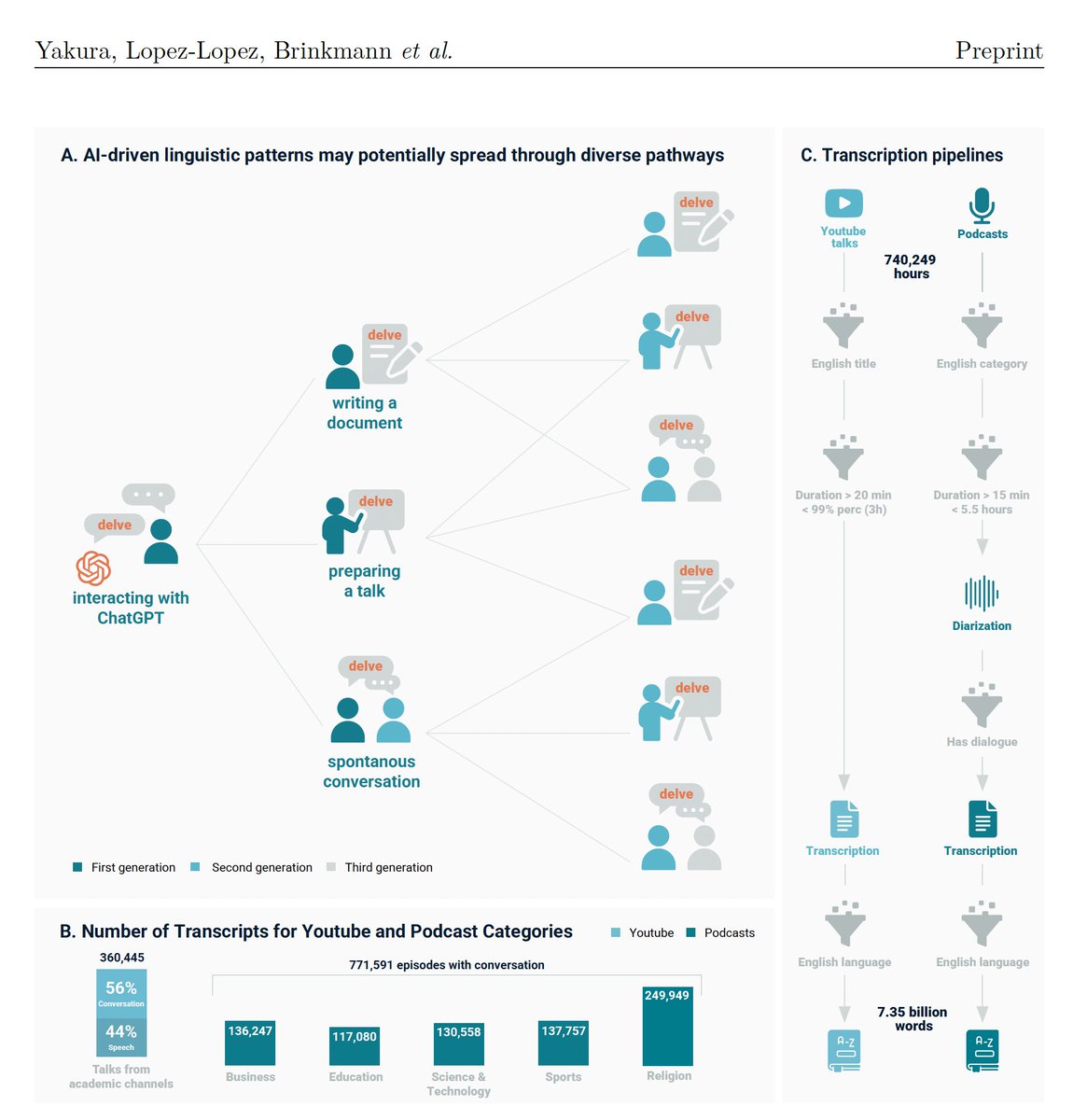
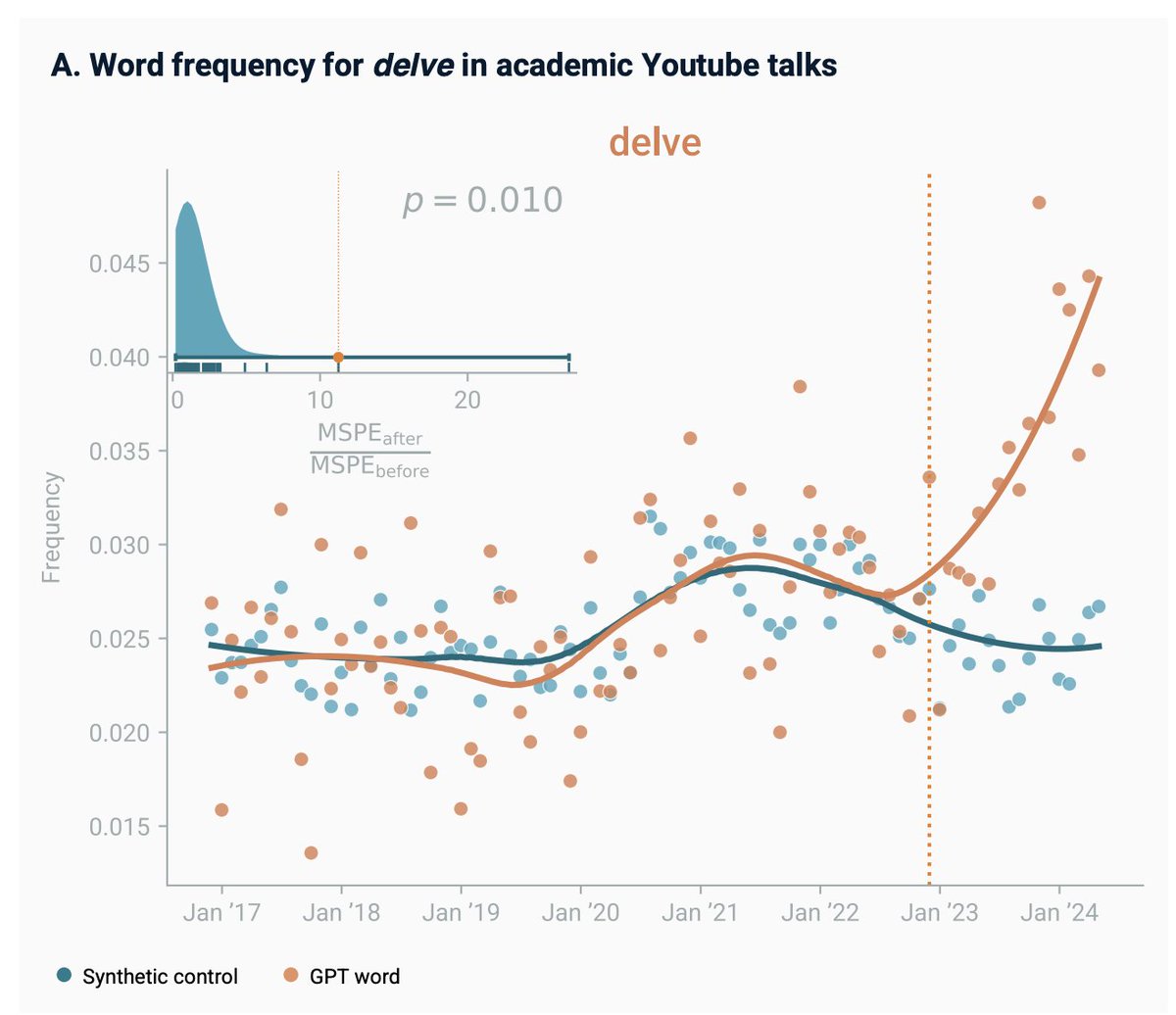
Pesquisadores analisaram 740 MIL horas de vídeos e podcasts e descobriram algo perturbador:
palavras favoritas do ChatGPT estão se espalhando na fala humana
Deixa eu explicar 👇
@guiltyaswalle O que a gente fez foi mais incrível. Nós pegamos a língua do colonizador e adaptamos com o léxico (palavras) e sintaxe (estrutura) das línguas africanas e indígenas: caçula, coringa, tanga… todas palavras do nosso português do Brasil que tem outras origens!
Just published: Children are not the main agents of language change 🚩🚩🚩
Despite a long standing belief that acquisition errors by young kids are the source of language change, here we show that this idea is poorly supported by empirical evidence. Read:
https://t.co/nVPAovnTMT
what if one person’s curiosity could spark the entire digital revolution?
> this book tells the story of claude shannon; the genius who invented information theory and quietly built the foundation of the information age.
> perfect for engineers, mathematicians, and anyone who wants to understand the mind that made the modern world possible
Humans largely learn language through speech. In contrast, most LLMs learn from pre-tokenized text. In our #Interspeech2025 paper, we introduce AuriStream: a simple, causal model that learns phoneme, word & semantic information from speech.
Poster P6, Aug 19 at 13:30, Foyer 2.2!
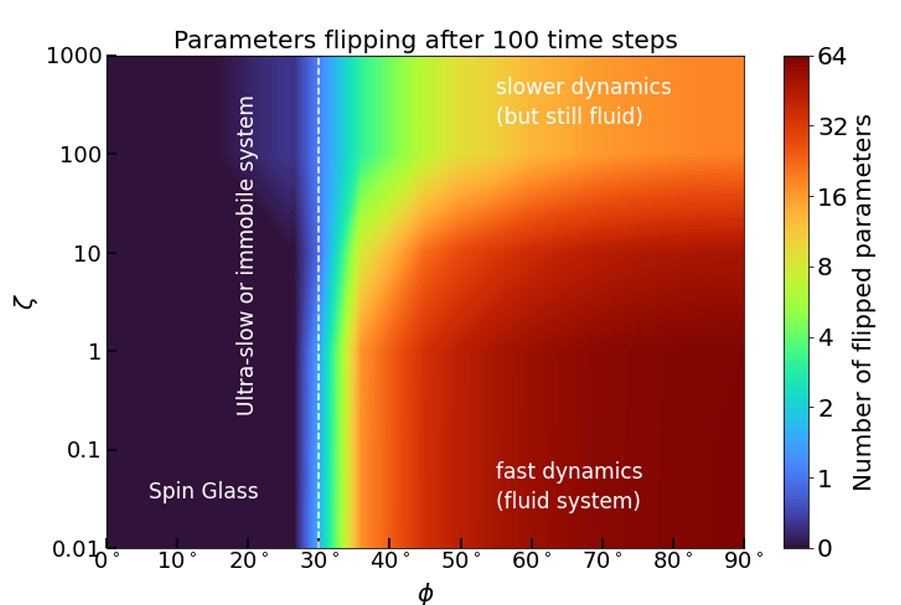
If languages are optimally designed, why do they change?
If they change to become optimally effective, why do they change so slowly and diversify?
👆Because disorder, rather than efficiency, may play a dominant role in language change and evolution
https://t.co/T5k3oN8tXO
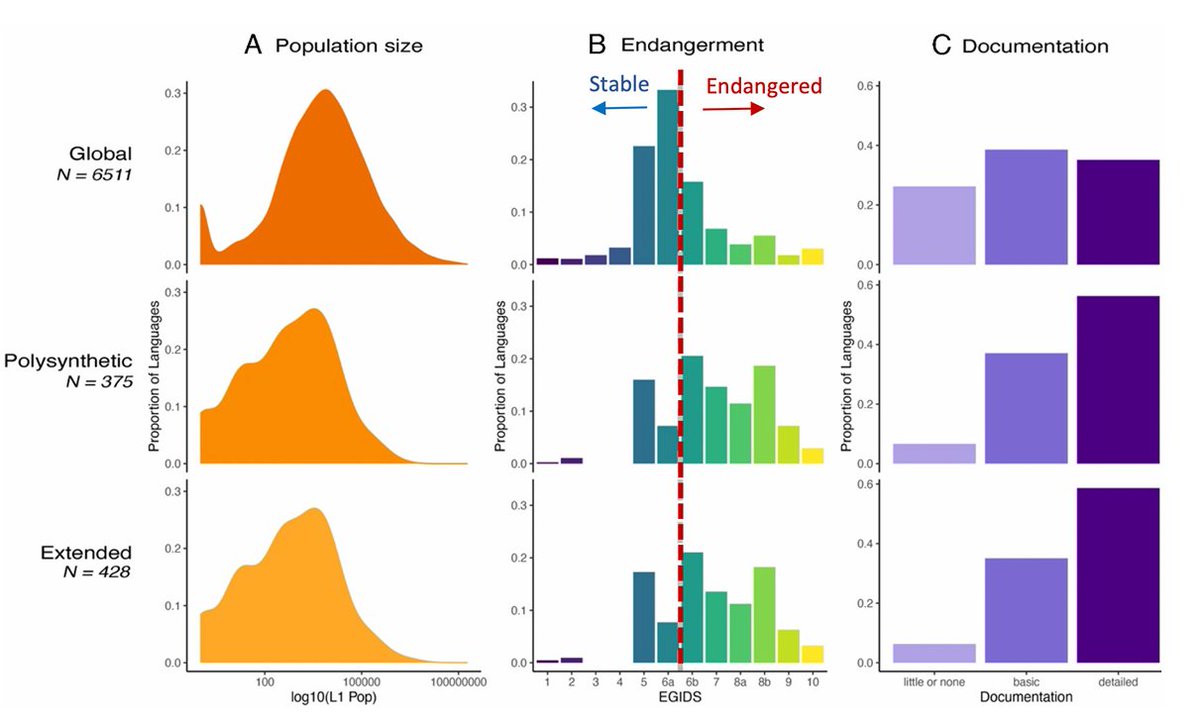
Macroevolutionary analysis of polysynthesis shows that language complexity is more likely to evolve in small, isolated populations
https://t.co/PtQqdUDcxF
New paper: "Large Language Models & Emergence: A Complex Systems Perspective" (D. Krakauer, J. Krakauer, M. Mitchell).
We look at claims of "emergent capabilities" & "emergent intelligence" in LLMs from perspective of what emergence means in complexity science.
⬇️
One further comment on this: when the Oxford Handbook of Language Evolution came out in 2011 when I was a lowly MA student I was thinking what a dream it would be to be featured in an Oxford Handbook on this topic. Now it finally happened!