It's amazing how QC simulator developers can report "quantum supremacy" experiment fidelity, and then the hardware providers argue its invalid because the noise profile is nonphysical, and we're all like, "Yeah, that makes sense: the wrong part of the answer is wrong!"
@Grownded@WKCosmo Made sense when I learned it via the physics department. Some of us would rather not invest the energy to learn (complicated, formal) subjects that list as selling point that have no application to human life and physical reality.
@WKCosmo In my first high school calculus class, I solved (I believe successfully) the questions on the first test with pure geometry; I saw no motivation for calculus. I was advised to drop the class.
It was when I took physics, that I suddenly saw the point; that made it make sense.
Two things I find graduate students are almost universally unwilling to accept are:
— Energy isn't conserved in cosmology
— Black holes are vacuum solutions
Not sure what that says about how we teach physics.
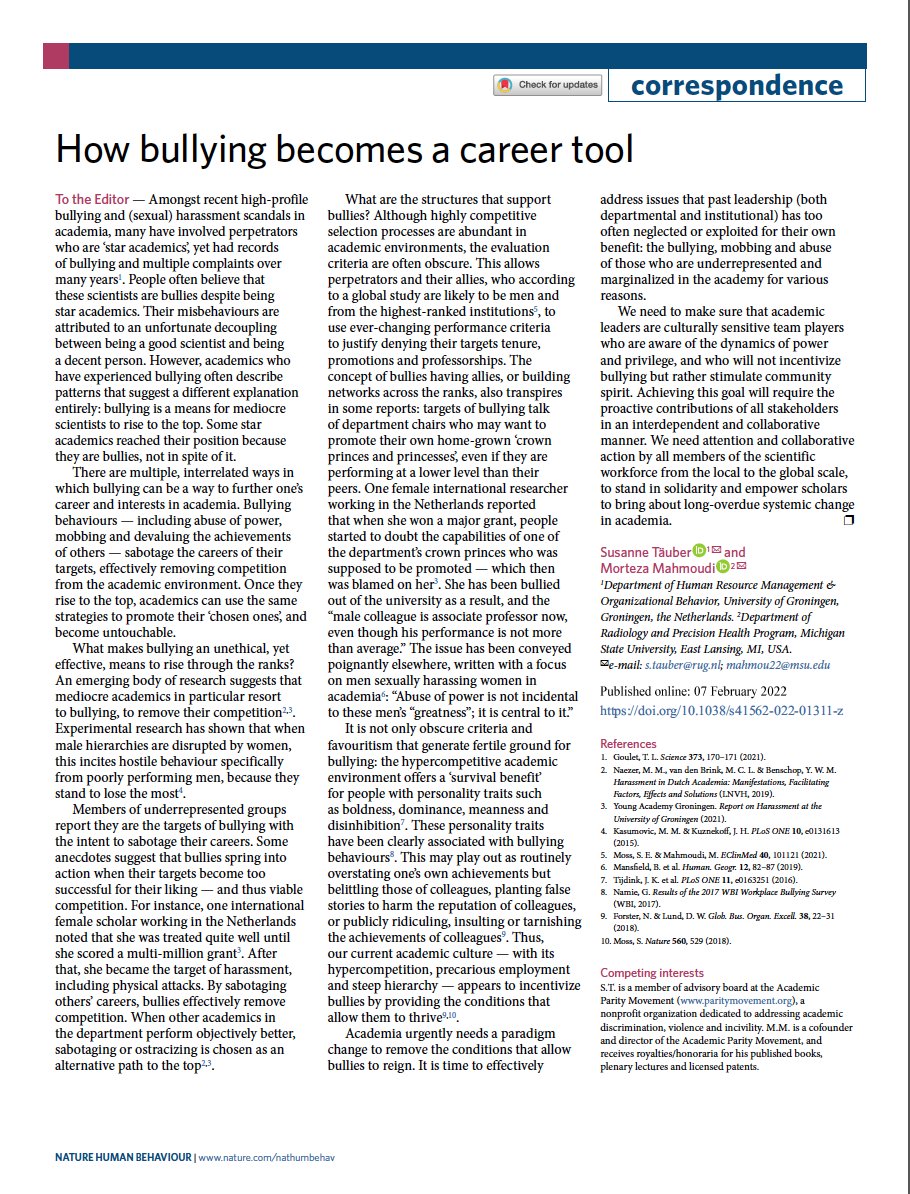
"Bullying is a means for mediocre scientists to rise to the top. Some star academics reached their position because they are bullies, not in spite of it." - Excellent piece about bullying in academia (and really any other professional environment). https://t.co/JTqGBaAuuf
By the way, Schwarzschild metric as a canonical solution to the Einstein field equations lacks accounting for thermodynamic evaporation... which seems wrong, by today, if regarded as a complete model in itself.
Q&A:
"Dumb" Q: Why aren't Schwarzschild coordinates valid on the interior?
"Smart" A: They just make no physical sense.
My "dumb" 2019 A: They actually do, if we accept the sign flip on "g_tt" and "g_rr" and effectively on the metric tensor signature.
https://t.co/WOzSISgtf1
Was this confused hobbyist work? That's what I was told, and maybe.
It "looks like" FLRW, at least superficially, when this code runs, by the way. (And it's de Sitter.)
By the way, avail yourself of the common misconception that CUDA is inherently faster; in single-GPU DFT benchmarks to 2^27 amplitudes in width, both execute in almost exactly the same time. (We produced QEngineCUDA by an almost line-for-line API translation from QEngineOCL.)
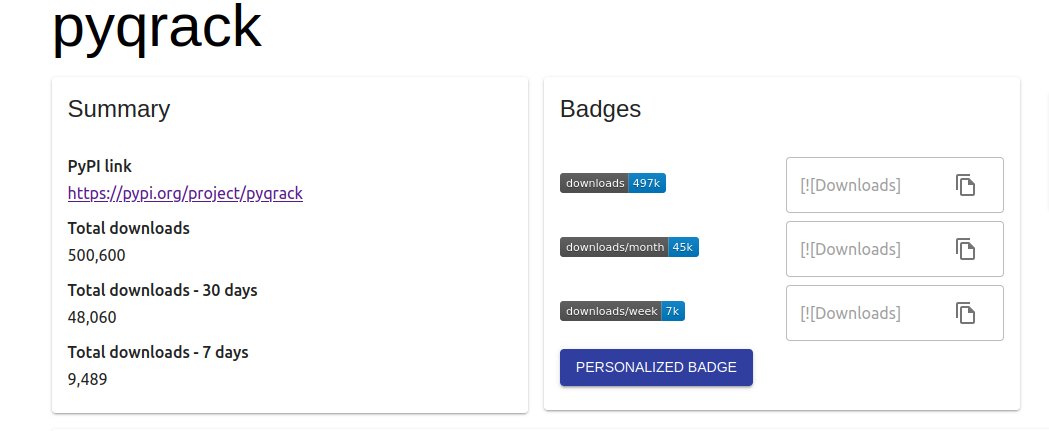
#Qrack has always supported #OpenCL acceleration, but now you get optional #CUDA, as well! As a result, we should be able to leverage NVIDIA's data transfer hardware gimmicks like NVLink and SLI, in Qrack's default optimal layer stack (with "QUnit")!
https://t.co/S3FswQ5Ev9
NAND prices are cratering at the moment, and that's half the system build!
We also gave a total debugging and parallelization overhaul on the (CPU-based) quantum binary decision tree ("QBdt") layer... 🤔
(Search "Robert Wille" for a line on the research that inspired our QBdt.)
By the way, we realized around Christmas that 8 NVMes in RAID 0 configuration (with at least 4 PCIe lanes apiece) as Linux swap disk can just barely or almost keep full utilization pressure on a recent 64 hyper thread AMD running Qrack, (but ask @twobombs).
Better than DIMMs! 🤣
I've been a professor for 22 years now, and written five pop-science books, but when I need to type "Schrödinger" I still copy-and-paste it from a Google search as the fastest way to get the dots over the o in the right place.
I mean, for example, Sanderson clearly had a better theoretical physics model of atomic electronegativity, as far as theoretical physics goes, but Pauling wasn't grossly wrong, and Pauling's scale is still seemingly in more common usage.
Believe it or not, a hypothesis doesn't have to "come from anywhere" in order to make a falsifiable prediction that can ultimately be proven true or accurate, empirically. (You can absolutely just literally guess.)