🚨SHOCKING - FIR against Malabar:
A man walked into a Malabar Gold showroom in Bilaspur with a simple request: exchange his old 22-carat HUID-hallmarked bracelet.
The staff ran it through their XRF machine. Once. Twice. Three times.
Every reading came back the same: 20 carat.
They even told him the hallmark didn’t exist.
He called the local jeweller who had sold him the bracelet. The jeweller walked in, confirmed the HUID, and asked them to test it again.
Same machine. Same bracelet. Same room.
This time an employee adjusted something on the machine. Suddenly the reading flipped to 916 - pure 22 carat.
The jeweller recorded everything. The Sarafa Association arrived. Police registered an FIR against the showroom manager and the machine operator. The machine and DVR were seized.
This wasn’t a small local shop. This was Malabar Gold “the chain that advertises trust, purity, and BIS standards across India”.
One bracelet. Two readings. An 8% gap in gold value. And the only thing that changed was who was watching.
If a hallmarked piece can magically lose two carats the moment a customer wants to exchange it, and magically regain them the moment someone pushes back, what exactly is the machine testing?
Customers don’t walk into Malabar expecting a calibration error that only appears when they’re selling gold.
They walk in expecting the purity printed on their receipt.
The FIR is real.
The readings are on record.
The machine was seized.
Malabar still hasn’t explained why the same piece of gold needed a “setting” before it became 22 carat again.
Until they do, this isn’t a machine glitch.
It’s a business model.
@PuneCityPolice@CPPuneCity
ज्या वाहनधारकांनी अजून पर्यंत एचएसआरपीसी नंबर प्लेट लावल्या नाहीत, त्यांच्यावर कारवाई कधी होणार.
When are you going to prosecute the vehicle holders who have not followed HSRPC Deadline.
Naval Ravikant's latest podcast with Chris Williamson is mind-blowing.
He revealed:
• Why he deleted his calendar
• Three decisions that determine 90% of your life's outcome
• Why most anxiety comes from a problem few understand
10 insights that'll transform your life:
Your body can’t function without this vitamin:
Vitamin D.
It regulates calcium, magnesium, and zinc—but if you take it incorrectly, it can do more harm than good.
Here’s how to optimize Vitamin D for maximum energy, immunity, and fat loss:
@PCcityPolice बुलेट क्रमांक MH 14 FL 5581, चे सायलेन्सर मॉडीफाय केलेले आहे.
रोज संध्याकाळी न्यू D.P. रोड रहाटणी, RSF फिटनेस क्लब च्या समोर, जोर जोरात फटाके फोडले जातात, खूप त्रास होतोय. बुलेट चालव��ारी मुले 18 वर्षा खालील आहेत, योग्य ती कारवाही करा 🙏.
@PCcityPolice बुलेट क्रमांक MH 14 FL 5581, चे सायलेन्सर मॉडीफाय केलेले आहे.
रोज संध्याकाळी न्यू D.P. रोड रहाटणी, RSF फिटनेस क्लब च्या समोर, जोर जोरात फटाके फोडले जातात, खूप त्रास होतोय. बुलेट चालवणारी मुले 18 वर्षा खालील आहेत, योग्य ती कारवाही करा 🙏.
“The hate of men will pass, and dictators die, and the power they took from the people will return to the people. And so long as men die, liberty will never perish…”
Charlie Chaplin, The Great Dictator
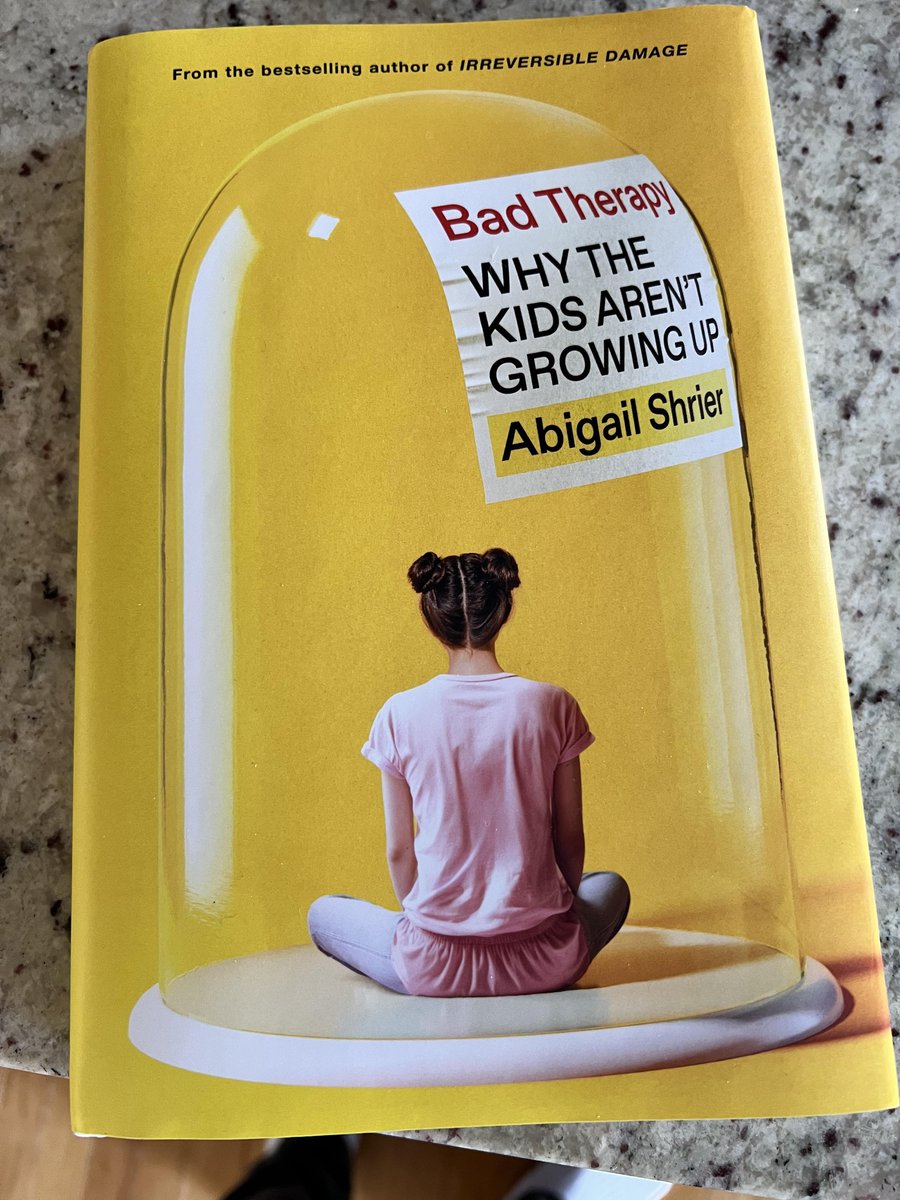
Just finished this book - Bad Therapy by @AbigailShrier
This is one of the most eye-opening books I've ever read. It's a must read for any parent, any teacher, and should be required reading for any school administrator as well.
The book dives into trying to figure out why kids are having so many mental health problems, when there are so many resources devoted to improving mental health outcomes.
Anxiety, depression, suicide, etc are all higher than they've ever been with kids, even though their lives are arguably better than ever before. It just doesn't make sense.
A few key takeaways from the book:
A constant attention on how kids are "feeling" or "thinking" is causing negative outcomes.
Constantly ruminating on your emotions and how you feel negatively impacts your mental health. If all you do is focus on your emotions, you are destined to be anxious or depressed.
We incessantly ask kids how they're feeling, if they're happy, how their mental health is, etc, and this is creating kids who think they're fragile instead of resilient.
Trying to solve every problem for kids has caused a generation who can't do anything for themselves.
We (Gen X) were told to "suck it up" or "you'll live" or "rub some dirt on it" all the time. Many of us came to the conclusion this is "bad parenting" because our feelings were neglected, and we vowed not to do this to our own children.
Because of that, kids immediately over-dramatize everything that happens to them, making mountains out of molehills, and thinking the world must revolve around their emotions and feelings.
You develop confidence and strong mental health by doing things, not by thinking or via therapy.
You can't think your way out of anxiety. You don't gain confidence by analysis of your thoughts or mental health issues.
You gain confidence and eliminate anxiety by doing gradually more difficult tasks, excelling at them, and realizing you are a competent, capable person.
The non-stop attention therapy gives to these small, common emotions we all feel blows them out of proportion to their seriousness (not talking about genuine disorders here, just normal anxieties that millions of people go to therapy to try to avoid).
One of the best ways to decrease your happiness is to chase it.
Our society constantly tells kids they should be "happy" and asks them if they are.
Happiness isn't a state you should be in 24/7. That's not realistic. Joy and bliss aren't permanent states - they are fleeting.
Contentment, stillness, and being even-keeled are much better goals to aim for mentally.
The happiest, most well adjusted kids come from families with loving parents that have strict rules for the household.
This one really set off the confirmation bias in me... I feel really blessed we have 2 well adjusted middle school kids who do great in school, are very respectful and well mannered, and we barely even need to parent them.
But for years, we were very strict with them. Bedtimes, family rules, how we do things, etc. The in-laws and lots of friends thought we were totalitarian.
In reality, we just had high standards. And it's really paying off right now. I found it really interesting that strict rules equals happy kids. Makes sense, though, as kids need to know what their boundaries are.
Constantly surveying school-age kids about their mental health causes more issues than it solves.
Mental health resources is big money. Districts need to validate all the resources allocated towards mental health, and they often do that via surveys.
Asking kids non-stop questions like:
- Have you thought about self harm?
- Have you thought about suicide?
- Have you been so anxious you can't get out of bed?
Etc, etc puts into their heads the idea that themselves, or many of their peers are broken and cannot function properly in the real world.
It normalizes situations that would be incredibly rare at any other time in history.
There's a lot of other takeaways, too, but I'll stop there.
It's a fantastic book. Go pick it up and read it. This isn't an affiliate thing or a promotion thing at all. I just really enjoyed it, and it will further shape the way I parent moving forward.
#WATCH | Jammu and Kashmir: A program was organized to celebrate the Shiv Jayanti at the Chhatrapati Shivaji Maharaj Statue in Kupwara, on the India-Pakistan Line of Control.
The soldiers paid their respect to Chhatrapati Shivaji Maharaj amidst snowfall and white ground all around in the vicinity with temperature with the level of mercury under 0 degrees.
(Video Source: DIO Pune)
Let's say, you invest 10 lakhs in the stock market.
It becomes 12 Lakhs after 2 years.
Now why are the indexation benefits, not given?
Think about this: the 20% returns you made (includes inflation).
In 2 year's time: the price of everything has gone up.
So why should you be paying capital gains tax on the principle amount (which has already been taxed at the time of investing?).
I'm genuinely trying to understand this.