Excited to share: Colleagues in community health, nursing, social work, urban planning and I are editing a Special Issue on "Dementia and Age-Equitable Planning: Analytics for Partnership" @tandfonline
Abstracts due March 2025. Submission details below: https://t.co/fUNldkCAGM
The EU @JPNDeurope has launched a new transnational call focused on health & social care for the moderate to late stages of neurodegenerative diseases.
CIHR-IA is proud to partner on this initiative, more details coming to ResearchNet next month! Stay tuned!
Excited to share: Colleagues in community health, nursing, social work, urban planning and I are editing a Special Issue on "Dementia and Age-Equitable Planning: Analytics for Partnership" @tandfonline
Abstracts due March 2025. Submission details below: https://t.co/fUNldkCAGM
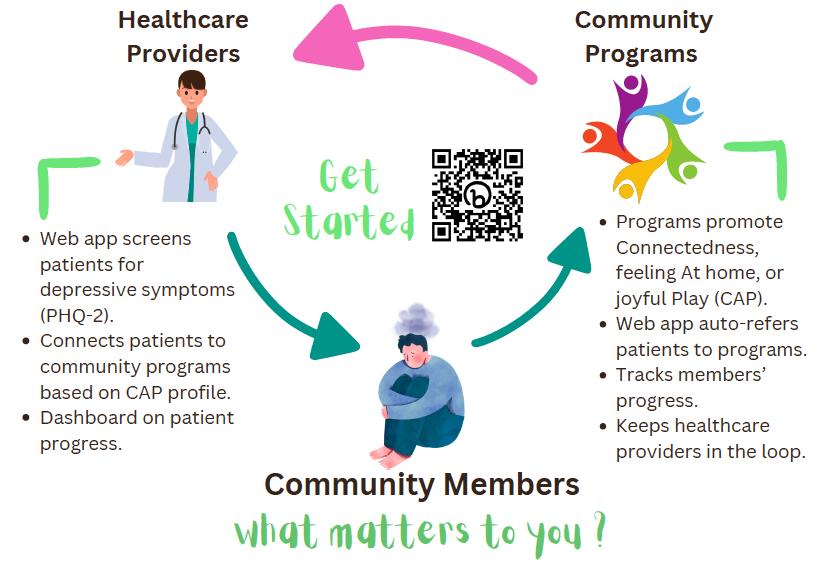
Very excited to share "Digital Social Prescribing Lite: Addressing Barriers of Preventive Integrated Care through Community Engagement" (Poster 407) with Drs. @AHoverman and @KateMMulligan at #GSA2024 this Saturday!
Methods presentation: "Brain Health in Community: Involving and Collaborating With Communities Yielded Unexpected Innovations" with @FrogHollowNH to follow https://t.co/WWPDCQ9uX8 #GSA2024#CEnR
Do we need more specialist or more generalist skills for the future? Some futurists predict that, in the age of AI, choosing to be a generalist will be a risky career move. Someone with broad, basic competence in multiple domains is likely to be overtaken by an AI language model.
However, there is a growing view that generalists will own the future. A generalist has something that language models don’t have: the capacity to learn quickly & see/solve novel problems in new domains. The person who thrives in the future might not be the expert who knows the exact answer to a question (specialist). Rather, it might be the one who knows which questions to ask in the first place (generalist).
https://t.co/PLqWwpOspZ.
By @danshipper via @FerraroRoberto.
Celebrating the last day of a CIHR postdoctoral fellowship which spanned 3 years with 4 major awards and 10 publications. Thank you @KateMMulligan, @FrogHollowNH and many mentor, co-authors and collaborators on the journey! 💙🧠👫👬
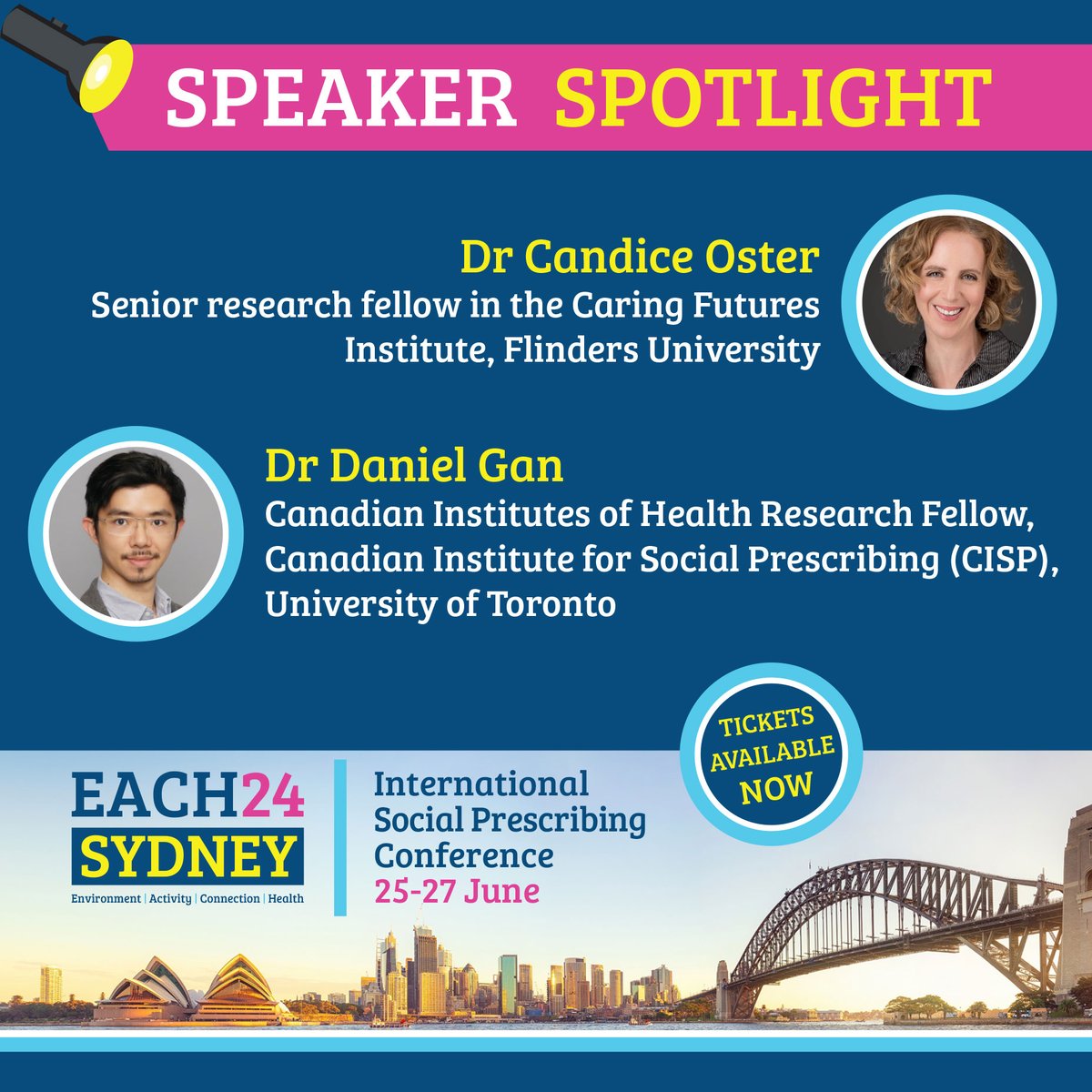
It was a pleasure to speak at #ISPC2024 yesterday. The main points I shared were:
1. From Needy to Needed: Emphasize the importance of community-led health and well-being by shifting the focus from viewing people who are supported as "needy" to recognizing them as needed. People are essential change agents for community and population health, not passive consumers. Ensuring that individuals feel valued and have meaningful social roles in promoting community health and well-being is crucial to their own well-being as well as their wider communities. People who are active contributors to creating a healthy community are acting in solidarity, not charity. Health beyond healthcare cannot be done to us or for us; we must do the work to place community at the center of healthier futures. Institutions remain necessary but insufficient to properly understand health as a social and political condition, not just a medical one. This is a direct challenge to the current dominant public narratives about health.
2. From Wrong to Strong: Prioritize building on strengths rather than focusing on deficits and labels, but avoid taking strengths for granted. Community development, social justice-based approaches, and an equity lens should be foundational and inform policies and practices throughout, instead of individualized therapy or lifestyle interventions as is currently the case.
3. From Supplanting to Supplementing: It is crucial, therefore, to shift policy and practice from Institutions that supplant community health creation to institutions that supplement it, moving from disabling to enabling states at all levels of government. This redesign is much bigger than Social Prescribing, and those who think Social Prescribing is the panacea are not paying attention. This level of co-becoming involves integrated care, neighborhood pooled budgets, community development, universal basic income, stronger trade union involvement, and a resurgence of the cooperative movements. To achieve all this, we must first relocate authority and equity to citizens proportionate to those who are experiencing structural inequality, racism, and economic poverty. As Isaac Prilleltensky has pointed out, "there can be no wellness without fairness."
4. From Charity/therapy to Solidarity: The bigger picture here calls us to set our sights beyond short-term relief action towards changing the social order that has led us up to this point. We require enabling states that support neighborhood belonging, community cohesion, and community control. That is how we’ll democratically respond to poly-crises and ensure proportionate universalism, as described by @MichaelMarmot
Achieving this vision of health beyond healthcare and hospitals towards health and community is about ensuring that those currently defined as having a problem secure the power to redefine the problem from sickness and fragmentation to wellness and integration.