Most of the victims in Arsi are Oromo, specifically Arsi Oromo. According to the BBC report, Orthodox Amhara militias have been fighting local armed groups for years. Unlike previous incidents, when they were able to kill Oromo civilians at will and no one is reporting, unfortunately for them, during this skirmish the unnamed local armed group defeated them. Some Orthodox Amhara militias were killed and others fled the area. Now, some Oromo Orthodox Christians and Amhara activists are flooding the media with false claims that innocent Orthodox christians were killed in Arsi.
To understand the root cause of the problem and understand who is behind this conflict, one should ask how on earth only Orthodox Amharas were allowed to carry arms where the Oromo are not? And, was the burned down church serving also as a command post for the Amhara militias? Does that makes it a legit target?
As an Oromo Orthodox Christian, I find the killings of Orthodox Christians in Arsi tragic and deserving of unequivocal condemnation, regardless of the victims' ethnicity. However, several claims in this argument deserve closer scrutiny.
First, the assertion that the victims are "predominantly Amhara" requires evidence. Arsi is home to large numbers of Oromo Orthodox Christians as well. Unless there is reliable data identifying the ethnicity of the victims, it is premature to frame the violence primarily through an ethnic lens. Doing so risks obscuring the experiences of other affected communities and may unintentionally reinforce the very ethnic narratives the author criticizes.
Second, attributing today's violence primarily to the post-1991 federal system oversimplifies a much more complex reality. Ethiopia has experienced political violence, state repression, religious tensions, and ethnic conflicts under multiple constitutional and administrative arrangements, including the very system Oboo Jambo appears to romanticize. The existence of violence today does not, by itself, prove that the current federal arrangement is its root cause.
Third, the claim that the pre-1991 provincial system "worked well" is highly debatable. The absence of officially recognized ethnic or religious conflicts does not necessarily mean the absence of ethnic or religious grievances. Many communities argued that the old systems marginalized their languages, cultures, religions, and political representation. A return to the old system may be one proposal, but it should not be presented as a sole solution. In my view, that model was already tried in practice and ultimately failed to create a durable and inclusive political order.
Fourth, while the research on implicit bias is valuable, it does not automatically support the conclusion that Ethiopia's current administrative structure is the primary driver of intergroup prejudice. Bias can emerge from political rhetoric, economic competition, historical grievances, religious extremism, media narratives, and conflict itself. In other words, the political system the author advocates would not be immune from these same dynamics. The relationship between governance structures and social bias is far more complex than the post suggests.
Finally, there are other factors that deserve attention. Some actors attempt to use religious institutions for political purposes, while extremist religious elements have also targeted the Orthodox Church. These dynamics cannot be reduced solely to governance systems.
The real challenge is not simply whether Ethiopia should have which governance systems. The challenge is how to build institutions that protect citizens equally, uphold human rights, strengthen democracy and self-governance, discourage political mobilization based on hatred, and maintain a clear separation between religion and politics.
If we are serious about preventing future violence & build a safe society, we need evidence-based analysis rather than explanations that place the blame on a single constitutional arrangement or on an entire generation raised after 1991.
As an Oromo Orthodox Christian, I object to using Orthodox Christian attacks to advance a particular political agenda. Equally concerning is the attempt by some actors to portray the Orthodox Church as if it speaks with a single political voice. The Church is home to millions of believers from different ethnic backgrounds, political perspectives, and social experiences. It should not be reduced to a vehicle for any one political project.
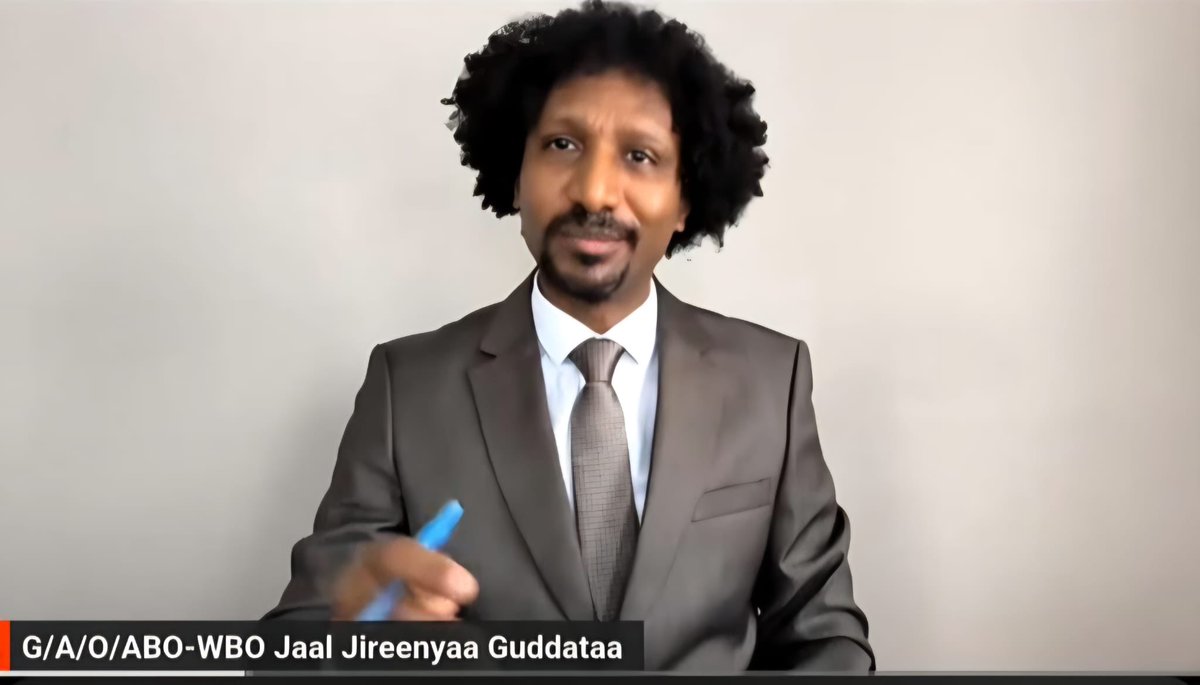
He was asked to defend against allegations of atrocities committed by the OLA. Instead of politely and systematically addressing the allegations, he resorted to confrontation and tried to embarrass the host. He wouldn’t do the same to an Amhara or Tigrayan host.
Jaal Jireenyaa Guddataa! Determined and fearless, as our great leader Jaal Marroo Dirribaa once declared, “He doesn’t like a lie.” True to those words, on the 6th of February, 2026, he stood firm and made the OMN director sweat in front of the entire nation—on his own media window 🪟. Faced with false allegations against our heroes and heroines, OLF-OLA—claims he himself could not even substantiate—he was forced to confront the truth and called upon to disclose what he could not prove. But, but… lies are never small matters. Lies will always be exposed, and they will never be taken lightly!!
#TruthWillPrevail #NoToLies #FearlessLeadership #JaalMarrooDirribaa #JaalJireenyaaGuddataa
#OLFOLA #StandForTruth #ExposeTheLie #Accountability
#HeroesAndHeroines #VoiceOfTheNation
It takes a significant lack of understanding to miss the insights being shared by the professor. As a key figure in z movements that led to z change in 2018, Professor Gabisa stands out as one of the few capable of articulating how this change was hijacked by the elites in Addis.
How much of a political and ideological loser do you have be, to actually believe there’s some sort of conspiratorial “Ethiopian-ist” cabal in Addis Ababa. Ezekiel Gabisa is a real clown🤡
In Somali region of Ethiopia, Oromos are totally banned from living there while Somalis from Mogadishu are the main business owners and first class citizens. By the way, Jijiga was an Oromo land some three decades ago.
#Somalia's
President Hassan Sheikh Jigjiga's speech:
Mogadishu youth dare to invest in the Somali region.
President Hassan Sheikh ''I came to Jigjiga 10 years ago, and there is a real change in the city. The people who do business here are from the Benadir region of Mogadishu
@RArarssa A nation that lacs political unity, strategic vision, coordinated defense, and solidarity is destined to fade away. History has shown us this reality time and time again.
@RArarssa Looking ahead over the next decade, it seems unlikely that anyone will openly identify as an Oromo without trepidation, nor will there exist a region known as Oromia within the Ethiopian empire, or any concept referred to as Oromummaa.
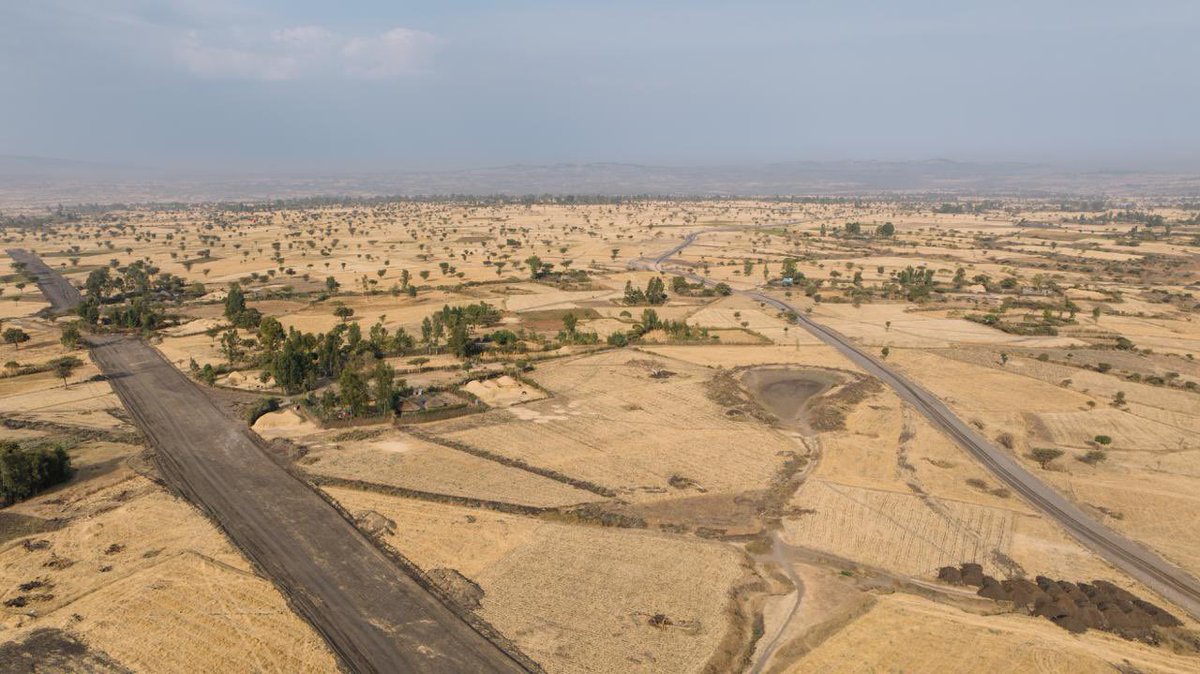
Thousands of farmers and their families farm and sustain their subsistence of this quiet land. Past experiences from the empire inform us that such mega projects bring misery to the residents rather than blessing as the PP leader often claims.
Today it’s quiet land. Tomorrow, it’s the heartbeat of travel and opportunity. This is where Bishoftu International Airport will come to life.
#FlyToEthiopia#VisitEthiopia#PMOEthiopia
Abiy is considering his options, but ultimately, he will choose a path that reflects the hopes and dreams of the Somaliland people. He is also aware of the frequently weak stance of Arab and Muslim countries when confronted with Israel and the United States.
What do you think is, the reason why Abiy Ahmed Ali is 🤫 silent..?
Ethiopia is the only country that has not yet spoken about the recognition given by the ISR to Somaliland, and so far Addis Ababa has not clarified its position on the issue while all countries in the region have clarified their positions.
Also, the leaders called by the Somali President do not include the Ethiopian Prime Minister, while Ethiopia is the last country visited by Somali President Hassan Sheikh Mohamud.
Many people are wondering why Ethiopia, the most influential country in the region politically and militarily, as well as the headquarters of the African Union, the largest African continental organization, has been silent.
Since the UAE has spoken on the issue,
The unassailable right of the people of Somaliland to self determination must be respected by all including the AU. You cannot trample on peoples rights in the name of non existent unity, sovereignty or independence.
#Breaking- #AU rejects recognition of #Somaliland, reaffirms “unwavering commitment to #Somalia’s unity and sovereignty”
The Chairperson of the African Union (AU) Commission, Mahmoud Ali Youssouf, has rejected any move to recognize Somaliland as an independent state, and reaffirmed the AU’s “unwavering commitment to the unity and sovereignty” of Somalia.
In a statement issued in response to what he described as “recent developments relating to Somaliland,” Youssouf said the African Union “unequivocally reaffirms the longstanding and consistent position of the African Union,” which it said is anchored in the principles of its Constitutive Act.
He stressed that the AU’s position is guided in particular by “the respect for the intangibility of borders inherited at independence, as affirmed by the 1964 decision of the Organization of African Unity,” the AU’s predecessor.
The AU Commission Chairperson “firmly rejects any initiative or action aimed at recognizing Somaliland as an independent entity,” the statement said, adding that “Somaliland remains an integral part of the Federal Republic of Somalia.”
The Chairperson also warned that “any attempt to undermine the unity, sovereignty, and territorial integrity of Somalia runs counter to the fundamental principles of the African Union” and that such moves “risk setting a dangerous precedent with far-reaching implications for peace and stability across the continent.”
The statement reiterated the African Union’s “unwavering commitment to the unity, sovereignty, and territorial integrity of Somalia,” while reaffirming the AU’s “full support for the efforts of the Somali authorities to consolidate peace, strengthen State institutions, and advance inclusive governance.”
The people of Somaliland have been struggling for independence and recognition for more than 30 years. This democratic right of the people must be respected by all neighboring countries including Djibouti and Somalia.
Northwestern Somalia “Somaliland” is an inseparable part of Somalia. It is, and it always will be. No amount of foreign meddling, Zionist backroom deals, or manufactured narratives will change that reality.
The coordinated efforts by Israel and their regional enforcers like the UAE to carve up Somalia—along with Yemen, Libya, and Sudan—will fail, just as they always do. These schemes are built on arrogance and exploitation, not legitimacy.
The people of these nations are not weak, not passive, and not for sale. They have endured war, sanctions, and interference—and they still stand. They have the courage and the will to defend their land, their sovereignty, and their future against these predatory alliances.
Fact: just open Google Maps and type in ‘Somalia.’ You’ll see one Somalia, period. Not the fantasy maps the secessionists and their Israeli/UAE sponsors keep pushing.
@addisstandard Recognition of Somaliland by the Israeli government opens a huge opportunity for Ethiopia to revive the stalled MOU and recognize Somaliland’s independence. Congratulations to the people of Somaliland! You fought hard for this important milestone and you deserve it big time!
The Ethiopian empire is trapped in a never ending cycle of war. It is now imminent that yet another war between Tigray and Ethiopia is on the horizon. As the saying goes, this may well be the straw that broke the camel’s back.
#Ethiopia: In an alarming escalation, authorities in the #Afar regional state say that “six villages were seized” and “civilians were shelled” in Magale Woreda of the Afar region by forces they claim belong to the #TPLF in the neighboring #Tigray region.
The authorities warned of retaliation if “hostilities continue.”
As of publication, Tigray regional authorities have not issued a statement regarding the reported incidents.
Read the news: https://t.co/M6m2kw255s
The number of civilians killed in Walaga and other parts Oromia over the past 6 or 7 years is not known. By Abiy's own admission, however, it is more extensive and probably more than those killed in Tigray, which is estimated in hundreds of thousands.
#BREAKING ― 🔥During his latest address to the House of People’s Representatives, PM Abiy Ahmed made a statement that stunned many Ethiopians:
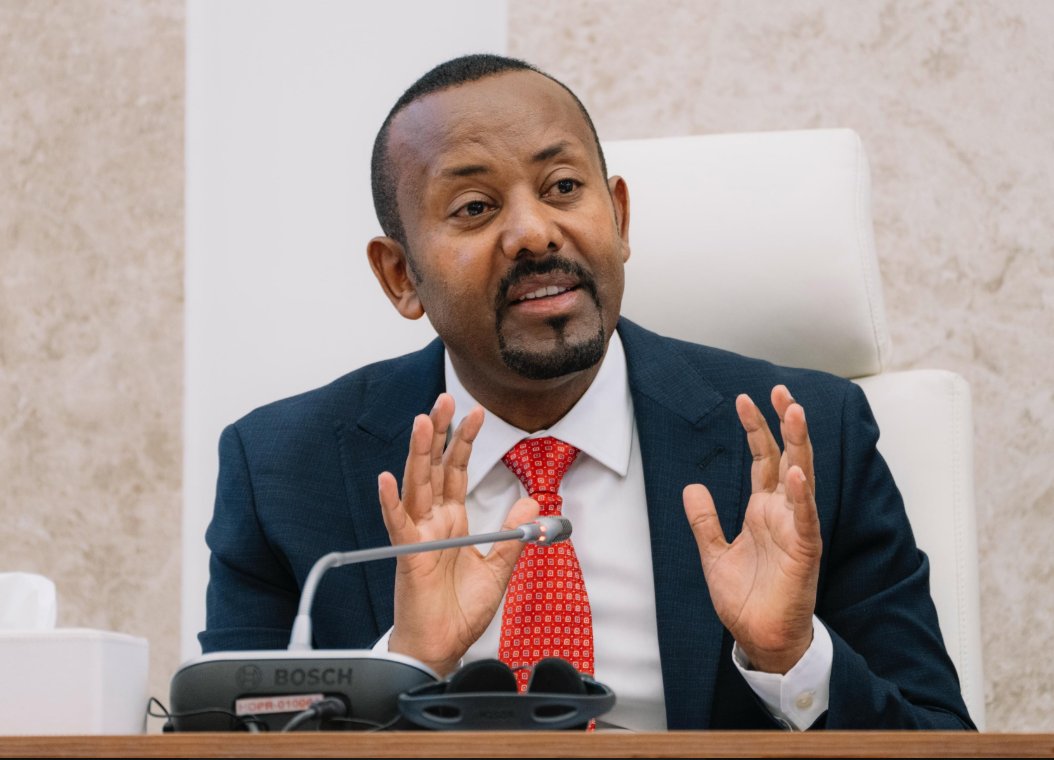
“The war we fought in Tigray was very small compared to what we conducted in Welega.” 🫢
The Tigray war is widely believed to have resulted in more than 600,000 deaths, and by the Prime Minister’s own admission, the death toll in the Welega conflict, Oromia region, was even greater.
If he described such large-scale loss of life as “very small,” it calls into question his judgment and moral compass.
How can #Ethiopia ever heal under this incompetent leader who measures strength by the scale of destruction? #CryForEthiopia
The massacres of Oromos in Nono and other parts of Oromia have been attributed to armed Amhara militias. These militias aim to undermine the Oromo people's pursuit of self-determination, a goal wholeheartedly supported by both the Abiy regime and Fano in Amhara.
Thank you, Rev. Dr. Tolesa Gudina, for standing up for the truth! As someone who grew up in Mekane Yesus and is still a member, I believe in telling the truth as it is, without sugarcoating it. The Oromo culture should be respected just like any other culture in Ethiopia. But my Christian Oromo brothers and sisters need to put their Christian faith first over other religious traditions that don’t intertwine with the Christian beliefs.
Before setting out on a grand mission to save others, the decaying empire must first save itself. A dying empire, locked in a never-ending cycle of conflict with its own people, is in no position to rescue anyone.
The international community including Ethiopia has a moral duty to rescue #Eritrea's people from modern slavery, oppression, and isolation imposed by DIA’s regime.
Why is there such an infatuation with Tigray? Both the leaders in power in Tigray & those in opposition have unequivocally expressed that the claims of genocide have been greatly overstated. Its perplexing to witness others showing more concern than z supposed victims themselves.