I made a hire after one question.
Mid-interview, I told the candidate to ask me anything.
He asked: who hallucinates more, agents or humans?
We use one definition for AI and another for ourselves. When an agent contradicts the data we fed it we call it hallucination.
When a human reads four hundred pages of documentation, retells it, gets many parts of it wrong, we call that his takeaway.
Apply the AI definition to humans and the picture flips. Humans probably hallucinate more. We just tolerate it much more.
The default matters. Out of the box, an agent will make low-confidence claims unless you tell it not to.
Constrain it to high-confidence, source-grounded statements, and on the same context, it hallucinates less than the average human.
Not zero. The human isn't either.
#AI
On "AI stops when tokens run out" - humans don't have continuity either. They burn out. Get depressed. Get sick. Sleep. Hallucinate just slower, with more meetings about it.
When the orchestra breaks, everything stops. When the CMO leaves for Burning Man or parental leave, everything also stops. No agents required.
The downtime from human failure modes isn't in the same ballpark as downtime from agent failure modes.
On "no soul": what's a soul, exactly? And measured in the units that matter at work (uptime, judgment, output under pressure) does every human in the org actually have one?
@EscanorReloaded I think, the math's off. An agent doesn't replace one person, it turns one into dozens. Tokens cost more because more work gets done, not the same work at a higher price. The real bottleneck isn't cost, it's long-planning. That's still on humans.
Your AI vendor offers a button. Press it: every metric in your company auto-improves by 15% for a year — pipeline, CSAT, retention, EBITDA. The cost: you will never again know which decisions caused which outcomes. Causality is gone. Forever.
Which button?
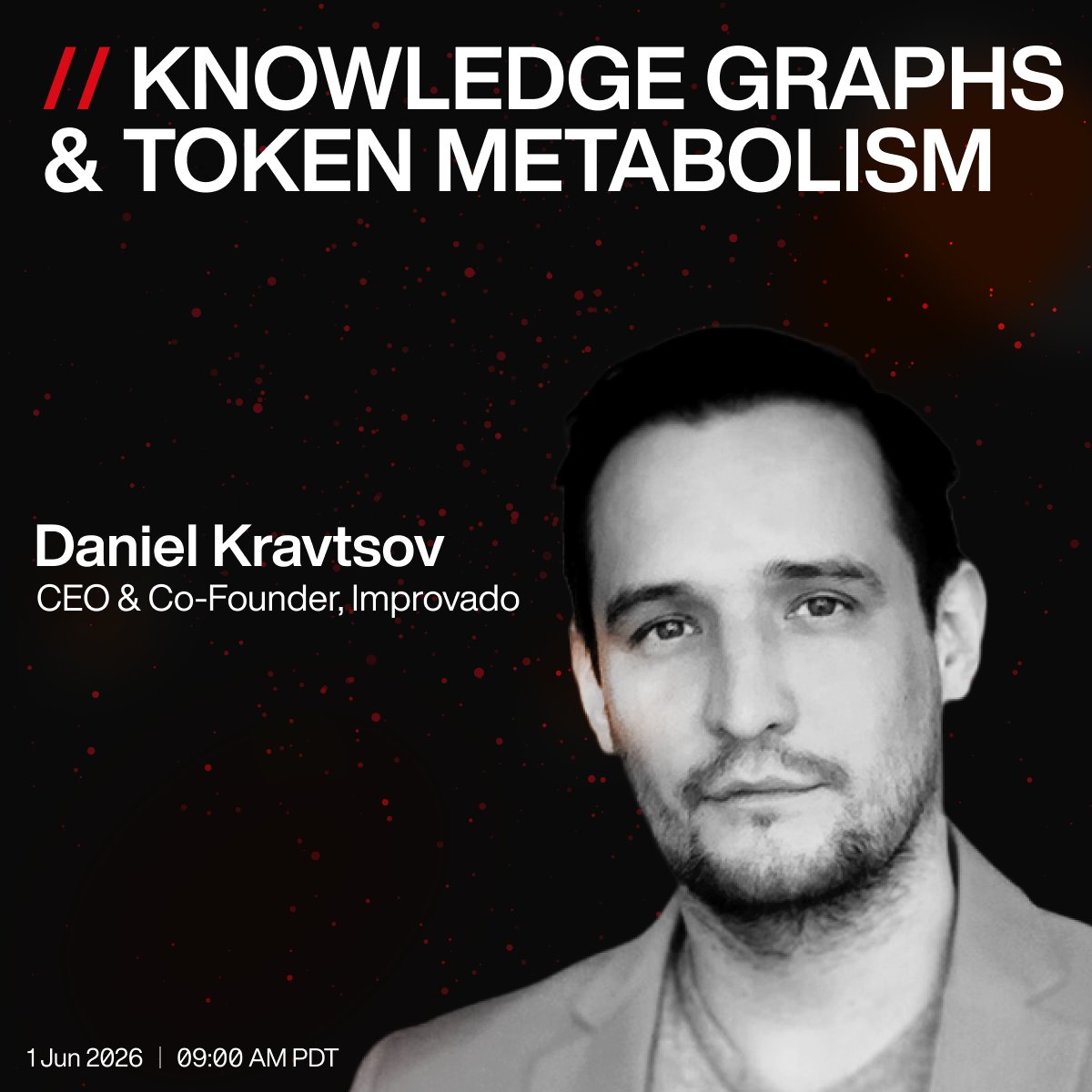
Meet @DanielKravtsov, CEO & Co-Founder of Improvado.
Many companies use AI, but Daniel built one that runs on it. His business and own work live inside the same ontology, with agents operating against the graph.
Demo June 1, plus how value moves through it all.
Two companies can hire from the same talent pool and grow into completely different organisms, because the shape decides what that talent becomes. At Improvado, we're moving in this direction as fast as we can.
The moat is the shape. Shape determines who can exist there. The structure of a company is a habitat. It selects for the people who can thrive inside it, and quietly repels the rest.