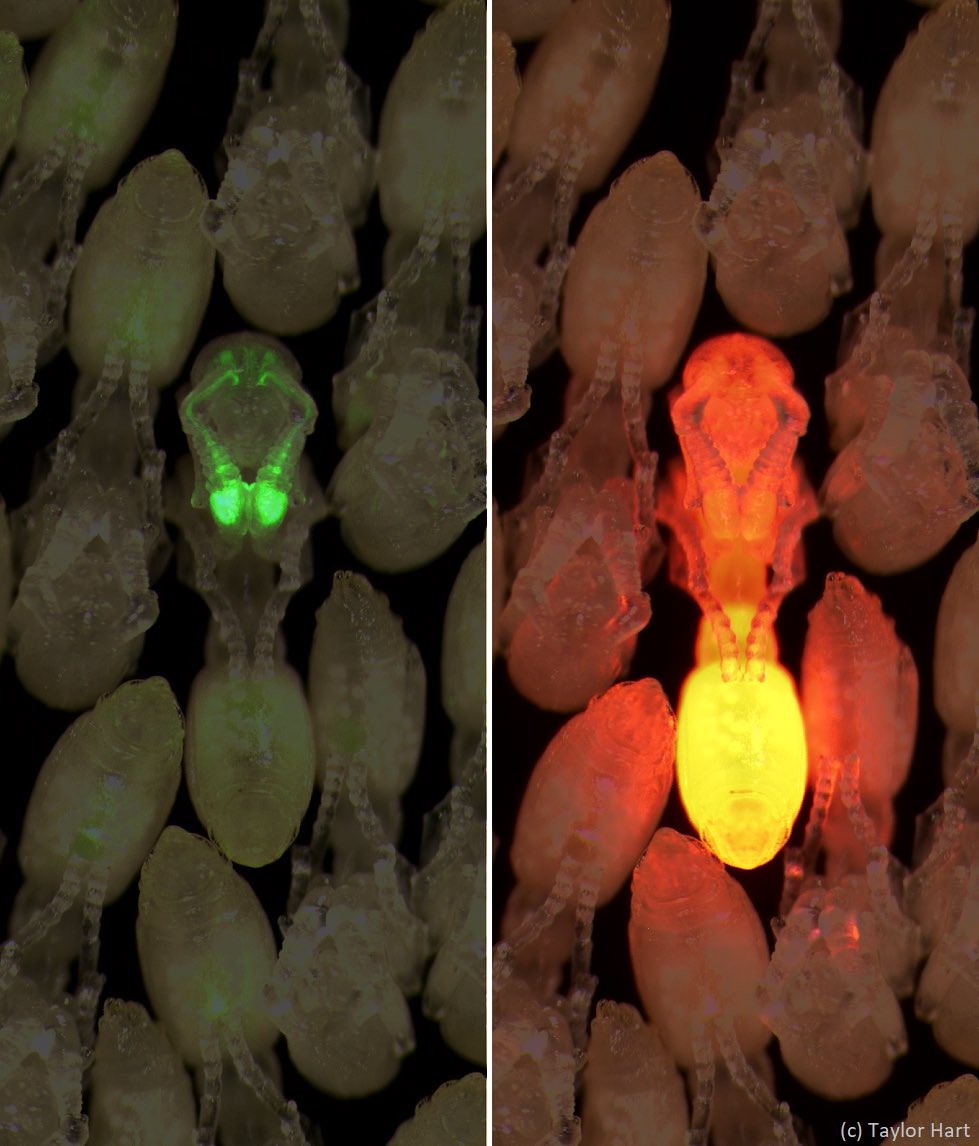
Our first neurogenetic study of ants survived peer review and just appeared OA in its final form @CellCellPress@CellPressNews: https://t.co/RJj0eas8a1. @teraxurato & team @RockefellerUniv created the first transgenic ants and identified a sensory hub for alarm behavior. 1/8
New paper in PLOS Biology: as we raise the difficulty of our 3D printed puzzles, bees keep landing on combs with ever stranger hexagonal order! 🐝
Led by the brilliant Golnar Gharooni Fard, in collaboration with CK Prasanna & FL Jiménez
https://t.co/whQy6k0SNu
I ended up spending six weeks with this colony, following its nightly emigrations through the Venezuelan cloud forest and documenting its behavior. At the end it took us almost an hour each way to just get to the colony. The resulting report is here:
https://t.co/woCj8K6bHG
An old photo I took during my first field season with a macro lens - checks notes - 20 years ago, in May 2005. I hadn’t discovered flash diffusion yet. But it’s a rarely witnessed scene: Eciton burchellii army ant workers collective carry a massive male larva. Henri Pittier NP.
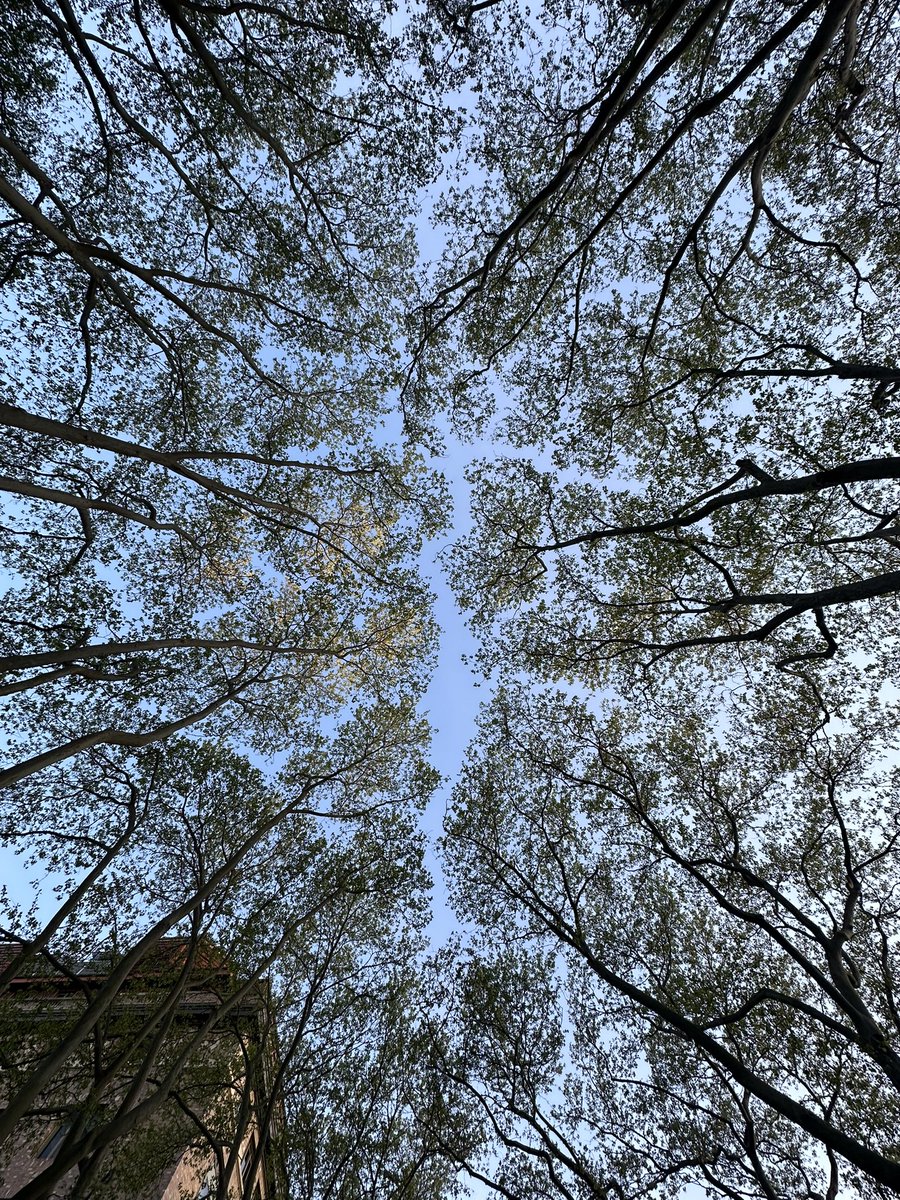
While “Berührungsangst” (the fear of contact) is generally the exception at @RockefellerUniv, here is an example of crown shyness on our beautiful spring campus.
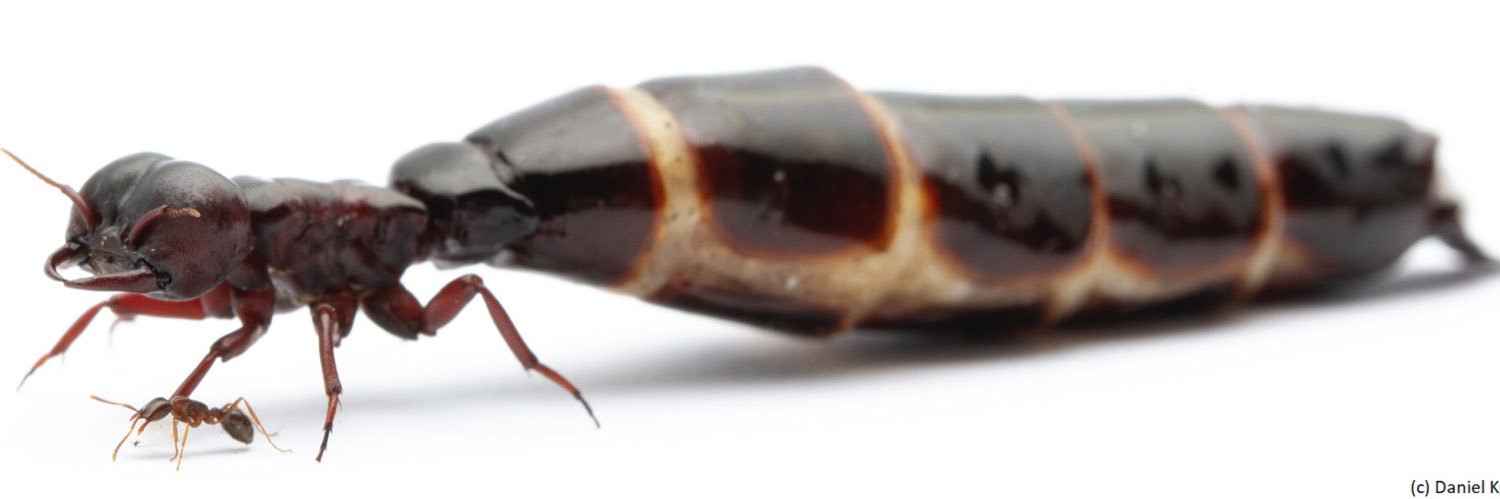
Army ant colonies bring in a lot of prey and discard the leftovers in refuse piles. The refuse is a welcome resource for many other organisms, including various beetles. Here is an Ecitopora rove beetle scavenging among the prey remains of an Eciton burchellii colony.🇨🇷
A nest of the northern paper wasp, Polistes fuscatus. The wasps like to build their nests under overhangs, especially of wooden houses. They masticate the wood they collect from the environment into a pulp, which they then use to construct their paper combs. Woodstock, NY.
Not that the internet needs more photos of monarch butterflies, but they’re just so pretty. Here’s my favorite stage, the chrysalis, with its golden ornamentations. The other image shows the fully grown caterpillar as it enters pupation. Woodstock, NY.
Monarchs accumulate cardiac glycoside toxins from the milkweeds, making them unpalatable. Marianthi Karageorgi and @NKWhiteman mapped the adaptations in the sodium pump, the target of cardiac glycosides, that confer resistance to the monarchs themselves:
https://t.co/cDctSP0dTk
Here’s a very hungry little monarch caterpillar eating its way through a milkweed leaf. If you want to learn more about this relationship, @anuragasclepias wrote a nice book about the coevolution of monarchs and their host plants:
https://t.co/fmOiJnw2Zd
I usually associate phasmids with the tropics, but there are also two species native to New York. Here is the common walkingstick, Diapheromera femorata, which enjoys the oak trees in my garden. Small nymphs appear in May, and adults, like this one, in late summer. Woodstock, NY.
A young queen of the American carpenter ant (Camponotus americanus) with a mite attached to its thorax. The mites associated with ants are highly diverse and vastly understudied. Woodstock, NY.
@barrygoldman1 They’re actually pretty much the same size - around 15-18mm. But yes, when seen close up you wouldn’t get them confused. However, making a predator hesitate just for a split second might be enough to escape. I remember thinking “wow, what’s that?!” when seeing the fly.
A bald-faced hornet fly (Spilomyia fusca; a syrphid, or hoverfly) and an actual bald-faced hornet (Dolichovespula maculata). The former is supposed to be a mimic of the latter, and I can believe that one might be fooled upon a cursory look. Woodstock, NY.
The mealybugs feed on root sap, and excrete sugary “honeydew”, which the ants consume. The ants in turn protect the mealybugs and move them around, as you see here. Woodstock, NY.
Each spring, a hidden spectacle unfolds when subterranean citronella ants (Lasius subgenus Acanthomyops) bring their mutualistic mealybugs (the large fluffy white thing) up under rocks to warm up. The prolific mealybugs produce vast numbers of nymphs (the small purple things).