Physicist 120 years ago: Maybe the inside of an atom is like plum pudding.
Physicist today: Light doesn’t experience time. All this shit might not even be real.
You're supposed to let it grow until it looks like shit and then cut it a bit shorter than you want to maximize the time until you need to cut it again
Es difícil creer que hoy se cumplan 13 años de la última victoria de Fernando Alonso en la Fórmula 1. Difícil creer que no hayan venido más desde entonces.
La espera se hace eterna… pero seguiremos esperando. Siempre de su lado, del más grande.
Dicho de otra forma: "el gobierno asumirá con dinero público el coste de la indecente especulación de las empresas petroleras en lugar de obstaculizar, sancionar y prohibir sus conductas ilegales"
Great simulation of the Ferrari Döner wing posted on LinkedIn by Dominik Bolasko. There are still some irregularities in this simulation, like the wing profiles being different than the actual Döner wing, but it looks to be one of the more accurate sims I have seen so far. One very interesting aspect of this simulation is the magnitude of the flow field disruption from the intermediate sail position.
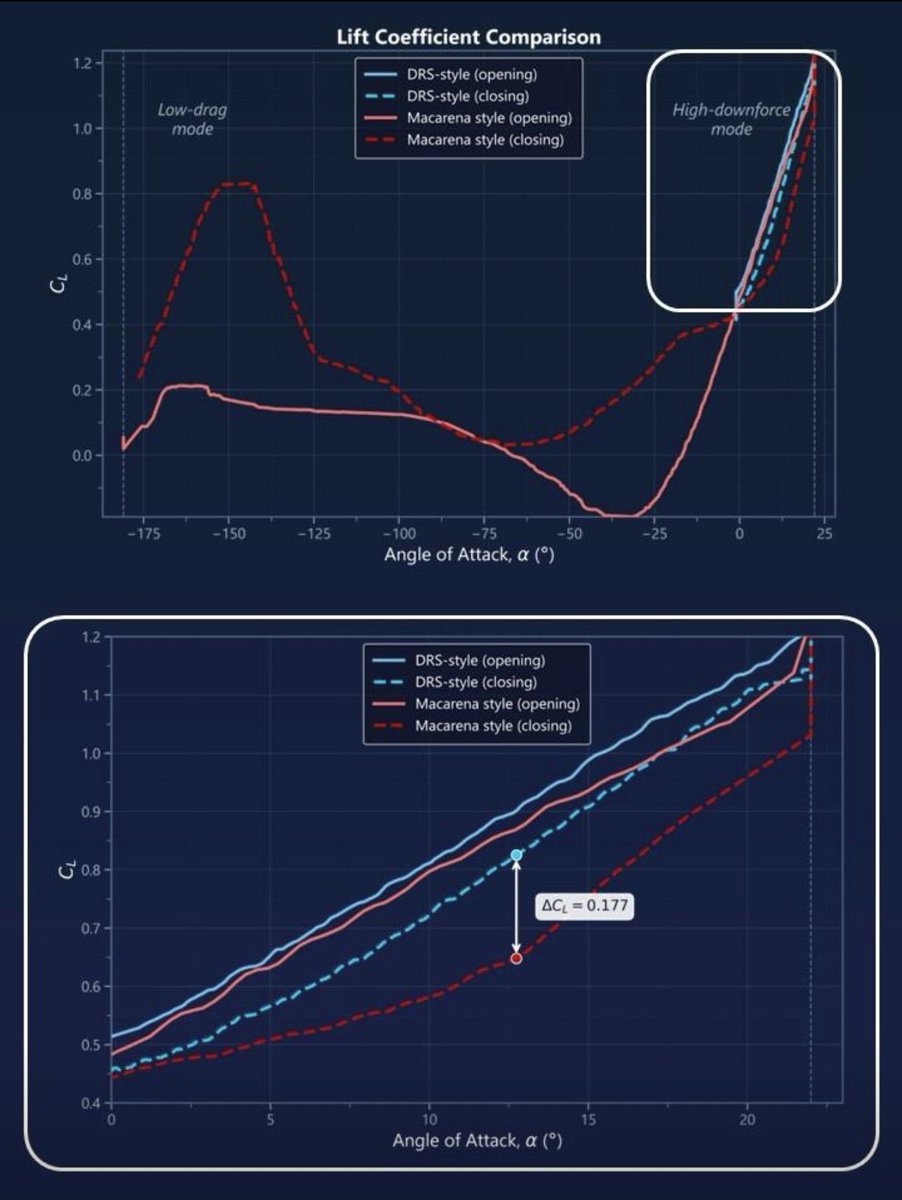
All DRS flaps naturally have a hysteresis with respect to flow recovery and attachment on flap closure. Hysteresis, in the simplest terms, is the difference in the value you get from the same device in one setting compared to another. In this case what we are looking at is the downforce the wing give you before opening, and after opening.
So why would you have hysteresis? Well the flow will take some time to recover snd reattach after a big geometry change bringing back the full load (downforce) to the rear of the car for the braking zone. This exists for all cars that have a flap geometry change like this. However, the magnitude of the flow disruption can further delay this recovery causing the car to not re-establish the full load potential in the first phase of braking.
So, I could certainly believe that the hysteresis for this type of wing would be greater than that of a conventional flap because of how much flow disturbance you have from that intermediate sail position. Meaning the rear of the Ferrari on initial braking could have some nervousness as the flow takes more time to re-attach and recover the load on the rear wing.
In fact, this is exactly what Dominik found in his simulations (image 2). I did speak with someone with a team, and this was one aspect they indeed had considered as a negative to this design when they first saw it. It’s possible that’s part of what was being tested when they ran it during testing in Bahrain.
Do you think we will see this wing again during the season?