🎮✨ ¡La 15ª edición del #Master en Gestión de #Esports de @eSportsProCurso ya tiene fecha de inicio!
🗓️ 24 de marzo de 2025
8 años formando líderes visionarios para un sector que no deja de reinventarse. 🚀
🌟¿Listo para formarte en tu pasión?
🔗Descubre más aquí: https://t.co/gETIEkVd87
#Educación #Gaming
El periodista debe poder centrarse en crear contenido de calidad. La IA puede ayudar en lo demás.
Introducing https://t.co/aIEj7KHkiW, tu copiloto periodístico. Convierte tu audio en noticia más rápido que nunca: transcribe, contextualiza, jerarquiza y redacta en pocos minutos
A veces odio el mundo.
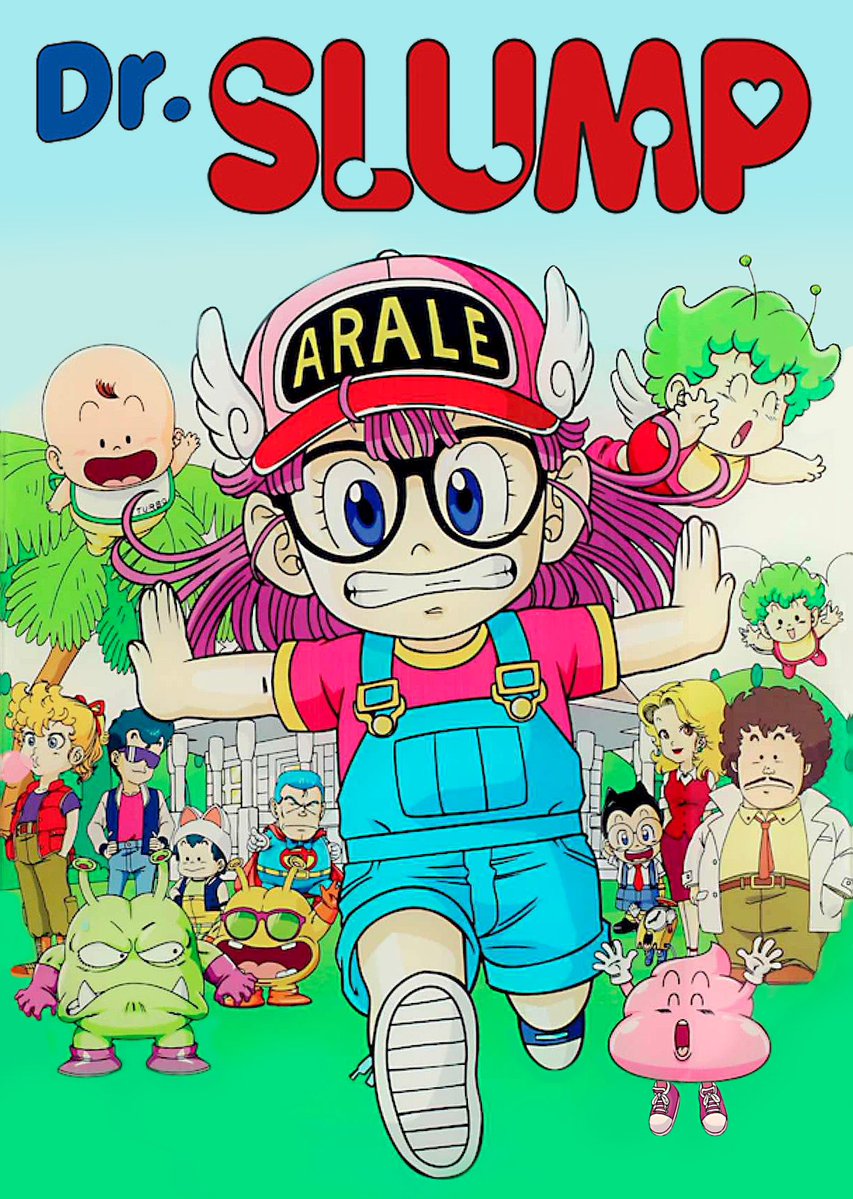
Ha fallecido de forma repentina Akira Toriyama, papá de Dragon Ball, Dr Slump, e ilustrador de infinidad de juegos y sagas. Una tragedia.
Descansa en paz y ojalá algún día te revivan con las bolas de drag��n 🥲
One of the secrets of my personal success is the ability to pace yourself and expecting a non even time line.
In every game or project I've ever worked on, and almost every other project I've witnessed, they all have one thing in common. No matter how well planned they are, no matter good the team is, now matter how well staffed they are, it's always the same. And that's the fact that the end of a project is always the hardest on you.
The end of a project, with the delivery date looming, what happens is the "creators curse" begins to set in, and everyone who is deeply involved, all they can see are the flaws. Because no project is ever perfect, you see all the things that could be better. Maybe if this level is better players won't get frustrated. Maybe if this asset looks a bit nicer the game will be higher quality. There is always something else to be done and the final 10% of a project feels like it goes forever. Ask any dev, even those who worked on a 10/10 masterpiece, and they probably have a laundry list of things they wish they had more time for.
Because of this certainty, it's best to pace yourself. At the beginning of a project, don't push too hard. Meet your deadlines of course, but without overexerting yourself. You'll need that strength in the end. As the project goes on, you'll ramp up, and the last few months will be the toughest, so prepare for that timeline. Then when the project finishes, make sure you get a good rest. Take 2-3 weeks off and recuperate. Being aware and mentally preparing for this cycle makes going through it a lot easier.
I bring this up, because as we approach TFT's eleventh set, as I watch newer devs go through this, this is still the toughest part. Even with longer timelines and more staff, the fact is we're a month from PBE and everyone is feeling the pressure to deliver another great set. That pressure can be rough because, again, all you see is everything that is wrong and still could be better. In the end, you can only do so much though, so take a deep breath, give it your all, and it will all be ok.
If you know anyone in game dev, or really any long term creation process (movies, comics, construction, you name it!), ask them if this is true and for the things they wish they had more time for. I bet you'll get some interesting stories.
Happy Monday, and I hope you have a great week. Until tomorrow, take it easy :)
This is going to be a long post...not really directly about TFT, but about leadership and how we should approach mistakes and failures. If you're looking for a solid promise about the future of TFT, this isn't that post. But if you're interested in my thought process, let's go.
When mistakes happen, the first thing to consider if it was an honest mistake, or something malicious. Often even the most severe mishaps are honest mistakes, and people do not need to be punished or put down when these happen, no matter the severity. I was around when League accidentally set all loot to 1 RP, which was a VERY bad mistake, but it was still just an accident. It's important to follow up of course, but these aren't career ending or anything. If the mistake was due to malicious intent or negligence, then it becomes a much bigger deal as it shows something will likely be a long term problem and needs to be taken care of with much more severity.
The other thing to consider is the frequency. Even the greatest employees will not have a 100% hit rate, and mistakes will be made. An amazing employee, when they make that first big mistake, honestly the worst thing you can do is come down on them hard. They are going to be their own worst critic and enemy in these situations, and adding onto the pile is a quick way to burn them out or make them distrust you, as you don't have their back. These mistakes are the learning process that shapes their experience and makes them better as time goes on. All you can do is help them back up and encourage them to learn and keep going.
It's super important to not overreact to a single mistake also and call it some sort of failing of the entire system. Sometimes a human error is an error, and trying to rewrite entire processes and systems to prevent that error is a productivity killer. Sometimes it really is as simple as "do better next time". Double check the code, run the sim better, etc is really all we're talking about. I've seen too often in retros these blow up into larger reworks. Don't fall for that trap if it was something small.
However, if the frequency isn't just a one off or an understandable accident, this is where things get more complex. If you continue to see error after error in a situation, it's time to evaluate all pieces of the process to see if there is something that can improve. An example of this in TFT was our process of Set creation in the Set 4 to 7 era, where it was clear we were consistently shipping good sets, but burning out devs and shipping with tons of bugs and reworks and more. This wasn't just "one set went rough, do better next time", this was "We need to change how we develop sets". When you get to this point, you have to consider all aspects of development. Is it the people? The process? The timelines? What's going on?
Next, you have to formulate a plan on how to address the systemic issue. When it gets to this point, "just do better" or just assuming more people will solve the problem is pretty pointless. Instead you need a plan that is possible with the resources you have or can get. In the case of Set Development as the example all the way back in Set 6 we begun the plan to swap to 3 sets a year with clear goals to try to improve set development to combat these repeated issues.
Now here is where things get extra tricky. When you are working on a live service game with high communication, players want to see results and change and information now. But development doesn't work like that, and in the case of swapping to three sets a year, it took us 10 months from the time the plan was originally conceived before we even announced it to players, and another 8 months before the first set with no midset would ship (Set 10). During this time while things are happening in the background, you still have to operate as is. You can't just stop making sets until you're ready even though you know this improvement is coming.
And then in terms of talking to players, those 10 months where we can't talk about it are rough. You want to tell players "Yup, we're aware set development has to get better and here's our 5 point plan to get it there.", but if anything goes wrong (you can't find the people, you don't get the budget, etc) you would be giving players false promises which is always awful. So you have to keep silent until you are truly ready to deliver because actions speak louder than words and all that really matters to players is results. Give them a good game! A good example of this was Spectator Mode for TFT. Someone promised it too early, and then priorities and situations changed, it fell off the roadmap, and became this thing we promised players but never delivered on, which is a feels bad and burns trust.
So as a leader, all of this has to be taken into account when considering what action and path to go down next. Is it a simple mistake that will happen less and less often as experience grows? Or is it a larger failing, be it the people or the system or something else? And if it's the latter, what is the path to improvement? You also have to take into consideration other factors like hiring capacity, team morale, player trust, and so much more. It's often not as simple as "Just do X". Even the swap to 3 sets a year had a LOT of hurdles we had to overcome internally in these areas before we could make it a reality. Alignment on the solution, staffing, processes for things like the ability to playtest more than one set at a time, etc, all had to be considered before we could lock it in.
Now if you've made it this far, you're wondering "What's all this yapping for and how does it affect TFT?" The reality is we as devs have the "Creators Curse" where all we see are the flaws in what we make, what could be better, what could be different. There are a LOT of things in TFT, despite how freaking amazing the game is, that can use improvement. Maybe it's our in game matchmaking formula, maybe it's our in client experience, maybe it's our item balance, maybe it's our bug testing, the list goes on and on. And for everything in this space we have to apply this sort of thought of "How are we going to improve this?"
So, all of this to get to this. When things are not going well, trust us, we know. We take it very hard. Even a simple bug that may have slipped through the crack for any number of reasons in the process, the whole team feels it and it sucks. It sucks for players, and we all want to bring the best experience to players. Any time something goes wrong, especially if it's repeated, actions are being taken. But the reality and unsatisfactory part is that we often can't share these with players until they are ready, because again, actions speak louder than words and results are what matter.
Again, if you were expecting some grand reveal, I'm sorry to disappoint. When results happen, we can talk about the process that got us there through articles and Q&A and more. Until then, we keep moving forward trying to make TFT the best game it can be. Apologies if this was too long or jumbled. It's early and now it's time for work!
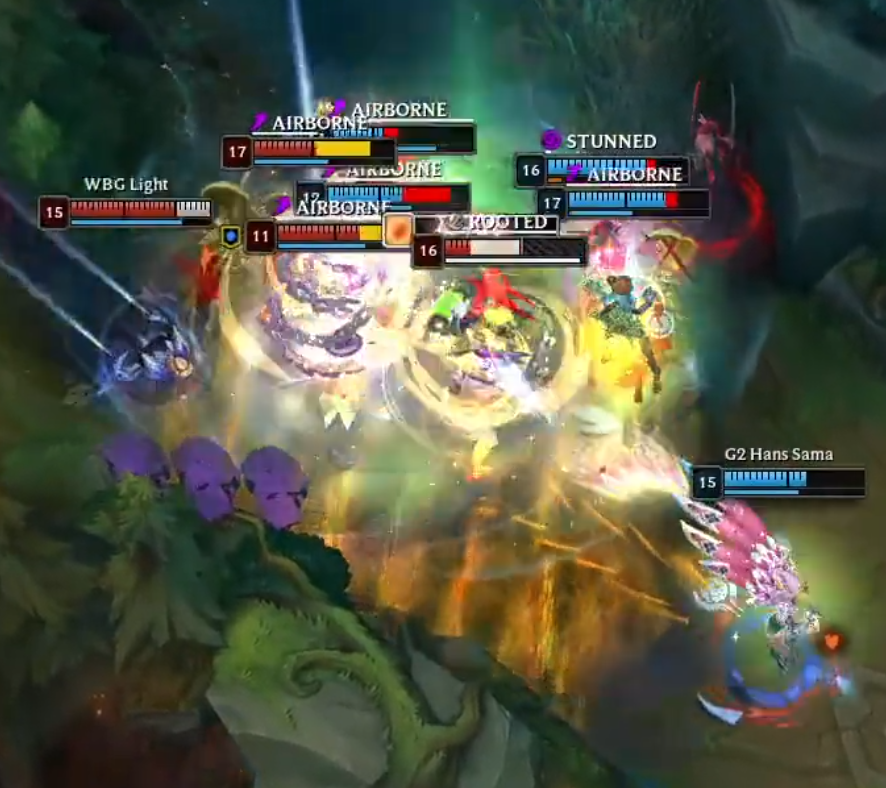
.@esportsjatt just made some (hyped-up) mid-game remarks. Much like it would happen with sidelane reporters.
And it sounded so refreshing to me!
He ended up staying in the cast, but I think this should happen more often.
BREAKING: Microsoft’s Activision Blizzard deal has been approved by UK regulators. Microsoft is now free to finalize its giant $68.7 billion acquisition. Details here 👉 https://t.co/4KYoUMYPLl
No me cabe duda que este es el futuro del deporte profesional como espectáculo.
Es una realidad en deportes como la F1 o la NFL y al fútbol le queda poco para dar el salto completo