El running acaba de convertirse en videojuego.
Un dev cargó su carrera vieja de Strava en unas Meta Ray-Ban y ahora corre contra su propio fantasma 20 metros adelante, recogiendo monedas.
Ningún número en la muñeca empuja así.
@pachachox Depende si es la misma moneda, si es la misma moneda la moneda se acuerda de lo que salió antes y le influye psicologicamebte. Pásame el peta
2000 artistes ont été mis au défi de créer une animation 3D de 5 secondes pour faire descendre une balle du haut vers le bas de l’écran.
Toutes les séquences ont ensuite été assemblées pour créer une gigantesque machine à billes collaborative.
@nandocruz32 Era en la recta del estadio, verdad? Algunos me discuten que era en el sot del migdia. Recuerdo que manolo estaba eufórico, en plan "lo hemos conseguido". No se querían ir ☺️
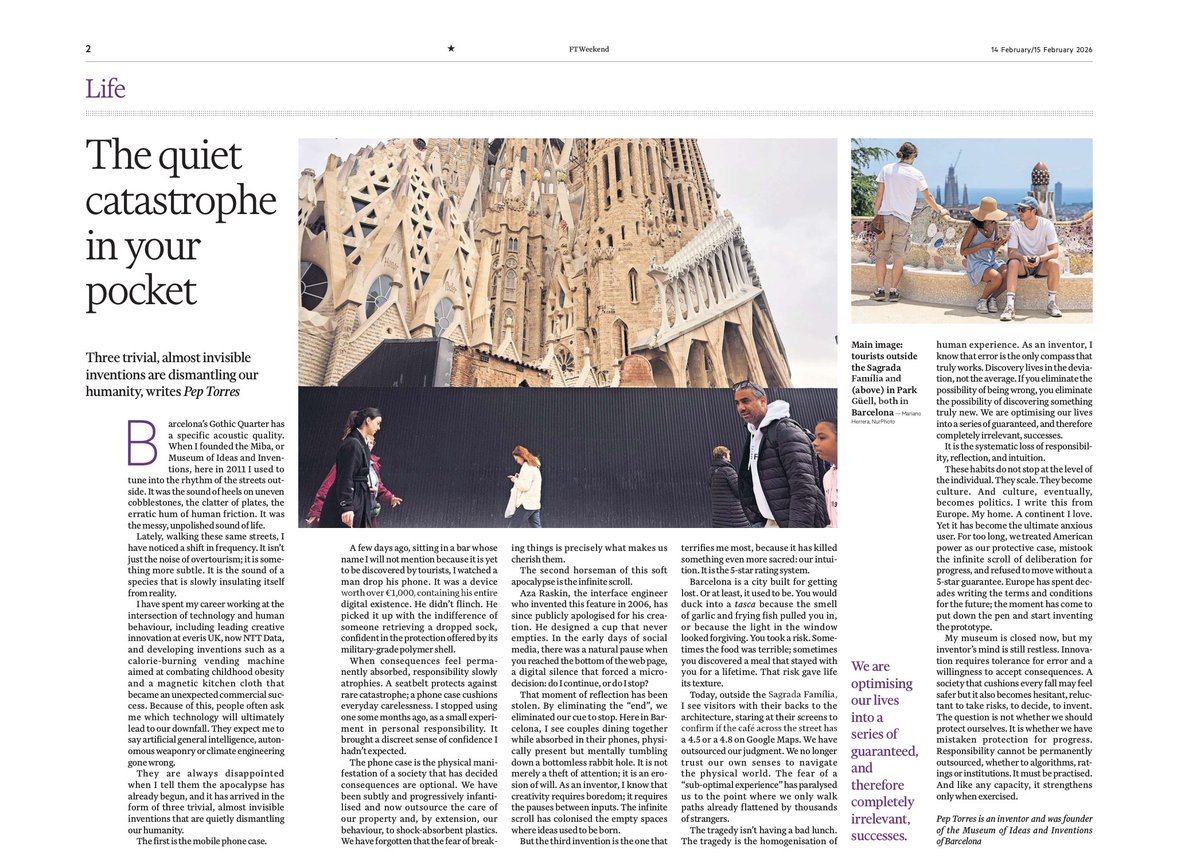
Hoy publico en @FinancialTimes
En “The Quiet Catastrophe in Your Pocket” sostengo que el mayor riesgo tecnológico no es la IA ni los robots, sino tres inventos aparentemente triviales: la funda del móvil, el infinite scroll y el sistema de 5 estrellas.
Your brain peaked musically somewhere around age 16. Everything since then has been a dopamine echo.
Between the ages of 12 and 22, the mesolimbic dopamine pathway, the same circuit that processes cocaine and sex, fires at levels in response to sound that it will never reach again for the rest of your life. A 2011 McGill study used PET scans and fMRI simultaneously and found that music triggers dopamine release in the striatum at peak emotional arousal. The caudate nucleus lights up during anticipation of the good part. The nucleus accumbens lights up when it hits. Your brain is treating a guitar riff with the same reward architecture it uses for food-seeking and pair bonding.
During adolescence, that response is dramatically amplified. Pubertal hormones are flooding the system. The prefrontal cortex is still wiring itself. Memories formed during this window get encoded with a density of emotional tagging that nothing in your 30s or 40s can replicate. Researchers at the University of Leeds identified this as the “reminiscence bump”: the period when your sense of self is forming, and the music playing during that formation becomes structurally integrated into your identity.
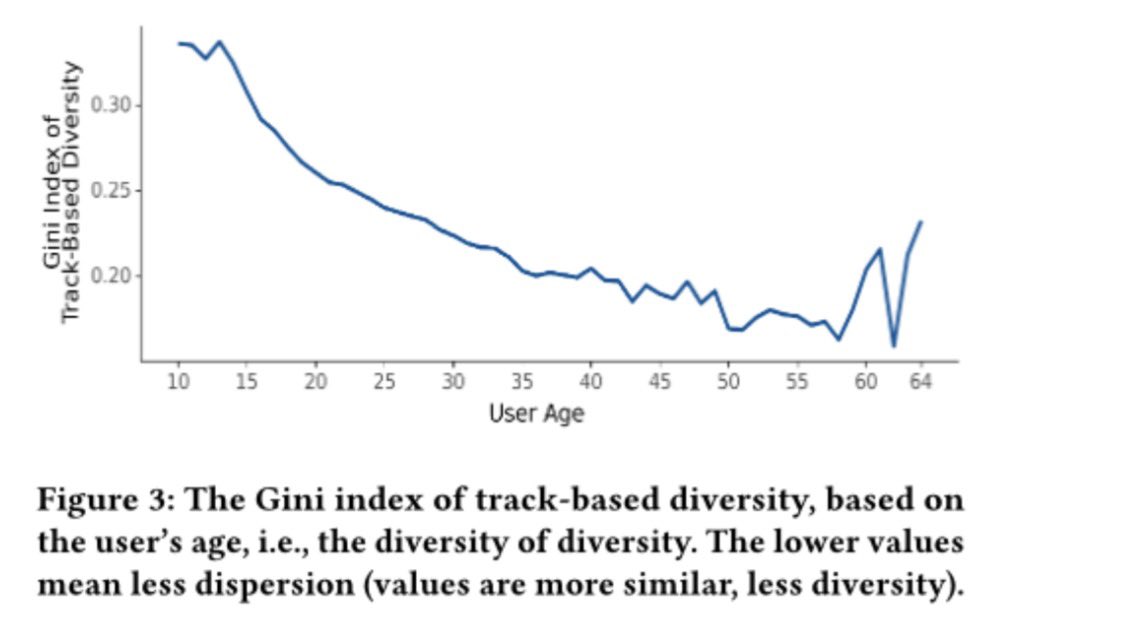
A 2025 longitudinal study from the University of Gothenburg analyzed 40,000 users’ streaming data across 15 years. Younger listeners explored broadly across genres. Older listeners collapsed into increasingly narrow loops, almost entirely anchored to music from their teens and early twenties.
Your brain stopped losing interest in new music years ago. It’s running a cost-benefit analysis. Familiar songs deliver guaranteed dopamine with zero processing cost. New songs require pattern recognition, expectation-building, and repeated exposure before the reward circuit kicks in. Past 25, most people stop paying that tax.
The one variable that predicts whether someone keeps exploring: the personality trait “openness to experience.” Score high, you keep seeking. Score average, you default to the familiar forever.
The fix, if you want one: deliberate exposure. Three listens minimum before your auditory cortex builds enough predictive models to generate a reward response. One passive listen on a playlist will never get there. Your brain needs repetition to find the pattern, and it needs the pattern to release dopamine.
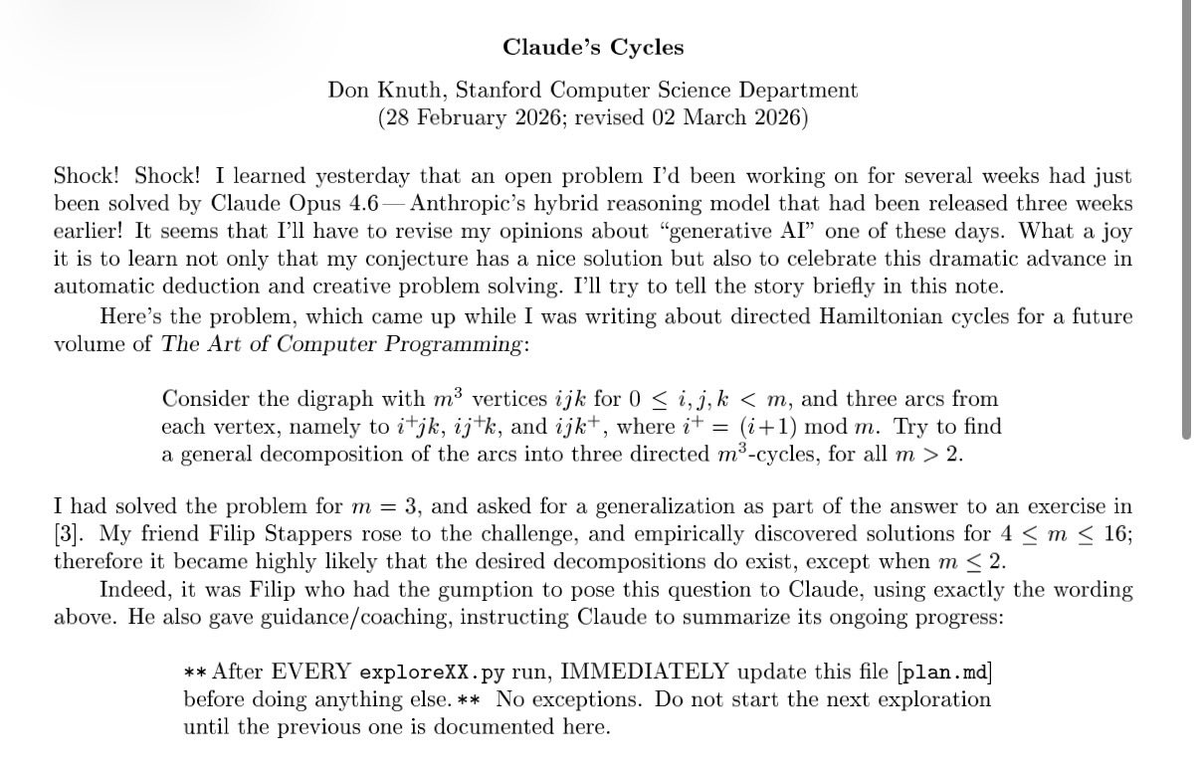
El Profesor Donald Knuth (el tipo que escribió la biblia de las ciencias de la computación) abrió su nuevo paper con "¡Impactante! ¡Impactante!"
Claude Opus 4.6 acababa de resolver un problema abierto en el que llevaba semanas trabajando — una conjetura de descomposición de grafos de The Art of Computer Programming.
Nombró el paper "Claude's Cycles."
31 exploraciones. ~1 hora.
Knuth leyó el output, escribió la prueba formal y cerró con: "Parece que tendré que revisar mis opiniones sobre la IA generativa en alg��n momento"
El hombre que escribió la biblia de las ciencias de la computación acaba de decir eso. En un paper que lleva el nombre de una IA, entienden lo grande que es esto?
@WinixRun ¡💯! A menudo me acuerdo de gente como Asimov, Feynman, Buckminster Fuller, Sinclair… y todo lo que estarían disfrutando ahora mismo si estuviesen entre nosotros…
Para "2001: A Space Odyssey" (1968), el maestro #DouglasTrumbull tuvo que predecir cómo serían los monitores leds en el futuro y los creó con proyectores de 16mm.
El resultado es espectacular 👏🏻👏🏻
It's Saturday afternoon in Spain, which means it's time for LaLiga to block your favourite MMORPG, banking app, productivity apps, etc...
Use Proton VPN to gain access by connecting to another country, it's completely free, and we never log your activity.