The question for us in @SocialistHealth is not whether Starmer goes, but who comes next. Wes Streeting’s resignation letter made some bold claims about his tenure as SoS Health. We looked at the impacts of his policies, actions and inactions here:
https://t.co/16bixtZe6Q
🧵 What do SSRIs really do to your emotions?
A major Oxford study (by researchers supportive of antidepressants) explored the lived experiences of SSRI users (experiences not captured by RCTs). What participants revealed about emotional blunting is disturbing… So here we go👇
On this #MayDay, we stand in solidarity with workers and reps who fight for better pay and conditions for workers and a more equal society.
I want to make special mention to all workers on strike in Britain and Ireland and across the globe. The world is our picket line!
We stand with you, we shall overcome, victory to the strikes.
Solidarity #IWD26 ✊
Imagine a 19-year-old scrolling TikTok. She watches a creator list five "signs you have undiagnosed anxiety." She recognizes three in herself. By the end of the week, she's describing herself as anxious to her friends. A month later, she's avoiding situations she used to handle fine.
What went wrong?
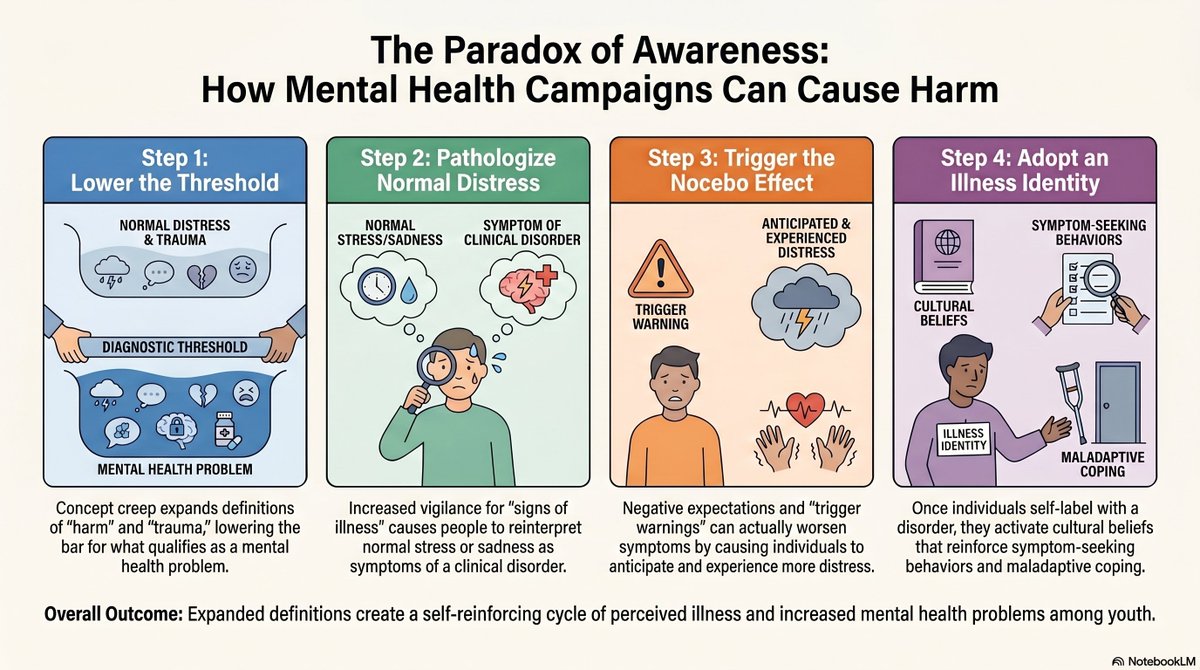
In a new paper by my PhD student Dasha Sandra, titled "Why mental health awareness can harm: Converging explanations for a societal problem", we argue that well-meaning mental health awareness can backfire, and we identify how. Four separate literatures (concept creep, nocebo effects, prevalence inflation, and illness self-labeling) have been circling the same problem from different angles. We show they converge on three mechanisms:
1.Awareness lowers the threshold for what counts as a disorder.
2. It trains people to scan their inner lives for symptoms and reinterpret normal distress as pathology.
3. Once someone adopts an illness identity, they behave in ways that confirm and deepen it.
The evidence is wide. Learning that loneliness is harmful makes solitude feel worse. Learning that stress is harmful worsens well-being and performance. Awareness videos about fake conditions like "wind turbine syndrome" produce real headaches. Trigger warnings raise anticipatory anxiety without reducing distress.
This does not mean awareness should stop. It means awareness can have unintended consequences, including manufacturing the suffering it tries to prevent. Inoculating people against these mechanisms works, and we already have evidence it does.
Link to paper: https://t.co/ucoGyhEuAj
Some of us have been saying this for a long time. Now mainstream academics are agreeing. Uta Frith: why I no longer think autism is a spectrum https://t.co/hIEZ4yrhZb
I left care in 1996 with no qualifications—just a handshake and an expectation that I’d survive on my own. By 17, I was homeless. By 27, I was homeless again. There are no words strong enough to capture what it takes to rebuild your life from absolutely nothing.
I became a published author because the truth about the care system needed to be said out loud. My adult life was shaped by 15 years of addiction, crippling mental health struggles, and moments when I stood on the edge of suicide—all because the support I desperately needed simply wasn’t there.
And the most heartbreaking part is this, in 2025, young people are still leaving care and walking straight into the same brutal reality. The system hasn’t just failed me—it continues to fail them.
This is a room for 16-year-old child, transitioning out of care, expected to cope alone. This is their reality. And nothing has changed in 28 years.
Shame on this government. Make care experience a protected characteristic. @SkyNews@NickMartinSKY
Today, on the International Day to End Impunity for Crimes Against Journalists, we remember Sri Lanka’s silenced voices and demand justice for every journalist attacked for speaking truth to power. #EndImpunity#Journalists#Justice
https://t.co/EgKVwMyyo6
Female subordination. Sexist 'modesty' codes. Violence against women.
These are forms of misogyny we would expect charities to try to combat.
But as our new report reveals, too many religious charities are promoting these ideas. Read more 👇
https://t.co/nruCgMmulF
FiLiA is a charity that campaigns for a world free from patriarchy where all women and girls are liberated. More than 2,400 delegates are gathering in Brighton this weekend and the activities of a small, violent minority will not diminish the spirit of sisterhood and solidarity which FiLiA embodies.
There are 250 speakers from across the world and over 80 sessions covering the broad spectrum of women’s lives all over the world: anti-racism, women's health, male violence, political organising, lesbian lives, migration, class and much more.
Brighton is proudly a City of Sanctuary and it is impossible to believe activity of this sort could be tolerated. Despite this, we have heard today that Brighton and Hove Council has rejected FiLiA’s Public Spaces Protection Order which we submitted in advance to pre-empt behaviour and aggression of this sort. We call on the council to condemn last night’s antics and to acknowledge that to protest against FiLiA is to protest against women gathering to discuss their lives.
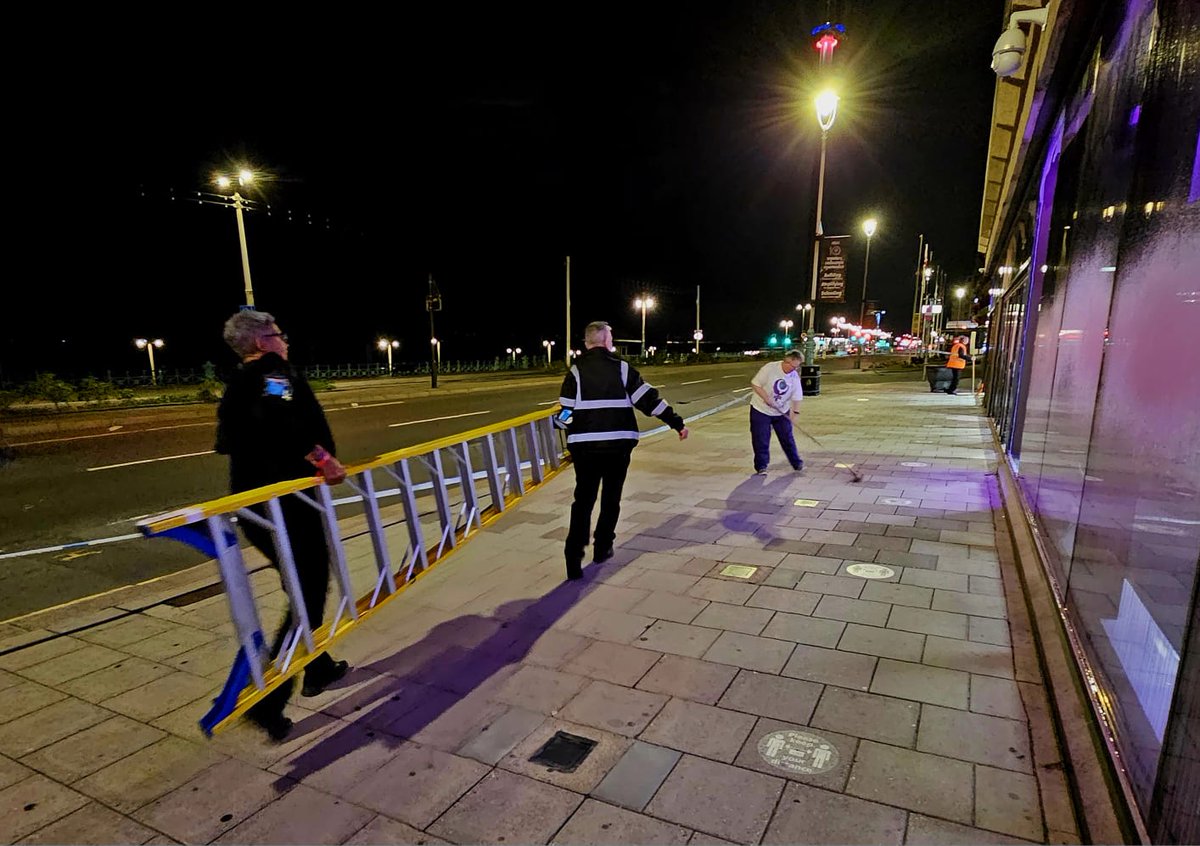
It is shocking and saddening that a conference for women to discuss domestic abuse, sexual violence and lesbian safety, has been met with smashed windows, graffiti and intimidation. We appreciate the support and professionalism from venue staff, which enabled us to start safely and to open on time.
"Erasing women and women-specific language and needs based on their sex is not only wrong, but also demeaning, regressive and constitutes one of the worst forms of violence that women and girls can experience," @UNSRVAW Reem Alsalem told the @UN Human Rights Council.
#HRC59
#Solidarity: @pcs_union has vowed to work with allies “to oppose the cruel welfare cuts announced by Work & Pensions secretary Liz Kendall today, a blatant attack on the most vulnerable in our society.”
The government has announced the most devastating cuts to disability benefits on record.
These plans should shame the government to its core.
Here's our initial response to the new Welfare Green Paper 🧵👇
“In prolonged grief disorder, the bereaved individual may experience intense longings for the deceased or preoccupation with thoughts of the deceased…” - That this’s deemed a disorder is the stupidest nonsense I have heard.
I was talking to a grandmother last week about schooling. ‘I can see the difference’ she said. ‘When my children were young, primary school was relaxed. If the weather was good, they went outside and ran around. If they were sick, they stayed at home. Now with my grandchildren they are seated in desks for more of the day and if they are ill, they are worried that they’ll lose their 100% attendance for the term. The pressure is on to pass their phonics test when they are six and then to learn their times tables at speed by the time they are nine. They feel it and their parents feel it too’.
There’s lots of talk about SEND (special educational needs and disabilities) at the moment, and how increasing numbers of children are being identified as SEND. It’s less common to ask questions about what SEND really means, and whether the education system creates more children ‘with SEND’ as it becomes more pressured and rigid.
For what SEND really means is that a child cannot learn in the way which mainstream education expects. They cannot keep up with expectations, either for academic work or for behaviour. SEND is something which happens in the interaction between a child and the education system. In a system where no 6-year-old is expected to sit still and learn to write their name, then a 6-year-old who just wants to run around outside isn't a problem. In a system where everyone is meant to be able to read by age 6, then they are.
We know from research that if a child is young in their year, they are more likely to be identified as ‘having SEND’. We know that summer born boys are far more likely to be identified as ‘having SEND’ than autumn born girls. We know that the impact of this immaturity resonates through the years, with the youngest in the year doing less well at GCSE. We know that the number of children ‘with SEND’ is going up year on year.
It's not really plausible that more children each year have difficulties in learning, nor that being born in August makes you more likely to have learning problems than if you are born a few weeks later in September.
It’s far more likely that in the push to ‘drive up standards’ the education system is becomes less, not more, suited to how children develop and learn. It’s more likely that the system is penalising immaturity – and children are inherently immature. That isn’t a lack or a defect, it’s a defining part of childhood.
As the education system becomes more rigid and pressured, we’d expect more children not to be able to manage without adaptations. This is exactly what we see. Those children are holding up the flag for all the others, saying that this system is not child-friendly and doesn’t take account of developmental needs and differences.
What if, instead of having higher expectations of the children, we had higher expectations of the education system? What if those expectations were of flexibility, reducing pressure and prioritising lifelong learning and wellbeing instead of short-term testing?
What if we saw the increasing number of children ‘with SEND’ as a sign that the system isn’t working for the many ways in which children develop, rather than a sign that more and more children have learning difficulties? We’ll never sort the ‘SEND crisis’ until we start looking at SEND as an interaction between children and the education system. The more rigid the system is, the more children it will fail.
Illustration by @_MissingTheMark from the book A Different Way to Learn.
High Cost Area Supplements for Inner and Outer London push the lowest Agenda for Change bands over the London Living Wage threshold of £13.85
https://t.co/OeFx5YzM2r
I'm grateful for #NHS 24/25 pay rise, but shocked that band 2 & most band 3 staff in England, Wales & Northern Ireland are still paid less than @LivingWageUK minimum hourly rate of £12.60. @NHSConfed if #NHSScotland can pay a living wage, why can't we?
https://t.co/xFiPeYOWT7