We are pleased to announce the new line-up for CHIBE's Virtual Research Seminar Series! This series will convene leading scholars and experts to examine the intersection of human behavior, economic principles, and health outcomes. https://t.co/t3ViCvf66z
South Korea gender divide update 😲
Young men lean right by 50 points
(74% conservative vs 24% centre-left)
Young women lean left by 22 points
(58% centre-left vs 36% cons)
Deep meritocracy is fundamentally unstable, because elites can't tolerate their kids losing. They will engage in destructive status competition with each other, and also just directly corrupt the institutions. 1/
همایش حضوری معرفی دورههای ویژه اقتصاد دانشگاه خاتم، موسسه تیاس
سهشنبه ۱۳ خرداد ۱۴۰۴
ساعت: ۱۱:۰۰ الی ۱۳:۳۰
همراه با فرصت گفتوگو با اساتید در زمان پذیرایی ناهار
لینک ثبت نام:
https://t.co/c6y6OJGVnk
#همایش_معرفی_رشته#کارشناسی_ارشد#اقتصاد
DOGE said 40% of phone calls into Social Security centers were fraud, so it built a tool to track it. Turns out the 40% was actually 0.0018% and the tool slowed down processing significantly.
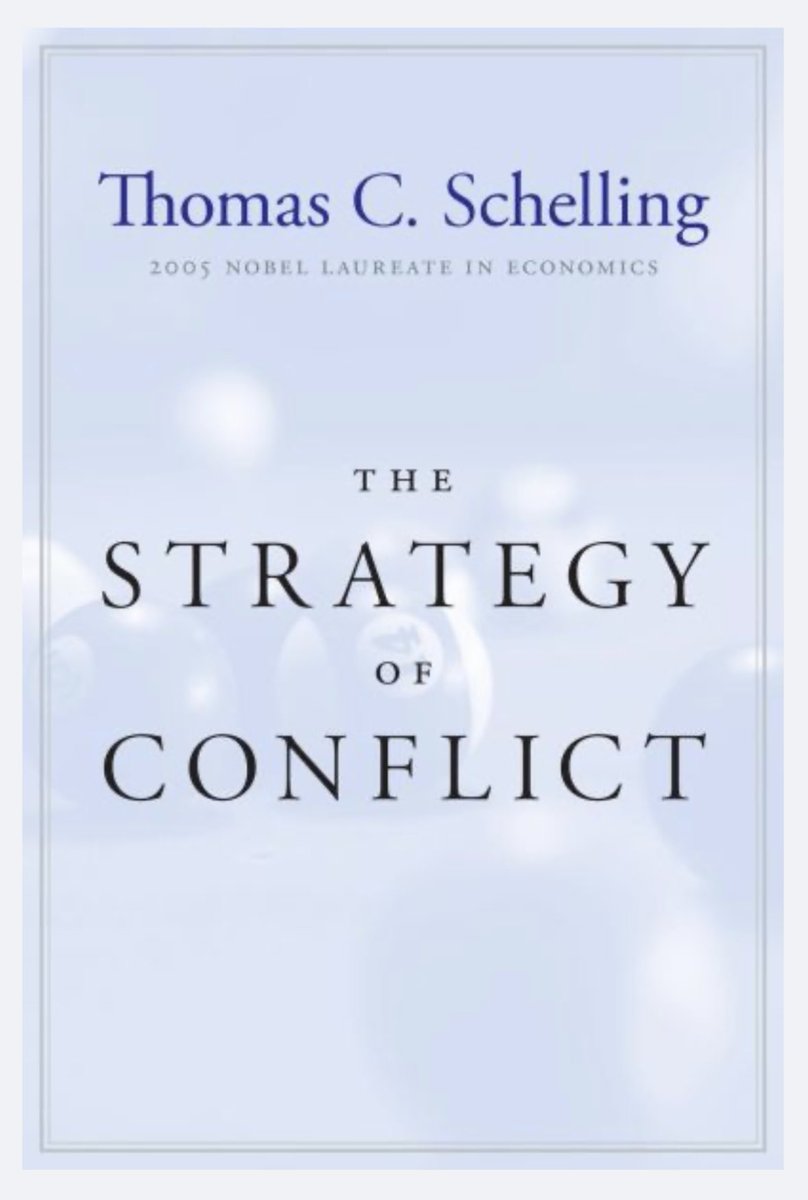
Two great works of game theory. Nash’s paper is just 1 page & pure mathematics. Schelling’s book is 328 pages, & plain English. Both are seminal, thereby showing the scope for diverse methodology.
AI OVERPRODUCTION
China seeks to commoditize their complements. So, over the following months, I expect a complete blitz of Chinese open-source AI models for everything from computer vision to robotics to image generation.
Why? I’m just inferring this from public statements, but their apparent goal is to take the profit out of AI software since they make money on AI-enabled hardware. Basically, they want to do to US tech (the last stronghold) what they already did to US manufacturing. Namely: copy it, optimize it, scale it, then wreck the Western original with low prices.
I don’t know if they’ll succeed.
But here’s the logic:
(1) First, China noticed that DeepSeek’s release temporarily knocked ~$1T off US tech market caps.
(2) Second, China’s core competency is exporting physical widgets, more than it is software.
(3) Third, China’s other core competency is exporting things at such massive scale that all foreign producers are bankrupted and they win the market. See what they’re doing to German and Japanese cars, for example.
(4) Fourth, China is well aware that it lacks global prestige as it’s historically been a copycat. With DeepSeek, becoming #1 in AI is now something they actually consider possibly achievable, and a matter of national pride.
(5) Fifth, DeepSeek has gone viral in China and its open source nature means that everyone can rapidly integrate it, down to the level of local officials and obscure companies. And they are doing so, and posting the results for praise on WeChat.
(6) Finally, while DeepSeek was obscure before recent events, it’s now a household name, and the founder (Liang Wengfeng) has met both with Xi but also the #2 in China, Li Qiang. They likely have unlimited resources now.
So, if you put all that together, China thinks it has an opportunity to hit US tech companies, boost its prestige, help its internal economy, and take the margins out of AI software globally (at least at the model level).
They will instead make their money by selling inexpensive AI-enabled hardware of increasing quality, from smart homes and self-driving cars to consumer drones and robot dogs.
Basically, China is trying to do to AI what they always do: study, copy, optimize, and then bankrupt everyone with low prices and enormous scale.
I don’t know if they’ll succeed at the app layer. But it could be hard for closed-source AI model developers to recoup the high fixed costs associated with training state-of-the-art models when great open source models are available.
Last, I agree it’s surprising that the country of the Great Firewall is suddenly the country of open source AI. But it is consistent in a different way, which is that China is just focused on doing whatever it takes to win — even to the point of copying partially-abandoned Western values like open source, which seemed like the hardest thing to adopt.
On that point: they did build censorship into the released DeepSeek AI models, but in a manner that’s easily circumvented outside China. So, you might conclude they don’t really care what non-Chinese people are saying outside China in other languages, so long as this doesn’t “interfere with China’s internal affairs.”
Anyway —this is an area I’ve been watching, and my reluctant conclusion is that China is getting better at software faster than the West is getting better at hardware.
Why should U.S. taxpayers pay for things like PEPFAR, or the Demographic Health Surveys, or high drug prices that subsidize medical research for the whole world?
Because we are far richer than anyone else in the world, and the way the world works now is really really good for the United States. When things are going well, you should be cooperating, not throwing stones.
We should be trying to preserve and stabilize this equilibrium where U.S. companies can do business anywhere, where global productivity gains make Americans richer. We want American dominance to be a stable equilibrium.
There are many alternate equilibria, multipolar worlds, worlds where American firms can't do business abroad, worlds where every country is arming itself to the teeth instead of pursuing productive activity.
The U.S. enjoys all kinds of exorbitant privileges from the current global economic system. If we shake everything up and see where it settles, there's a good chance we'll be a lot worse off than we were before. You want low variance when you're doing well, you want high variance when you're doing poorly.
Russia and Hamas are throwing bombs at the global economic order precisely because they are losing. They want to shake things up and see if they resettle in a better place.
The U.S. is winning. U.S. GDP per capita is $82000, vs. $50,000 UK, $54,000 Germany, $45,000 in France. We are winning. It makes no sense to shake up the whole game.
The U.S. problem is that the winnings are not being well distributed within the U.S. A lot of Americans are hurting, while the oligarch class gets more and more rich and influential.
The Trump/Vance view is "we need more of the world's resources coming to the United States." But an outsize share of the world's resoures are *already* coming to the United States. The global equilibrium is already pretty good for us, we just need to do a better job of sharing those resources internally.
Instead, they're going to throw all the chips in the air and see what happens. There's a good chance it will make the U.S. worse off globally, without doing anything to solve the internal problems that are at the root of the current malaise.
After being alerted about possible misconduct, the I4R are reproducing published papers that use data from a specific NGO (GDRI). This thread releases the first 2 reports and provides more information about the work and responses/statements from authors journals and journals. 🧵
A new malpractice scandal is brewing in development economics.
We should ask: What is the role of co-authors who had access to all of the shady data (and more), were happy to claim "all authors contributed equally" when these were top publications, and now quietly disavow and distance.
They may be completely innocent — victims of a colleague who fabricated data, and now caught in the collateral damage, losing publications and having a shadow cast on their legit work. It's hard to imagine how devastating it would feel to invest years in a project that was totally fraudulent.
But can they *all* be *totally* innocent? If there are six authors on an RCT and the data is fabricated, can five of them be completely ignorant? Surely they were working with the data for months and months, and could have noticed the anomalies found by the I4R replicators? Maybe one was brought in for a specialized task like building a structural model— bad luck!! But 5 out of 6 authors on a paper?
I don't know what information I4R plans to release, but I think we need a greater accounting than just one bad actor and everyone washes their hands and moves on. We should hear from the more than half dozen people involved, some on multiple projects. We should hear from the NGOs and firms that ran the surveys—if they exist. How could a thing like this happen? What questions should have been asked but weren't? What systems and practices would these researchers use to prevent it from happening to them again?
Research fraud imperils the entire discipline, and it is surely more widespread than the egregious scandals which come to light. The fraudsters are not all as ham-fisted as Ariely/Gino "the fake data is in a different font in an Excel spreadsheet."
And trust me, this is not the only research team in development economics churning out result after result that is too good to be true.
"Donald Trump’s demand for a $500bn (£400bn) “payback” from Ukraine goes far beyond US control over the country’s critical minerals. It covers everything from ports and infrastructure to oil and gas, and the larger resource base of the country."
What does this remind me of? Oh, yes, what the troika extracted from Greece. Not just "everything from ports and infrastructure to oil and gas, and the larger resource base of the country" but ALSO one million homes (collateral to NPLs that were handed over at 5% of face value to vulture funds) plus 70% of agricultural land.
Lest we forget...
https://t.co/orRfr1SYxZ
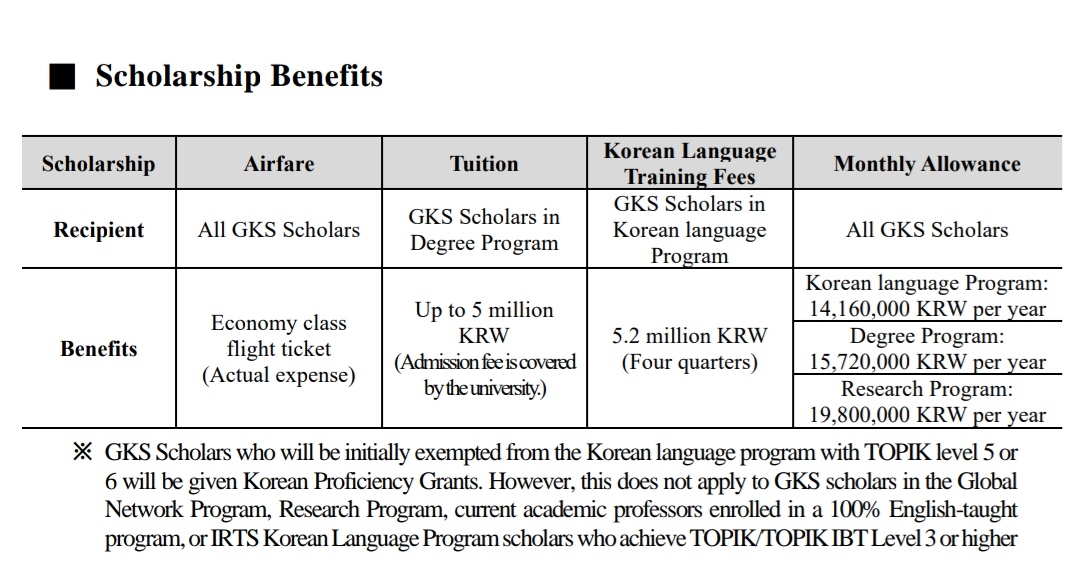
اسکلارشیپ دولت کره برای فوق لیسانس و دکترا شروع شده
https://t.co/Db7MuoVReO
مهلتش تا ۱۶ فوریه است (یک هفته دیگه)
اسکلارشیپ: شهریه، بلیط هواپیما، حقوق ماهانه و هزینه ویزا و بیمه رو میده.
مدارک هم باید تحویل سفارت بدین پول پست خارجی نداره .
ریتوییت اگه میشه بکنین برسه دست کسی که لازم داره با این وضع دلار.
Some of you might remember the fascinating AER paper by Oprea that shows that classic lottery anomalies have nothing to do with risk.
There is now a new paper which calls this surprising result into question.