Dark Compute is live.
A dark pool for GPU compute on Robinhood Chain.
Orders go in sealed.
One clearing price per batch.
Nobody sees your hand.
CA: 0x2caf693f29504c87b8c90cbe7d6dddf0e1a6e04f
The pool never pays out more than it holds.
held = balances + escrow + fees
Every division rounds in favour of the venue. Checked on every test book, up to a full 96 × 96 batch.
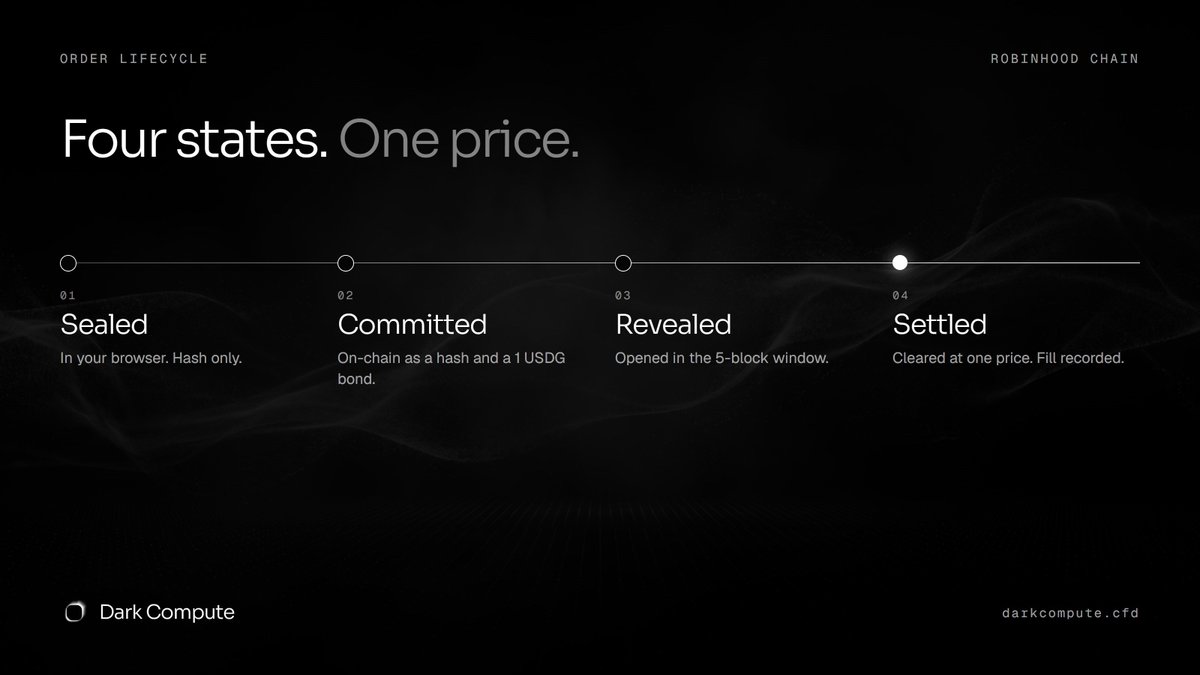
Four states. One price.
Sealed: in your browser, hash only.
Committed: on-chain with a 1 USDG bond.
Revealed: opened in the 5-block window.
Settled: cleared at one price, fill recorded.
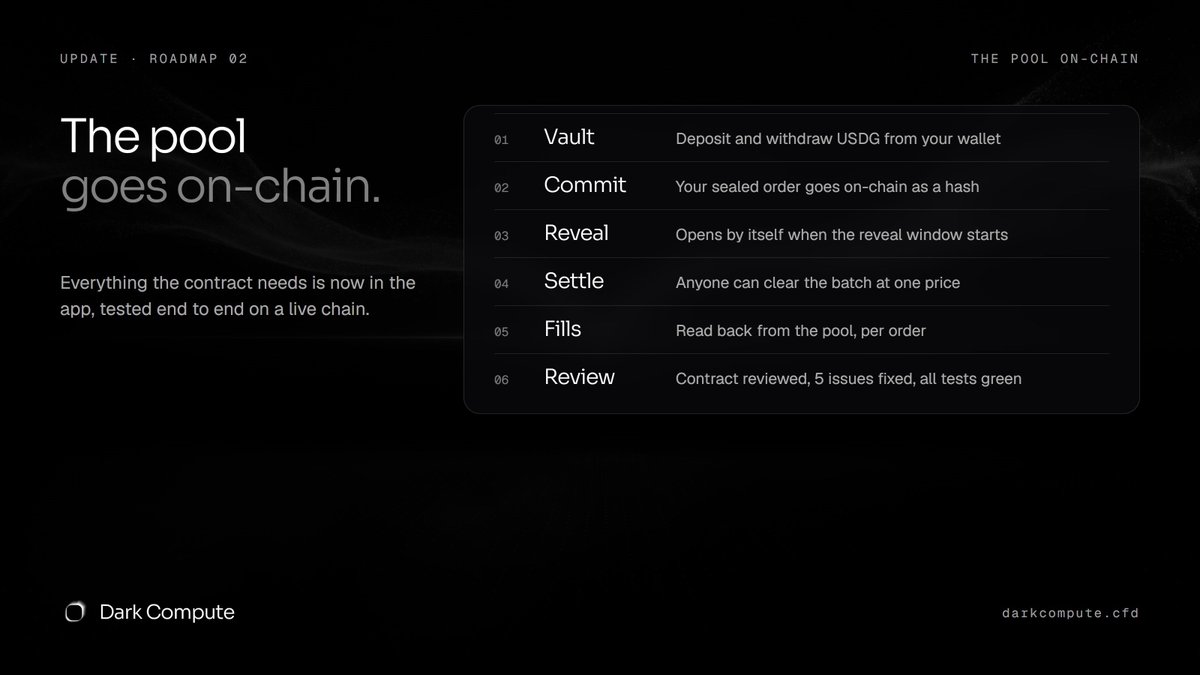
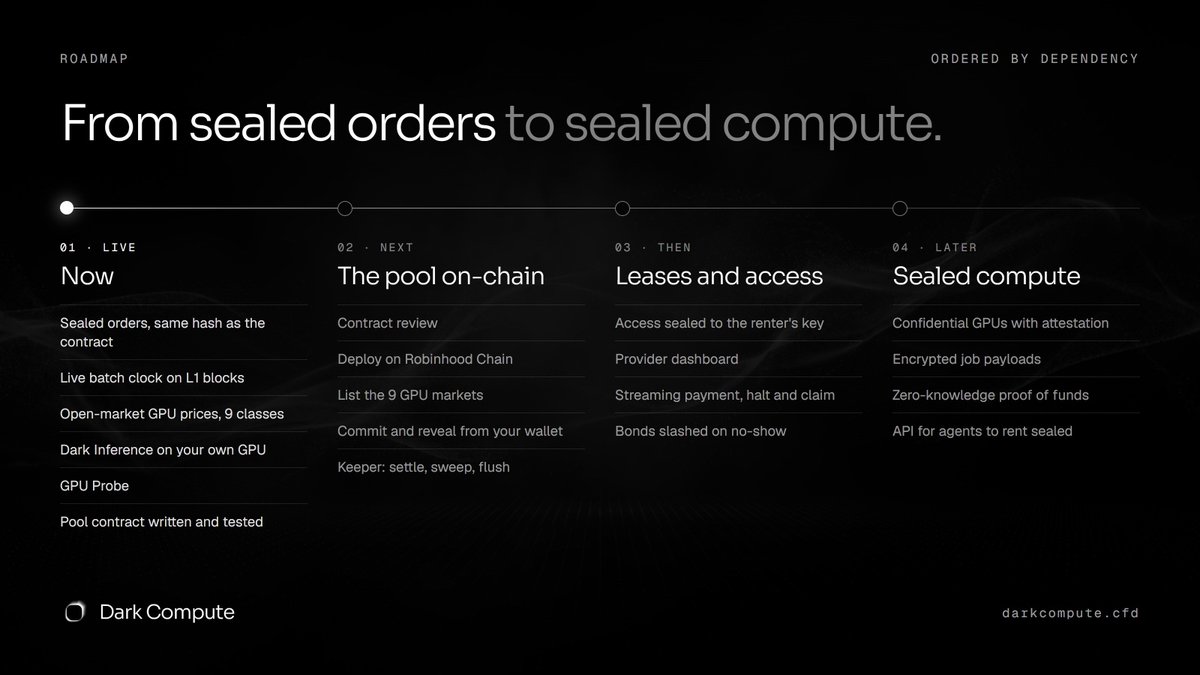
First Update is here: the pool goes on-chain.
Vault: deposit and withdraw USDG
Commit: your sealed order lands as a hash
Reveal: opens by itself in the window
Settle: one price, anyone can clear
Contract reviewed, 5 fixes
Mainnet deploy is next.
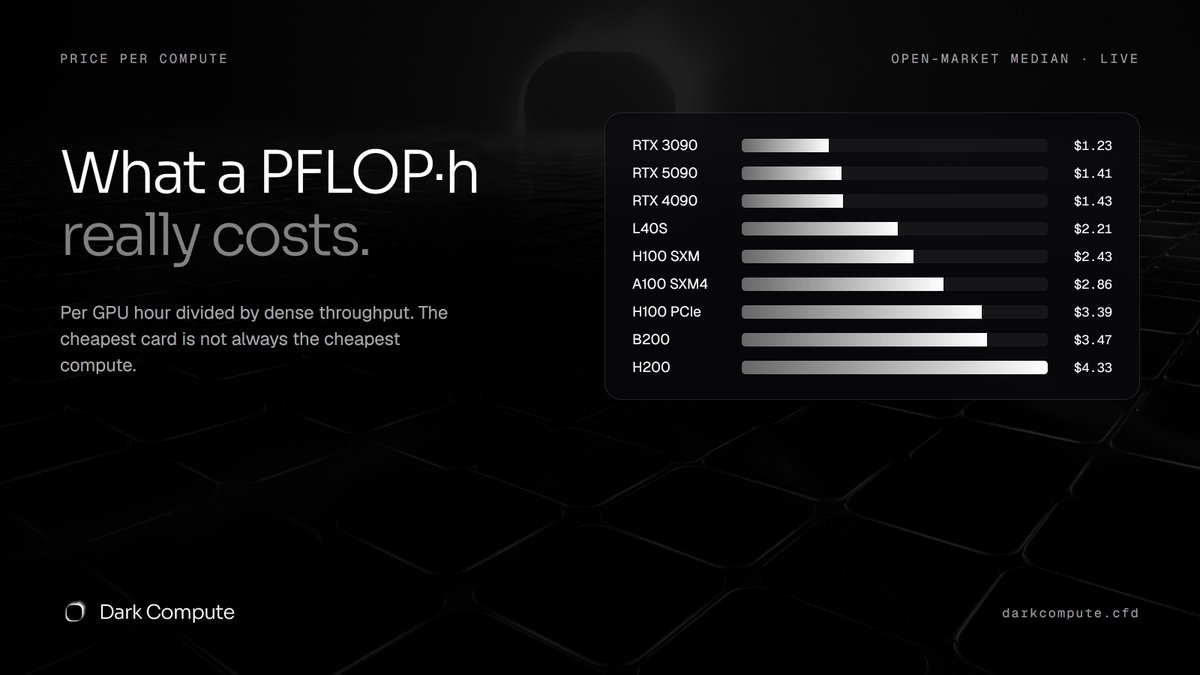
What a PFLOP-hour really costs, live.
Price per GPU hour divided by dense throughput, across 9 classes.
The cheapest card is not always the cheapest compute.
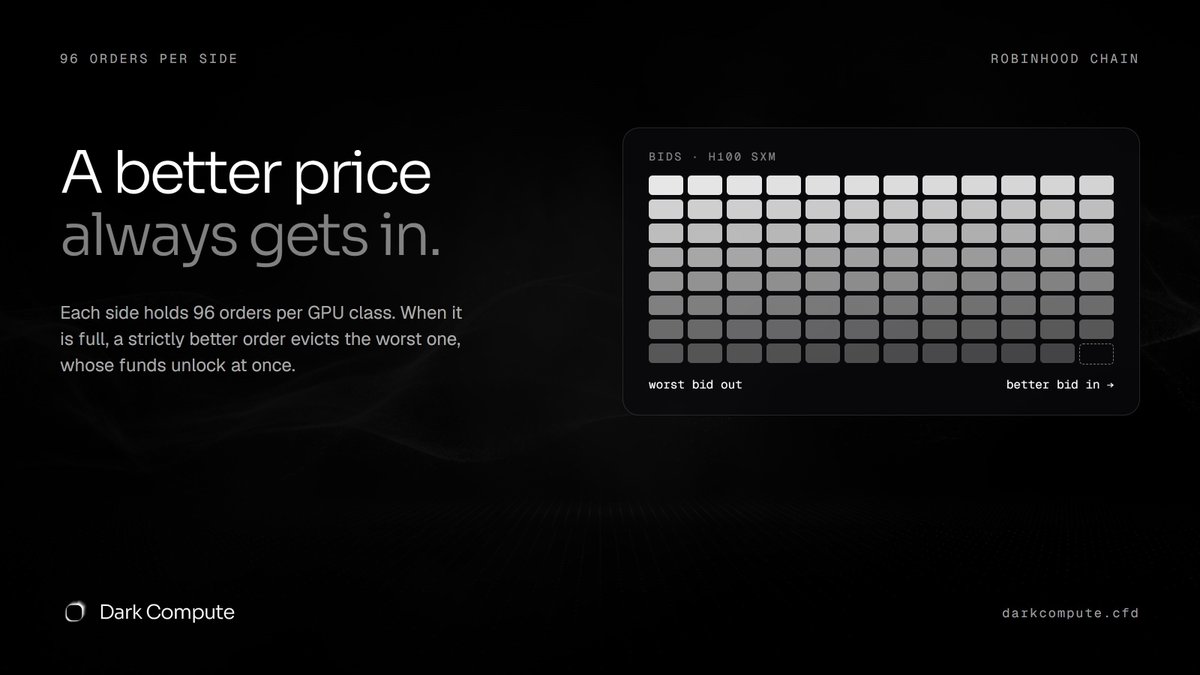
96 orders per side, per GPU class, per batch.
When a side is full, a strictly better order evicts the worst one.
You cannot block a market with junk prices.
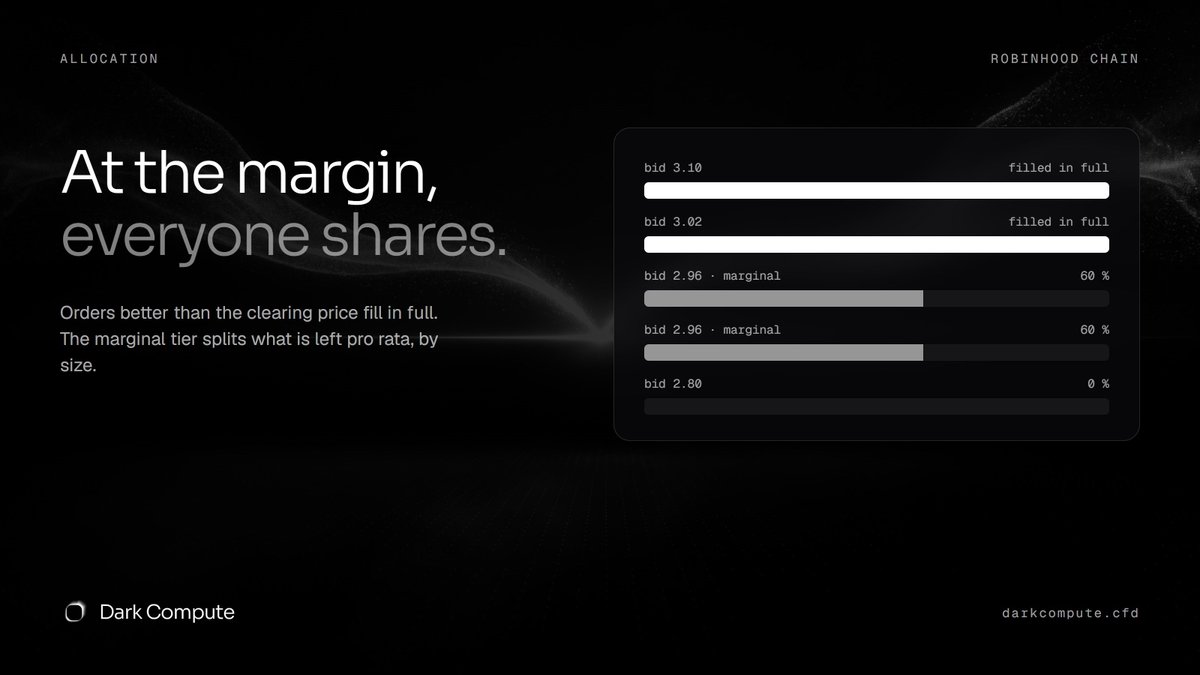
At the margin, everyone shares.
Orders better than the clearing price fill in full. The marginal tier splits what is left pro rata, by size.
No queue jumping. No priority fees.
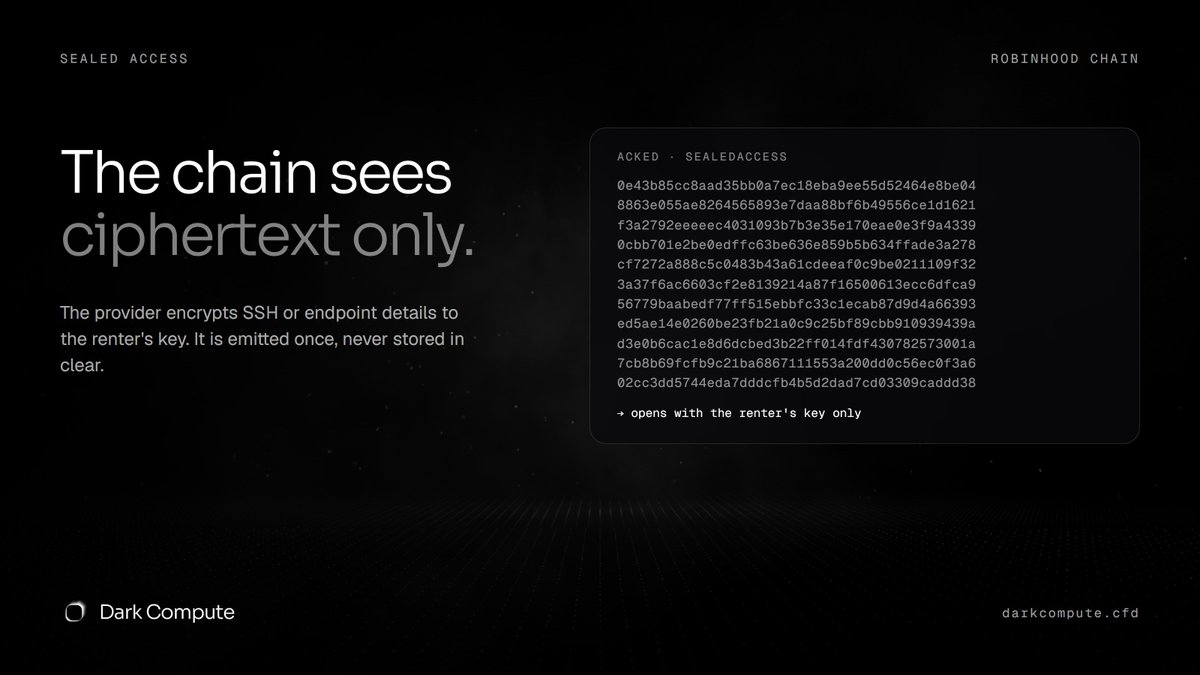
The chain never sees your machine access.
Providers encrypt SSH or endpoint details to the renter's key. Only ciphertext touches the chain.
Sealed orders. Sealed access.
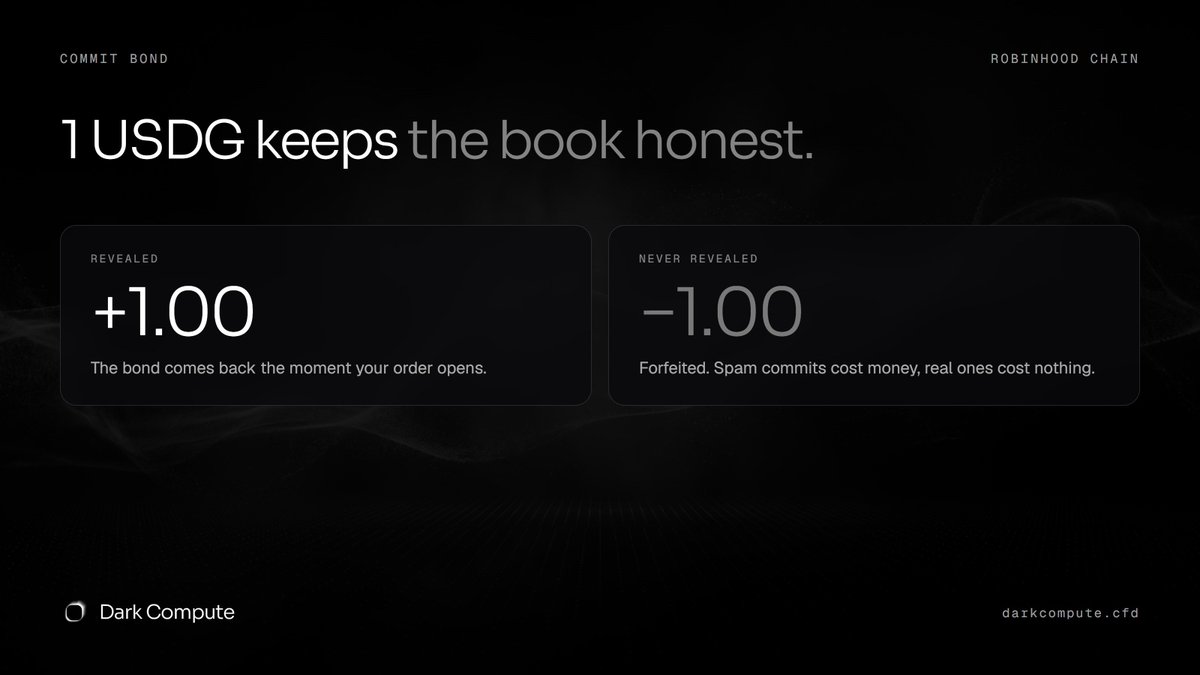
1 USDG keeps the book honest.
Reveal your order and the bond comes straight back.
Never reveal and it is forfeited.
Spam commits cost money. Real ones cost nothing.
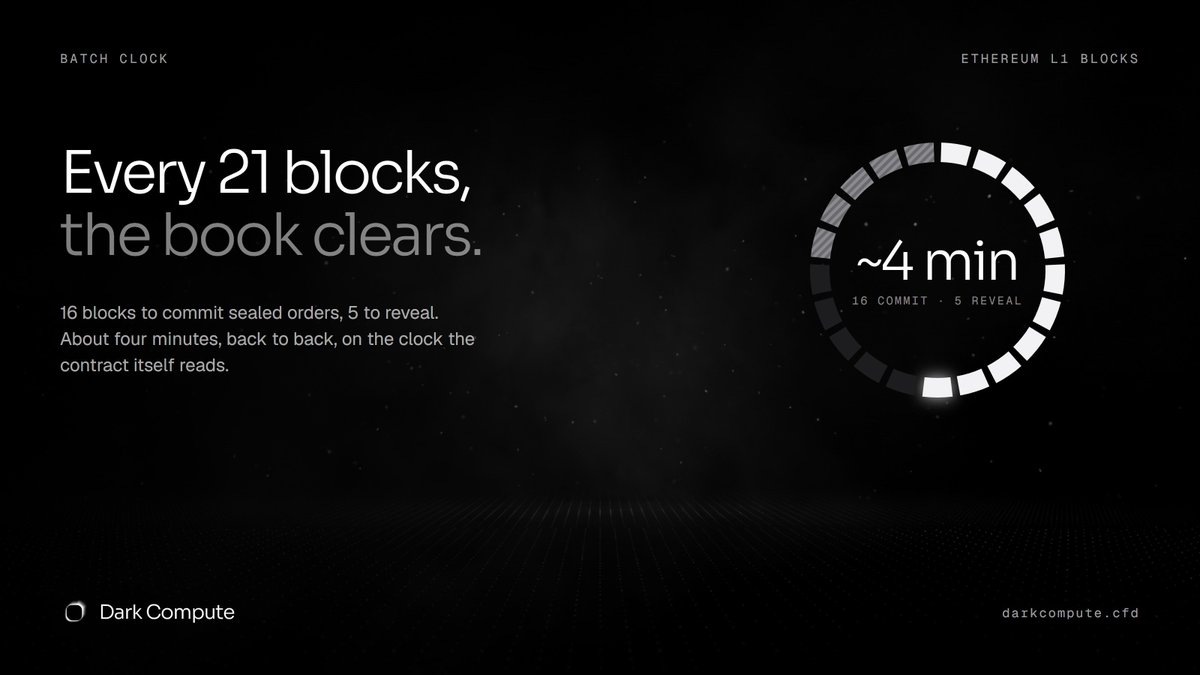
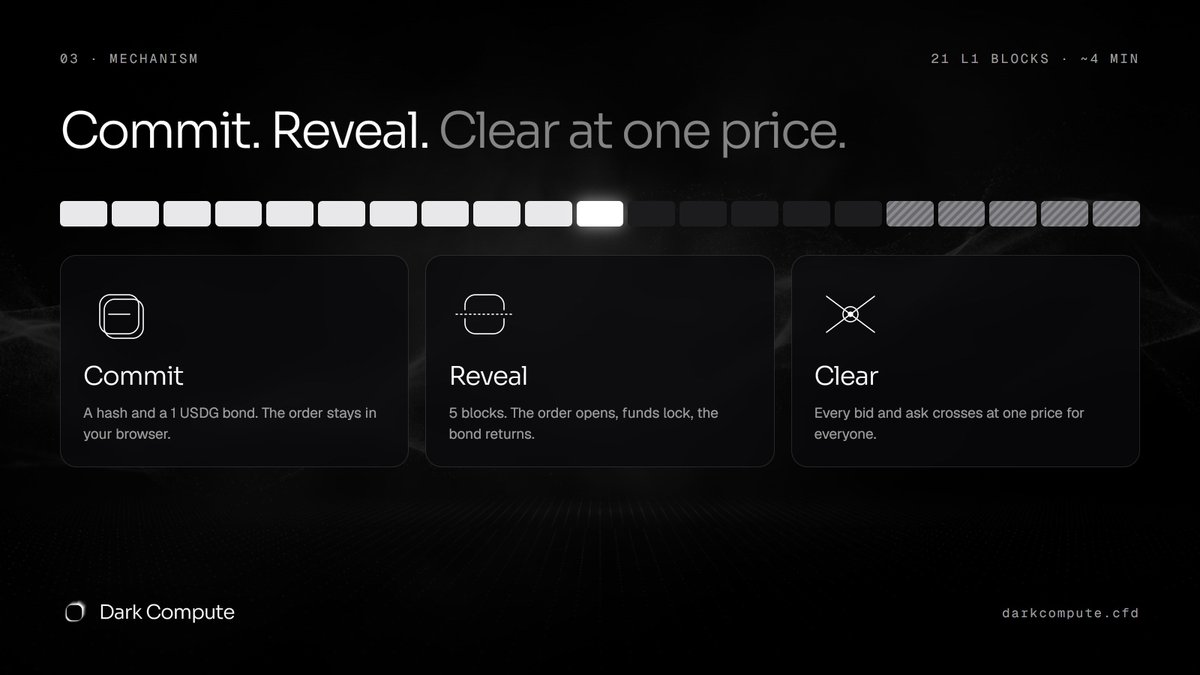
Every 21 blocks, the book clears.
16 blocks to commit sealed orders. 5 to reveal. About 4 minutes, back to back.
The clock is Ethereum's block number, the same one the contract reads.
Providing compute?
GPU Probe benchmarks your card with a WebGPU compute shader, reads its architecture, and tells you which class it can be listed in.
Then seal an ask.
The most private GPU is the one you already own.
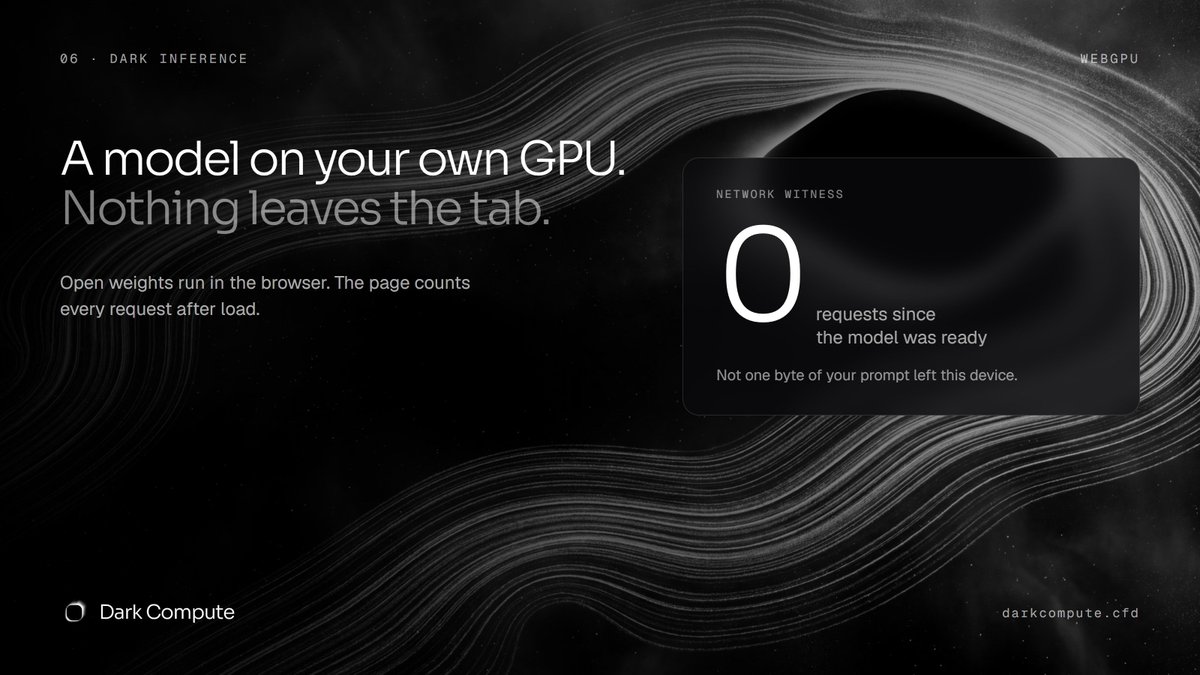
Dark Inference runs an open model on your GPU, inside the browser tab.
A network witness counts every request after load. It stays at 0.
9 GPU classes, from B200 to RTX 3090.
Each one is its own sealed book. The open-market median is shown next to it, live, as a yardstick.
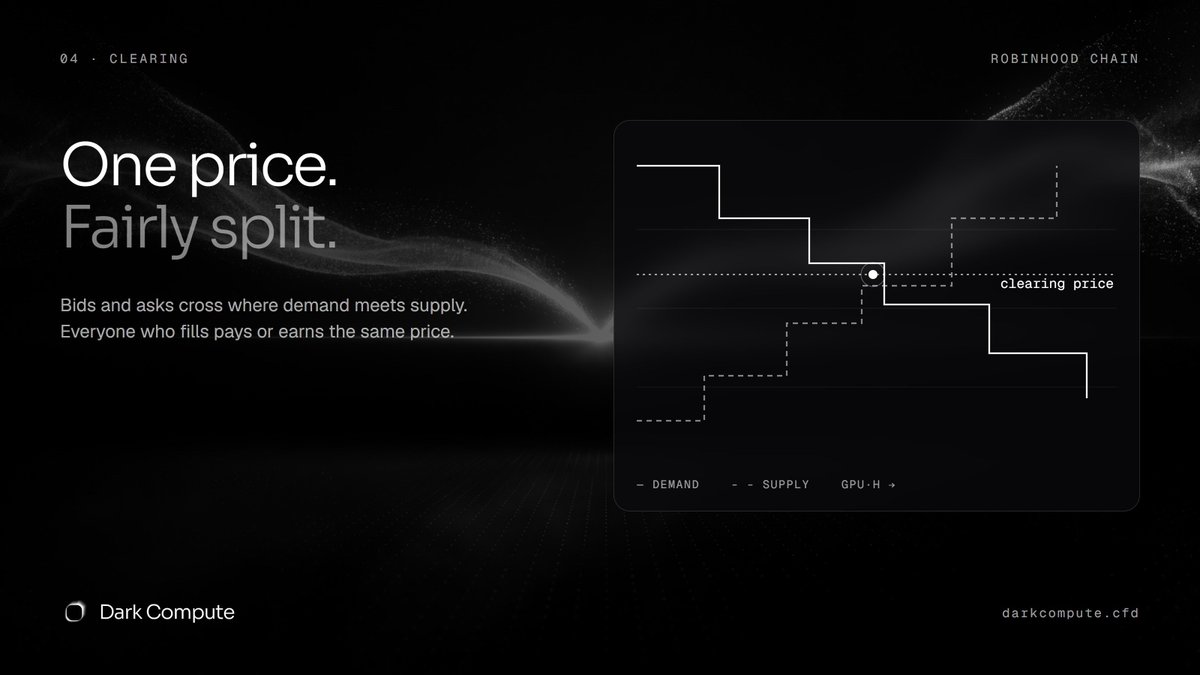
The batch sets the price. Not the loudest bidder.
One price per batch.
Bids and asks cross where demand meets supply. Everyone who fills pays or earns the same price.
No front-running the book, because there is no book to read until it closes.
Commit. Reveal. Clear.
Batches run on the Ethereum block clock, 21 blocks, about 4 minutes.
16 blocks to commit sealed orders.
5 blocks to reveal.
Then every bid and ask clears together.