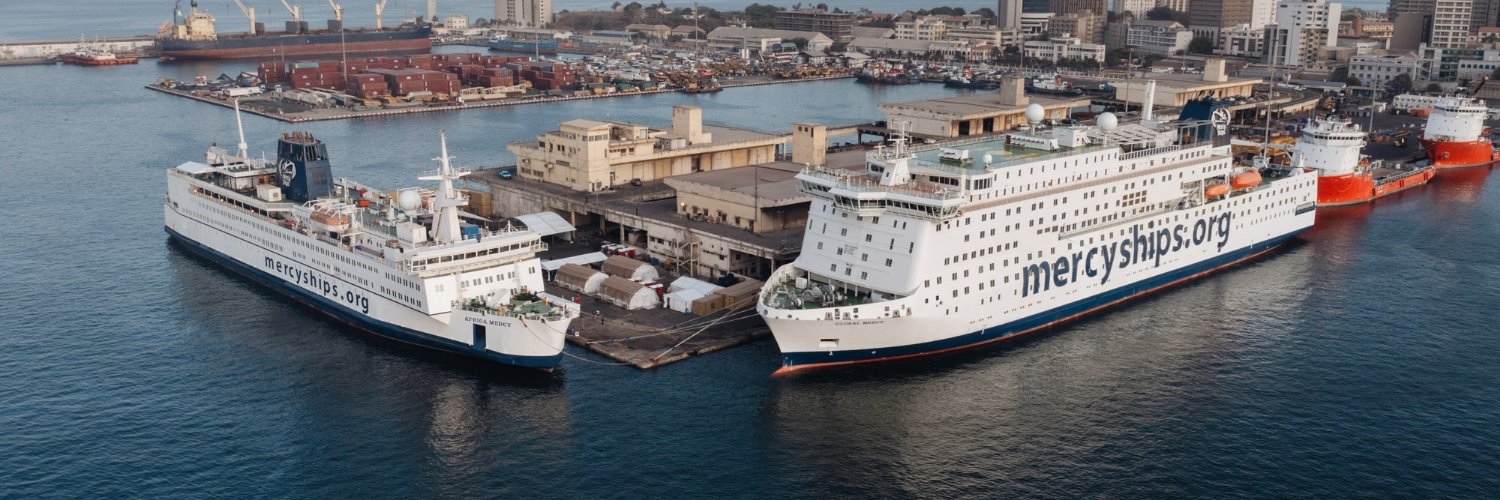
The impact of @MercyShips is transformative in regions grappling with a shortage of doctors, specialists and essential medical equipment, coupled with financial and geographical barriers to care.
#globalhealth#globalsurgery
https://t.co/MkoKSWtrVL
Big Oil sees shortages coming
Exxon: We're nearing inventory levels that are truly unprecedentedly low.
ConocoPhillips: critical shortages of oil on the horizon.
Chevron: shortages in oil supply will begin appearing.
Saudi Aramco: fuel stocks are heading for critically low levels.
Meanwhile, markets are hitting all-time highs...
Apparently shortages don't matter until they do.
This day in Vancouver #Canucks history, June 4, 2011:
Alex Burrows scores 0:11 into overtime of Game 2 to give the Canucks a 2-0 lead over the Boston Bruins in the Stanley Cup Final.
🎥: CanucksHD / YouTube
The world is hitting tank‑bottom oil inventories by September.
Oil inventories work like blood in the human body: you can donate a bit, but below a certain level your blood pressure tanks and organs start failing. You don’t die because blood hits zero, you die because circulation collapses
That’s where we are with oil. We began the year with more than 8 billion barrels in storage, yet only around 10% was actually usable without pushing the system into stress... that safety margin has now been drawn down.
The next stage is dropping to operational floor levels, where pipelines and refineries start failing – that’s the real tank bottom.
Open Letter
To the President of the Russian Federation
From the President of Ukraine
When you came to power in Russia more than 26 years ago, many people in Ukraine viewed you positively. That is how it was. But that is now in the past.
Now, the overwhelming majority of Ukrainians view it positively that our long-range drones paid a visit to the opening of your forum in St. Petersburg, covering a distance of more than 1,000 kilometers. As you know very well, that distance is not the limit of our capabilities.
CANADA🇨🇦 SWEEPS THE USA🇺🇸!!
It's a shocking three sets victory for Canada at home in front of a packed house in Quèbec City!
This is Canada's first win over the U.S. in the Volleyball Nations League. Wild. Highlights below:👇 #VNL2026#TeamCanada
Everything changed the moment Trump walked away and Europe stepped in. Funny how that works.
The EU has mobilised over €75B in military support. Ukraine – the country everyone was supposed to be rescuing – is now exporting its own drone technology to Europe.
And on the ground? Ukraine is systematically destroying Russian supply routes along the land bridge to Crimea, hitting over 125 trucks in May alone. Just trucks on fire.
The country that was supposed to fall in 72 hours is strangling Putin’s crown jewel.
Remember this day. When Ukraine finally celebrates victory, there will be a loser sulking at Mar-a-Lago. JD Vance, Rubio, and Hegseth won’t be on the guest list – because losers don’t get invited to victory parties. That’s just how it works.
Thought you might enjoy this video.
Just some Ukrainian blowing up things
Lee Iacocca had everything. Then he lost it. Ford Motor Company. Thirty-two years of work. Countless promotions.
The creation of the Ford Mustang. A reputation as one of the most successful executives in America. Then it ended. Henry Ford II called him into his office and fired him.
No dramatic explanation. No public celebration of his achievements. Just out. The humiliation was enormous. Iacocca had spent decades helping build Ford into a powerhouse. Now he was unemployed. Many people assumed his career was over.
Then the phone rang. Chrysler wanted him. Most executives would have run the other direction. The company was collapsing. Losses exceeded $1 billion. Factories were shutting down.
Workers were losing jobs. Dealers were disappearing. Cash was running out. Some believed bankruptcy was only a matter of time. Lee Iacocca accepted anyway. When he arrived, the situation was worse than expected.
The company was drowning. Bills were piling up. Money was disappearing. Time was running out. Desperate situations require desperate decisions. Iacocca went to Washington.
He stood before Congress and asked for help. Critics attacked him. Some called Chrysler a lost cause. Others argued taxpayers should never help a private company.
The criticism was relentless. Still, he kept pushing. Eventually, the government approved loan guarantees. The conditions were harsh. Workers took cuts.
Executives took cuts. Iacocca reduced his own salary to one dollar a year. Most people expected Chrysler to fail anyway. They were wrong. New vehicles arrived. Sales improved. Factories reopened. Employees returned.
The company slowly came back to life. Then came the moment nobody expected. August 15, 1983. Lee Iacocca walked into a room carrying a check. Eight hundred million dollars. The remaining government-backed debt. Paid in full. Seven years ahead of schedule.
The executive who had been fired. Mocked. Written off. Had just completed one of the greatest business turnarounds in American history. Some people quit after humiliation. Lee Iacocca used it as fuel.
🇺🇦🇷🇺 Ukraine just droned a Russian warship inside a dry dock in Kronstadt.
Kronstadt. As in 30km from Saint Petersburg. As in deep inside Russia.
The radar collapsed onto the superstructure. The mast fell over. The ship is cooked.
A new five-storey building is under construction in Victoria which will include 34 culturally supportive homes for Indigenous peoples, the province announced Wednesday.
https://t.co/RE4UM458px
BREAKING: The House passed a measure to provide almost $2 billion in aid to Ukraine and impose new sanctions against Russia on Thursday, sending the measure to the Senate behind a 226-to-195 tally — despite GOP leadership in full opposition to the measure.
https://t.co/N0bcE7baze
“Better to be a member of the EU than a U.S. state” — Finland’s president made Canada an unexpected proposal
Alexander Stubb suggested expanding the EU to around 40 countries. He said Europe needs to become stronger on the global stage and more actively attract new partners.
Among possible candidates, Stubb named the United Kingdom, Canada, Turkey, Norway, and Iceland.
According to him, now is the right moment due to the war in Ukraine and shifts in U.S. policy.
The French hate air conditioning.
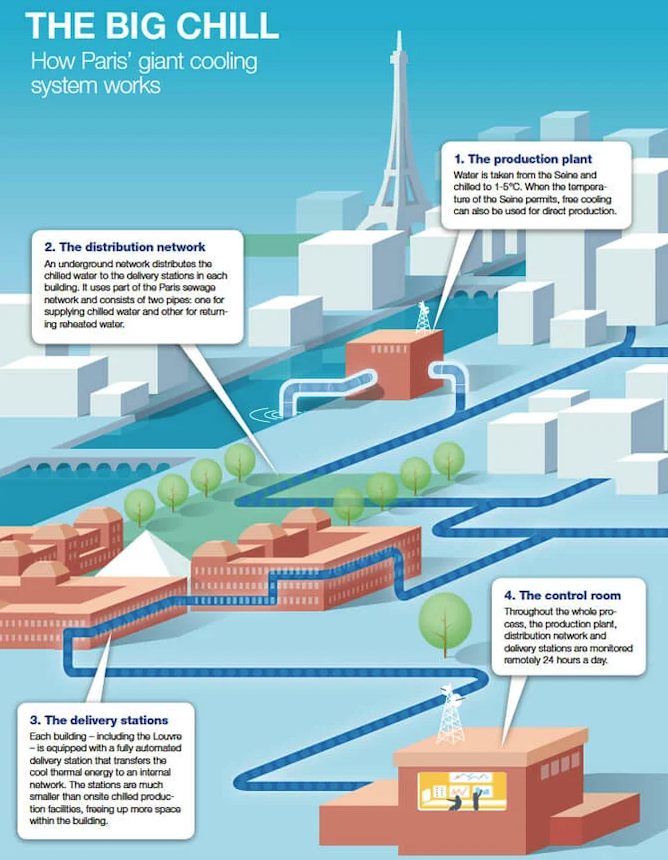
So Paris built a 120-kilometre machine under its streets for producing cold.
It’s called Fraîcheur de Paris, and it does for summer heat what district heating did for winter: centralise the problem.
Instead of every museum, office, hotel, hospital and shop bolting its own cooling plant onto the building, Paris moves cold through pipes.
The network sends water chilled to 2 to 4°C through buried supply lines. The water enters a connected building, absorbs heat through an exchange station, then returns at 12 to 14°C to be cooled again.
It essentially functions with two pipes. One carries the cold out, the other carries heat back.
The production plants cool the circuit from 12°C to 4°C. Some sites use the Seine as a heat sink. In colder periods, the system can use the river’s own temperature for free cooling, which means the machines work less and the electricity demand drops. The Seine water doesn’t become the building water. It stays separate, passing temperature across heat exchangers.
The scale is pretty strange when you see it written down though.
It's got 15 production sites, 4 storage sites, 120 km of underground network with 924 subscribers. This has resulted in 7 million square metres cooled, and 493 GWh of cooling sold.
A cold utility running beneath one of the densest cities in Europe.
The Forum des Halles has been cooled this way since 1979. The Louvre since 1986. Galeries Lafayette, Opéra Garnier, Hôtel de Ville, Station F, La Samaritaine and the National Assembly all sit on the same idea. Tourists stand in the Louvre looking at paintings while a municipal cold loop does part of the dull work below ground.
The boring part is the breakthrough.
Cold can be stored at night in chilled water or ice, then used during daytime peaks. The network is monitored from a control room with more than 125,000 control points. A delivery station inside a building takes 5 to 7 times less space than a standalone cooling installation and avoids the roof and façade clutter that turns cities into compressor farms.
That matters because conventional air conditioning solves heat by moving it somewhere nearby. In a dense city, thousands of private machines mean thousands of outdoor units rejecting heat into streets, courtyards and roofs, plus refrigerants, noise, vibration and maintenance spread across every building.
Paris’s public cooling network has a stated coefficient of performance of 4, against 3 for a wet standalone system and 2 for a dry standalone system. Against an equivalent set of autonomous installations, Fraîcheur de Paris says the network gives 100% higher energy efficiency, 35% less electricity use, 90% fewer refrigerant-fluid emissions and 50% lower CO2 emissions.
The climate backdrop is the real reason this exists.
Paris ran a full crisis exercise called “Paris at 50°C” in 2023. Météo-France’s 2050 reference trajectory for France points to heatwave days becoming five times more frequent, hot nights rising sharply in urban centres, and some local extremes around 48°C becoming possible.
The city signed a 20-year concession in 2022 with Fraîcheur de Paris, owned 85% by ENGIE and 15% by RATP. The contract is worth a projected €2.4 billion. The plan is to extend the network by 158 km by 2042, add 20 production plants and 10 storage sites, and reach more than 3,000 subscribers, including hospitals, nurseries, schools and care homes.
This is basically the infrastructure version of admitting that summer is becoming a public systems problem...
Canada touches three oceans — each one connecting us to communities far beyond our shores.
Mercy Ships serves overseas, but the journey begins here in Canada with people ready to bring hope where it’s needed most.
🌊🇨🇦 Start here: https://t.co/jllyUFfjOM
#WorldOceanDay
"The best leaders may not be your best players, but they will be the guys that will set the table in terms of how you want the team to look, and how you want your team to behave."
Manny Malhotra on what he looks for in a captain.
We just launched Canada’s new AI Strategy: AI For All.
We’re taking control of our future — with AI that’s governed by Canadian values, AI that’s accountable to Canadians, and AI that serves all Canadians.
A massive political schism is opening in Europe. While Brussels pushes for total energy decoupling, Germany’s leading opposition party has just bypassed the government to hold direct talks with Gazprom on restarting the Nord Stream pipelines. 🇷🇺🇩🇪🇪🇺
🧵 👇