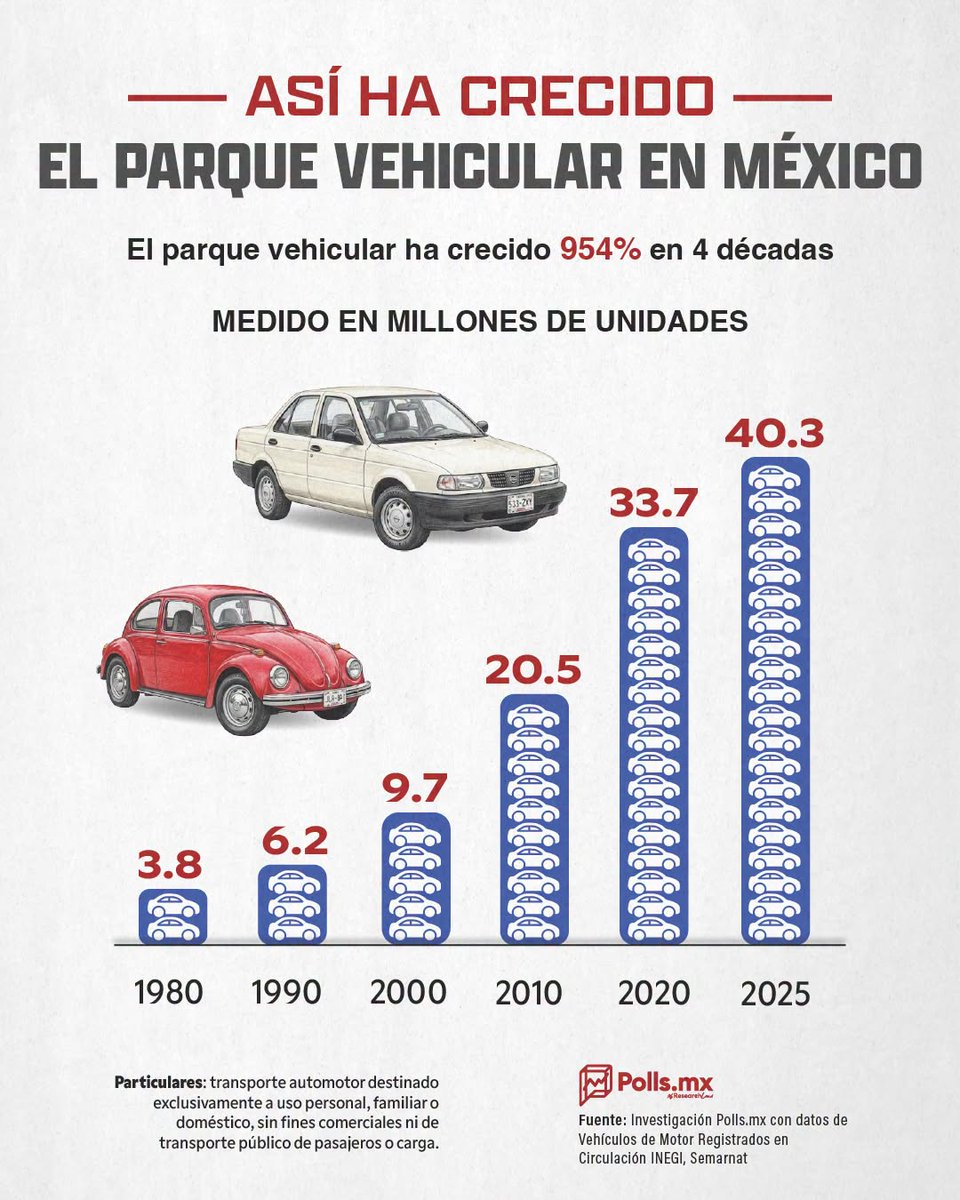
📈🚘🚐 En poco más de cuatro décadas el padrón vehicular en México ha crecido más del 1000%: hay 40.3 millones de autos
De acuerdo con una investigación de https://t.co/HFW6Gvpors basada en datos del INEGI y Semarnat, el número de autos particulares en el país pasó de 3.8 millones en 1980 a 40.3 millones proyectados para 2025. El gráfico refleja un disparo constante en la movilidad privada durante los últimos 40 años, registrando su brinco más fuerte entre el año 2000 y 2010 al duplicarse de 9.7 a 20.5 millones de unidades, hasta superar los 33.7 millones en 2020.
Nathan Fielder's next project is about you. He's been surveilling you for three years. Your home is rigged with hidden cameras, your phone lines are tapped. All of the meaningful relationships you've developed have been with paid actors. And you are probably going to jail
Factores de la ultrabaja fecunidad (0.8) en la CDMX.
10 Posibles hipótesis:
1.- Las mujeres estudian más tiempo. Retardan maternidad.
2.- Falta de vivienda asequible. Costo alto para tener hijos.
3.- Largos tiempos de traslado al trabajo. Dificultan cuidados.
4.- Densificación y verticalización de vivienda. En condominios, la tasa de fecunidad es todavía más baja.
5.- El ruido, la contaminación y la certeza sísmica.
6.- Expulsión de personas jóvenes al Estado de México.
7.- Descenso en la actividad sexual juvenil.
8.- Transformación de las expectativas de las mujeres. El deseo de tener hijos ya no es prioritario.
9.- La mujer continúa soportando desproporcionadamente la crianza y el trabajo doméstico.
10.- El aumento del costo jurídico esperado de formar y, sobre todo, disolver una familia.
¿Tú qué opinas?
America lost one in six of its neighborhood bars in a single decade, and the killer was real estate math.
A bar like this can pour $3 beers because the building was paid off decades ago. The owner often lives upstairs. No rent, no investors, no debt service on a Pabst sign that's been hanging there for 40 years.
The moment that building sells, the math dies with it. A new operator inherits a market-rate lease, which forces $9 drinks, which forces a renovation to justify $9 drinks, which produces another exposed-brick cocktail bar where the dive used to be.
The Midwest kept its dive bars because of how they got built in the first place. Before Prohibition, Milwaukee's breweries put up corner taverns themselves. Pabst and Schlitz wanted guaranteed outlets for their beer, so they built bars directly into residential blocks. That's why these places sit on quiet snowy corners between houses instead of on commercial strips where rent explodes.
Chicago had around 3,300 tavern licenses in 1990. It's down to about 1,200. At the worst of the decline, America was losing six neighborhood bars a day.
And every single closure is permanent. You can't build a dive bar. You can only inherit one.
New Yorkers, here’s what you need to know about this week’s nor’easter:
The storm is expected to pass offshore, keeping the heaviest rain east of New York City. But we should still prepare for gusty winds, rain, and some high-tide flooding beginning today, peaking Friday, and potentially continuing through Sunday.
If you live near the coast, move your car to higher ground or away from streets that regularly flood.
Secure loose outdoor items, including furniture and garbage containers, that could be picked up by strong winds. Storm tracks can change, so please stay informed and be prepared.
For emergency alerts, text NOTIFYNYC to 692-692.