The math on this project should mass-humble every AI lab on the planet.
1 cubic millimeter. One-millionth of a human brain. Harvard and Google spent 10 years mapping it. The imaging alone took 326 days. They sliced the tissue into 5,000 wafers each 30 nanometers thick, ran them through a $6 million electron microscope, then needed Google’s ML models to stitch the 3D reconstruction because no human team could process the output.
The result: 57,000 cells, 150 million synapses, 230 millimeters of blood vessels, compressed into 1.4 petabytes of raw data. For context, 1.4 petabytes is roughly 1.4 million gigabytes. From a speck smaller than a grain of rice.
Now scale that. The full human brain is one million times larger. Mapping the whole thing at this resolution would produce approximately 1.4 zettabytes of data. That’s roughly equal to all the data generated on Earth in a single year. The storage alone would cost an estimated $50 billion and require a 140-acre data center, which would make it the largest on the planet.
And they found things textbooks don’t contain. One neuron had over 5,000 connection points. Some axons had coiled themselves into tight whorls for completely unknown reasons. Pairs of cell clusters grew in mirror images of each other. Jeff Lichtman, the Harvard lead, said there’s “a chasm between what we already know and what we need to know.”
This is why the next step isn’t a human brain. It’s a mouse hippocampus, 10 cubic millimeters, over the next five years. Because even a mouse brain is 1,000x larger than what they just mapped, and the full mouse connectome is the proof of concept before anyone attempts the human one.
We’re building AI systems that loosely mimic neural networks while still unable to fully read the wiring diagram of a single cubic millimeter of the thing we’re trying to imitate. The original is 1.4 petabytes per millionth of its volume. Every AI model on Earth fits in a fraction of that.
The brain runs on 20 watts and fits in your skull. The data center required to merely describe one-millionth of it would span 140 acres.
On this day in 1928, Alexander Fleming noticed a mold growing on one of his petri dishes at St. Mary’s Hospital in London. This contaminated petri dish led to the discovery of penicillin - the world's first antibiotic that has saved millions of lives.
There are a few art docs that I've watched
dozens of times and I've picked up something new every time.
Not just because I may have missed things previously, but as I've grown and learned, I'm capable of knowing and experiencing more.
An unintended consequence of everything being avail at all times is that people no longer experience art or music multiple times.
They no longer watch the same skate video or drum video hundreds of times on VHS because that's all you have.
If you first know what you want in your head, then you know what direction to travel in.
Then comes how to achieve it technically.
Lastly, understanding how your tools
fundamentally function aids in the end result.
MUSIC/ART.
Want the hard truth?
For 95.3% of us:
We can hit a million golf balls
play 10,000 rounds
take 1,000 lessons…
And will never have a swing as good as this 3 year old…
😂😂😂
Happy Friday!
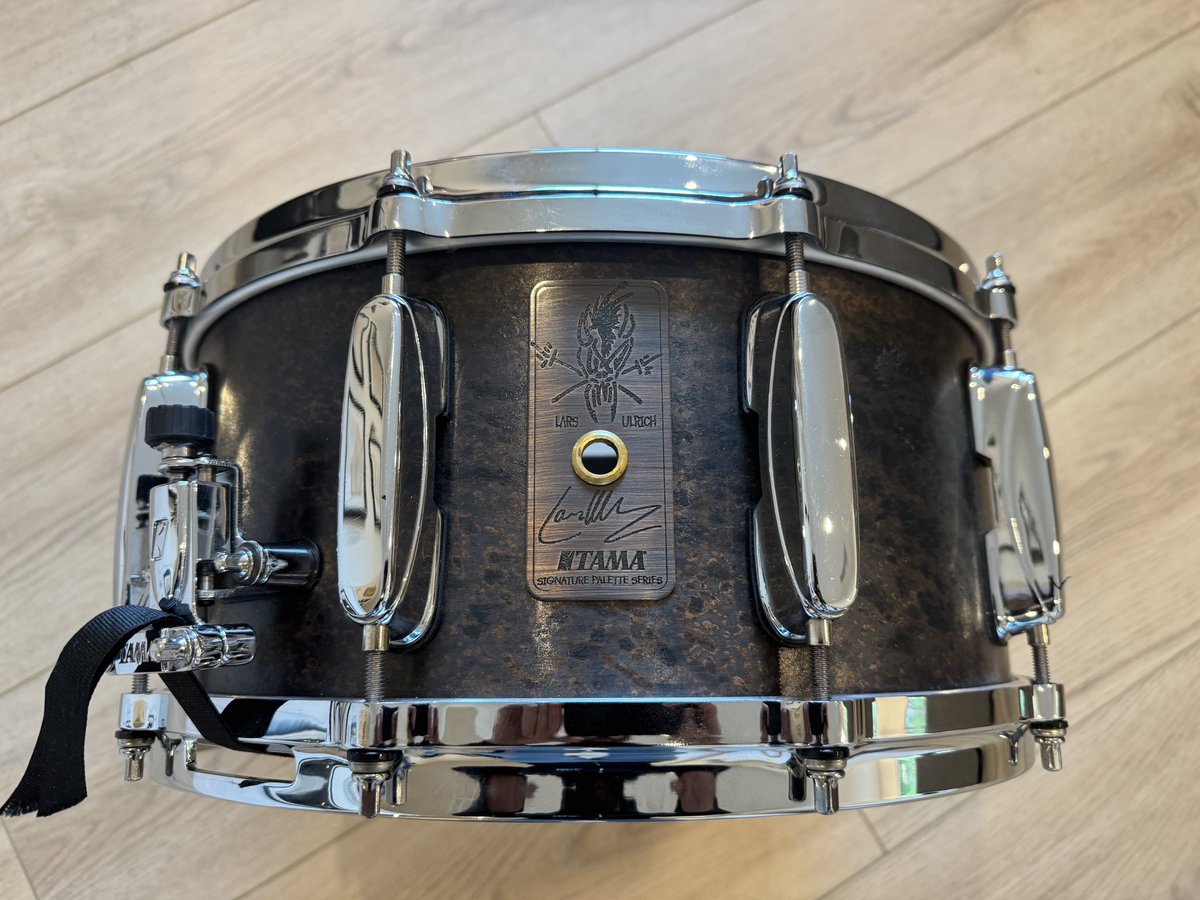
This is a 6.5x14 Tama Lars Ulrich Bell Brass from the “Signature Palette” series. This drum was one of the last “real” Tama Bell Brass drums ever made and according to the throw off and adjustable butt plate, we’re looking at 2008-2009 production year with 2009 being the final.
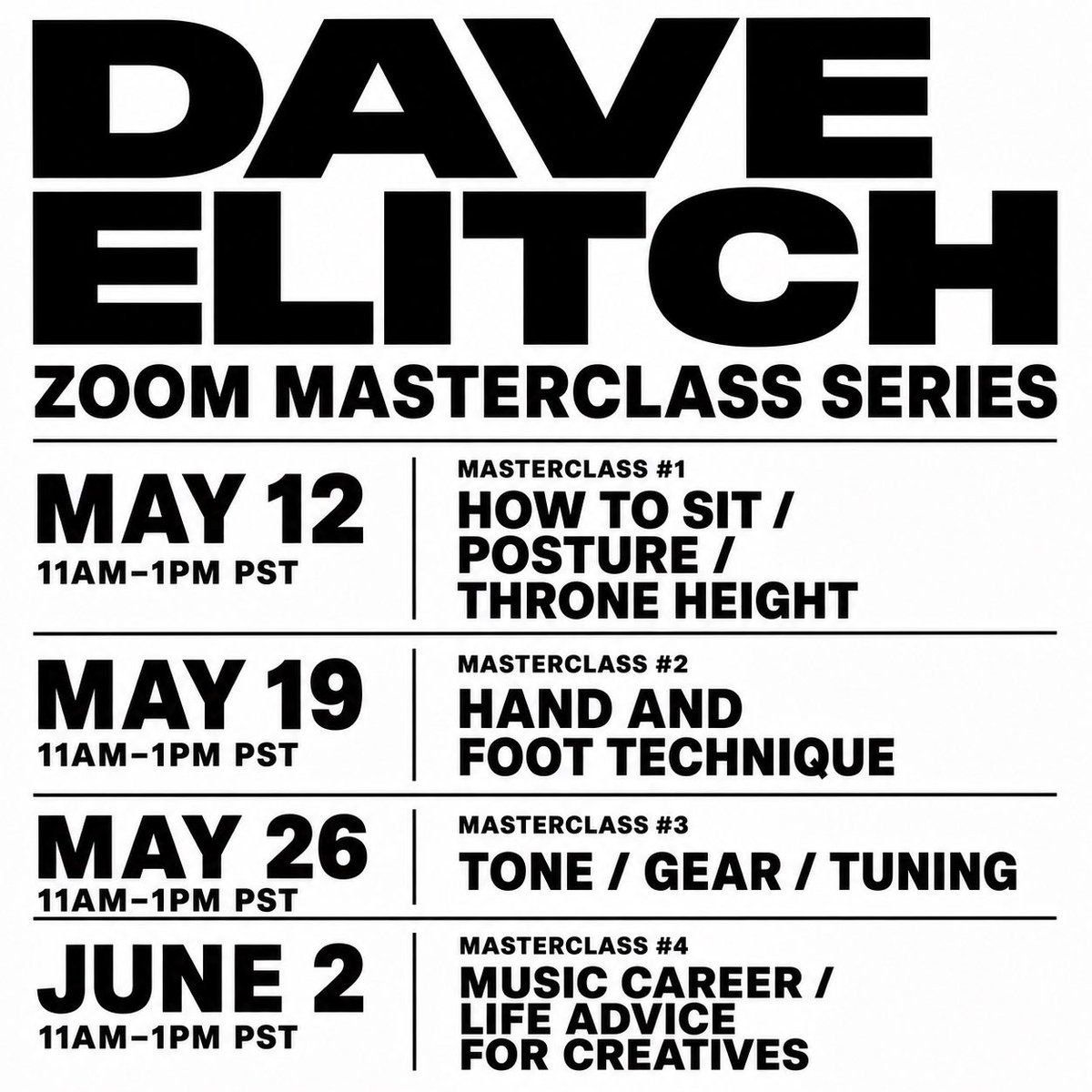
If you’ve been sitting on the sidelines for a while and haven’t had the chance to check out my online courses or study privately with me and want to see what all the fuss is about, this is the perfect time to get a taste of with the work I do with the best musicians in the world.
Zoom Group Masterclass!
I’m super excited to announce that I’m holding my first ever Zoom Group Masterclass!
Weds, March 19th@10am-12pm PST
Fee is $30 per person
To grab a spot, send email to: [email protected]
See ya there!
DE