This semester I organised a career panel for the Dairy Cattle Nutrition class at @ABSc_UofG with @keithschweitzer, Sarah Robson, Justine Dodson, Bruna Mion & Chris Church. Check out the podcast recording here: https://t.co/PfToqfRlal
It's great to have so much industry support!
You’re invited to our Annual Research Showcase on Thursday, November 2 at the Grandway Events Centre in Elora. Register by October 15: https://t.co/AvHJcRCJe9
Here’s a thread of topics to expect and the people behind the expertise 😉 (1/5) #ontag
Some cows are better suited to an extended lactation strategy than others, but deciding which cows should have a delayed breeding needs to occur within the first 50 to 90 d of lactation. Here, we investigate methods of modelling individual lactations to help achieve this...
https://t.co/cWfTKTNUTs
We present methods of modelling lactations using daily milk yield data from the beginning of lactation to predict milk yield at d 305.
We explored some interesting challenges with this approach, but an on-farm decision support tool will require more work.
@jcressw3 Can normally only buy NZ or Aus lamb in shops here in Ontario unless you go to local butchers. Often goes on sale for cheap because nobody buys it. Yet some of them will go and kill a moose or deer and eat that
El día de ayer participé en el Congreso lechero de @Prole2023 presentando la primicia de los resultados de nuestra investigación en curvas de lactancia de El Salvador. Gracias a todos por su trabajo @DaveJInnes, @ABSc_UofG, @F_Agroues, @UESoficial.
If there was an "Animals Earth" instead of "Animals Australia" they would lobby for Aus's live export standards to be the gold standard. Instead the privileged & ignorant decision has been made to ban sheep live ex, shifting the 'burden' of animal welfare to other countries.
If any of my urban followers would like an explainer on the live sheep trade & the reasons why banning it is a really bad idea @LizJack38115324 can help:
Why Australia banning live sheep exports may be a net loss for animal welfare https://t.co/aEDw1eizIK
"The thornier question is whether the ban – something animal welfare activists have campaigned for decades – will be a net gain for global animal welfare. It’s likely to mean more animals being shipped from nations with lower standards." @LizJack38115324
https://t.co/5b5U6QwtZb
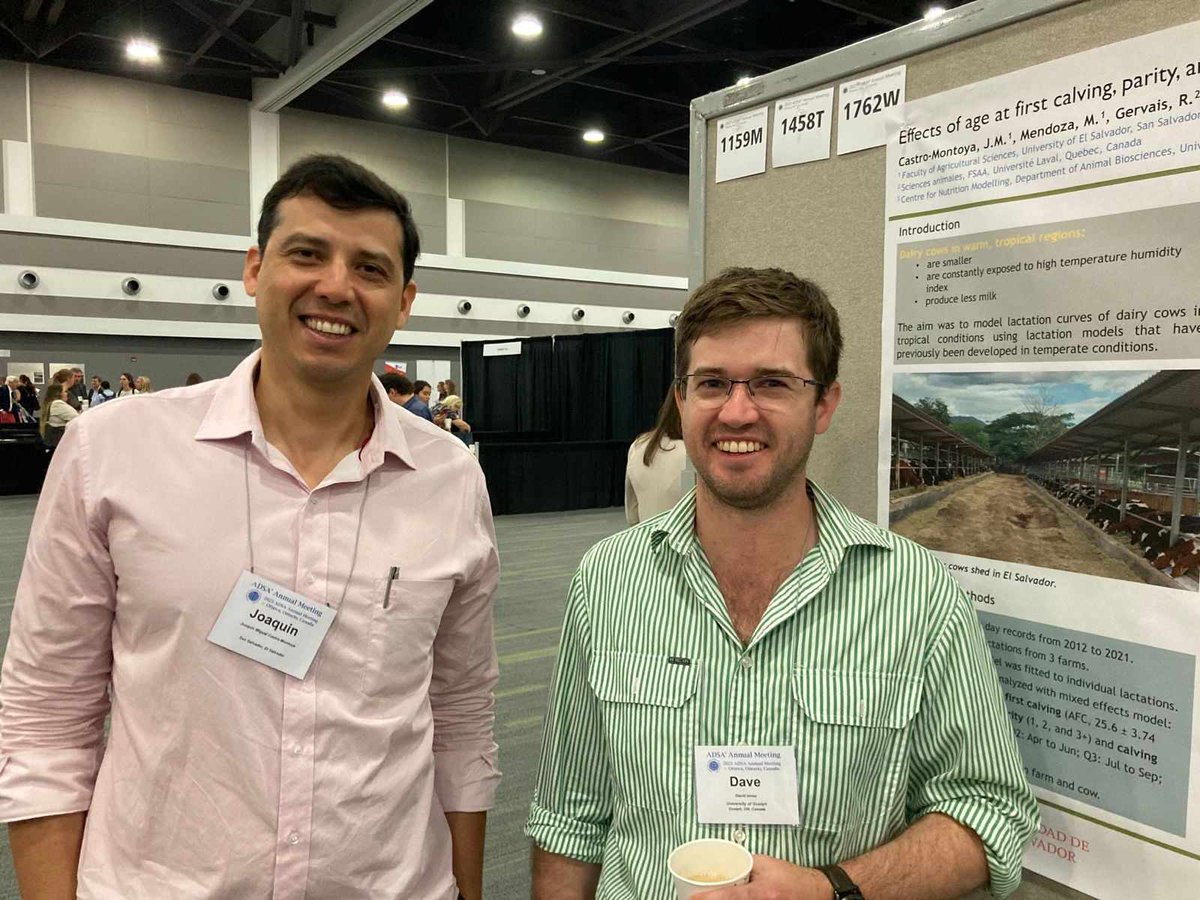
I've been fortunate to work with an old colleague and friend, @Joaquin_MCM, from University of El Salvador on his project to model lactation curves from thousands of cows in El Salvador that he will use to develop decision support tools and benchmarks specific to the tropics.
He recently presented this work at ADSA conference in Ottawa and we convinced him to visit us at @ABSc_UofG@uofg afterwards to share more about his work in El Salvador. It was great to talk about tropical forages again!
@DairyatGuelph
How do you clean feed intake data?
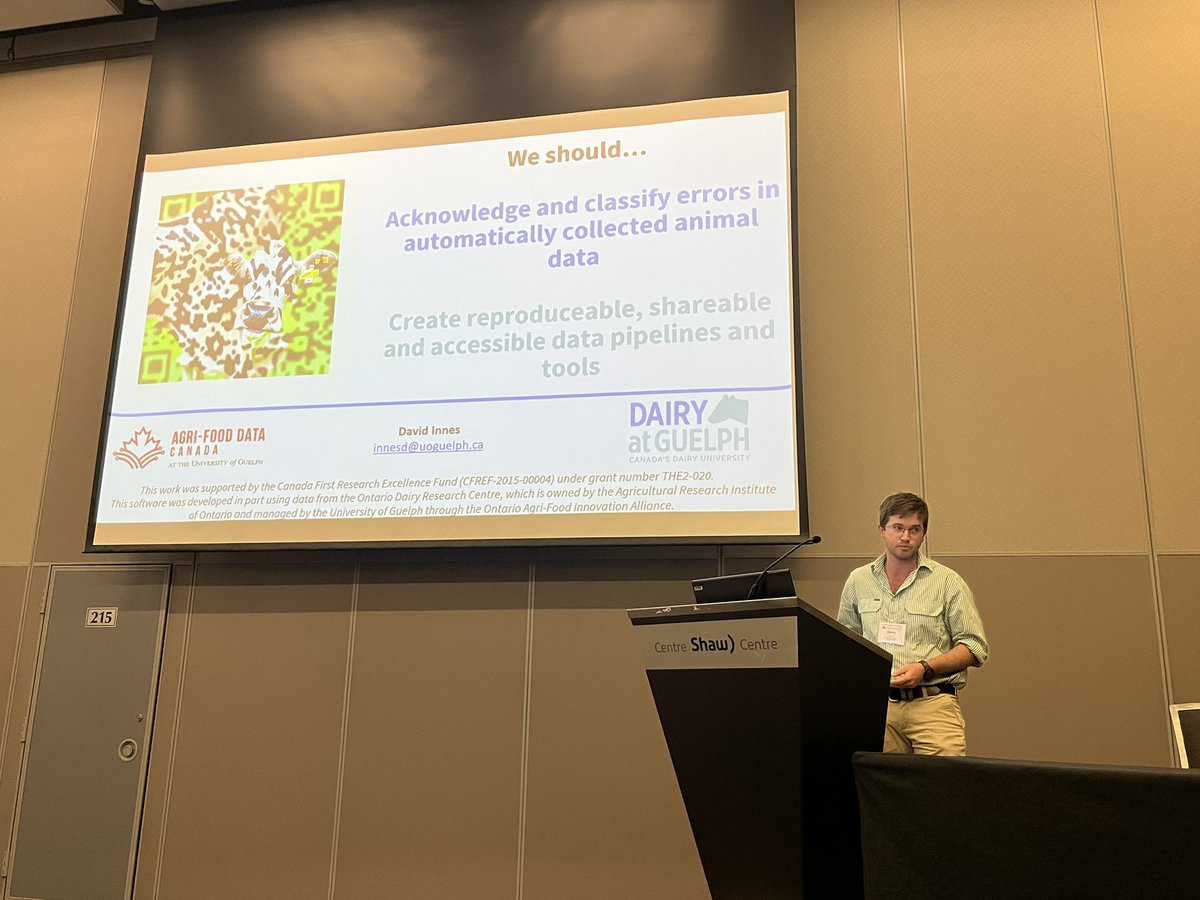
@DaveJInnes from @CNM_UofG presented today at #ADSA2023 the IntakeInspectR, an #OpenSource#RShiny app that flags several types of outliers based on logical and regression analysis to help researchers clean their data.
https://t.co/OfJ9EGQGyM
I agree - killing 200,000 cows won’t help the climate b/c the demand for their products remains. Likely outcome is that the related production will move elsewhere and with it the emissions - a phenomenon called “leakage”.
@LanceLefebure This is what we do a SwarmFarm Robotics. So far our robots have sprayed over 1.4 million acres for Australia farmers. It’s heading mainstream over here!
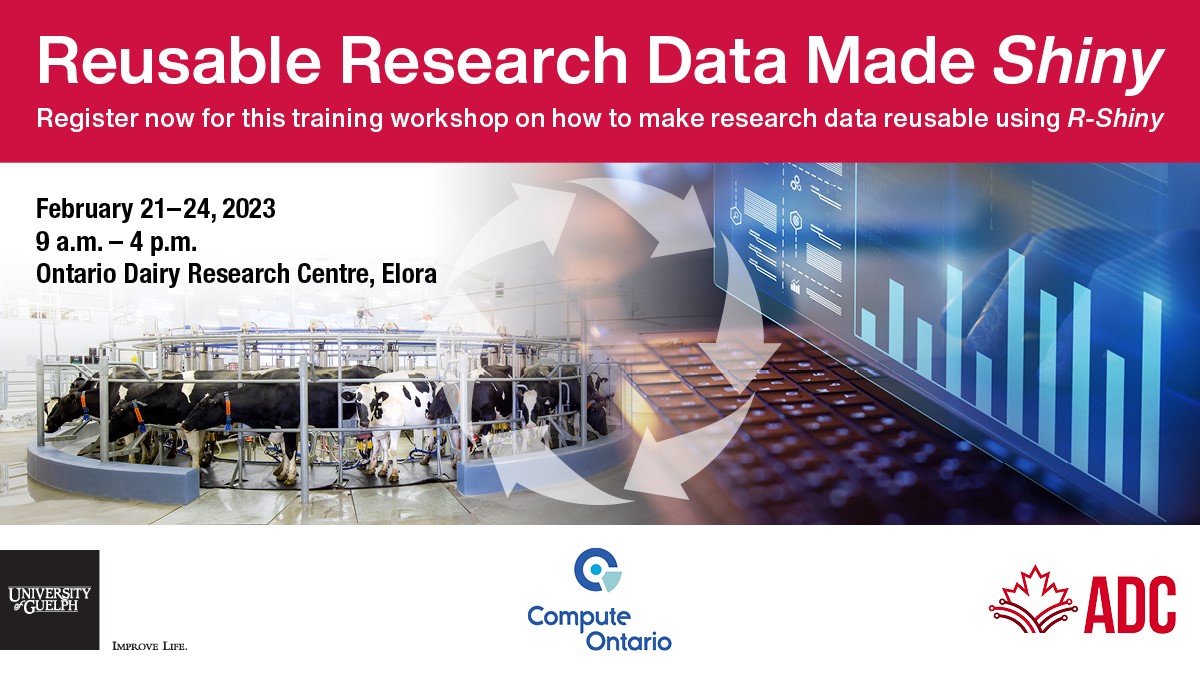
Do you know how to tidy research data to make it reusable? Learn the best practices for data organization, documentation, and sharing with hands-on training in this four-day workshop. Join online or in person. Click to learn more and register: https://t.co/NLqewoONtI
@UofG_FfT