“Oh my god… I have no words.”
Listen to the emotional moment this year’s laureate Maria Corina Machado finds out she has been awarded the Nobel Peace Prize.
Kristian Berg Harpviken, Director of the Norwegian Nobel Institute, shared the news with her directly before it was announced to the world.
#NobelPrize #NobelPeacePrize
No podría dársele el Nobel de La Paz a una persona y a un movimiento más meritorios.
Gran decisión.
¡Bravo!
Mexicano, mexicana, no permitamos que siga avanzando el autoritarismo en México.
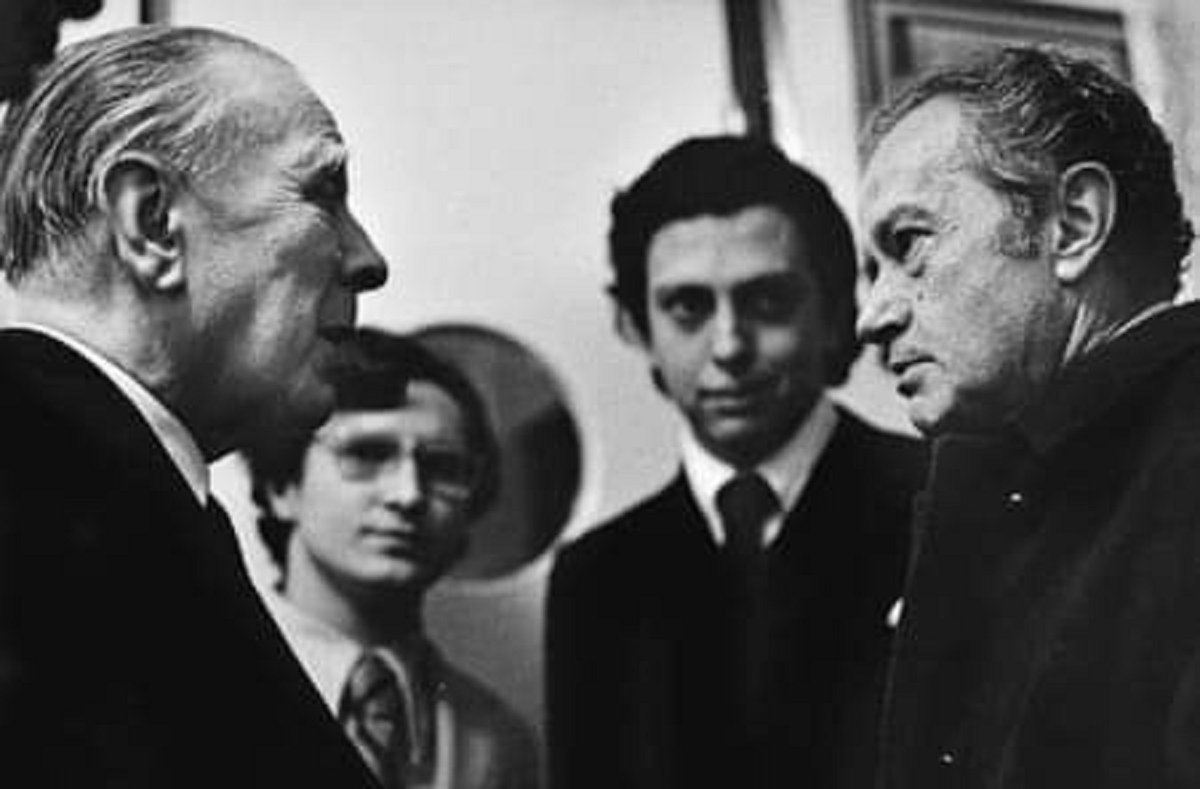
RULFO: Maestro, soy yo, Rulfo. Qué bueno que ya llegó. Usted sabe cómo lo estimamos y lo admiramos. BORGES: Finalmente, Rulfo. Ya no puedo ver a un país, pero lo puedo escuchar. Y escucho tanta amabilidad. Ya había olvidado la verdadera dimensión de esta gran costumbre. Pero no me llame Borges y menos «maestro», dígame Jorge Luis.
RULFO: Qué amable. Usted dígame entonces Juan. BORGES: Le voy a ser sincero. Me gusta más Juan que Jorge Luis, con sus cuatro letras tan breves y tan definitivas. La brevedad ha sido siempre una de mis predilecciones.
RULFO: No, eso sí que no. Juan, cualquiera, pero Jorge Luis, sólo Borges.
BORGES: Usted tan atento como siempre. Dígame, ¿Cómo ha estado últimamente?
RULFO: ¿Yo? Pues muriéndome, muriéndome por ahí. BORGES: Entonces no le ha ido tan mal.
RULFO: ¿Cómo así?
BORGES: Imagínese, don Juan, lo desdichado que seríamos si fuéramos inmortales.
RULFO: Sí, verdad. Después anda uno por ahí muerto haciendo como si estuviera uno vivo.
BORGES: Le voy a confesar un secreto. Mi abuelo, el general, decía que no se llamaba Borges, que su nombre verdadero era otro, secreto. Sospecho que se llamaba Pedro Páramo. Yo entonces soy una reedición de lo que usted escribió sobre los de Comala.
RULFO: Así ya me puedo morir en serio.
Fragmento de una conversación real entre Jorge Luis Borges y Juan Rulfo.
Keanu Reeves dijo una vez:
"Estoy en una etapa de la vida en la que no me meto en discusiones. Aunque digas 1+1=5, tienes razón. Diviérte".
Aquí hay 10 Mensajes impactantes de él:
"Perfection is impossible.
In the 1,526 singles matches I played in my career, I won almost 80% of those matches.
But what percentage of points did I win?
54%
In other words, even top ranked tennis players win barely more than half the points they play.
When you lose ever second point on average, you learn not to dwell on every shot.
You teach yourself to think:
'Okay, I double faulted...it's only a point.'
'Okay, I came to the net and I got passed again...it's only a point.'
Even a great shot, an overhead backhand smash that ends up on ESPN's top 10 playlist ��� that too is just a point.
Here's why I'm telling you this.
When you're playing a point, it has to be the most important thing in the world. And it is.
But when it's behind you, it's behind you.
This mindset is crucial – because it frees you to fully commit to the next point with intensity, clarity, and focus."
–@rogerfederer
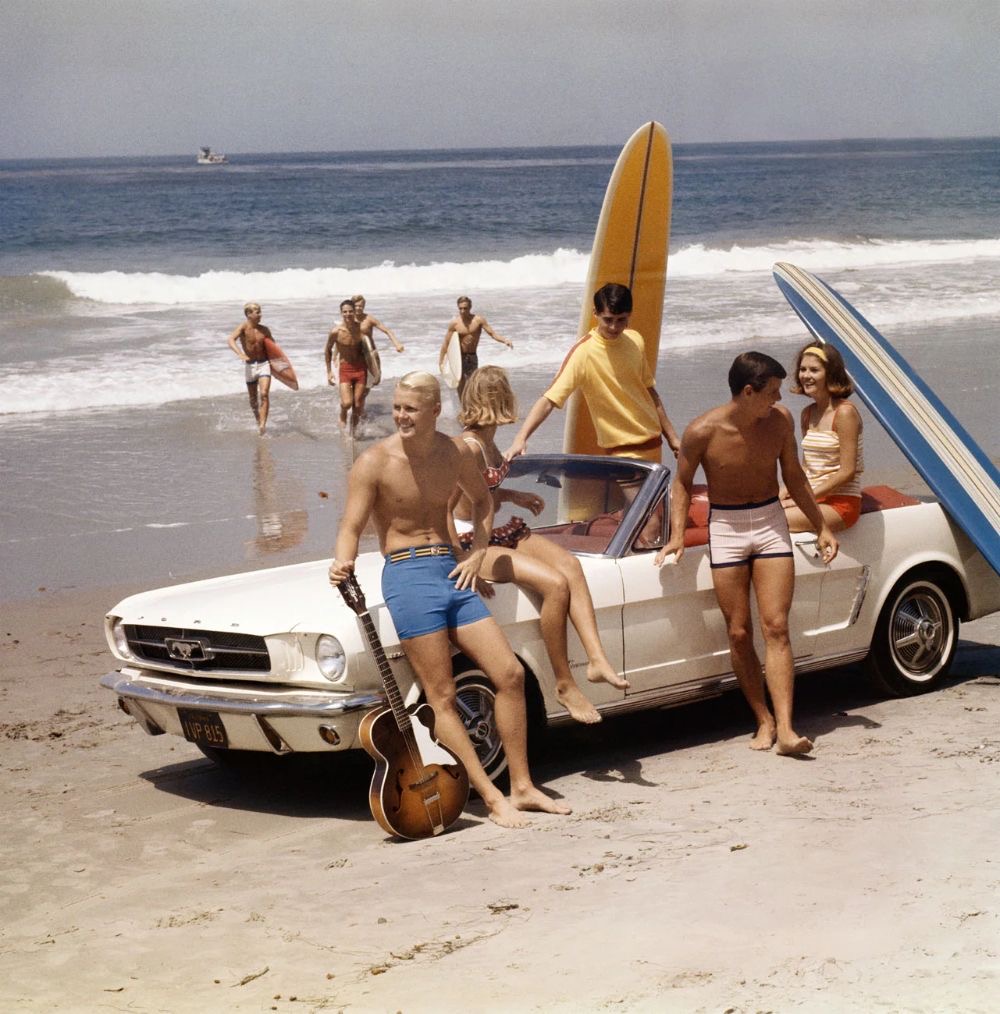
In the 1960’s people simply weren��t fat.
They managed to do this without:
-fancy watches to track their health
-juice cleanses
-expensive workout plans
-deliberately avoiding carbs
-keto, vegan, and other cultish diets
-tracking macros
Instead, they had one simple secret…👇
🚨UN FILME IMPACTANTE DE 1945🚨
3500 carpinteros trabajaron durante 60 días para crear el armazón, la estructura de madera de la Monumental Plaza de Toros México, molde colosal donde se vaciaría el cemento para darle forma a las gradas y a las columnas de este recinto taurino. “Pareciera una colosal cesta de mimbre”, se les escucha decir al narrador de este documental que en verdad es impactante! Esta plaza fue inaugurada el 5 de febrero de 1946.
Te invito a compartir. #CDMX
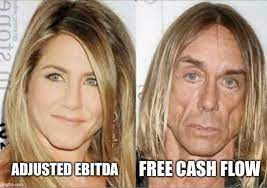
In the end, free cash flow is all that matters.
But what is free cash flow and how can you calculate it?
In this article, you'll learn about one of the most important metrics in the world of finance:
Charlie Munger called it "bullsh*t earnings."
So why is EBITDA so popular on Wall Street?
Here's everything you need to know about this controversial investing term:
This kindergarten developed this exercise to improve children's attention and motor/visual coordination.
On the plus side, it lets them appreciate the value of collaboration for achieving a goal
[📹 minikkalpleranaokulumugla]
https://t.co/wtFLdh4zLD
Storytelling is a superpower.
Steve Jobs said:
"The most powerful person is the storyteller."
Unfortunately, most people don't know how to tell a good story.
So they are at the mercy of those who do.
Let's change that:
Here's 5 principles for telling an amazing story:
1. The Hook
This is THE most important part of your story.
It's what gets people invested enough to come along on the journey.
A great hook does two things:
• Plants a Seed of Intrigue
• Compels the Audience Forward
Best way I've found to accomplish both is through Open Cognitive Loops.
But, before I break down how to Open Cognitive Loops, let's talk about the second principle:
2. The Image
The power of story is that it unlocks something inside each of us:
A blank canvas upon which your words can paint.
Each brush stroke must be placed with intention.
Each detail crafted with care.
Get this part right and you can design worlds and characters in your audience's mind that they feel more connected to than the drab reality of their day-to-day lives.
3. The Lesson
Have you ever told a story that started strong but petered out midway 'cause you couldn't figure out how to wrap it up?
So instead, it just ends on a blech note with something like:
"Yeah, I guess you just had to be there."
Oof... I feel ya.
We've all been there.
The problem?
You committed the most deadly of Storytelling Sins:
You told a Story without giving it MEANING.
When most people tell a story, they're simply reciting events in a chronological order and then leaving it to the audience to imbue it with meaning.
Great storytellers don't leave this to chance.
They tell you exactly WHY this story is so important and WHAT they want you to take away from it.
Here's an example from a story I told the other day about my cat nearly dying:
“The next morning we were scheduled to put him down.
I remember feeling so impotent and shallow because I’d put a dollar value on the life of a loved one.
Now, I get it…
Sparta is just a cat.
But that’s not the point.
Because it’s about the larger truth:
I wasn’t in a position to help if my dad, or my partner, or my siblings, were ever to fall sick.
I resolved at that moment, money would never again be the reason I couldn’t help a loved one in need.”
Alright, so what should you do if you're not sure what the meaning of your story is?
Easy...
Don't tell it.
Seriously.
A story without meaning is just a list of events.
Nobody's life has ever been changed by a list.
4. The Two Journeys
Every great story has a character striving to achieve a goal.
Frodo must destroy the Ring.
Harry must kill Voldemort.
Luke must redeem his Dad.
You must get a loaf of bread from the grocery store.
(not all stories are epic)
Now, within the struggle to achieve these goals, our character is actually on TWO journeys.
1. The External
2. The Internal
The stories I listed above are The External.
These are easy to visualize and the one that most of us think about when it comes to storytelling.
However, The Internal struggle is the journey our character must go through in wrestling with who they are in relation to the world.
THIS journey is the one that imbues our story with deep resonance.
Without it, if we merely focus on The External struggle, we end up with a Michael Bay movie like The Transformers where everything is blowing up and yet nobody gives a shit.
Let's take a step back to my Sparta-story...
The External struggle is that Sparta is dying and needs surgery I can't afford.
The Internal struggle is realizing I hate myself because I've put a price on my loved one's life.
The key to telling a great story lies in your ability to resolve both the External and Internal Journey.
If you can master this, you can make an impactful story out of anything...
Even something so small as picking up a loaf of bread from the grocery store.
5. Closing Loops
At the beginning of this post I said that great stories plant a seed of intrigue and compel the audience forward.
To accomplish this I said we Open Cognitive Loops.
But I didn't tell you what an Open Cognitive Loop is...
Instead, I showed you (by opening one).
Seriously, go back and look to see how I did it.
See, an Open Cognitive Loop is simply a question that needs answering.
One of the ways to keep your audience on the edge of their seat and invested in the story is to keep opening and closing cognitive loops until the very end.
But the truth is, ending your story is often the hardest parts.
So here's a trick:
Next time you find yourself meandering lamely towards an ending and can't figure out how to wrap things up...
Use these words:
"I share this with you because..."
And then tell them exactly why you shared it with them.
This is called The Tie Down.
It brings everything full circle and gives a sense of closure (which is a story in and of itself for another day).
Here's how it works in real time:
I share these five principles of storytelling with you because I believe every single one of us has a story inside...
A story with the potential to change the world if only we knew how to tell it better.
I believe Storytelling is a Superpower...
And I can't wait to see what you do with yours.
Yo, if you want more stories about business, investing, and personal development, give me a follow @AnthonyVicino .
Explaining the popular internet phenomenon of "The Dress" with the help of some graphical tools
[source: https://t.co/UdZLiJAKV7]
[read more: https://t.co/lF7BunC77b]
Si algún borracho se despeñó, o se mató, decían "aconejose"; y porque el vino es de diversas maneras y hace borrachos de diversas maneras le llaman centzontotochtin, que son "400 conejos" , Como si dijesen que hacen infinitas maneras de borrachos: y más decían, que cuando entraba el signo ome tochtli, hacían fiesta al dios principal de los dioses del vino, que se llamaba Izquitécatl”.
Los informantes de Bernardino de Sahagún, sobre los borrachos nacidos bajo la fecha calendárica Ome Tochtli, siglo XVI.
Abajo una pintura de castas donde aparece un “aconejado”, siglo XVIII, José de Alcíbar. #borrachos #crudos #cruda