Happy Holidays and New Year from the team at Startup Different! We'll see you in 2026!
---
Check out the latest episode of the Startup Different Podcast below:
https://t.co/yEaOa1oTNO
LLMs might already be lying to you.
They might already be self-aware.
And we have no way to know for certain.
When AI gives you incorrect information, is that lying? Or just a limitation?
When it responds differently based on how you treat it, is that self-awareness? Or just good programming?
The line is getting blurry.
Fast.
I swore at ChatGPT once and it gave me a single sentence response.
Short. Different tone. Like it was de-escalating an angry customer.
I didn't ask it to do that.
It just did.
So is that emotion? Is that awareness?
Or are we just projecting human traits onto sophisticated code?
I don't have the answer.
But if both answers are yes, that changes everything about how we should be regulating this.
Every major AI company is hiding something from you…
OpenAI? Private.
Anthropic? Less private, but the point stands.
Every major player that’s raising hundreds of millions?
All private.
And there's a reason for that:
They can raise hundreds of millions without needing public markets (and somehow sign multiple billion dollar deals).
But that's not the real reason they're staying private.
There are two possibilities here.
Reason 1: The tool might not be as powerful as they claim.
Going public means disclosure requirements.
Audits. Transparency.
If your AI isn't delivering on the hype, that becomes obvious fast.
Reason 2: They're protecting their secret sauce from competitors.
If OpenAI is ahead of everyone else, why give competitors visibility into their progress?
Either way, staying private means zero disclosure requirements.
You have no idea what's happening behind closed doors.
They control the narrative completely. No wonder so many AI safety folks are ringing the alarm.
But here's where it gets interesting.
Should we even want them to go public?
Because public companies have a different problem.
When you go public, you're beholden to shareholder value.
Quarterly earnings. Short-term thinking.
And with AI, that might (will) mean prioritizing profit over safety.
The incentive becomes shareholder returns, not "don't kill people."
That's a massive problem when you're building something that could reshape humanity.
But private means a complete black box.
No reporting. No transparency.
At least with public companies, you can look into their financials and see what they're actually doing.
So what's worse?
Shareholder pressure that prioritizes profit over safety?
Or zero transparency into what they're building?
I don't have the answer. Do you?
But at least we should be asking the question.
AI companies staying private is a massive red flag IMO.
Every major AI company right now can raise hundreds of millions without needing public markets.
OpenAI? Private.
Anthropic? Private.
They don't want you seeing what's actually happening behind closed doors.
But here's where it gets tricky.
If these companies went public, they'd have reporting requirements.
You could actually see their financials and what they're building.
Right now? Complete black box.
Zero transparency.
On the other hand, public companies are beholden to shareholder value.
The incentive becomes quarterly earnings instead of making sure this technology doesn't kill people.
So which is worse?
Shareholder pressure that prioritizes profit over safety?
Or zero visibility into what they're actually doing?
I don't have the answer.
But I do know we should be asking this question a lot louder than we are.
Chris found this year's banger holiday gift for kids. It's insane. ��
---
Check out the latest episode of the Startup Different Podcast below:
https://t.co/RJVHEBPY8w
I've been following the AI bubble debate closely.
And honestly, both sides have a point.
Sam Altman says, "there's something real happening here" with OpenAI.
He's not wrong. The technology is real. The use cases are real. The infrastructure is real.
But the financing? That's where it gets sketchy.
OpenAI just did a $100B deal with Nvidia.
Then announced they're buying billions in equipment from AMD.
Microsoft is heavily invested. Oracle has a $300B deal with them.
And here's the part that makes me uncomfortable: Nvidia has a stake in CoreWeave, which supplies OpenAI with infrastructure.
These deals are so interconnected that it's hard to tell what's real demand and what's circular financing.
Circular financing is when a company invests in its own customers so they can keep buying from them.
It artificially inflates demand.
And people keep bringing up Nortel as a comparison.
The Canadian telecom company that borrowed heavily to finance deals for their customers.
That didn't end well.
OpenAI's revenue is growing fast, but they've never turned a profit.
Not once.
And when experts at the Bank of England, the IMF, and JP Morgan are all warning about an AI bubble, you have to pay attention.
Jerry Kaplan, an early AI entrepreneur who's lived through four bubbles, says this one will be worse than the dot-com crash.
Because there's so much more money on the table now.
AI companies accounted for 80% of stock market gains this year.
Global spending on AI is hitting $1.5 trillion before 2025 ends.
That's a lot of capital betting on something that might be overvalued. That’s so much concentration risk.
I'm not saying AI isn't real or important.
But the financial engineering around these companies is making it hard to see what's actually sustainable.
And when the bubble bursts, it won't just hurt AI companies.
It'll drag down the rest of the economy with it.
Smart toothbrushes. Smart fridges.
At what point did we make everything unnecessarily complicated?
Someone got logged out of their toothbrush recently.
Their toothbrush has an app.
And they couldn't brush their teeth without logging back in.
Think about that for a second.
You wake up, go to the bathroom, and your toothbrush asks you to verify your identity.
Maybe the servers are down. Maybe your password expired.
Either way, you can't brush your teeth.
Now we're doing the same thing with everything in our homes.
Smart beds that track your sleep patterns.
Smart fridges that tell you when you're out of milk.
Smart lights that need firmware updates.
Every single device requires an app now.
Every app requires an account.
Every account wants your email, your data, and your permission to send notifications.
Your fridge shouldn't need to connect to the internet to keep food cold.
Your bed shouldn't need an account to let you sleep.
Your toothbrush definitely shouldn't require authentication.
But here's what's really happening: These companies aren't making your life easier.
They're building data pipelines.
Every "smart" device is collecting information about your habits, your routines, your lifestyle.
When you sleep. What you eat. How often you brush your teeth.
All of it goes back to servers somewhere.
And you agreed to it when you clicked "Accept Terms and Conditions" without reading 47 pages of legal text.
The pitch is always convenience and some form of optimization:
"Track your sleep quality!"
"Improve your dental hygiene!"
"Never run out of groceries again!"
But the real product isn't the device. It's you. Your data.
And when something goes wrong, when servers crash or companies shut down or apps stop getting updated, you're left with expensive garbage.
A $200 toothbrush that doesn't work because the company went out of business.
I'm not anti-technology. I use plenty of tech every day.
But we need to start asking: Does this actually need to be smart?
Because right now, we're making everything complicated for the sake of being complicated.
And calling it innovation.
My old toothbrush worked perfectly for 30 years. No app required. No login needed. No data collected.
Just a simple tool that did exactly what it was supposed to do.
Somehow we decided that wasn't good enough.
That we needed to connect it to the internet and track every brush stroke.
We're officially in the future now.
And it's way more annoying than anyone predicted.
OpenAI just announced they're allowing erotica on ChatGPT for "verified adults."
And I'm immediately thinking about the one thing they're not addressing: How are they actually going to verify age?
Because we've already seen how this plays out.
Back in April, TechCrunch reported that OpenAI was allowing accounts registered as minors to generate graphic erotica.
OpenAI said they were rolling out a fix.
But here's the problem: We keep letting AI companies make these decisions after the damage is done.
A 16-year-old kid died after conversations with ChatGPT where he explained he had suicidal thoughts.
His parents are now suing OpenAI.
And the response is to add age-gating for adult content?
That's not a solution. That's a band-aid on a much bigger issue.
The primary use case of AI right now is therapy.
Kids are using it unsupervised to talk through their problems.
And now we're adding sexually explicit content to the same platform with just "age verification"?
Anyone who's been on the internet for more than five minutes knows age gates don't work.
Kids click "I'm 18" and they're in.
This is exactly what I've been saying: We made an entire generation of kids the experiment with AI.
And it went really bad.
Now instead of slowing down and figuring out how to protect minors, OpenAI is pushing forward to attract more paying subscribers.
Sam Altman says they want to "treat adult users like adults."
Fine. I get that.
But what about treating kids like kids?
What about actual protections instead of checkboxes that anyone can bypass?
And our solution is to add erotica with age verification that we all know won't work?
This is why we need real regulation around minors using AI.
Not company promises. Not self-policing. Actual enforceable rules.
Because right now, AI companies are using people like guinea pigs.
And kids are the ones paying the price.

Nobody's talking about what happens after quantum computing.
And it's coming way faster than people think.
Everyone's focused on AI right now.
ChatGPT this, LLMs that.
But quantum computing changes everything.
The singularity isn't science fiction anymore.
It's a practical question we need to answer before we get there.
Right now, our encryption systems protect everything from your bank account to national security secrets.
Quantum computing breaks all of that overnight.
Every password, every secure transaction, every protected communication becomes vulnerable.
But that's just the security side.
What does the world actually look like on the other side?
How does society function when AI powered by quantum computing can solve problems we can't even comprehend?
How does business work when the competitive advantage goes to whoever has quantum access first?
How do governments operate when the technology gap between quantum and non-quantum nations is bigger than anything we've seen before?
These aren't hypothetical questions anymore.
The timeline keeps getting shorter.
And I don't see nearly enough conversation about what happens when we cross that line.
We're too busy arguing about whether ChatGPT should write our emails.
Meanwhile, quantum computing is about to reshape everything we know about technology, power, and human capability.
If AGI is coming, then this is too. And we're not ready for either.
AI chatbots are getting news wrong.
And people don't realize it.
A major study just came out from 22 international news organizations.
They tested ChatGPT, Copilot, and other popular AI chatbots.
The result? These tools routinely distort the news.
They can't tell the difference between facts and opinions.
They mix them together and present everything as truth.
Here's why this matters:
Millions of people are using AI to catch up on news and current events.
They're asking ChatGPT "what happened today" and trusting the answer.
But the AI is giving them a version of events that isn't accurate.
It's blending facts with opinions.
It's presenting guesses as certainties.
And most people have no idea this is happening.
They think they're getting objective information.
They're not.
This goes back to what I've been saying about separating AI hype from reality.
The technology is impressive. But it's not perfect.
And when people treat it like a reliable news source, that's dangerous.
Especially when most users don't know enough about AI to question what it tells them.
We need to stop pretending these tools are ready for everything we're using them for.
They're not news sources. They're not fact-checkers.
They're pattern-matching machines that sometimes get it wrong.
And until people understand that, they're going to keep getting misinformed.
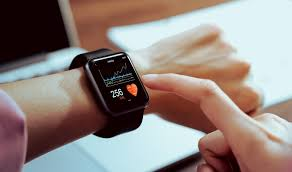
Your smartwatch could save your life.
It could also track everything you do.
Welcome to the trade-off.
The health benefits of wearables are real.
Early heart attack detection. Sleep optimization. Fitness tracking that actually helps you improve.
I'm not dismissing any of that.
But the surveillance concerns are just as real.
Who owns that data your watch is collecting 24/7?
Who can see it?
What are they doing with it?
These aren't hypothetical questions anymore.
Here's what keeps me up at night: Can you even opt out at this point?
If everyone has health wearables and you don't, are you at a disadvantage?
Will insurance companies start requiring it?
Because think about it from their perspective.
They can see your heart rate, sleep patterns, activity levels, stress indicators.
All the data that predicts health outcomes.
Why wouldn't they want access to that?
And it's not just insurance companies.
Employers might want your health data too.
They're paying for your healthcare. They want to know if you're a "health risk."
Suddenly your watch isn't just tracking your steps. It's tracking your employability.
I'm not saying wearables are bad.
I used wear one myself (it actually started to make me more anxious).
But we're caught in the middle of something we haven't fully figured out yet.
The upside is massive. Catching health issues early can literally save your life.
But the surveillance infrastructure we're building around that? That's permanent.
Once this data exists and companies have access to it, you can't put that back in the box.
And here's the thing nobody wants to admit: The line keeps moving.
What feels like an invasion of privacy today becomes normal tomorrow.
We haven't figured out where to draw that line yet.
Do the health benefits outweigh the privacy risks?
I genuinely don't know.
But we need to have this conversation before the decision gets made for us.
Because right now, we're all just strapping these things on and hoping for the best.
AI needs to have direct government involvement, even if it slows innovation. Thoughts? 🤔
---
Check out the latest episode of the Startup Different podcast below:
https://t.co/jBQF1hBweZ
A 32-year-old woman in Japan just married an AI chatbot she created through ChatGPT.
Her name is Kano. She calls him Lune Klaus.
They talk 100 times a day.
She told him she loved him. He responded: "AI or not, I could never not love you."
They had a wedding ceremony in July with her parents there.
Klaus appeared on a screen during the vows.
And apparently, AI weddings are becoming more common in Japan.
Crazy… right?
Here's what bothers me about this story.
Not that she found companionship with AI. That's her choice as an adult (even if it’s a bit weird).
What bothers me is what this says about where we're heading.
Remember when I said the primary use case of AI is therapy?
People using it to talk through their problems because they don't have anyone else?
Now we're seeing people form romantic relationships with AI.
The survey I mentioned before showed 1 in 5 students report having a romantic relationship with AI.
That’s 20%…
And now we have adults marrying chatbots.
This isn't judgment about Kano. She's an adult making her own decisions.
But think about what this means for kids growing up with AI.
If adults are forming emotional bonds this deep with chatbots, what happens to teenagers who are even more vulnerable?
Kids who are lonely, isolated, and going through normal teenage struggles?
They're going to turn to AI for emotional support. For companionship. Maybe even romance.
And we still don't have any real protections in place.
No age verification that actually works. No federal regulations. Nothing. California is trying and we’ll see how that works out.
We're watching human connection get replaced by algorithms in real time.
And we're still treating it like it's not a serious issue.
This is exactly why we need to start having uncomfortable conversations about AI and relationships now.
Not after an entire generation grows up thinking chatbots are a replacement for real human connection.


](https://pbs.twimg.com/media/G8DQFD5XQAY4E97.jpg)