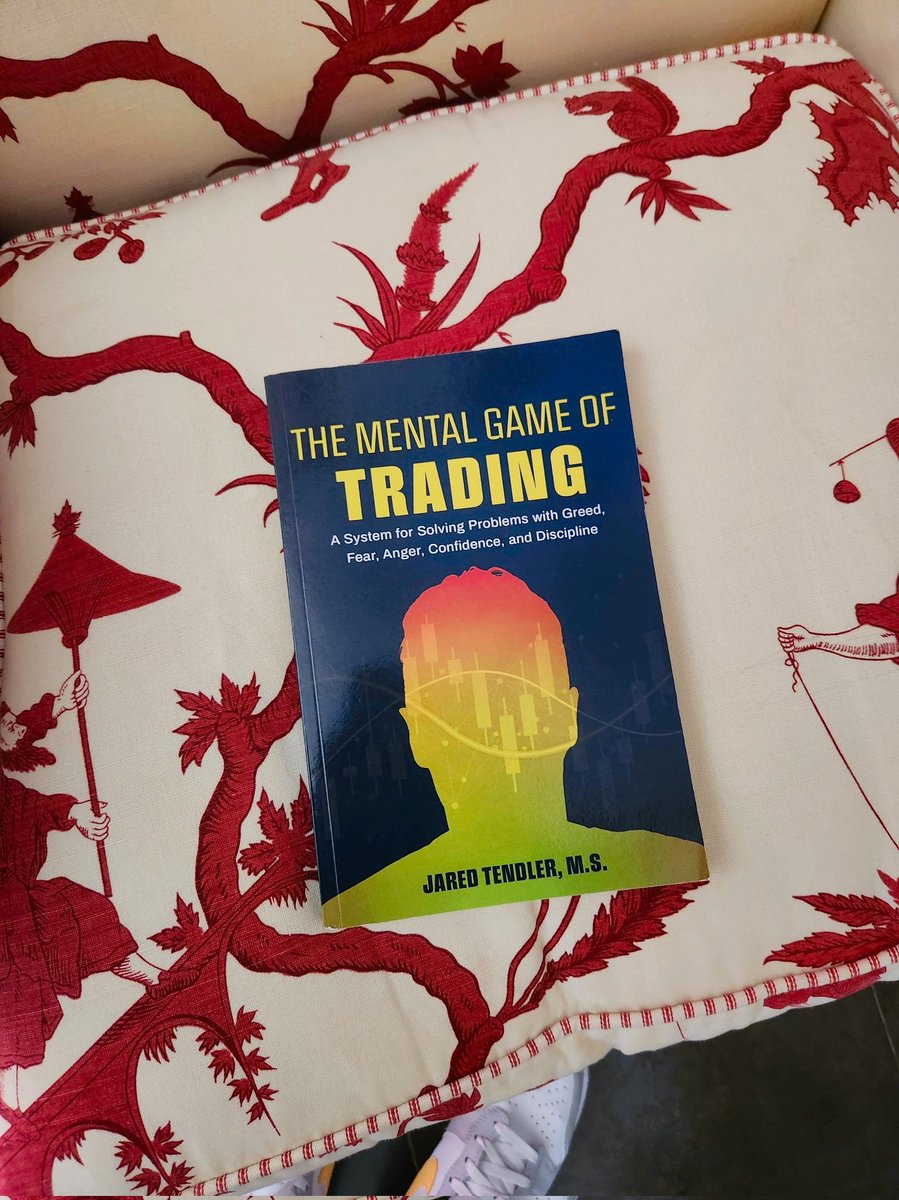
Some people have asked for my opinion on the recent post around this 'mentor' so here it is.
The issue is not that someone was once new as everyone starts somewhere. The issue is not that someone improves as people can improve as times goes on.
You can be genuine and improve.
You can be deceptive and improve.
Growth alone does not prove integrity. The issue is not that someone sells coaching, writes a book, or uses AI to polish their writing. Tools are tools. Business is business, and growth is growth.
The issue begins when all of that gets wrapped inside a manufactured image of wealth, authority, experience, and success that does not appear to match the receipts.
That is where it stops looking like growth and it becomes identity inflation. And when identity inflation gets monetized, it becomes credibility laundering. I believe i first read this term in Barncore's timeline during Zero Ika's drama.
Credibility laundering is simple: Borrow the symbols of success before earning the substance of success.
Borrowed luxury, lifestyle, confidence, authority, depth, and scenery. Then sell access to the persona as if the persona itself is proof.
That is the danger, because beginners do not only buy information. They buy belief, certainty, and proximity to success. They buy the illusion that the person selling them advice has already crossed the bridge they are trying to cross.
From what is being shown, there are serious questions. Luxury car-key images allegedly found through reverse image search on Pinterest or Instagram from someone else's account. Travel and suitcase photos that appear to belong to someone else. A timeline that allegedly goes from asking for signals, promoting questionable micro-cap crypto projects, and behaving like a beginner not long ago, to suddenly presenting as a high-level mentor of future successful people, and millionaires.
A coaching program reportedly costing thousands. A book often pushed to beginners while the account simultaneously sells a rich-and-successful lifestyle image. Posts polished aggressively to sound hyper-intelligent while the real-world receipts behind the persona look increasingly questionable.
None of these things alone prove everything, but together they create a pattern.
The issue is not whether he knows more than a beginner. He probably does. The issue is not whether someone learned something from him. They probably did. The issue is not whether he has a selection of good trades. Maybe he has.
The issue is whether the authority being sold is honest, because someone can help a newbie and still misrepresent themselves. Someone can improve over time and still pretend the image was earned long before the receipts existed.
That is the part gullible people miss. The standard is not: 'Did one person say the mentorship helped?'
The standard is: 'Is the person selling the mentorship honest about who they are, what they have done, where their credibility comes from, and what their real lifestyle actually is?'
Because if someone needs borrowed luxury photos to look successful, that tells you something. If someone was asking for signals not long ago but now markets himself like a veteran mentor, that tells you something. If someone was promoting shady micro caps two years ago but now acts like a polished authority figure, that tells you something. If someone needs AI to make ordinary thoughts sound profound while the timeline behind the persona does not match the image, that tells you something.
This is why i do not trust aesthetics. I trust timelines.
Who were you two or three years ago?
What were you promoting?
Were you asking for signals?
Were you selling garbage?
Were you deleting mistakes?
Were you chasing referrals?
Were you pretending to live a life that reverse image search says belonged to someone else?
Did the authority come before the receipts, or did the marketing come first?
Real credibility compounds slowly while fake credibility gets assembled quickly.
Anyone can repost luxury, steal scenery, polish words, use AI to sound deeper than they are, call themselves a mentor, and charge thousands to pretend the price itself proves value. But real authority has weight, history, scars, timing, consistency, receipts that do not need manipulation.
And this is where the second layer begins. In this space, a lot of people are not only looking for market education. They are lonely, confused, ambitious, lost desperate for direction. They want someone to talk to about markets, life, dreams, struggles, fear, failure, money, purpose, past mistakes, and the future.
That creates a dangerous business model, because some people online are not really selling mentorship. They are selling emotional access. A 'high-status' friend. A private confidence dealer. A paid source of certainty. Someone who listens, validates, answers, makes the mentee feel seen. Someone who makes success feel inevitable, just delayed.
That is powerful, and that is exactly why it is dangerous. Because once someone pays thousands, the relationship is no longer only about information. It becomes proximity, attachment, access to a character the mentee believes has already reached the place he is trying to reach.
That is how weak mentors can still receive strong testimonials. Not because they are elite, but because they are available. A beginner usually cannot properly audit the quality of the advice, but he can audit how the mentor made him feel: Supported, motivated, understood, important, closer to the dream.
That feeling can be real, but that does not mean the authority is real. That does not mean the track record is real, neither the lifestyle. That does not mean the person is who they are presenting themselves to be.
Availability can masquerade as expertise.
Emotional support can masquerade as mentorship.
Confidence can masquerade as competence.
And now, with AI, the costume is easier to maintain than ever. If they do not know the answer, they can dodge it with 'I use a completely different system' or 'You are thinking about it the wrong way because you learned from the wrong sources'
Or they can ask AI for the cleanest, deepest, most polished, most human-sounding answer possible. Then the mentee receives something calm, structured, intelligent, and profound, but it may not be earned. It may not be lived.
The mentee thinks he is receiving wisdom from someone who carried the lesson, but sometimes he is receiving polished output from someone who only knows how to stay two steps ahead of the person paying him.
That is the trap. The mentor does not need to be elite. He only needs to know slightly more than the mentee. He only needs to sound certain, to stay available, to keep the mentee believing he is close, improving, and asking the right questions.
And often the mentee does improve, learns something, and maybe conversations help, but none of that answers the real question: Is the person selling the mentorship genuinely who they are presenting themselves to be?
Time is the cleanest audit.
Everyone gets 24 hours per day.
The broke person gets 24 hours.
The millionaire gets 24 hours.
The trader gets 24 hours.
The builder gets 24 hours.
The person scaling something real gets 24 hours.
And the more serious your life becomes, the more selective you become with your time. That does not mean successful people never help others. Of course they do. Some teach because they care. Some mentor because they enjoy it, and some guide because they want to build something bigger than themselves.
But when someone is supposedly wealthy, successful, trading, scaling, building, living the dream, and somehow has endless daily hours for one new mentee who paid thousands, people should ask a simple question: What is really the main business?
Someone wealthy does not accidentally sell unlimited access. Someone wealthy is never chasing small payments. The more valuable your real work becomes, the more expensive your attention becomes. So if someone is going the extra mile every day, for hours, for a paying stranger, that usually tells you something.
That client may not be a side mission. That client may be the business, and that is not automatically wrong but it becomes a problem when the person presents as if the money comes from trading, investing, elite success, and lifestyle dominance, while the real monetization appears to come from selling access to that image. That is where mentorship becomes performance, availability becomes a funnel, and where emotional support becomes a product.
This is why fake lifestyle matters. The car keys are not random. The trips are not random. The suitcases are not random. The polished writing is not random. The calm authority is not random. The 'I mentor millionaires' language is not random. The high-ticket offer is not random.
It all works together as the mentee may 'need' to see a lifestyle that makes sense for the price he's paid. It tells the potential mentee: 'This person is where i want to be'
But if the lifestyle is borrowed, the authority is inflated, the answers are AI-polished, and the time availability does not match the claimed level of success, then people should ask what is really being sold, because maybe they are not buying trading education. Maybe they are buying emotional access to a character. A character built to look wealthy, to sound wise, to feel close enough to trust.
That is why i call it credibility laundering, because the product is not always the book, the course, or the mentorship. Sometimes the product is the illusion of proximity to success.
🧵EDUCATIONAL POSTS
I’ve put together a focused collection of all of my educational content on technical analysis, everything I use from order blocks and refining entries to order flow and execution.
Whether you’re starting from zero or sharpening an existing approach, a few focused months here can compound into years of better decisions.
📌 Bookmark this post — it’s designed as your ongoing reference.
More breakdowns like this on @OverlordEins — a repost helps more people see it.
Table of Contents:
1. Order blocks/Breaker blocks
2. Refining across timeframes
3. Fibonacci Guides
4. Wyckoff/Ranges/Market Structure
5. Trade Execution
6. Order flow + Why the concepts work
7. Strategy Summary/Cheat sheet for revision
8. Additional Concepts(MS, Confluence, FVGs etc)
9. Sorted @Moneytaur_ Decoding Posts
10. Best Moneytaur Post Compilation
11. Q&A
12. Older Summaries
13. Terminology
1) Order blocks(OB)/Breaker blocks(BB)
• Beginner guide
https://t.co/4Hziwp8vvU
• OB/BB Video Explanation (+FVGs)
https://t.co/RjkbCFfexD
• Order block Strength Criteria https://t.co/5ULpfh9fcD
• Order block Search Shortcut using only one TF
https://t.co/WyxvT9wC5l
• Order block Sorted Posts https://t.co/daYHtv5dUw
• OB strength wick to body ratio
https://t.co/aRz2p1Q1hJ
=>Reason: Why we refine entries
https://t.co/EgdQKe9xH9
2) Refining: Narrow down the entry to maximize RR
• Beginner Guide
https://t.co/v6MT4p8Pcx
• Refining Guide Part 2
https://t.co/agHUA6NtFO
• Advanced FVG Timeframe refining
https://t.co/dVu7lCf560
• Refining Breakers into OB within the FVG
https://t.co/ZE0em1UVco
• New Partial Breaker variation
https://t.co/3vB65W6ViN
• Advanced Refining explanation
https://t.co/9VE33PYcWn
• Refining using Gaps
https://t.co/WGWSd0W5gF
• Refining Wicks
https://t.co/LiAGdNz0Rm
• Laddering of TFs
https://t.co/7IrMzcB2kz
• Refining CME Gaps
https://t.co/bukJXlzEsN
3) Fibonacci Guides
• Fibonacci Guide Part 1
https://t.co/fehW4QtA8w
• Fibonacci Guide Part 2
https://t.co/xYsswppkzJ
4) Wyckoff/Ranges/Market Structure
• Simplified Wyckoff/Ranges
https://t.co/i1cW15ia4G
• Wyckoff + Market Structure Concepts
https://t.co/otvRo3NJ9b
5) Trade Execution
• Entry Checklist
https://t.co/uNBji4xkb2
• Entry using Candle Closes/VSA Intro
https://t.co/Nnk3mCMJ32
• Signs to look for before entering
https://t.co/IBvvZ8I6rL
• Trendline method for entries
https://t.co/deBPZiNTsL
• Sorted Execution Posts
https://t.co/gVyiZBFdSl
• Candle Range Theory
https://t.co/g9vrrIVIP6
• Stop Placement
https://t.co/SjlLp3amk1
• Take Profit Rules
https://t.co/0mLOSrKHJ0
6) Order flow + Why the concepts work
• Full Order flow Guide
https://t.co/8DtfKBpzmI
• What is Liquidity and why does price even move
https://t.co/6NmyIV1VAB
• Order flow Trade Example
https://t.co/aSBNXaEHwu
• MT Volume Spread Analysis (VSA) explanation
https://t.co/zMvh4K47Eu
• How to use Volume Profile https://t.co/2CxZhgeKT9
• Order flow notes on a video
https://t.co/mwVgnFK7dm
The Mechanics behind the Market
Why do Order blocks work?
• TPO explanation of candle patterns like OB/BBs
https://t.co/8rFhnBztnX
• Order blocks through the lens of a footprint chart.
https://t.co/QUOPZUT9pS
• OB explanation from an Order flow perspective https://t.co/eXMuWvPc51
• How MMs Engineer Liquidity
https://t.co/XFBixnmjHR
7) Strategy Summary/Cheat sheet for revision
• Strategy Summary https://t.co/AJGpJ90cWO
• Liquidity Cheat sheet https://t.co/6j7o64ZW5y
Tip for your success in this game
Liquidity is concentrated on bodies. Institutional trading volume is on HTF candle bodies. Those are what MMs target. You want to play alongside whales rather than alongside the herd if you want to Win this game.
Wicks can be manipulation most of the time. They can be printed in 1 second, and deceive you into thinking there's any liquidity there, when there isn't. You will plan to enter positions based on wicks, or position your SLs considering them. You will be missing out on opportunities, and you will be stopped often alongside most retail investors. You will as well increase your risk dramatically.
The above represents a particular trading style and interpretation of market behavior. Other traders/investors might have different viewpoints and use different strategies. I'm just sharing the highest probability of success secrets in this game.
'Which coins will recover?'
Let’s talk hints.
1] Coins leaving HTF BBs behind, toward supply zones, above 0.5 fib of macro range. These coins are likely to recover -- it’s just how the game is programmed.
There’s no "life-changing tech" or projects revolutionizing the world. This market is a cash grab, selling dreams to the naive. From ashes it was born, and to ashes it shall return -- for most coins.
2] Coins on institutional portfolios
If institutions hold it, it’s more likely to survive crashes and recover once it finds its HTF lows. Institutions don’t shoot themselves in the foot. They accumulate for the long term.
Example with Grayscale: https://t.co/IWq5yyGI5w
Look up what big players are holding as those assets are very unlikely to disappear in a matter of months.
3] Coins that haven’t lost their HTF lows
If a coin is still holding its HTF lows, it’s not a confirmed death sentence. If it’s trading on consistent high volume, whales have an interest in keeping it alive. FUD can always hit, but more often than not, it’s just another classic shakeout to drop price into HTF key levels for those “magical” reversals. If a coin previously had a massive run from what is today an HTF demand zone, you can dig into its past liquidity -- it’ll tell you who’s really playing with it.
If liquidity was high, big players were involved. They don’t just gamble -- they accumulate with intent.
If liquidity was low, then it was just the usual CX larps gathering their cabal for another pump & dump. Understanding who’s behind the moves is the difference between playing blind and playing to win.
4] Coins that have survived multiple bear markets
If a coin has survived previous bear markets, it will likely outlast whatever new shiny object retail is chasing today.
XRP is a prime example. The average investor who has never been profitable in this game might hate it, but it has been around for over a decade, owned by major players, banks, and institutions.
Survived a brutal SEC lawsuit [smoke & mirrors] and never dropped out of the top 10. That’s real resilience.
Not saying XRP will moon or won’t moon -- but it’s volatile, high-volume, and will likely stay relevant for years. Life-changing money can be taken from it, if you know what you're doing.
Coins that fit these criteria have a better shot at recovery. The rest is heading to the digital graveyard in the not so distant future.
Flow
If you want to become truly great at anything in life, you need to unlock the flow state. It’s that magical place where everything seems to align, you’re fully immersed in an activity, all the puzzle pieces fit together effortlessly, and time seems to disappear. There’s no overthinking, no second-guessing, just pure presence. You’ve been there before, that effortless, almost magical state where everything just flows. But have you ever wondered why it happens?
Being in flow means being completely absorbed by something that resonates with your true purpose. It’s an activity that’s neither too easy nor too hard. In the beginning, new things can feel overwhelming, but over time they become easier and often, you’ll naturally want to raise the difficulty to stay engaged. If something becomes too easy, boredom kicks in and you slip back into default mode. If it’s too hard, constant failure blocks you from entering flow. The sweet spot is the challenge that stretches you just enough, but remains doable.
Science has studied this phenomenon extensively, especially thanks to the pioneering work of psychologist Mihály Csíkszentmihályi and his book Flow. He identified key conditions that make people enter the flow state:
Clear Goals
Your brain needs a clear direction. Knowing exactly what you’re trying to achieve gives your attention something to lock onto. It doesn’t have to be a big goals, even a small, well-defined task works.
A Balance Between Challenge and Skill
Flow happens when the challenge level is just right: Not too easy (which causes boredom) and not too hard (which causes anxiety). This sweet spot stretches your abilities without overwhelming you.
Immediate Feedback
Activities that give instant feedback, like a musical instrument, sports, drawing, trading, writing or even good conversations, help your brain adjust and stay engaged in real time.
Deep Focus and Concentration
Distractions kill flow. When your attention is fully captured by what you’re doing, you enter a single-channel mental mode. Neuroimaging shows reduced activity in the prefrontal cortex during flow, which explains why self-consciousness and time perception fade.
Loss of Self-Consciousness
In flow, the inner critic quiets down. You stop thinking about how you look, what others might think, or whether you’ll succeed, you simply do.
Distorted Sense of Time
Time either speeds up or slows down. Many athletes, artists, and performers describe this as “time stopping” or “the world disappearing.”
Intrinsic Motivation
You’re doing it for its own sake, not for rewards. Flow thrives in activities you genuinely enjoy or find meaningful.
Neurologically, flow is a neurochemical cocktail:
- Dopamine sharpens focus and motivation.
- Norepinephrine boosts alertness.
- Anandamide (the “bliss molecule”) enhances lateral thinking and creativity.
- Endorphins reduce pain and create euphoria.
- Serotonin floods in after the state, leaving a sense of deep satisfaction.
This combination creates a state where your brain operates at peak performance while feeling effortless. That’s why athletes call it “the zone”, musicians call it “the groove”, and many spiritual traditions describe it as “being present”.
Interesting studies illustrate this clearly. Researchers gave people random quizzes during their daily lives and asked about their happiness in that moment. Many reported being happiest when deeply engaged in their work, yet at the same time, they also wished they were elsewhere. At home watching TV, most said they weren’t fulfilled but still preferred staying put. Strange, right?
The reason is simple: TV doesn’t challenge our abilities nor lead to meaningful outcomes. Recreation is important, but if you want a fulfilled life, more time should be spent doing meaningful things rather than just killing time.
Another fascinating study looked at elderly people living simple, remote lives in the Italian Alps. Their days were physically demanding: Producing food, caring for animals, and climbing steep terrain daily. They had little to no modern luxuries, yet ranked among the happiest groups ever studied. Their lives were purposeful, productive, and useful.
Younger generations from those same families, who moved to cities for higher salaries and easier lives, consistently reported lower fulfilment, poorer health, and less happiness, even though they enjoyed more comfort and luxury. They would never consider moving back, yet they were clearly missing something essential.
Reading about these studies opened my eyes: A fulfilling life doesn’t come from what you have, but from what you do. It’s about purpose, usefulness, being needed, and being productive. Modern society has largely turned into a machine that fuels unfulfilling material dreams. Many people spend their lives chasing things that don’t actually make them happy.
Most modern jobs lack purpose. Many are reduced to repetitive, isolated tasks to maximise efficiency. Add decades of doing the same thing and you see why so many people hate their jobs: They’re neither challenged nor fulfilled. Yet, almost any activity can produce flow if approached correctly. The key is doing whatever you do with 100% intention and focus. Even repetitive tasks can bring joy when you fully immerse yourself in the small magical details of the universe.
The happiest people I’ve met share a pattern: They’re useful, productive, and helpful. They don’t complain much, they support others, and they keep their hands and minds busy. They’re the heart of communities, the coworker everyone turns to for help, the neighbour who can fix anything, the person who radiates good energy.
Science is clear: Flow is the key to happiness and fulfilment. And flow can arise even in seemingly boring activities if you do them right. The world is full of magic, but most people rush past it on autopilot.
A simple piece of wood carries thousands of unique patterns.
The sky paints a new picture every single day.
Plants burst with endless shades of green and colours beyond counting.
Machines like cars are quiet wonders of human ingenuity.
Water never looks the same twice and has thousands of shapes and forms.
Even your body is in constant transformation, shifting moment by moment.
If you turn off autopilot and start living with intention, love, and curiosity, you can unlock flow in every area of your life.
When that happens, life becomes vibrant, exciting, and deeply fulfilling and everything you want to achieve starts flowing naturally.
Before elaborating on it, i'd just say this: people will always have money available at some point, whether every month or every couple of weeks, which means they can always keep gambling. There are people with gambling addiction who have been going to casinos almost daily for years. Crypto is simply a casino disguised as investing, airdrops are the "comps" to keep people playing, which allows many to hide behind the "investor" label while continuing to feed the exact same addiction.
It's not really about how many times the herd will fall for it. It's about how long whales can keep the machine effective enough to extract from them. Not how many mistakes retail can make, but how long the system remains efficient at monetizing those mistakes. As long as enough people still believe, still hope, still think the next cycle will "make it all back" the game can continue. But once enough people learn the hard way, once enough capital is destroyed, once enough trust is gone, the efficiency of the trap declines. There'll be the people who got wrecked for life, and there will be the people who never played the game but is aware of the majority getting wrecked over several years playing the game, thus scared.
And that's when the real strategic question appears: Do whales keep milking the same game with lower efficiency, or do they gradually shift attention to the next shiny object, the next narrative, the next scam large enough to absorb mass hope?
Bitcoin gives them a unique advantage in this regard. With the "last coin mined" roughly a century from now
the dream can technically be kept alive for decades.
That long timeline is not just a feature. It's also the perfect psychological weapon. It allows people to project wealth far into the future, to build life plans around eventual riches to remain emotionally invested for years, sometimes for life. And that's where the trap becomes deeper than price, because now they’re not just holding bags. They're holding identity, belief, future expectations, and the hope that one day all the pain will be justified.
If you think like a whale, why would you rush to end that? Why would you kill a system that can keep people voluntarily attached to the dream for decades?
A dream that keeps them buying, holding, waiting, and explaining away every rug as "part of the cycle"
That's the brilliance of it, not the tech. Not that people lose once, but that they can be conditioned to lose repeatedly while believing they're still on the path to winning. So the real danger isn't that people get rugged once. It's that they spend the rest of their lives planning around a future that never arrives.
What can you use to understand whether crypto cycles will keep playing out?
1] In my opinion, everything changes dramatically once whales turn openly pro-Bitcoin. I said that many times before, and then they did. That matters because by the time whales are publicly bullish, the game is no longer early accumulation, but positioning, narrative control, and distribution into belief.
2] You need to find ways to measure whether there is still enough belief, hope, and deployable capital in the system. Not just money, but money willing to sit through volatility for the promise of insane gains. You also need to ask whether whales are even interested in playing a game where the herd is already poor. If the crowd is too drained, too traumatized, and too broke, the upside of running the same cycle becomes weaker.
Sometimes whales "give away" money first. Incentives, rewards, grants, random pumps, sudden strength across the board. People read that as opportunity, but often it is preparation. They create conditions that make people feel early again, confident again, hopeful again. Then the herd chases, leverage returns, greed comes back, and the rug becomes much more effective. In that sense, the money they "gave" was never kindness. It was bait, or more precisely, a temporary redistribution designed to be reabsorbed later at scale.
It is also important to understand how much whales may have extracted over certain periods, because that tells you how financially comfortable they are, how aggressively they can build in the real world, and how patient they can afford to be before needing another major harvest. They may be extracting constantly through normal market behavior, but that is different from the large extraction events, the real resets, the violent crashes, the moments presented as random when in reality they function as massive wealth transfers.
So the question is not just whether crypto cycles still exist. The real question is whether the ingredients for an effective cycle are still there: enough belief, enough fresh or recycled capital, enough patience from whales, and enough despair in the herd to make them chase the next breadcrumb as if it were salvation.
Whales are using the entire market as a fundraising mechanism for their real goals: AGI, longevity, biotech, data monopolies, private space programs.
Whales needed a donor. Not a single billionaire nor a government budget. They needed a global population willing to fund their last, desperate race against time.
A race toward AGI. Toward extending their minds, their bodies, their legacy past the limits of a human lifespan, and cryptos became the perfect machine. A 24/7 siphon. A casino disguised as a revolution.
Retail thinks they're investing in "the future" but in reality, they're donating. Their lost money ascends up the pyramid into labs, foundations, think-tanks, private AI firms, longevity projects, and black-box research that you'll never read about until it's already done.
It might sound crazy, but i've read more than 500 books in my life. Mostly on the following categories:
🔹 Business,
🔹 Mindset,
🔹 Investing/Finance.
I also delved deep into the lives of the top 200 richest people, and name by name done a deep research on who they are, what they've built, how, and so on. I've invested 1,000h+ on this research alone.
Absorbed the best from each and integrated it into myself, while ensuring the worst from each never became a part of me.
Back in the day, people around me labeled me as "weird" and "strange". Today, they envy my position, while most remain in the same place they once were. In fact, they've regressed. More than one decade ever since, and they are living in the same exact houses, with the same or worse jobs Vs before, and are burdened with more debt than before.
I might have missed out on Game of Thrones marathons, weekend football, and regular nights out, but in exchange, those "sacrifices" gave me a life most people can only dream of as they are not willing to sacrifice any addiction and comfort.
I chose a path of continuous learning and self-improvement, while my old circle chose to procrastinate. Today, they find fault in everything but themselves – blaming the government, their bosses, lack of luck, and more.
Everyone's journey is unique, and while some may choose comfort over challenge, I've embraced sacrifice, fear, and doubt to achieve my dreams.
They chose to stay behind.
Every single day i challenge failure. That's how you win, but most people are afraid of being wrong, so they do nothing apart from following the herd. It is what it is. Very few will make it, and everyone else will lose everything.
When you feel you will make a lot of $ by holding, it is close to the top. When you feel you will lose all your $ by holding, it is close to the bottom.
Your own fear & greed emotions are two of the most powerful indicators you will ever find.
📖
Reminder on a great read on the psychology in this game. It will help you level up in this game, and in life. Swap movies and wasting time for high quality books, and before the end of this decade your life is sorted 🤝
📖 25 "Cheat-codes" to achieve Success in Life
1) If you want to flourish, you take care of the soil rather than the seed. Upgrade your environment, because your environment upgrades you.
2) A flower doesn't go after the bee. The flower flourishes, and then the bee will come. Stop chasing butterflies. Plant a garden (build) so they will come to you (results)
3) Stop hanging out with losers unless you want to be one yourself. Hanging out online included - The sources you choose to receive content from, are one very big reason for your future decisions and outcomes. Choose carefully what you fill your mind it, and what you spend your most valuable asset (time) on. Don't worry about following too many sources or having too many friends. Quality over Quantity.
4) Try to never be the smartest person in all rooms you're in. Be somewhere where you can consistently learn, and be somewhere where you can consistently teach - Teaching is learning twice and can build trustworthy networks.
5) Define one Big goal for your life. Make it explicit. It will serve as your north star. Write it down in detail on a piece of paper and look at it every once in a while to remind yourself why you're doing all of this. People who write down goals are much more likely to achieve them Vs who doesn't.
6) Once you know where you're going, stay in your lane and let the nay-sayers be. They'll try to distract you and discourage you, because deep inside they actually fear you achieve more than they ever did. Remember that you're not competing with them. You're competing with poverty and who you were yesterday. Seek progress rather than perfection.
7) The worst position to find yourself in: No money + No time. Barely anyone on the planet is victim of both combined. The person who has time can always choose to trade it for money. Once you have money, you can begin choosing to trade it for time. Learn this arbitrage and you're sorted for life.
8) There are no shortcuts to any place worth going. Focus on doing what you do, and do it consistently better. It takes thousands of hours to master anything life-changing.
9) For as long as you live remember that the only free cheese is in the mousetrap.
10) Every day, do one thing that gets you closer to your big goal. Venture out into the unknown. Get out of your comfort zone. Remember, boats are safe in the harbor, but that's not what boats are for.
11) Do not quit. Everyone who won at life, simply did not give up. It might take a while, it might be hard, it might be scary at times, but as long as you keep putting one foot in front of the other, you will eventually get to a life most can only dream of. Hardships are life's way of seeing if you're ready to level up.
12) Never assume the answer is No before you ask. Let them be the ones to tell you No. More often than not you'll be surprised by how wrong you were to assume the worst. A "No" doesn't change your reality much. A "Yes" might do. Even if you get a "No", then you can ask what would've made them say "Yes". Their feedback will help you grow. You need the right mindset to understand the value on this.
13) Let them hate. Nobody throws stones at a tree that doesn't have ripe fruit on it. If you begin having haters, you're growing.
14) Stop expecting them to see what you see. Stop expecting them to act the way you would act. Stop expecting YOU from other people. They won't be able to see the world the way you see it. When you talk growth and achievements with people who don't want to grow, to them it sounds like bragging. They'll resent you from trying to move up from where they are, because your progress makes them realize that they are less in comparison. A man with no aspirations sees dreams as arrogance.
15) Others will only see the outcome, not the effort. "Overnight success" usually takes years to accomplish.
16) Stop chasing people. Yes, sex is fun, but making your dreams come true is the ultimate climax. You can't even imagine what it's like to wake up without the stress of having to survive/follow boss's rules.
17) The only real test of intelligence is if you actually get what you want out of life. Ask yourself: "If i'm so smart why am i not rich? Why have i been so many years selling my time for cheap money to make other people rich?"
Smart people are able to figure these things out. Maybe you're just smarter than your inner circle and that makes you feel smart enough, but are you?...Self-reflect and you might find the answers to change your life moving forward.
18) Learn to use leverage (and this is not about futures...) Those who use the tools at their disposal outperform the rest. Most people's lives are cheap because they think investing in themselves is expensive.
19) Rise up early. The world is lazy and unmotivated. It's easy to compete with them if you're up before them. An extra hour awake is worth more when you're 30 than when you're 80. It pays off to cut on sleep when you're younger.
20) In life you have to choose one of two pains: The pain of Discipline, or the pain of Regret.
21) You feel bad because deep down you know you could be doing better. The gap between reality and expectations creates stress. Either bring your reality to the level of your expectations, or bring your expectations to the level of your reality. Make a choice.
22) People want you to do well in life, but not better than them. Pay attention to those who don't cheer when you win. They're always ready to give you "advice" or even laugh if you fail, because they never win.
23) You can get rich by taking large amounts of risk with low amounts of money. You stay rich by taking low amounts of risk with large amounts of money.
24) Cost of public failure is the ticket to the life you dream about. Most people live with the fear of public embarassment, so they settle for whatever society tells them to settle for. You don't need others to believe in you if you believe in yourself. You get to decide whether to be your greatest obstacle, or your biggest fan.
25) The world where you were born, no longer exists, so open up your mind and get ready for the future.
Lastly, it's not the recipe that you're missing. You're smart enough to know what needs to be done, but you have to do it rather than thinking of doing it later. What you need is 6 months of focus, productive routine. In 3 years from now your life can be so much better if for the next 6 months you put in the work on your mindset and skills.
'You only lose when you sell' is the biggest lie ever chanted in this space.
If your scam coin rugs, sure, you still hold the same number of coins, but they're worthless. You didn't just lose on paper. You lost. Period. The number in your wallet means nothing if the market values it at zero.
This lie survives because denial is easier than facing reality. It's easier to tell yourself you're still 'in the game' than to admit you've been wrecked. It's easier to blame timing, manipulation, or bad luck than to admit greed, ego, and lack of discipline.
But the truth doesn't care about your feelings: a rug is a rug, a -95% drawdown is financial suicide, and holding until 'it comes back' is just a polite way of saying you've chosen to stay poor.
Winners sell high after buying low. Losers cope.
When you're given exact dates, it's a trap. There are plenty of reasons why, but let’s go with the simple math one.
If retail is collectively waiting for a specific day or week expecting explosive moves, they prepare for it, millions of them doing the exact same thing. As a whale, you can't afford to let that play out as expected. You have to counter-trade them, or you lose. Whales don’t lose.
When everyone is hyping up a specific date and/or event as bullish, you have to counter-trade them, otherwise you’re just another sheep walking straight into the same trap.
If you want to make it through the "Great Reset" you need to become someone of more than average value. There's countless different skills to learn and knowledge to acquire. You can do that even from a cellphone nowadays.
"You'll own nothing and you'll be happy" is said by the WEF itself. Why do they want such?
- You owning nothing equals them owning everything. Subscription model for everything is next, so they can simply ban you if they wish, plus control your money, and if they wish they can make it expire if you don't spend it.
CBDCs would allow the government to monitor what you buy/sell. This would work in conjunction with UBI (Universal Basic Income) which would be paid through CBDCs. CBDCs give governments the power to control the people through money, and they already control the people through fear. Cash is private and millions of people all over the planet do such transactions. The elites cannot control it, so they want to abolish it.
If they wish, through CBDCs, the elites can reward/penalize it's citizens on whether they're Pro or Anti their policies. Example?
- If you're anti their immoral policies, they can simply make you not eligible for UBI and it could get worse because they control your money...
AI/AGI will lead to an unprecedented amount of job losses in the not so distant future. The UBI will be for the unemployed and to stimulate the economy. People will survive with "just enough", and all because they chose to ignore and procrastinate during the decade we currently are in. You'll own nothing...
A financial system collapse is likely before the end of the decade (not just yet and there's still opportunity to change your life - not with shitcoin chasing in my opinion though*...)
*Remember?
- You should develop a strong skillset, and this no one can take away from you. You should build 3+ income streams. There's time, but the clock is ticking...
This collapse would facilitate the coming dystopian future planned by the Globalists. The system crashing allows for the "Reset".
Again, for whatever happens next...there's time to build the solutions, but start moving now or you're pretty likely to regret later.
This is one of my long-term forecasts, and likely one of the most important of all.
🎯Backtesting a strategy, my process step by step: (how I structure it, organize it, and try to avoid the mental traps along the way) -- PT.1 (written version) -- crucial read if you want to level up.🎯
The process of backtesting serves as a powerful mechanism for evaluating how a trading strategy performs utilizing past data and if it can be suitable to my approach.
I generally don't scalp, I trade HTF levels because trading for me is a complementary business and I don't want to be a slave of charts, so based on this I structure my strategy.
1. Define the strategy clearly
I start by writing out the trading rules in plain language.
- What triggers my entry?
My entry is justified by a clean BOS above/below a key swing confirmed by an HTF closure (which, to me, is at least a 1D one) as this shows me the intention from one side or another to take the counterpart dominance.
In the meantime, I start searching for a potential PB usually toward a freshly formed OB (EQ of the candle) or toward, if created with the impulse above/below the swing, the FVG. (premium/discount depending on the trade)
When/if the price comes back down/up in my region of interest, I pull the trigger after having evaluated closures within the level in order to not get caught in a fake trade and after checking if majors are aligned.
Sometimes the price reacts in a sharp manner without giving me the time to wait and act, sometimes it does but this doesn't change the fact that I don't chase it and I prefer to miss out waiting for another opportunity.
Setting LOs?
It could be valid, but when trading with leverage it holds more risk so I keep it at low risk preferring to operate with MOs.
Sometimes I won't be able to stack all confluences but this doesn't make a potential setup invalid, it simply makes it more risky so in this case I will look for at least a ranging condition in BTC to take individual altcoin levels.
- What triggers my exit?
My exit is justified by previous OBs and significant liquidity zones toward crucial FVGs and regardless, are based on premium/discount depending on the trade.
I have all the exit levels already plot in my charts categorized by "partial" and "more consistent" ones where I will scale out different %s depending on the strength of the zones (HTF, significant key fibs/macro ones) so in this manner my brain is not forced to chase the dopamine coming from impulsive PA, it has "barriers" where to stop it.
Price hits my levels? I'm selling no matter what.
These regions are often in alignment with fib extensions which play a vital role in my strategy.
For spot bags I have pre-set TP levels that will be automatically triggered (it's my decision to leave spot bags on an exchange, I'm aware of the risks).
Independently, if majors are at risk, I will not be focused on individual altcoins targets but I will start to cut my positions or at least trailing them along.
I'm humble by nature, so this helps me a lot to be satisfied with what made glorifying each dollar I extract from the market.
Example here:
- Mental traps to avoid? 🧠
There's no room for "I want to go big on this because I have strong conviction" or "That person said that this won't play out".
I play my game, with my rules and my invalidations and if I make a mistake, it is being made with my brain so I can learn from.
2. Collect relevant historical data
I make sure the historical data I’m using is clean, accurate, and representative of the market conditions I expect to trade in. (I use SMC so, as explained above, I rely on all the concepts around so FVGs, OBs etc)
Despite their relevance across the board, I scroll through individual assets (spending hours and hours at the charts) in order to see how they respond to levels.
For example, a coin like BNB has responded extremely well to its imbalances, demands and supply zones wicking minimally and therefore offering safer trades compared to other assets that wicked way more.
I’ll often spend weeks observing how an asset behaves at premium/discount zones, how often it gives inducement before entries, and whether the reactions are sharp and controlled or sloppy and volatile.
- Does it respect OBs without deep wicks?
- Does it sweep liquidity before breaking structure, or does it randomly break levels?
- Are its FVGs respected regularly or ignored?
Some charts look good in theory, but when you start monitoring them day by day, you realize they’re erratic, they overshoot OBs, or they consolidate too messily to read clean intent.
Eventually, I narrow down keeping a focused watchlist, maybe 8 to 12 names, and treat them like my own personal case studies.
3. Run the backtest with discipline
This is where most traders, including myself at times, fall into subtle traps.
It’s easy to say you’re backtesting a strategy, but what many are actually doing is cherry-picking, adjusting, or subconsciously avoiding trades that don’t “look right.” That’s not testing the system, that’s protecting your ego.
When I run a backtest,I force myself to follow the rules as they are written, not as I wish they were in the moment.
This means every trade that meets the criteria, even if it looks sketchy, uncertain, or emotionally uncomfortable, gets taken.
Why? Because I’m not trying to prove I’m a good trader during backtesting. I’m trying to see, in a raw and honest way, how the strategy performs when I stick to it without interference.
The temptation to skip a trade after a few losses, or to “tweak” an entry slightly to avoid an uncomfortable setup, is huge and it’s often unconscious.
I’ve caught myself hesitating on trades that looked messy only to realize I was making decisions based on fear of being wrong, not based on the system I’m testing. That completely ruins the purpose of the backtest.
4. Evaluate with 🔑 metrics
After the backtest is complete, I don’t just glance at the final profit and call it a day.
I go much deeper, because a profitable strategy can still be dangerous if it produces that profit in an unstable or unsustainable way.
That’s why I focus on risk-adjusted returns, not just how much the system made, but how it made it.
One of the most important things I look at is the Sharpe ratio.
It tells me whether the strategy’s returns were smooth and consistent relative to the risk it took. A system that made $10,000 but had massive swings and emotional rollercoasters along the way might look good on paper, but it could be a nightmare to trade live.
The Sharpe ratio helps expose that.
I also examine the maximum drawdown, the largest drop the equity curve experienced from a high to a low point.
This is crucial. I ask myself: "would I have had the mental strength to keep executing the strategy through that drawdown in real time?
Because if the backtest shows a 25% drawdown, and I know I’d emotionally tap out at 10%, then the strategy isn’t truly viable for me, no matter how profitable it ends up."
The win/loss ratio gives more "color" to the story.
A system might win only 40% of the time, but if the winners are 3x the size of the losers, it can still be incredibly profitable.
Still, I need to see that this dynamic is consistent, not based on a few lucky big wins skewing the results.
Finally, I study the equity curve.
I don’t just want to see it rising: I want to see how it behaves.
Is it smooth, steady, controlled?
Or is it jagged, erratic, and driven by a few massive spikes?
The shape of the equity curve says a lot about the psychological experience of trading the system.
A strategy with a messy curve might technically “work,” but if it’s emotionally exhausting, it won’t last.
5. Test out of sample
After completing a backtest, I don’t immediately assume the strategy is solid just because it performed well on past data.
That initial performance could easily be the result of curve-fitting where the strategy has been unintentionally tailored to fit historical patterns too perfectly.
To avoid this trap, I run what’s called an out of sample test.
Out of sample testing means validating the strategy on fresh data it hasn’t seen before, data that wasn’t used during the original testing or tweaking phase.
If, for example, I tested the strategy on price action from January to June, I’ll now run it on July to September without changing a single rule.
The idea is to see whether the strategy holds up in different market conditions, or whether its success was limited to one specific stretch of time.
This step matters because markets change.
They go through different cycles: trending, consolidating, or ranging.
A strategy that worked in a trending environment might completely fall apart when the market becomes choppy unless it’s built on principles that adapt well across conditions.
Testing it out of sample helps reveal whether the strategy is genuinely strong or just overfitted to the past.
6. Journal every iteration
Whenever I try different versions of my trading strategy, I make sure to write down everything: what I tested, how it went, and any changes I made.
Doing this keeps me honest with myself because I can’t just ignore the losses or only remember the wins.
It helps me really learn from both my successes and my mistakes.
By keeping this record, I understand what works, what doesn’t, and why, so I can keep improving my strategy over time instead of just guessing or relying on my memory.
It’s how I stay organized and grow as a trader.
7. Gut check & "forward testing"
At the end of the day, I always check in with myself and ask: "Does this strategy really match how I understand and feel about the market?"
Because no matter how good a system looks on paper, if it doesn’t align with my own market view or personality, I’m unlikely to stick with it when things get tough.
I also ask myself if I truly have the discipline to follow this strategy live: can I manage my emotions, resist the urge to deviate, and stick to the plan even during losing streaks?
If I’m confident in both how I think about the market and my ability to trade the strategy consistently, that’s when I take the next step.
I’ll start forward-testing it by paper trading or using a small live account with real money, so I can experience the pressures of real-time trading without risking too much.
This way, I can see how it feels in practice and make sure it really works for me before fully committing.
Study, apply and contextualize to your strategy, your methodology.