New paper in Applied Physics Letters 🥳!
🧐 https://t.co/mMqsYuAf6q
We demonstrate ultrafast (100 ns) resistive switching in simple oxide memristors based on a single metal/oxide interface, even at cryogenic temperatures 🥶—promising for fast neuromorphic computing 🧠💾.
Pleased to share our most recent results published
https://t.co/iHjROUz2vf
Via 3D magnetic imaging we reveal that ancient giant magnetofossils, belonging to
unknown organisms, were optimised for magnetic navigation.
@HZBde, @helmholtz_en, @mpi_CPfS, @Cambridge_Uni, @PKU1898
New paper out: Giant photoconductance at infinite-layer nickelate/SrTiO3 interfaces via an optically induced high-mobility electron gas https://t.co/wP5wLm8lRA (https://t.co/ABCo4OokhD)
#PressRelease 🗞️For the first time, an international research team led by @CNRS researchers has discovered how to generate an electron gas, found for example in LED screens, by illuminating a material made up of layers of oxides.
👉 https://t.co/f2ezs7mopH
@DanielePreziosi Of course, this has been a multi-lab effort, Laboratoire Albert Fert Institut de Physique et de Chimie des Matériaux de Strasbourg - IPCMS STEM group @ LPS Orsay Universidad Complutense de Madrid and Universität Duisburg-Essen.
Surprisingly, we have observed that when iluminating NdNiO2/SrTiO3 bilayers (grown and characterized by @DanielePreziosi and G. Krieger), its resistance decreased 100.000 times without any superconducting signature!
@DanielePreziosi Thanks to the study of the interface between these materials via 4D-STEM (A. Raji and A. Glotter) and DFT calculations (B. Geisler and R. Pentcheva) we have demonstrated that this change in resistance is due to the photogeneration of an electron gas at the interface!
#Communiqué 🗞️ Et si demain, nos téléphones portables et nos données internet fonctionnaient grâce à la lumière plutôt qu'à l’électricité ?
👉 https://t.co/qcZQTqZt0C
Pour la première fois, une équipe de recherche internationale menée par des scientifiques du CNRS vient de découvrir comment générer un gaz d’électrons, élément que l’on retrouve par exemple dans les écrans LED, en éclairant un matériau constitué de couches d’oxydes.
BREAKING NEWS
The Royal Swedish Academy of Sciences has decided to award the 2025 #NobelPrize in Physics to John Clarke, Michel H. Devoret and John M. Martinis “for the discovery of macroscopic quantum mechanical tunnelling and energy quantisation in an electric circuit.”
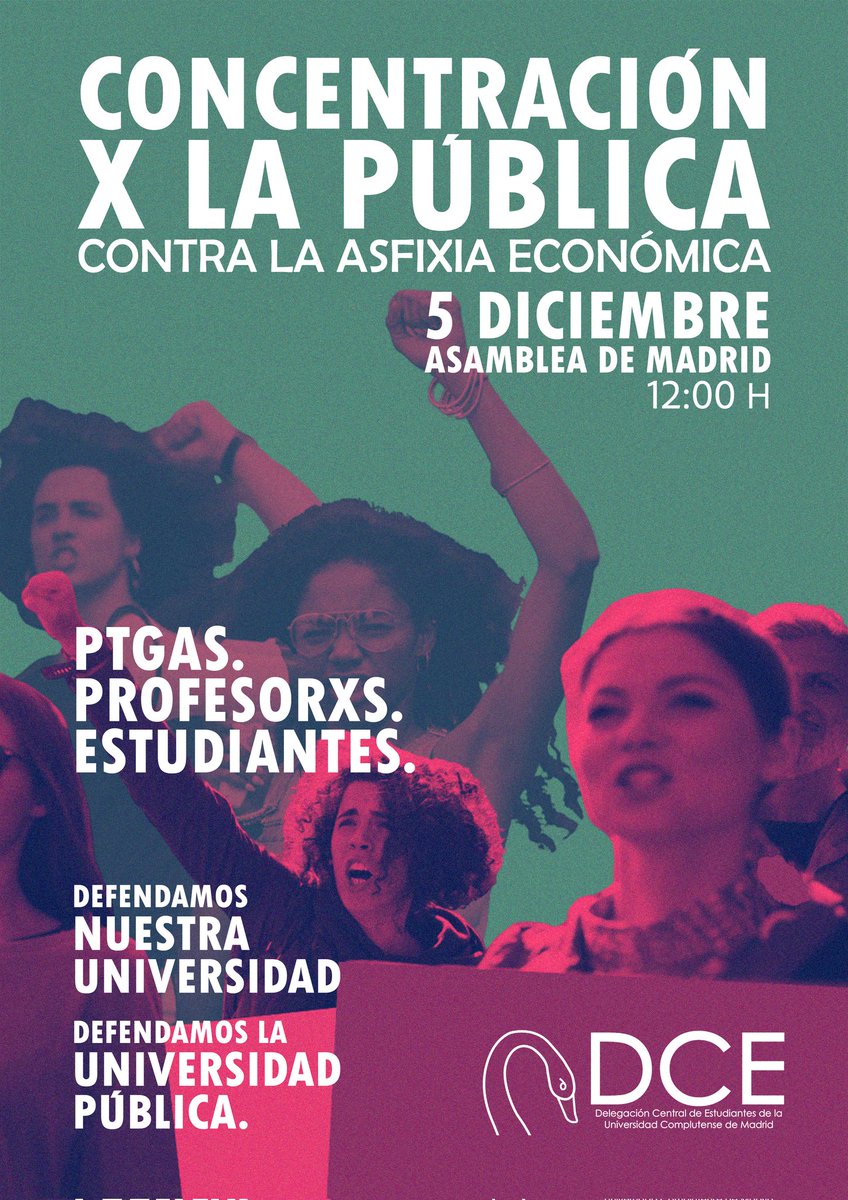
La Complutense toca fondo en su asfixia. 76 científicos llevan 9 meses a la espera de los fondos que han ganado para liderar proyectos y lo peor es que no les va a dar tiempo a ejecutarlos porque el plazo termina en diciembre del 2026.
https://t.co/TDtPnBM5q4
Físicas de la UCM empapelada de ciencia. “Lo hemos hecho para recuperar la dignidad de la universidad pública y para que se conozca la labor de investigación, que es vertebral para toda la docencia. Si no, no tiene la calidad”, cuenta una de sus promotoras https://t.co/yWPbmaEWRQ
As a professor at the @Fisicas_UCM of @unicomplutense, I took part in a symbolic protest against budget cuts to public universities by the regional government of Madrid: we unfolded a banner reading ‘Public university, investment in quality.’
But this was no ordinary banner…
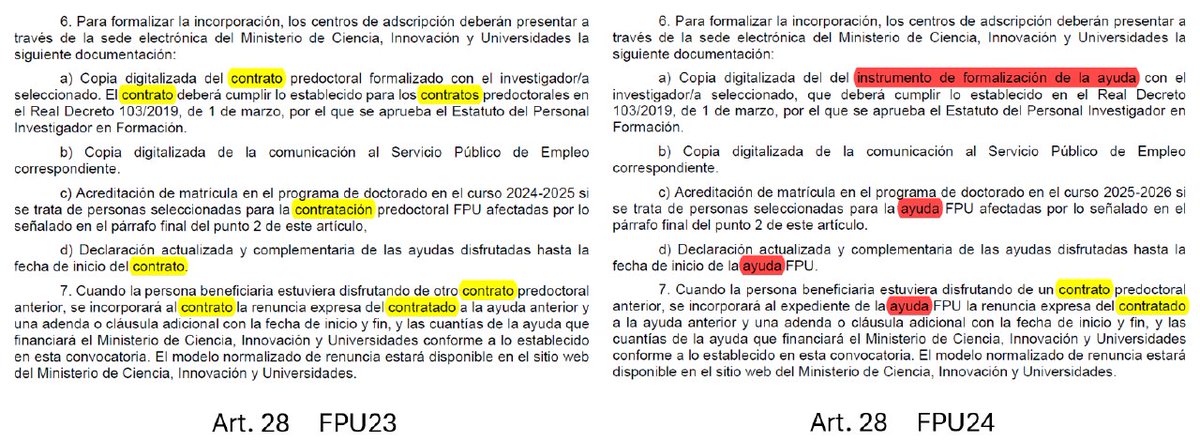
🤯➡️Cuando creíamos que el baremo era la novedad de la FPU 24, descubrimos un cambio alarmante en el lenguaje empleado en la convocatoria.📝
1. Hay una deliberada y sistemática omisión del término "contrato predoctoral". 📃🚫