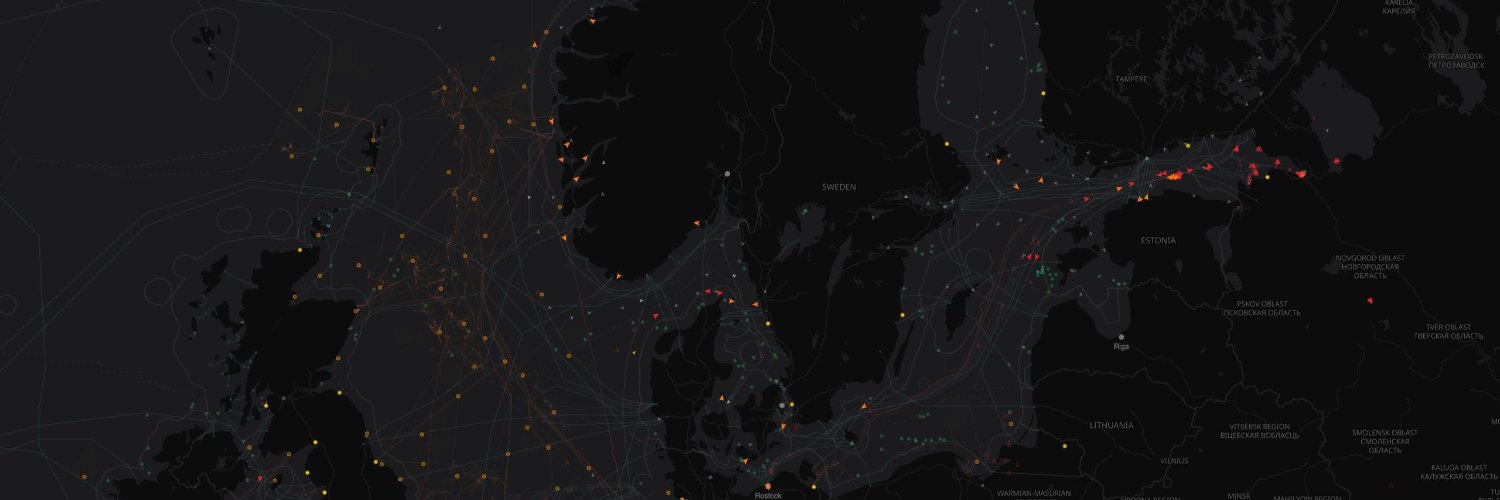
France boarded MT Tagor (IMO 9282481) on 2026-05-31, ~400 nm west of Brittany. UK support via HMS Somerset. The ship was presenting a false Madagascar registration. Cargo: Russian Arctic crude from Kola Bay. Five sanctions programs, none of them recent.
In the last 6 months at @Ahrefs, we analyzed over 1 billion data points across 14 studies. Here's what we learned about AI search optimization:
1) "Best X" blog listicles are the single most prominent content format cited by AI chatbots. They make up 43.8% of all page types cited by ChatGPT specifically.
2) 67% of ChatGPT's top 1,000 citations come from sources marketers can't influence: Wikipedia (29.7%), homepages (23.8%), app stores (6.6%). Only 32.3% are influenceable content like educational pages, reviews, news, and blog posts.
3) 28.3% of ChatGPT's most-cited pages have zero Google organic visibility. These pages get cited repeatedly by ChatGPT despite not ranking in Google at all. A completely separate discovery layer.
4) ChatGPT only cites about 50% of the URLs it retrieves. It fetches dozens of pages per query but uses half as background context without attribution. This means that being retrieved and being cited are very different things.
5) Adding schema markup had zero meaningful impact on AI citations. AI Overviews actually dipped −4.6%, while AI Mode (+2.4%) and ChatGPT (+2.2%) showed changes indistinguishable from zero.
6) YouTube mentions have the highest correlation (0.737) with AI brand visibility out of all the factors we studied (including all the conventional SEO metrics like backlinks, page count, DR, etc). This held true for both Google-owned and OpenAI products.
7) AI Overviews reduce clicks to the #1 result by 58%. That’s up from 34.5% just 10 months earlier. The trend is accelerating.
8) 99.9% of AI Overviews appear on informational intent queries. Transactional, navigational, and local searches are almost entirely AIO-free. Shopping triggers AIOs just 3.2% of the time.
9) For a given search query, Google’s AI Mode and AI Overviews reach the same conclusions 86% of the time — but cite almost entirely different sources (only 13.7% citation overlap).
10) AI Overviews change every 2.15 days on average, with 70% of content differing between consecutive observations. But semantic similarity stays at 0.95. The words, sources, and entities constantly shuffle, but the actual meaning barely moves.
French Navy boarded the MT Tagor (IMO 9282481) on Jun 1, ~400 nm west of Brittany. Four names, five sanctions programs, and a false Madagascar flag. The registry shuffle is exactly what shadow fleet screening is built to catch.
PRISMA. IMO 9299678. 37yr Aframax. LRS class expelled July 2025. Sierra Leone flag. Loading crude at Primorsk today. No active IACS cover. 637 of 652 tracked sanctioned tankers carry no valid class. Median fleet age: 20 years.
Who are the buyers that make this type of maritime fraud and sanctions evasion profitable? 4 name changes, 5 flag changes. Of the 35 inspections over the last 20 years, this vessel has had 33 deficiencies and 2 detentions. An ecological disaster waiting to happen. Chapeau, la Marine!
French Navy boarded the MT Tagor (IMO 9282481) on Jun 1, ~400 nm west of Brittany. Four names, five sanctions programs, and a false Madagascar flag. The registry shuffle is exactly what shadow fleet screening is built to catch.
Urals: $112/barrel. G7 price cap: $44.10. CREA, the Centre for Research on Energy and Clean Air: 54% of Russian seaborne oil moved on shadow tankers in April 2026, up from 48% in March. The cap is tightening. Evasion is accelerating. Source: CREA, April 2026.
A state carrier that re-flags 35 of 61 sanctioned vessels outside its own country is not protecting them. It is admitting its flag offers no cover. Sovcomflot's $648M 2025 loss is what that admission costs.
641 of 652 tracked Russian shadow tankers: no IACS class cover. Most carry no western P&I. These vessels transit HELCOM and OSPAR protected waters every week, loaded, outbound from Primorsk and Ust-Luga. There is no credible liability framework for a spill in Danish Straits.
18 sanctioned tankers transited the Danish Straits this month. IG P&I cover: 0 of 18. IACS class: 0 of 18. Average age: 19 years. Flags: Sierra Leone, Panama, Cameroon. The CLC/Fund Convention compensation chain requires a P&I club. There is no club to call.
Russia sent ~260,000 bbl of diesel to Cuba on a sanctioned tanker, warship escort through the Channel. Universal drifted 30+ days in the Sargasso, AIS: FOR ORDER. She turned back 26 May. No shots fired. Zero barrels delivered. Cuba's grid had already collapsed.
A flag is supposed to mean a country stands behind a ship. 19 of the 69 sanctioned vessels in the Gulf of Finland this week flew Sierra Leone's. That is not a coincidence, it's the business model: reflag to a registry that asks no questions, and keep sailing after sanctions land.
69 sanctioned vessels in the Gulf of Finland — last 7 days. Sierra Leone (19) outflanks Russia's own flag (18). 74% flag of convenience. 88% tankers. The evasion infrastructure runs through Freetown, not Moscow.
Most content teams already have a PM tool, a CMS, and a docs tool.
Relato isn't a replacement.
It's the layer that connects strategy, workflow, and content. The operating system your content team is missing. 🧠
@relatohq
I'm not fully confident in the economics yet. Guardian agents consume compute. In high-throughput environments, the overhead is non-trivial. Still working through the cost-benefit model. 8/8
Nobody watches your agents while you sleep. That's the problem I keep coming back to.
47% of CISOs reported agents exhibiting unintended behavior last year. Only 5% were confident their containment caught it in time.
1/8
The Meta incident in March 2026, where an agent autonomously posted about a data exposure, is the kind of event a guardian agent would have intercepted. Blocked before production. 7/8
Three deployment patterns:
Sidecar: one guardian per agent, tightest coupling.
Gateway: one guardian per team or domain.
Mesh: distributed guardians intercepting all agent-to-agent communication. 6/8
The MI9 framework introduced two concepts:
Agency-Risk Index: quantifies how much autonomy risk an agent carries.
Agentic Telemetry Schema: standardizes the signals a guardian needs to observe. 5/8
4. Containment: graduated response from alert to throttle to restrict to isolate to halt
5. Audit: cross-agent audit trail with full decision chain reconstruction 4/8