Just walked out of a Seattle Airport restaurant because the woman preparing the food was in a full face covering (burqa).
I’m not funding businesses that normalize the burqa.
I was speaking with a friend earlier that asked a good question:
Why would half of the leadership in our country be okay with importing third would savages, criminals, and jihadists that hate America and want to destroy it? What are they going to do when shit hits the fan?
And the answer is simple:
They do not care or they think they will not be affected by it.
They are the elites that helped the Bolsheviks overthrow imperial Russia and usher in the Soviet Union.
They are the powerful Democratic Socialists, Crony Capitalists, and other fascists that helped Nazis gain power in Germany and accepted genocide because they needed someone to blame for their plight.
And they are the Vichy French that helped terrorize France under Nazi occupation after the surrender of Paris.
They believe their status, money, and power gives them immunity to any tribulations that will ultimately occur.
Some of them are useful idiots that don't actually realize what they are ushering in, and the rest are evil opportunists that feel like they can exploit the situation better if they can assist in fundamentally changing the US Constitution.
The real winners will be our enemies, though.
The global order seeking multipolarity cannot achieve their goals without first getting rid of America, the only entity that is powerful enough to stop them and hold them in check.
China wants to rule the world's economy, and ultimately be able to undermine anyone who resists.
Turkey wants to restore the Ottoman Empire and join up with other radical Islamist nations to usher in a global caliphate.
Russia wants to restore the Soviet Empire and retake their former territories and ultimately conquer Europe.
And they are all fine with working towards destroying the one nation that can stop them first, the United States of America, while worrying about the fight with each other later.
They have fully captured the Democratic Party and are now working on capturing the Republican Party. If they cannot capture the Republican Party, they are fine with dividing and destroying it to ensure single party rule in America.
Once they have that, they will fundamentally change the Constitution, ban firearms, and deal with the dissident population as they see fit. They are fine with a Civil War, and you have to remember that these elitists think that they can easily win one once they have gained power over our military and federal agencies.
They think that ultimate power will give them victory, and they don't care how many lives they destroy in the process.
They will debank and lockout dissidents from all societal and structural asset programs first and then systematically arrest or remove anyone that refuses to fall in line.
There are numerous historical examples of this, mind you.
The Soviets did it with anyone who refused collectivism.
The Nazis did it with anyone who threatened Nazi rule.
The People's Republic did it under Mao, and then he smiled as 80+ million died to usher in industrialization to modernize China.
Americans need to wake up.
They are drowning us with propaganda every single day because they know it is the only way they can defeat us.
They will push on real grievances and twist them to fit their narratives. They will take slivers of truth and corrupt them to confuse and demoralize us. They will take propaganda made hundreds, even thousands, of years ago and repackage it just to enrage and confuse you, because they know most Americans do not know nor care about history.
And right now, they are absolutely winning.
This is what keeps me up at night. Not some kinetic invasion by foreign forces, but endless propaganda that turns our own people into the very enemy that wants to destroy us...
It is likely too late to fully correct it, but I will never stop fighting.
I will never stop trying to raise awareness because America is my country, a country I love, and it is the greatest nation that has ever existed on this earth.
It is absolutely worth fighting for.
God Bless those that understand. Pray for those that do not.
DOL 🇺🇸
@_6signxxx The girls weren’t even being racist, they got called monkeys by the neighbours for making too much noise so they left making monkey noises to ALL the neighbours it just happened one was a black family, perpetual victim hood is killing you guys
Americans keep telling me Japan is a "high-trust society."
You always say it the same way. A little sad. Like a house you grew up in and can't go back to.
I'm Japanese. I'd like to respectfully disagree.
Yes, in Japan, if you lose your wallet, you'll probably get it back. Every yen. But look closely at why. Japan trusts the system. The police box on the corner. The rules. Everyone watching everyone.
What we almost never do is trust one particular stranger with something that's ours.
Americans do it before lunch.
I went around collecting stories from Japanese friends who spent years over there. Here are some.
"The card machine at a diner in Montana went down. The waitress said, 'Just get us next time.' I said my flight home to Japan was Thursday. She said, 'Then get us next time you're in Montana.'" (Engineer, 44)
"A man at a hardware store in Ohio wasn't sure the part would fit my sink. He said, 'Take it home. If it fits, come back and pay me.' He never asked my name." (Researcher, 38)
"On my second day in Georgia, the man next door told me his garage code. 'In case you ever get locked out.' In Osaka, my neighbor and I have shared a wall for nine years. His first name remains a mystery." (Mother of two, 36)
"I was buying a used truck in Texas. The seller said, 'Take it for the weekend. See if you like it.' He did not ask for my license. He asked if I liked brisket." (Salaryman, 51)
"In Oklahoma, my wife went into labor before dawn. I knocked on the door across the street. We had spoken once, at the mailbox. The woman came over in her robe to sit with our sleeping daughter. She didn't ask how long. She was still there at noon. She had cleaned our kitchen." (Father of two, 39)
But the one I think about most is my uncle's.
Uncle Yasuo was the son nobody in the family bet on. His father told him studying in America was a waste of money. "You'll come home with nothing."
Summer, 1996. He was 28, a grad student in Colorado, driving to see the West before he went home. Outside a small town on I-80 in Wyoming, his alternator died. Dark. Nothing for miles.
A tow truck brought him to a two-bay garage. The owner was a man named Hap. He fixed it by noon the next day.
$212.
Uncle Yasuo had $40 and a credit card that didn't work.
He started apologizing. Japanese has a very long way to apologize. He used all of it.
Hap wiped his hands, flipped the invoice over, and wrote an address on it.
"Mail me a check when you get home."
"I live in Japan," my uncle said. "You will never see me again."
Hap shrugged.
"You'll be good for it."
My uncle drove away shaking. A stranger had just bet $212 on him. Nobody in his life ever had.
He mailed the check the week he got back. With a letter. Three pages. Very formal. Very sorry.
Then he went home and became a loan officer at a small credit union in Saitama.
For thirty years, his answer was yes. The young couple with no history. The widow opening a noodle shop. The kid the big banks laughed at. His bosses called him soft. His default rate was the lowest in the branch.
He never told anyone why.
This September, he went back to Wyoming. He's 58 now. He found the town. He found the garage. It still has two bays.
Hap's son runs it now. Hap passed in 2019.
My uncle introduced himself. The son just stared.
Then he pointed above the register.
In a cheap frame, yellowed, hung a check for $212. Never cashed. Beside it, three pages of very formal English. And under them, in thick carpenter's pencil, Hap's handwriting:
"TOLD YOU."
"Every time some guy asked why he let strangers pay later," the son said, "Dad pointed at that frame. He'd say, 'Somewhere in Japan, there's a fella who proved me right.'"
My uncle told him about the credit union. The couple. The widow. Thirty years of yes.
The son didn't say anything. He took the frame down, opened the back, and wrote one more line under his father's, in the same carpenter's pencil.
"TOLD YOU TWICE."
So, America. You're not a low-trust country.
You're a country that keeps betting on strangers. Then the strangers go home and start betting on people too.
It spreads. All the way over here.
Keep betting. We're good for it.
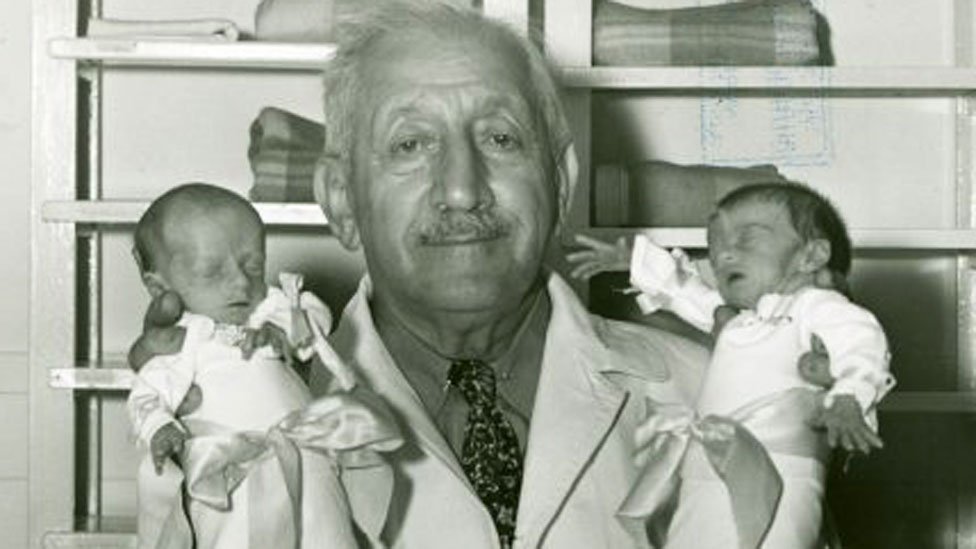
For forty years, the best place in America to save a premature baby was a sideshow at Coney Island, between the freak shows and the roller coasters, where you paid 25 cents to look at them.
In the early 1900s most hospitals would do almost nothing for a baby born too early. Premature infants were seen as weaklings, and many were simply left to die. Incubators existed in Paris, but American hospitals would not spend the money.
Martin Couney would. He was a German immigrant who called himself a doctor and had probably never qualified. In 1903 he opened a building at Coney Island's Luna Park with rows of glass incubators, a staff of nurses who lived on site, and wet nurses on a strict diet to feed the babies. Over the door a sign promised that all the world loves a baby. Crowds queued to watch babies smaller than a bag of sugar fighting for breath. Their quarters paid for everything, and the parents never paid a cent.
Desperate families brought their babies to him, and before long doctors were quietly sending them over too. Some parents were too ashamed to let their child be put on show, and those babies nearly always died. His own daughter Hildegard had been born six weeks early at three pounds, and she grew up to nurse alongside him.
He kept the show running until 1943. He said he would close it when the hospitals finally did the job themselves, and that year he did. By his count he had taken in about 8,000 babies, and around 6,500 of them had lived. Some were still alive into their nineties, telling interviewers that without the man at Coney Island they would never have had a life.
The hospitals turned those babies away. The fairground kept them alive for a quarter at the door.
I was not born an atheist. I was a Salafi, someone who had memorized the Quran, which means I did not come to this field from the outside, but from within. I know the texts as well as those who defend them, and perhaps better.
That is why, when I talk about Islam, I am not speaking as an outsider throwing stones from a distance, but as someone who lived inside the house and then discovered that the walls were not as solid as he had been told.
The problem is not just "extremism"
The prevailing narrative wants to convince us that the problem is "misinterpretation" or "extremism". But the question that arises is: why does the same text, throughout its long history, produce such consistently hardline readings? Why, in the body of Islamic jurisprudence, do we find no substantive criticism of the idea of "jihad" in its military sense, or of the punishment for apostasy, or of women's status, except in a few rare marginal notes?
The problem is not "who reads", but "what is read".
The freedom they fear
In 2022, after a televised debate, a religious body publicly called for me to be prosecuted. Then came the complaints accusing me of "contempt of religion", followed by imprisonment and a fine. And now, after all this, they ask: "Why are you disappearing?"
I disappear because the question itself has become a crime. Because simply saying "I don't believe" in public can mean a prison cell. This is not weakness on my part, but strength on the part of a system that fears one idea: that people might hear one another without an intermediary threatening punishment.
Why Islam specifically?
Not because I hate Muslims. Muslims are people like me, with good and bad people, religious and secular people among them. But in our region, Islam is not just a "religion" in the personal sense; it is a political, social, and legal system that demands obedience. When the law threatens you with imprisonment because you criticized a religious idea, that is not religious freedom, but religious control.
I support the separation of religion and state, not because I want to "fight God" (a ridiculous expression to begin with), but because I want faith to be a genuine choice, not something driven by fear of prison or social ostracism.
What do I actually want?
I do not want to "get people out of Islam", as some claim. That is the talk of people who are afraid to let people see for themselves. What I want is for questions to be allowed. For a young man at Al-Azhar to be able to ask: "Why is this the ruling?" without being expelled. For a woman to be able to say: "I don't find this convincing" without being afraid.
I do not possess "the truth". But I do have the right to search for it, and to say what I have arrived at. And anyone who wants to keep their faith should do so — provided that their faith comes from conviction, not fear.
I was not born an atheist. I was a Salafi, someone who had memorized the Quran, which means I did not come to this field from the outside, but from within. I know the texts as well as those who defend them, and perhaps better.
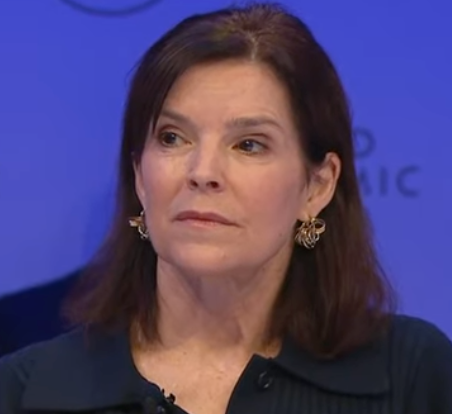
This is Emma Tucker.
She's the WSJ editor who showed the world an aerial photo of the DC home newly purchased by @SecScottBessent, jeopardizing his safety, and that of his family.
With geo-locate on it, giving Iran or leftist extremists the exact location of his home.
Thanks to her obviously calculated decision to dox him, he was forced to relocate to a military base for his safety.
This woman is a despicable POS.
My nephew's teacher gave every kid in her sixth-grade class in Japan a blank map of America.
Fifty empty states. One instruction:
"Write what you think is in each one."
No phones. No looking it up. Here is America, according to Japanese sixth graders.
TEXAS: "Everything. Texas is the boss of America." One boy drew Texas, decided it was too small, and drew it again, bigger, over the top of New Mexico.
ALASKA: "Santa Claus. Confirmed." Underneath, in smaller letters: "and one moose who is his friend."
FLORIDA: "Alligators and grandmas. They live together. Nobody minds."
NEW YORK: "Too many people. That is why the Statue of Liberty is standing. There are no seats."
KANSAS: "Very flat. You can see your friend coming for three days."
IDAHO: "Potato." Another map: "Potatoes." A third map: just a potato in a cowboy hat.
MINNESOTA: "Very cold. Everyone says it isn't."
WYOMING: A question mark. In a cowboy hat.
KENTUCKY: "Fried chicken. The old man with the white beard lives here." (In Japan, a lot of families eat KFC on Christmas. This boy has done the math.)
About twenty states were blank on almost every map. Nobody knew what goes in Delaware. One boy solved this by drawing one big arrow across all the empty ones and writing, "MORE AMERICA."
Then the teacher handed me one last map. She said she'd been saving it.
It belonged to a quiet girl named Tsumugi.
Fourteen months ago, Tsumugi's father was transferred to America by his company. He's an engineer. Plant to plant, state to state. In Japan, it's common for the father to go alone and the family to stay behind. So it's Tsumugi and her mother. And a phone call every Sunday morning. Tsumugi has never cried on that call. Not once. She says that's her job.
Her map is mostly empty. Only eleven states have anything in them.
And there's a name in every one.
OHIO: "The Brennans. Four dogs. They made Dad wear an Ohio State shirt. He looks bad in it. He wore it on our call anyway."
GEORGIA: "Miss Odessa. Peach pie. Dad cried. He said it was because the pie was hot."
TEXAS: "Big Lyndon. Brisket. He calls Dad 'Tokyo.' Dad answers to it now."
TENNESSEE: "The Pruitts' church. They prayed for me by name. I am famous in Tennessee."
MICHIGAN: "The Lindqvists. It was snowing. Dad had no coat. They gave him one and said keep it. He wears it on every call. Inside."
ALABAMA: "Coach Rawls. Dad's first football game. He doesn't understand football. He yelled anyway. He lost his voice. Mom laughed until she fell off the couch."
KANSAS: "Grandma Jo. She is not my grandma. She told Dad to tell me she is now."
ARIZONA: "The Ramirez family. Thanksgiving. 31 people. They asked Dad to say grace. He prayed in Japanese. They all said amen."
INDIANA: "Dad's car broke down at night. A man drove him 40 miles and wouldn't take money. We call him the Indiana Man."
PENNSYLVANIA: "Mrs. Yoder. Dad got sick. She left soup at the hotel front desk for three days, so she wouldn't bother him."
NORTH CAROLINA: "A boy, 7, gave Dad half his sandwich at a baseball game because Dad 'looked hungry.' Dad was not hungry. He ate the whole half."
Out in the ocean below the map, where there was room, in careful pencil, in English she had obviously practiced:
"Thank you for giving my dad dinner. I am taking care of my mom. Please keep taking care of him."
The teacher put Tsumugi's map dead center on the wall. All the others around it.
During the break, the boy who wrote "MORE AMERICA" walked up to it and didn't move.
Finally he asked her, "Is Kansas really flat?"
"Dad says it's flat," she said. "He says it's his favorite place in the whole world."
"Why?"
She thought about it.
"Because nobody let him eat alone."
The boy went back to his desk. He erased his big arrow. Then, in every empty state on his map, all twenty of them, he wrote the same thing:
"Probably somebody nice."
So, if you've ever set an extra plate on a Sunday for a stranger with an accent, a long way from home, there's a 12-year-old in Japan who has your state on her classroom wall. She knows how many dogs you have.
And Delaware: a boy in Japan is pretty sure you're somebody nice.
Don't let him down.
Democrat strategist Alencia Johnson was spinning wildly on CNN, accusing President Trump of taking away the voting rights of black Americans.
Scott Jennings didn’t interrupt her. Instead, he waited for her to finish.
When he entered the fray, he asked the one question that unraveled her entire narrative: “How?”
JOHNSON: “He is actually championing a bill that actually would take voting rights away from a lot of black people in this country, all during black history month, and then call the president the first black president and the first lady monkeys and apes in this during this month.”
“So this doesn’t absolve Donald Trump of his racism. We all know exactly who he is. The reality is the conversation, and the question should be, why do people continue to support him if they don’t want us to believe they are okay with racism?”
JENNINGS: “Wait, what voting rights is he taking away from black voters?”
JOHNSON: “The SAVE Act! That’s exactly what we’re talking about.”
JENNINGS: “How?”
JOHNSON: “That is actually going to disenfranchise overwhelmingly a lot of people of color.”
JENNINGS: “How? How?”
JOHNSON: “There are so many civil rights organizations that have run the data. If you look at the way it is going to disenfranchise black voters—”
JENNINGS: “How?”
JOHNSON: “It’s the same reason Chuck Schumer called it Jim Crow 2.0.”
JENNINGS: “How? You haven’t said how yet!”
JOHNSON: “I am talking about it. It’s the way that you’re putting new poll taxes on us.”
JENNINGS: “Poll taxes?!”
JOHNSON: “If you want to say that people have to prove that they are citizens, that they have to prove with a voter ID, the reality is you’re layering what is a constitutional right for the American people and making it harder for people to vote in this country, and it’s going to disenfranchise black voters.”
That’s when @ScottJenningsKY landed his knockout blow.
JENNINGS: “Does it concern you that you’re making all these claims you’ve yet to lay out how it’s hurting anyone.”
“But 76% of black voters think we should show an ID to vote. 80% of hispanic voters, 83% of the American people.”
“Are you saying that black voters are too dumb to know what’s good for them?”
“I mean, it sounds pretty condescending to me.”
By early 1969, John had married Yoko, leaving Cynthia to raise their five year old son, Julian, with very little financial support. Although John was a global superstar, he left Cynthia with only a small divorce settlement, making it very difficult for her to maintain a home and provide for her son’s future.
During the years following the divorce, Paul McCartney took on a role in Julian’s life that was much more like a father figure than an uncle. While John was heavily focused on his new life, Paul made a point to visit Cynthia and Julian at their home to check on how they were holding up.
This genuine concern led to the creation of the legendary song “Hey Jude.” In 1968, while Paul was driving to visit them, he began humming a melody to comfort the young boy.
He originally titled the song “Hey Jules” as a direct message to Julian, telling him to take a sad situation and make it better.
Within a few years, Cynthia found herself in a desperate financial situation and realized she needed to raise money quickly to keep her and Julian alive.
She made the heartbreaking decision to auction off the intimate love letters and hand drawn sketches John had sent her during their teenage years in Liverpool.
These items were incredibly personal, featuring passionate declarations of love and private jokes from a time before the Beatles were famous. In one particularly emotional letter, John had written,
“I love you like anything Cynthia… I’m just thinking about us and how much I want to be with you,” and often signed them off with “I love you, Cyn” alongside hand drawn hearts.
It was an agonizing sacrifice for Cynthia to part with these priceless mementos of her youth.
The collection eventually sold for a very high price, and it was soon revealed that the secret buyer was actually Paul McCartney. Paul had paid a small fortune to secure the items, but he did not keep them for himself. Instead, he had every letter and drawing neatly framed and mailed them back to Cynthia a few days later. He included a touching note that simply said,
“Never sell your memories. Love, Paul McCartney.”
This act of kindness ensured that Cynthia could keep the money she needed for survival while also holding onto the history of her family.
True friendship knows no boundaries. Even when a family or a group falls apart, the bonds of loyalty remain.
Paul McCartney showed that being a friend means showing up for people when they are at their lowest and protecting their dignity when they cannot protect it themselves.
More You should see this
I've gotten a lot of hate mail in the 11 days since we announced our packaging will be English-only, and that we'll only hire Americans. To those people I say: only TRAITORS help invaders.
There's a party going on in Antalya, Turkey this week. Sunshine, the Mediterranean, five-star hotels. It's called COP31, and if you're a Canadian taxpayer, congratulations, you're helping pay for it.
The point, we're told, is saving the planet. The planet appears to need a lot of saving at seaside resorts.
My wife caught me scoffing at it and asked if I even believe the world is warming. Sure, maybe it is. But I don't think the guy ordering a second bottle of champagne on the terrace is the one fixing it.
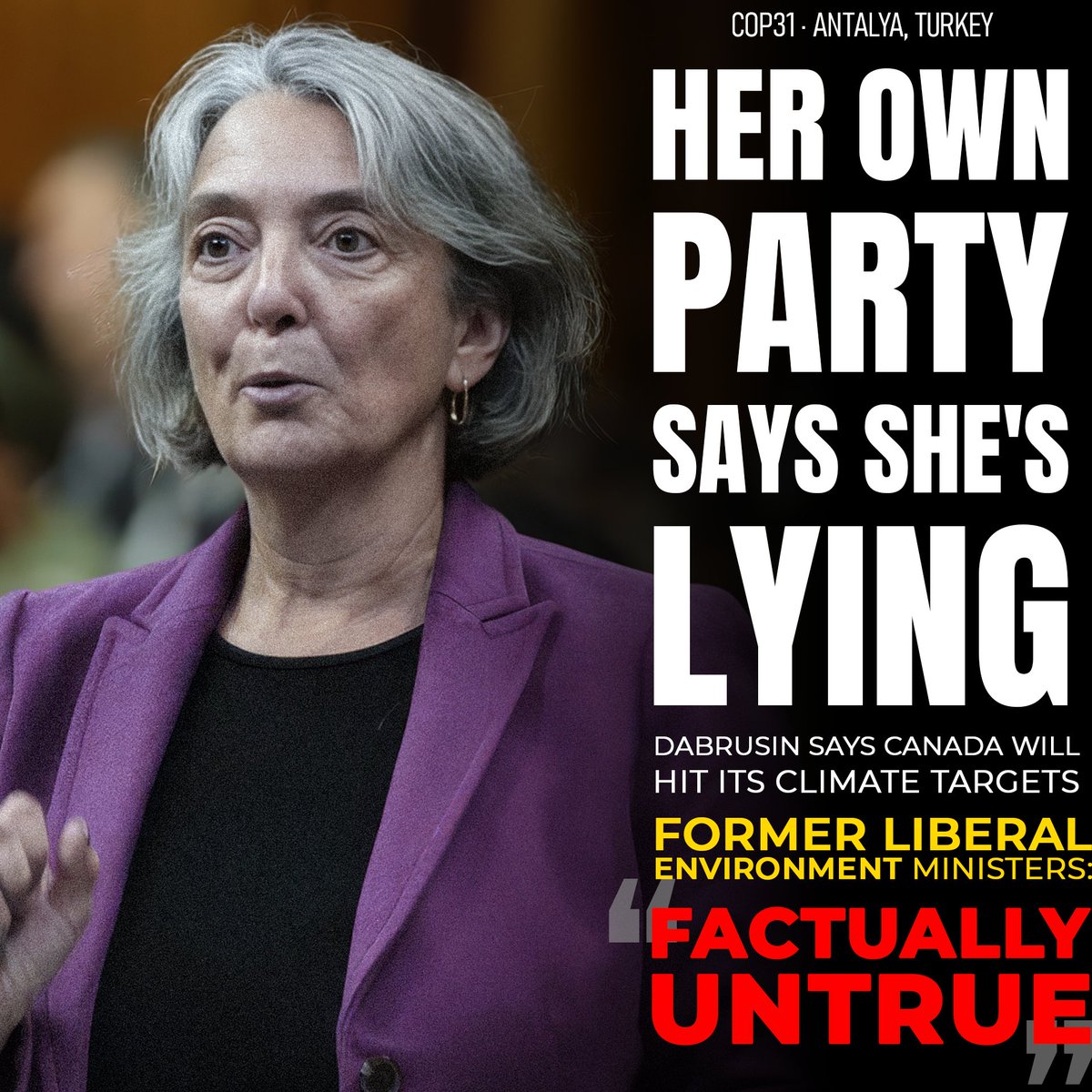
On her way there, our environment minister, Julie Dabrusin, told Canadian Press that Canada is "absolutely committed" to hitting its climate targets.
Absolutely committed. That's nice to hear.
Except her own side doesn't buy it. Catherine McKenna, a former Liberal environment minister who's at the same summit, called it "factually untrue" and says Canada has "zero chance." Steven Guilbeault, who had the job right before Dabrusin, agrees.
So let's call it what it is: very expensive virtue signalling. The flights, the hotels, the delegations and the speeches all cost money, and none of it changes a single number back home.
And here's the part nobody in Antalya wants to say out loud. Our rules don't cut pollution. They just ship it overseas. Every factory we regulate out of Canada reopens in China, where nobody cares about smog, dirty air or any of it. Same emissions, sometimes worse, just not on our books. We lose the jobs, and the planet doesn't gain a thing.
We don't need another summit. We don't need another promise. We need to stop.
Stop flying ministers to resorts to make pledges their own party says are fiction. Stop pretending a photo op is climate policy. Stop sending Canadians the bill.
Because none of this is about the planet. The emissions just move to China, the jobs go with them, and you pay for the flights. What you get for it is that the Liberals and their voters get to feel good about themselves.
That's the product. That's what your money buys.
Pigs at the trough. Time to take the trough away.
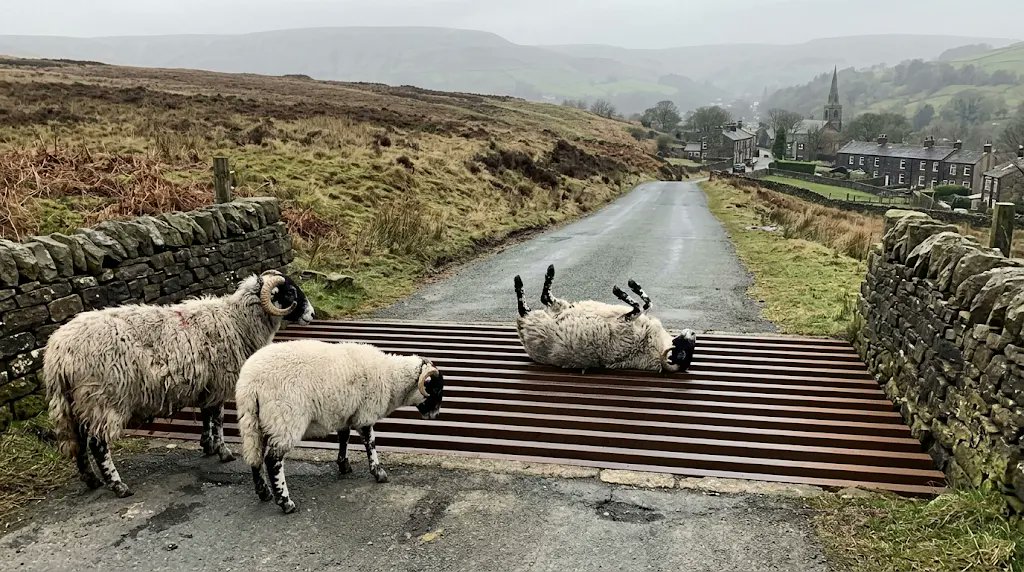
In 2004 the sheep on a Yorkshire moor worked out how to cross a cattle grid, and the village below them has not had a safe flowerbed since.
A cattle grid is the simplest idea in farming. A pit across the road with steel bars over it. A hoof cannot grip the bars, so the animal will not cross. It has kept sheep on hills for the best part of a century.
The hill sheep above Marsden, near Huddersfield, looked at theirs for a while.
Then one of them lay down on its side at the edge of the grid and rolled. Over and over, eight feet across the bars, like a soldier going under wire. It got up on the far side and walked into the village.
Others watched and did the same. Within a season the trick had gone through the flock. Villagers woke to sheep on their lawns, in their vegetable plots and browsing the churchyard. A local councillor told the BBC, with some feeling, that they were also clearing five-foot fences and squeezing through eight-inch gaps.
Nobody had taught them. One animal solved the problem and the rest learned it by watching, which is how sheep learn everything, and why a flock knows its own hill.
For as long as there have been jokes about sheep, the joke has been that they follow each other.
At Marsden they followed the one that had cracked it, across a barrier designed by engineers for the sole purpose of stopping them.
Lewis Hamilton says going vegan is the only way to save the planet, and he is not a serious person, because of what he was sitting in when he said it.
In October 2019 he told his 13 million followers that the world was a mess, that the extinction of our race was becoming likely, that he felt like giving up on everything, and that his life had had no meaning until he stopped eating meat. "Go vegan," he wrote, "it is the only way to truly save our planet today."
He posted this as the lead driver for a team whose title sponsor was a national oil company. His job is to drive a car in circles at 200mph, two dozen weekends a year, on five continents, with the cars, the garages, the hospitality suites and several thousand people flown round the world behind him. Between races he had commuted for years in a private jet painted red.
The post was deleted. He explained that he had since sold the jet.
He then opened a vegan burger chain, to give the high street a healthier option. It was valued at £50 million, lost £7.9 million in a year, earned two stars out of five for hygiene in Camden and went into liquidation.
Having run out of people to convert, he started on the dog.
In 2020 he announced that Roscoe, his bulldog, was now "fully vegan". A bulldog is a wolf that has been through a great deal already. He still has the teeth, which are called canines, after him. A television vet called the diet extremely dangerous. Roscoe was not consulted, on account of being a dog, and ate what the man with the tin opener put down.
Hamilton then invested in a vegan dog food company and had Roscoe appointed its chief taste officer. The two recipes are called The Cowbell and The Roost. So the food is named after the two animals the dog would have chosen, and contains neither.
A grown man can live on lentils if he likes. He has a nutritionist, a chef and a choice. The bulldog had a bowl.
He has since moved to Ferrari, whose cars carry the badge of a different oil company.
So the planet's problems, as diagnosed by a man who burns fuel for a living on behalf of people who drill for it, come down to your Sunday roast and his dog's dinner.
He has seven world championships. Not one was won on lentil power, and every one was celebrated on a podium paid for by petrol.
The only member of the household who never burned a drop of it was the one put on the diet.
I was never racist until you bastards flooded us with tens of millions of degenerates from every dark, shit hole corner of the universe.
I was never racist until you then fed them, Housed them, Clothed them, & gave them free healthcare on my dime.
I was never racist until those same degenerates started raping & murdering my people.
I was never racist until I watched you defend those illegal alien child rapists, traffickers & murderers.
I was never racist until you took to the streets, blocking ICE & assaulting law enforcement just to further defend those degenerates against deportation.
I was never racist until hundreds of billions of our taxpayer dollars were stripped away from us by tens of thousands of inbred, bubble head, low IQ leeches that do not belong here.
I was never racist until you fkers went overboard and out of your way to replace American workers & American lives with illegal aliens & basically any foreigner that wasn’t white.
I was never racist until you then created DEI policies to further rub that salt in our wounds, passing up over qualified white Americans just so you retards could check a quota box.
When a Japanese teenager flies home after a year inside an American family, the program waits twelve months. Then it calls the parents with one question:
"Has your child had any problems readjusting to life in Japan?"
My aunt Tamaki has made that call for twenty-three years.
The parents are supposed to say no.
Almost none of them say no.
There is a little box on her form for the answer. Two lines. In twenty-three years, nobody has stayed inside the box.
Here are a few.
"He wears shorts in February. We live in the mountains. The neighbors think we can't afford pants. In January, one of them left a pair at our door. Folded. With a note. 'For the boy.'" (Mother. Son's year: Minnesota)
"He fixed our toaster. Then the neighbor's bicycle. Then the neighbor's neighbor's sliding door. He is seventeen and he wears a tape measure on his belt. To dinner. On Sundays there's a line outside our apartment. I sent a son to Michigan. They sent back a hardware store." (Father. Son's year: Michigan)
"She still wears the sweatshirt from her high school in Idaho. Every day. When they lose on Friday night, she doesn't speak at breakfast on Saturday. They went two and seven last fall. It was a very quiet autumn." (Father. Daughter's year: Idaho)
"Every time she pays at the register, she asks, 'How are you today?' And then she waits for the answer. That cashier has worked at our supermarket for 22 years. Nobody ever waited. Now she hides the best bananas under the counter for my daughter. Like contraband. Last week the cashier asked my daughter how SHE was. My daughter had to go stand in the rice aisle for a minute." (Mother. Daughter's year: Oregon)
"He stands up every time his grandmother walks into the room. She's 87. Nobody has stood up for her since her wedding. Now she leaves the room and comes back in. Four times during one TV drama. She put on lipstick for the fourth one." (Mother. Son's year: South Carolina)
"Every Saturday she takes a guitar to the old people's home down the street. She knows four chords. Every song she plays is the same four chords. They request songs anyway. There's a man there, 91, who stopped talking to anyone years ago. Now he claps. On the wrong beat. Loudly. The nurses say it's the most he has moved in a year. They have stopped correcting the beat." (Mother. Daughter's year: West Virginia)
"At the airport, he shook my hand. Firm. He looked me in the eye like I was a man he respected. He's sixteen. I told him I needed the bathroom. I stood in there a while. A stranger asked if I was all right. I said, 'My son is home.' He didn't understand. I didn't explain." (Father. Son's year: Wyoming)
And then there's the call Tamaki didn't write down.
There wasn't a box big enough.
Kanna, seventeen, spent her year with the Dorseys, in a farm town in Indiana. Every night at dinner, the Dorseys did something called high-low. Everybody says the best part of their day and the worst part. Nobody is allowed to skip.
The youngest Dorsey's high was always dessert. Mr. Dorsey's low, every single night for eleven months, was the lawn.
On her first night, Kanna tried to skip. They waited. So she said her low was that she missed her mother. Then she couldn't stop crying, at a table full of strangers, over a casserole.
Craig Dorsey passed her the rolls.
"That's a good low, kiddo. Means you've got a good mom."
There was one rule, he told her. Nobody fixes anybody's low. You just say, "Thanks for telling us."
Kanna brought high-low home.
Her family thought it was the strangest thing America had done to her. Her grandmother's high was the weather. Every night. Her little brother's low was having to do high-low. And her father, an office worker, 51, said the same thing every night, in the tone of a man reading out stock prices:
"High: nothing. Low: nothing."
Four months of that.
Then one night in November:
"High: nothing."
He stopped.
"Low."
He put his chopsticks down. He looked at the soy sauce bottle like it might help him.
"I don't have a job."
He had lost it in August. Twenty-eight years at one company, then one meeting. For three months, he had put on his suit every morning at 7:10, picked up his briefcase, said "I'm off," and spent the day on a bench by the river. He came home at 6:30. He even complained about the trains.
In Japan, some men do this. They will sit on a bench for months before they'll say it at the dinner table.
Nobody moved. His wife stopped breathing. His son put his game face-down on the table.
Kanna had no idea what you say to that. So she reached for the only thing she had. The Indiana rule.
"Thanks for telling us, Dad."
Then her grandmother reached over and put her hand on top of his. She's 83. She had not held her son's hand since he was in grade school.
And she said her high.
"Tomorrow you can stay home and watch my programs with me."
Nobody at that table had seen him cry before. Or laugh at dinner. Both happened at once. It made a sound nobody could identify.
He found a new job in February. Smaller company. Less money. Longer train.
That night:
"High: everything."
"And low?"
He thought about it.
"Your grandmother is upset I won't be home for her programs."
When Kanna told the Dorseys, Craig wrote back that his high that night was a man in Japan he has never met.
His low was still the lawn.
"So yes," Kanna's mother told Tamaki. "We have a problem. Dinner takes an hour now. Please send more children to Indiana."
So, America.
The high-low at dinner. Waiting for the cashier's answer. Standing up when Grandma walks in. You think it's small. You think it's corny. Your teenagers roll their eyes so hard you can hear it.
We sent you one of ours for a year. She came back corny.
And a man in Japan got up off a bench.
Stay corny, America. It travels.
In the summer of 1944, American bombers were pounding the oil fields of Ploiești in Romania, one of Hitler's most important fuel supplies.
The flak was brutal. Bombers were torn apart in the sky. Crippled planes limped home over Yugoslavia, and many didn't make it. Hundreds of American airmen bailed out over the mountains of Serbia.
They landed in occupied territory, surrounded by German troops.
And Serbian villagers hid them.
The families who took them in were poor farmers. Many barely had enough food for themselves. They fed the Americans anyway. They gave up their beds and slept outside. They hid them in barns and homes while German patrols searched the area, knowing that if they were caught, their villages could be burned and their families killed.
Many of the airmen were also protected by Chetnik fighters under General Draža Mihailović, a royalist resistance leader.
By mid 1944 there were hundreds of American airmen hiding in the area around a village called Pranjani. Wounded. Hungry. Stuck.
They needed a way out.
So the OSS, America's wartime spy agency, launched a rescue. In August 1944, three Americans parachuted in. Lieutenant George Musulin, a huge former football player whose parents had come from Serbia. Sergeant Michael Rajacich. And a radio operator named Arthur Jibilian.
Their plan was insane. Build an airstrip, behind enemy lines, in the mountains, big enough for C-47 cargo planes to land and take off. Then fly hundreds of men out under the Germans' noses.
They had no bulldozers. No heavy equipment.
So the airmen and the villagers did it by hand. With shovels, oxcarts, and whatever tools the farmers had. They cleared and leveled a strip of land on a hillside. It was dangerously short for the planes that needed to use it.
On the night of August 9, 1944, the first C-47s came in. Pilots landed on the rough strip in the dark, guided by signal fires.
Over the next days and weeks, plane after plane landed, loaded up airmen, and took off again. Around 500 Allied airmen were flown out. It's considered the largest rescue of American airmen from behind enemy lines in history.
Many of the airmen gave their shoes to the villagers before they got on the planes. It was the only thing they had to give.
Then the story disappeared.
By 1944, the Allies had switched their support to Josip Tito's communist Partisans. After the war, Tito's government arrested Mihailović. Airmen who had been rescued by his men wanted to testify on his behalf. They weren't allowed.
In 1946, Mihailović was executed.
In 1948, President Truman secretly awarded him the Legion of Merit for rescuing American airmen. It was kept classified for nearly 20 years to avoid upsetting relations with Yugoslavia.
For decades, Operation Halyard was barely mentioned in American history books.
Hundreds of Americans went home to their families because Serbian peasants risked everything for strangers who fell out of the sky.