There is no cure for Alzheimer’s. Prevention is essential.
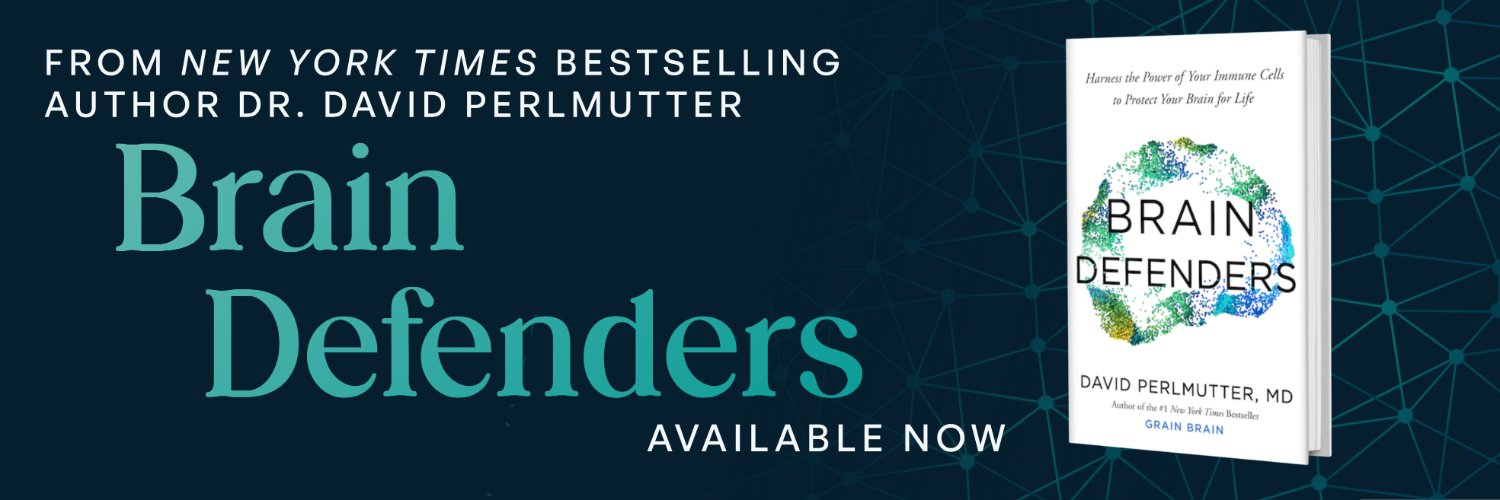
If we want a future with a lower risk of Alzheimer’s and cognitive decline, we must care for the brain long before symptoms begin. My new book Brain Defenders is a practical guide for doing exactly that.
Pre-order now: https://t.co/PLwkLXtEX2
The foods most aggressively marketed to you are often the ones doing the most harm. Research continues to link higher ultra-processed food consumption to changes in cognition, attention, and dementia risk.
One simple place to start: eat a protein-rich breakfast. It can significantly reduce cravings for ultra-processed foods later in the day. The goal is to create a daily environment that better supports long-term brain health.
For far too long, the conversation around neurodegenerative disease has centered almost exclusively on inevitability.
What I want people to understand is that the brain is dynamic. It is constantly responding to the environment you create through food, sleep, movement, stress, toxins, social connection, and metabolic health.
This shift in perspective is at the heart of my new book, Brain Defenders: https://t.co/AZq6ZXF9l9
Pre-order your copy and receive:
📖 A sneak peek of Chapter 1
🧠 The complete Brain Defenders glossary
🎁 Exclusive partner offers curated for brain health
The quality of the air in your home may be affecting your brain more than you realize. Air quality influences inflammation, sleep, cognition, and overall neurological health.
If you're interested in cleaning up the air in your home, my favorite air purifier is from Lichen Air: https://t.co/YJKNt7MaIO
You cannot cancel out the ultra-processed foods you consume just by adding healthy, whole foods to your diet too.
Adding healthy foods to your diet is important. But it does not erase the effects of foods linked to inflammation, metabolic dysfunction, cognitive decline, and Alzheimer’s disease.
Adding healthy foods matters, but reducing ultra-processed foods matters just as much.
In this episode of The Empowering Neurologist, I speak with @robinberzinmd about why metabolic health may be the missing piece behind brain fog, fatigue, and burnout, and what a more proactive approach to medicine can unlock.
Listen to find out what your symptoms might actually be telling you. https://t.co/g2h4kKfEWb
In a world full of conflicting health advice, the science of metabolic flexibility stands out as one of the most fundamental factors in how we age, think, and feel.
That's exactly what my latest conversation with @robinberzinmd explores.
In this episode, we go deep on metabolic health, hormones, sleep, and inflammation and what they mean for your brain and your longevity. We also explore what the traditional medical model often gets wrong, and what a more proactive approach can unlock.
https://t.co/ZSRwZac4oa
Do you actually need omega-3s?
In my opinion, yes. One of the most important omega-3 fatty acids for brain health is DHA, and one of the best food sources is wild salmon. Many people may also benefit from a high quality omega-3 supplement with at least 800–1,000 mg of DHA daily.
For decades, the consensus was that genetics were destiny.
But research in epigenetics tells a different story. Lifestyle choices, especially nutrition, can influence how genes are expressed.
One example is sulforaphane from broccoli sprouts, studied for its role in detoxification, oxidative stress reduction, and anti-inflammatory pathways.
Your genes matter. But your daily choices matter too.
You should be getting at least 800-1,000 mg of DHA daily. DHA, a key omega-3 fatty acid, is one of the most important fats in the brain. Save this as a reminder to have your levels checked at your next appointment.
Most people are not getting enough vitamin D. Sunlight matters, but for many people, it isn’t enough. That’s why I often recommend checking vitamin D levels and considering D3 supplementation with guidance from your physician.
Why does Alzheimer’s affect women more than men?
Research points to the connection between estrogen, brain inflammation, and the immune cells that help protect the brain. https://t.co/caNmAIvyso
Inflammation often starts in places people overlook.
For many, it comes back to two foundational things: Sleep and metabolic health.
Not just how long you sleep, but whether it’s restorative.
Not just what you eat, but how your body responds to it.
Blood sugar and insulin sensitivity sit at the center of the conversation.
AI can analyze massive amounts of data, recognize patterns, and support earlier, more precise diagnosis in ways we’ve never seen before. The real opportunity is not replacing clinical judgment, but enhancing it. How we integrate this technology will shape the future of patient care.
How do you feel about it?
https://t.co/BO5z9gYVC5
June is #BrainHealth & #AlzheimersAwareness Month.
Awareness alone is not enough. We need to shift the conversation toward prevention. Sleep, exercise, nutrition, metabolic health, and social connection all help shape brain health over time. The best time to protect your brain is now.