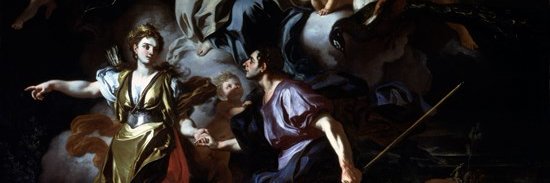
I am happy to present the fourth (concluding) post of More’s essay “William Morris,” one of the chapters in his Shelburne Essays, Seventh Series.
https://t.co/4h1A8jjQwq
.@ericadamsfornyc + @nyclandmarks: I urge you to landmark the endangered historic Most Holy Redeemer Church on E 3rd St in the East Village. It’s been a critical part of NYC history for over a century and a half, and we can’t lose it.
cc: @GVSHP https://t.co/B6d0pSz2tO
Dear Professor Goodwin,
Don't know if this will make its way to you, but I am a traditional poet and playwright, having previously published two plays, The Tragedy of King Lewis the Sixteenth and Dido: The Tragedy of a Woman (the theme of which is infanticide, and by extension abortion), as well as collected poems. I am happy to say that the Canadian Catholic publisher Arouca Press has recently published my third play, entitled The Tragedy of Orpheus and the Maenads.
In this play, I have retold the Greek myth of Orpheus and Eurydice by way of addressing Imagism, the literary revolution that began with “the men of 1914,” who abandoning the rational aspect of poetry (i.e., discursive thought and narrative) attempted to communicate subjective states of mind tending to elude description rather than to imitate human action in stories, which have a beginning, a middle, and an end that conveys some transcendent (that is super-rational) truth embodied in the interpersonal doings of men and women.
I have addressed this to you in the hope that you might see fit to publish a review of the play in, say, The Imaginative Conservative or other publication, as you see fit.
Hoping to hear from you soon,
I am faithfully yours,
David Lane
(718-729-4523)
https://t.co/NvYFVdk7Ll
Dear Professor Goodwin,
I am a traditional poet and playwright, having previously published two plays, The Tragedy of King Lewis the Sixteenth and Dido: The Tragedy of a Woman (the theme of which is infanticide, and by extension abortion), as well as collected poems. I am happy to say that the Canadian Catholic publisher Arouca Press has recently published my third play, entitled The Tragedy of Orpheus and the Maenads.
In this play, I have retold the Greek myth of Orpheus and Eurydice by way of addressing Imagism, the literary revolution that began with “the men of 1914,” who abandoning the rational aspect of poetry (i.e., discursive thought and narrative) attempted to communicate subjective states of mind tending to elude description rather than to imitate human action in stories, which have a beginning, a middle, and an end that conveys some transcendent (that is super-rational) truth embodied in the interpersonal doings of men and women.
I have addressed this to you in the hope that you might see fit to publish a review of the play in, say, The Imaginative Conservative or other publication, as you see fit.
Hoping to hear from you soon,
I am faithfully yours,
David Lane
(718-729-4523)
https://t.co/NvYFVdk7Ll