O tratamento inicial foca no fortalecimento e alongamento muscular com a correção biomecânica, além de procedimentos para intervenção na dor de forte intensidade quando necessário. Avaliação individualizada com equipe multidisciplinar é chave. #Ortopedia#DorNoJoelho
Se você sente dor na frente do joelho, esse vídeo é para você! https://t.co/8u2Zjmk0Kd
Abordando a dor anterior no joelho: Avaliação clínica detalhada + exames de imagem quando necessário.
A terapia com testosterona pode complementar, sob estrita supervisão médica, mas não substitui a essencialidade da atividade física e nutrição otimizada. #MedicinaEsportiva#SaúdeMuscular#Reabilitação
https://t.co/NBNZkIeTx4 Na gestão da sarcopenia e recuperação de pacientes acamados, a prioridade deve ser exercícios de resistência, ingestão adequada de proteínas de alto valor biológico e ajustes no estilo de vida.
É essencial identificar precocemente sinais de fraqueza progressiva em idosos para prevenir complicações e reduzir o risco de mortalidade. A atenção e o cuidado podem fazer uma grande diferença na qualidade de vida e na longevidade.
No entanto, é crucial uma avaliação individualizada do paciente, considerando fatores como a etiologia da lesão, a fase da patologia e a resposta a tratamentos anteriores, para otimizar os resultados.
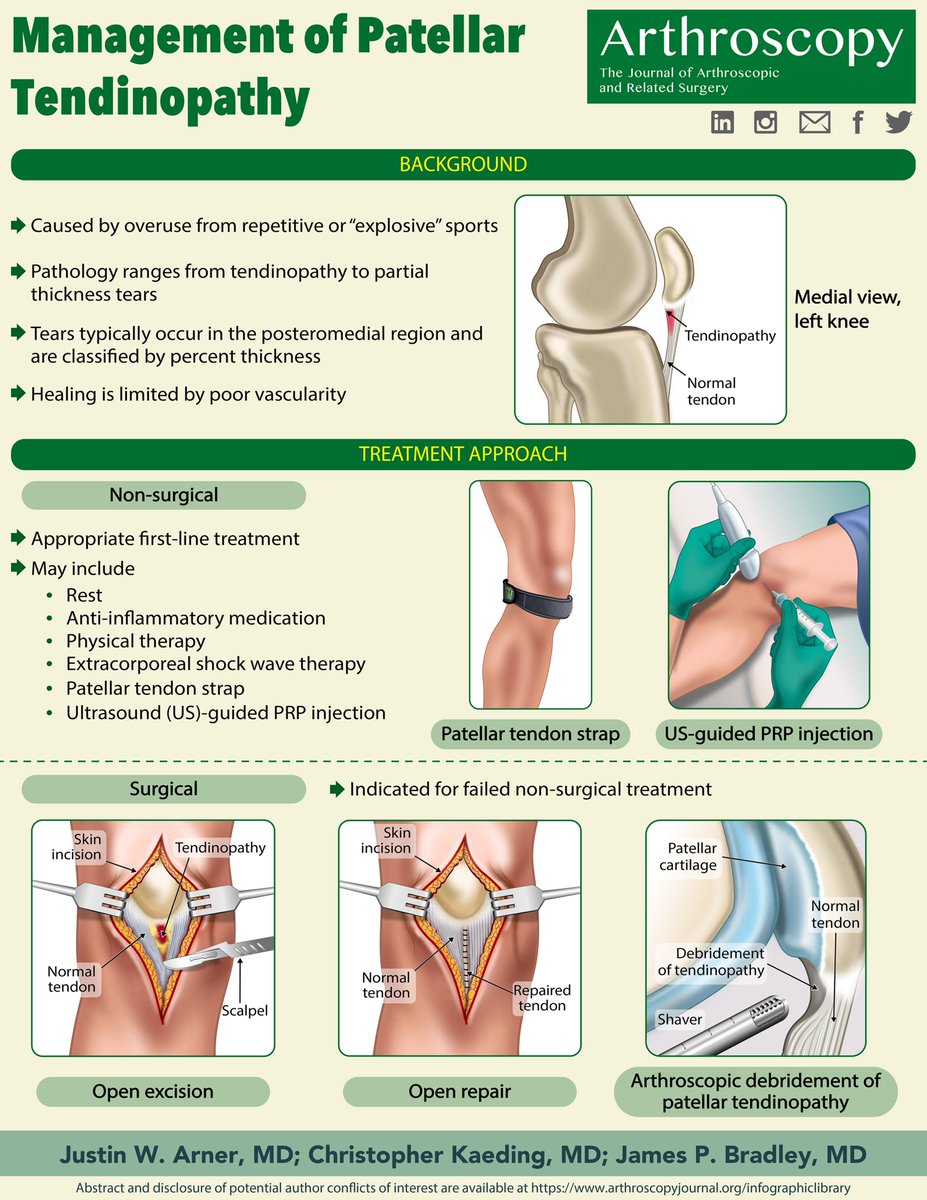
A abordagem multifacetada destacada para o tratamento da Tendinopatia Patelar, envolvendo terapias por ondas de choque e infiltração com plasma rico em plaquetas (PRP), reflete uma evolução significativa no manejo não cirúrgico desta patologia.
Estudos recentes sugerem que a combinação dessas terapias pode oferecer uma sinergia promissora, potencializando os processos naturais de reparação tecidual e alívio da dor.
Sua superioridade, relevante no arsenal terapêutico para dor, é reforçada pela comprovada não inferioridade e custo-efetividade, solidificando o PRP como uma escolha estratégica no tratamento.
Pesquisas indicam que, embora as opções sejam limitadas, o Plasma Rico em Plaquetas destaca-se sobre corticoide, ácido hialurônico, proloterapia e placebo na gestão da dor e função, minimizando danos à cartilagem.
💉PRP vs. Placebo for Knee Osteoarthritis: A Systematic Review and Meta-Analysis
An OE Original
Platelet-rich plasma (PRP) is one of the most popular, yet controversial, therapies in orthopaedics.
Some studies suggest it is safe and effective, while others have found no benefit.
We conducted a systematic review and meta-analysis comparing PRP vs. placebo to see what the current evidence says!
🏗️METHODS
We searched the MEDLINE, EMBASE, Cochrane, and OrthoEvidence databases for RCTs including adult patients with knee osteoarthritis comparing:
1⃣ Platelet-rich plasma injection(s)
2⃣ Placebo
We looked at the following outcomes of interest:
-pain
-WOMAC total scores (measures pain, stiffness & function)
-KOOS sub-scores (symptoms; activities of daily living; sports/rec; quality of life)
-IKDC scores (measure of function & symptoms)
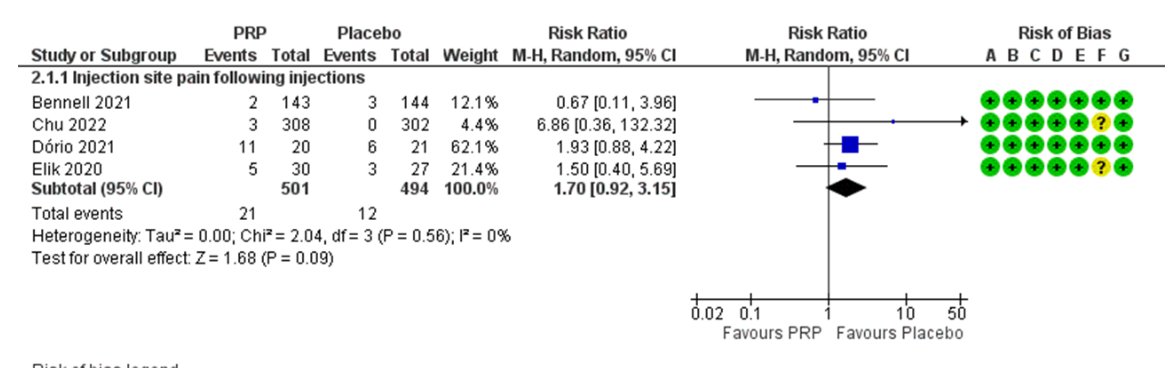
-Injection site pain
We assessed the risk of bias of the included studies using the Cochrane Risk of Bias tool, and the GRADE approach to determine the quality of the evidence.
🔍RESULTS
We found 12 RCTs, with a total of 1,834 patients!
Risk of Bias
The included studies generally had a low risk of bias; however, the risk of bias in selective reporting was unclear in 7 trials.
Pain
Pooled pain scores at all time points, up to 12 months post-treatment, were significantly in favour of PRP!
WOMAC Scores
Pooled WOMAC total scores at all time points, up to 12 months post-treatment, were significantly better in the PRP group.
KOOS Scores
Only 2 studies reported KOOS scores: all pooled sub-scores were not significantly different between the two groups, except the sports/recreation sub-score which was significantly better in the PRP group (p=0.05).
IKDC Scores
Pooled IKDC scores were significantly better in the PRP group at 6 and 12 months post-treatment.
Injection Site Pain
The pooled risk of injection site pain was not significantly different between the PRP and placebo groups (p=0.09).
Subgroup Analyses
No differences were found in our sub-group analyses by number of injections or formulation (leukocyte-rich vs. leukocyte poor).
✅INTERPRETATION
Current evidence suggests that PRP injections are likely to be safe and effective vs. placebo for knee osteoarthritis.
Future high-quality studies, and comparison with other non-surgical interventions are of interest to further elucidate the potential utility of PRP!
Sabe como as células mesenquimais têm se destacado como uma abordagem promissora no tratamento da dor e inflamação nas articulações? Assista ao vídeo e explore as descobertas científicas que estão moldando o futuro da ortopedia. https://t.co/sOpc0ZwHqY
Eu prescrevo Duloxetina nos pacientes com osteoartrite sintomática, principalmente nos casos em que a dor crônica é de intensidade constante ou persistente a analgésicos simples. Resultados bons na maioria dos casos dentro de um esquema terapêutico multimodal.
💊Duloxetine for Hip & Knee Osteoarthritis: A Systematic Review & Meta-Analysis
An OE Original
Depression...anxiety...osteoarthritis?
Duloxetine is commonly used as an antidepressant but has also been utilized to manage pain.
Can it effectively manage pain from hip & knee osteoarthritis?
🏗️METHODS
We searched MEDLINE, EMBASE, Cochrane CENTRAL, and the OE MIND database for randomized controlled trials (RCTs) comparing:
1⃣ Duloxetine
2⃣ Control (ex. placebo; usual care)
We performed a risk of bias assessment and utilized the grade approach to assess the quality of the evidence.
Outcomes of interest included:
- Pain (measured with the Brief Pain Inventory [BPI] & Visual Analog Scale [VAS])
- Western Ontario and McMaster Universities Arthritis Index (WOMAC)
- Adverse events
🔎RESULTS
9 RCTs with a total of 2,431 hip/knee osteoarthritis patients were included!
The risk of bias was low for most of the studies!
BPI Average Pain
Pooled BPI average pain scores after 7-8 & 12 weeks of treatment were significantly in favour of the duloxetine group!
VAS Pain
Pooled VAS pain scores after 7-8 weeks of treatment were also significantly in favour of the duloxetine group!
WOMAC
Pooled WOMAC total scores after 7-8 & 12 weeks of treatment were significantly in favour of the duloxetine group!
All WOMAC subscores (pain; function; stiffness) were also in favour of duloxetine at both time points!
Adverse Events (AEs)
The risk of treatment-emergent AEs, nausea, dizziness, and somnolence were all significantly higher in the duloxetine group.
✅INTERPRETATION
Duloxetine appears to be an effective treatment for improving pain and function for patients with hip or knee osteoarthritis.
However, a higher risk of minor adverse events such as nausea or dizziness may accompany the benefits!
🔍 O estudo da JAMA (2022) destaca um fato muitas vezes subestimado: a obesidade é o maior fator de risco modificável para osteoartrite do joelho. A chave para aliviar a dor e melhorar a qualidade de vida pode estar no controle do peso!
🏃Community-based Diet & Exercise for Knee Osteoarthritis
Published in @JAMA_current
One of the most impactful, yet modifiable, risk factors for knee osteoarthritis? Obesity.
Diet and exercise have been demonstrated to be effective in improving symptoms. But most RCTs on the topic were conducted in controlled settings.
Can it work in a community-based setting?
🏗️METHODS
The WE-CAN Trial was a multicenter, assessor-blinded RCT which randomized 823 obese or overweight knee osteoarthritis patients to receive:
1⃣ 18 months of community-based diet & exercise intervention (n=414)
2⃣18 months of attention control (n=409)
The primary outcome of interest was knee pain, measured with the WOMAC scale.
Secondary outcomes included:
- quality of life
- body weight & waist circumference
- function
- 6-minute walking distance
🔎RESULTS
Knee Pain
After 18 months, patients who received the community-based diet and exercise program reported significantly lower pain scores than the attention control group (p=0.02).
Quality of Life
After 18 months, quality of life scores were significantly better in the community-based diet and exercise group (p<0.001).
Body Weight & Waist Circumference
After 18 months, patients in the community-based diet and exercise group lost 6kg more in weight and 5cm more in waist circumference than the attention control group!
Function
After 18 months, function scores were significantly better in the community-based diet and exercise group (p<0.001).
6-Minute Walking Distance
After 18 months, the average 6-minute walking distance was significantly longer in the community-based diet and exercise group (p<0.001).
✅ INTERPRETATION
An 18-month community-based diet and exercise training program effectively reduced pain, lowered body weight, and improved function and quality of life for overweight and obese knee osteoarthritis patients!
📢 To all clinician helping people with #osteoarthritis to manage their symptoms
We have answered to the most common questions patients have about exercise therapy for knee and/or hip #osteoarthritis
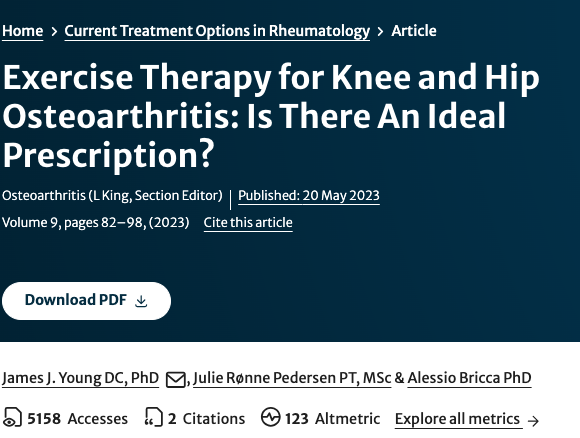
https://t.co/REoxCHLd4u
Pacientes mais fortes e com prática regular de exercícios previamente a cirurgia evoluiu com menor atrofia e perda de força muscular. Consequentemente a reabilitação é mais rápida e menos sofrida.
https://t.co/Sf7CNVRP9e
Alívio da Dor e Inflamação: A Capacidade das Células Sinalizadoras Mesenquimais.
Neste vídeo, exploramos as descobertas fascinantes do estudo JISAKOS de 2023, que reexamina e amplia a pesquisa pioneira de Arnold Caplan sobre células-tronco mesenquimais.


![OrthoEvidence's tweet photo. 💊Duloxetine for Hip & Knee Osteoarthritis: A Systematic Review & Meta-Analysis
An OE Original
Depression...anxiety...osteoarthritis?
Duloxetine is commonly used as an antidepressant but has also been utilized to manage pain.
Can it effectively manage pain from hip & knee osteoarthritis?
🏗️METHODS
We searched MEDLINE, EMBASE, Cochrane CENTRAL, and the OE MIND database for randomized controlled trials (RCTs) comparing:
1⃣ Duloxetine
2⃣ Control (ex. placebo; usual care)
We performed a risk of bias assessment and utilized the grade approach to assess the quality of the evidence.
Outcomes of interest included:
- Pain (measured with the Brief Pain Inventory [BPI] & Visual Analog Scale [VAS])
- Western Ontario and McMaster Universities Arthritis Index (WOMAC)
- Adverse events
🔎RESULTS
9 RCTs with a total of 2,431 hip/knee osteoarthritis patients were included!
The risk of bias was low for most of the studies!
BPI Average Pain
Pooled BPI average pain scores after 7-8 & 12 weeks of treatment were significantly in favour of the duloxetine group!
VAS Pain
Pooled VAS pain scores after 7-8 weeks of treatment were also significantly in favour of the duloxetine group!
WOMAC
Pooled WOMAC total scores after 7-8 & 12 weeks of treatment were significantly in favour of the duloxetine group!
All WOMAC subscores (pain; function; stiffness) were also in favour of duloxetine at both time points!
Adverse Events (AEs)
The risk of treatment-emergent AEs, nausea, dizziness, and somnolence were all significantly higher in the duloxetine group.
✅INTERPRETATION
Duloxetine appears to be an effective treatment for improving pain and function for patients with hip or knee osteoarthritis.
However, a higher risk of minor adverse events such as nausea or dizziness may accompany the benefits!](https://pbs.twimg.com/media/F_ZbKNsXkAA2cET.jpg)
![OrthoEvidence's tweet photo. 💊Duloxetine for Hip & Knee Osteoarthritis: A Systematic Review & Meta-Analysis
An OE Original
Depression...anxiety...osteoarthritis?
Duloxetine is commonly used as an antidepressant but has also been utilized to manage pain.
Can it effectively manage pain from hip & knee osteoarthritis?
🏗️METHODS
We searched MEDLINE, EMBASE, Cochrane CENTRAL, and the OE MIND database for randomized controlled trials (RCTs) comparing:
1⃣ Duloxetine
2⃣ Control (ex. placebo; usual care)
We performed a risk of bias assessment and utilized the grade approach to assess the quality of the evidence.
Outcomes of interest included:
- Pain (measured with the Brief Pain Inventory [BPI] & Visual Analog Scale [VAS])
- Western Ontario and McMaster Universities Arthritis Index (WOMAC)
- Adverse events
🔎RESULTS
9 RCTs with a total of 2,431 hip/knee osteoarthritis patients were included!
The risk of bias was low for most of the studies!
BPI Average Pain
Pooled BPI average pain scores after 7-8 & 12 weeks of treatment were significantly in favour of the duloxetine group!
VAS Pain
Pooled VAS pain scores after 7-8 weeks of treatment were also significantly in favour of the duloxetine group!
WOMAC
Pooled WOMAC total scores after 7-8 & 12 weeks of treatment were significantly in favour of the duloxetine group!
All WOMAC subscores (pain; function; stiffness) were also in favour of duloxetine at both time points!
Adverse Events (AEs)
The risk of treatment-emergent AEs, nausea, dizziness, and somnolence were all significantly higher in the duloxetine group.
✅INTERPRETATION
Duloxetine appears to be an effective treatment for improving pain and function for patients with hip or knee osteoarthritis.
However, a higher risk of minor adverse events such as nausea or dizziness may accompany the benefits!](https://pbs.twimg.com/media/F_Za5leXEAAKWxv.jpg)
![OrthoEvidence's tweet photo. 💊Duloxetine for Hip & Knee Osteoarthritis: A Systematic Review & Meta-Analysis
An OE Original
Depression...anxiety...osteoarthritis?
Duloxetine is commonly used as an antidepressant but has also been utilized to manage pain.
Can it effectively manage pain from hip & knee osteoarthritis?
🏗️METHODS
We searched MEDLINE, EMBASE, Cochrane CENTRAL, and the OE MIND database for randomized controlled trials (RCTs) comparing:
1⃣ Duloxetine
2⃣ Control (ex. placebo; usual care)
We performed a risk of bias assessment and utilized the grade approach to assess the quality of the evidence.
Outcomes of interest included:
- Pain (measured with the Brief Pain Inventory [BPI] & Visual Analog Scale [VAS])
- Western Ontario and McMaster Universities Arthritis Index (WOMAC)
- Adverse events
🔎RESULTS
9 RCTs with a total of 2,431 hip/knee osteoarthritis patients were included!
The risk of bias was low for most of the studies!
BPI Average Pain
Pooled BPI average pain scores after 7-8 & 12 weeks of treatment were significantly in favour of the duloxetine group!
VAS Pain
Pooled VAS pain scores after 7-8 weeks of treatment were also significantly in favour of the duloxetine group!
WOMAC
Pooled WOMAC total scores after 7-8 & 12 weeks of treatment were significantly in favour of the duloxetine group!
All WOMAC subscores (pain; function; stiffness) were also in favour of duloxetine at both time points!
Adverse Events (AEs)
The risk of treatment-emergent AEs, nausea, dizziness, and somnolence were all significantly higher in the duloxetine group.
✅INTERPRETATION
Duloxetine appears to be an effective treatment for improving pain and function for patients with hip or knee osteoarthritis.
However, a higher risk of minor adverse events such as nausea or dizziness may accompany the benefits!](https://pbs.twimg.com/media/F_ZajPYXYAAjCCh.jpg)




![OrthoEvidence's tweet photo. 💊Duloxetine for Hip & Knee Osteoarthritis: A Systematic Review & Meta-Analysis
An OE Original
Depression...anxiety...osteoarthritis?
Duloxetine is commonly used as an antidepressant but has also been utilized to manage pain.
Can it effectively manage pain from hip & knee osteoarthritis?
🏗️METHODS
We searched MEDLINE, EMBASE, Cochrane CENTRAL, and the OE MIND database for randomized controlled trials (RCTs) comparing:
1⃣ Duloxetine
2⃣ Control (ex. placebo; usual care)
We performed a risk of bias assessment and utilized the grade approach to assess the quality of the evidence.
Outcomes of interest included:
- Pain (measured with the Brief Pain Inventory [BPI] & Visual Analog Scale [VAS])
- Western Ontario and McMaster Universities Arthritis Index (WOMAC)
- Adverse events
🔎RESULTS
9 RCTs with a total of 2,431 hip/knee osteoarthritis patients were included!
The risk of bias was low for most of the studies!
BPI Average Pain
Pooled BPI average pain scores after 7-8 & 12 weeks of treatment were significantly in favour of the duloxetine group!
VAS Pain
Pooled VAS pain scores after 7-8 weeks of treatment were also significantly in favour of the duloxetine group!
WOMAC
Pooled WOMAC total scores after 7-8 & 12 weeks of treatment were significantly in favour of the duloxetine group!
All WOMAC subscores (pain; function; stiffness) were also in favour of duloxetine at both time points!
Adverse Events (AEs)
The risk of treatment-emergent AEs, nausea, dizziness, and somnolence were all significantly higher in the duloxetine group.
✅INTERPRETATION
Duloxetine appears to be an effective treatment for improving pain and function for patients with hip or knee osteoarthritis.
However, a higher risk of minor adverse events such as nausea or dizziness may accompany the benefits!](https://pbs.twimg.com/media/F_ZcL_lWAAAcE_V.jpg)