Founder of Heaven's Family, a nonprofit that empowers the poor to lift themselves while multiplying disciples of Jesus. Husband, father and grandfather.
Abraham, Isaac, and Jacob Were Gentiles (continued from previous post because of character limit...)
At that point, Abram gained more clarity on God’s plan. He now knew with certainty that he would not possess Canaan in his lifetime, which turned out to last another 90 years. He also knew with certainty that his unborn heir would not possess Canaan in his lifetime, nor would any of his grandchildren. In fact, it would be at least 460 years before any of his descendants would possess the land of Canaan.
Why the long delay? Only one reason was given: “The iniquity of the Amorite is not yet complete” (Gen. 15:16). That is, the moral decline among the Amorites, just one of tribal nations in the Promised Land, had not reached its inevitable moral low point that would require God’s judgment in the form of an Israelite invasion. Think about that. God was planning the invasion of the Promised Land at least 460 years in advance by the army of a nation that didn’t exist yet. That was certainly a lesson to Abram about God’s mercy, holiness, and judgment. Do you suppose Abram thought to himself, “I’m glad that God’s core character fluctuates, and that He is going to give me and my descendants the Promised Land unconditionally, unlike the Amorites who obviously hold it conditionally, so that we never have to fear God’s wrath if we displease Him!”?
Of course, when God freed the descendants of Abraham, Isaac, and Jacob from Egyptian slavery, He made a covenant with them that irrefutably tied their possession of the Promised Land to their faith and obedience. The first generation of ransomed Israelites failed to enter the promised land because of their unbelief and disobedience. The alleged “unconditional” Abrahamic covenant didn’t override the conditionality of the Mosaic covenant. And, of course, the God who never changes didn’t change between the Abrahamic and Mosaic covenants.
At the close of God’s covenant ceremony with Abram, we read:
"It came about when the sun had set, that it was very dark, and behold, there appeared a smoking oven and a flaming torch which passed between these pieces. On that day the Lord made a covenant with Abram, saying, 'To your descendants I have given this land, from the river of Egypt as far as the great river, the river Euphrates'" (Gen. 15:17-18).
The area described in that promise is, at bare minimum, ten times larger than modern Israel, and encompasses, not only all of modern Israel and the Palestinian territories, but all of Lebanon, significant portions of Syria, much of Jordan, fringes of Egypt, and small parts of northern Saudi Arabia and western Iraq. I’m waiting for dispensational Christians to start asking for donations to help arm the Israel militarily to invade all those nations in order to take “the land that belongs to them by divine right.” And why not? If the Abrahamic covenant described in Genesis 15 gives modern descendants of Abram’s grandson Jacob divine right to the current land defined by modern Israel’s borders, it gives them right to all the land described in Genesis 15.
And perhaps I, as one of Abraham’s descendants, should fly over to Saudi Arabia and kick some Saudis off the land that is mine by divine right! I wonder how that will go over?
5.) Fast forward another 14 years, to when Abram was 99 and Sarai was 89. (And Ishmael was 13.) The Lord again appeared to Abraham and repeated the old promises, some of which were now 24 years old. This time as you read, I hope you will look for what applies to you:
“'I am God Almighty;
Walk before Me, and be blameless.
I will establish My covenant between Me and you,
And I will multiply you exceedingly.'
Abram fell on his face, and God talked with him, saying,
'As for Me, behold, My covenant is with you,
And you will be the father of a multitude of nations.
No longer shall your name be called Abram,
But your name shall be Abraham;
For I have made you the father of a multitude of nations.
I will make you exceedingly fruitful, and I will make nations of you, and kings will come forth from you. I will establish My covenant between Me and you and your descendants after you throughout their generations for an everlasting covenant, to be God to you and to your descendants after you. I will give to you and to your descendants after you, the land of your sojournings, all the land of Canaan, for an everlasting possession; and I will be their God'" (Gen. 17:1-8).
I love those words “everlasting covenant.” It was a covenant between God, Abraham, and Abraham’s descendants, which includes all Gentiles who believe in the Lord Jesus. Obviously, unless Abraham and his descendants would be living forever, an “everlasting covenant” would not have much relevancy.
I also hope you noticed God’s words to Abram, the believer, “Walk before Me, and be blameless.” It was not a suggestion. It was a command. God expects obedience.
Again, God promised Abraham and his descendants “all the land of Canaan, for an everlasting possession.” To this day, both Abraham and I are waiting for that promise to be fulfilled. Moreover, all of Abraham’s believing physical descendants who, hundreds of years after Abraham, actually possessed some part of the Promised Land during their lifetimes, are waiting for that promise to be fulfilled as it was promised: “for an everlasting possession.” It is a sure eternal inheritance waiting for all believing Jews and Gentiles.
It is beyond me how anyone can extrapolate from these promises in Genesis 17 that the modern physical descendants of Abraham, through his grandson Jacob, who have rejected their Messiah and who are not born again, now have a divine right, over both Muslims and Christians, to the land that Abraham and everyone in Christ, Jew and Gentile, will one day inherit forever. I can’t find that in Genesis 17 or anywhere in the Bible, both Old and New Testaments. Why would unbelieving physical descendants of Jacob/Israel have a divine right now to land that they will have no right to in eternity?
During the same divine appearance, God promised Abraham that Sarah would give birth to a son whom they should name Isaac, concerning whom God promised, “I will establish My covenant with him for an everlasting covenant for his descendants after him” (Gen. 17:19). God also instituted the covenant mark of circumcision at that time, similarly stipulated hundreds of years later in the Mosaic Law. From this point on in the Abrahamic covenant, circumcision was required, so we’re certainly not talking about a “unconditional” covenant. Moreover, circumcision was symbolic of a repentant, transformed heart. The concept of a circumcised heart is found, not just in the New Testament, but also the Old:
"So circumcise your heart, and stiffen your neck no longer" (Deut. 10:16).
"Moreover the Lord your God will circumcise your heart and the heart of your descendants, to love the Lord your God with all your heart and with all your soul, so that you may live" (Deut. 30:6).
"Circumcise yourselves to the Lord
And remove the foreskins of your heart,
Men of Judah and inhabitants of Jerusalem,
Or else My wrath will go forth like fire
And burn with none to quench it,
Because of the evil of your deeds” (Jer. 4:4).
Paul put it in perspective for us 2,000 years later:
"For indeed circumcision is of value if you practice the Law; but if you are a transgressor of the Law, your circumcision has become uncircumcision. So if the uncircumcised man keeps the requirements of the Law, will not his uncircumcision be regarded as circumcision? And he who is physically uncircumcised, if he keeps the Law, will he not judge you who though having the letter of the Law and circumcision are a transgressor of the Law? For he is not a Jew who is one outwardly, nor is circumcision that which is outward in the flesh. But he is a Jew who is one inwardly; and circumcision is that which is of the heart, by the Spirit, not by the letter; and his praise is not from men, but from God" (Rom. 2:25-29).
Personally, I’m not going to debate Paul about that. And to Gentile believers in Colossae he wrote:
"And in Him you were also circumcised with a circumcision made without hands, in the removal of the body of the flesh by the circumcision of Christ; having been buried with Him in baptism, in which you were also raised up with Him through faith in the working of God, who raised Him from the dead" (Col. 2:11-12).
6.) Not long after the Lord’s appearance to Abraham when he was 99, He appeared to him again, visiting him at his tent, along with two angels. The Lord then told him that within a year, Sarah would give birth to a son. Then the Lord asked:
"Shall I hide from Abraham what I am about to do, since Abraham will surely become a great and mighty nation, and in him all the nations of the earth will be blessed? For I have chosen him, so that he may command his children and his household after him to keep the way of the Lord by doing righteousness and justice, so that the Lord may bring upon Abraham what He has spoken about him" (Gen. 18:17-19).
I want to point out two things from those two sentences. First, what made Abraham so important in God’s eyes so as not to have anything hidden something from him? Primarily it was that “in him all the nations of the earth will be blessed.” Those words were the primary and redundant theme for 25 years of divine communication with Abraham, from start to finish. When theologians try to make the Abrahamic Covenant all about the descendants of Jacob/Israel (or worse, all about modern political Israel), they are completely missing the point. The story of Abraham is the beginning of the story of the redemption of all the families on the earth. That story continues through the entire Bible, and I could write a small book showing that. That great story of redemption ends in Revelation, where we read:
"And they sang a new song, saying, 'Worthy are You to take the book and to break its seals; for You were slain, and purchased for God with Your blood men from every tribe and tongue and people and nation. You have made them to be a kingdom and priests to our God; and they will reign upon the earth…
"After these things I looked, and behold, a great multitude which no one could count, from every nation and all tribes and peoples and tongues, standing before the throne and before the Lamb, clothed in white robes, and palm branches were in their hands; and they cry out with a loud voice, saying, 'Salvation to our God who sits on the throne, and to the Lamb'" (Rev. 5:9-10; 7:9, emphasis added).
Those two passages in Revelation show us that God’s plan through Abraham and his seed will be fulfilled. Abraham’s spiritual descendants, both Jews and Gentiles from all of earth’s families, “will reign upon the earth.” It won’t just be the Promised Land that we will inherit, it will be the entire world. “The meek shall inherit the earth” (Matt. 5:5). Paul referred to Abraham as “heir of the world” (Rom. 4:13). The New Jerusalem is 1,500 miles wide by 1,500 miles long (Rev. 21:16). That’s about the distance from Philadelphia to Denver.
The second sentence of that passage is the final nail in the coffin of the idea that the Abrahamic Covenant was unconditional. God declared: “For I have chosen [Abraham], so that he may command his children and his household after him to keep the way of the Lord by doing righteousness and justice, so that the Lord may bring upon Abraham what He has spoken about him" (Gen. 18:19). It can’t get any clearer than that. The covenant was conditional. A few years later, God tested Abraham by commanding him to sacrifice Isaac on an altar. When Abraham was about to follow through, the Lord stopped him and said:
"By Myself I have sworn, declares the Lord, because you have done this thing and have not withheld your son, your only son, indeed I will greatly bless you, and I will greatly multiply your seed as the stars of the heavens and as the sand which is on the seashore; and your seed shall possess the gate of their [or his] enemies. In your seed all the nations of the earth shall be blessed, because you have obeyed My voice” (Gen. 22:16-18, emphasis added).
And what was it that the Lord decided not to hide from the man with the conditional covenant? If we keep reading in Genesis, we soon see it was God’s intention to destroy Sodom and Gomorrah, two wicked cities within the Promised Land that Abraham is still destined to inherit. As I asked similarly earlier, do you think that when Abraham saw the smoke of Sodom and Gomorrah’s destruction, he thought to himself, “I’m so glad God’s standards of righteousness are different for me, and will be different for all my future descendants, since we have an unconditional covenant”?
For Now
The Bible’s grand story of redemption doesn’t start with Jews or Israel. It started in the Garden of Eden, where God promised that the seed of the woman would crush the serpent’s head (Gen. 3:15). Adam and Eve weren’t Jews. There would be no Jews for more than 2,000 years. There were 22 generations from Adam to Jacob/Israel. And there were no Jews on the earth until after the days of Judah, Jacob/Israel’s fourth son. The word “Jew” is derived from the word “Judah.” The first time we find the word is in 2 Kings 25:25 (in the NASB).
That redemption story continues with the calling of Abram, a man from Ur of the Chaldeans. The ruins of that ancient city can still be visited—in modern Iraq. Not Canaan. Not Israel. Abram wasn’t an Israelite. He wasn’t a Jew. He was a Gentile. The fact that he is the first person in the Bible who is called a “Hebrew” (Gen. 14:13) lends itself to that fact, as it is derived from a semitic word that means “to cross over, pass through, or traverse.” Abram crossed over from Mesopotamia (Ur of the Chaldeans) into Canaan. And he received, as an uncircumcised Gentile, a promise that all the families of the earth would be blessed through his seed. That seed was the incarnate Son of God, who most often referred to Himself as the “Son of Man” and who once, while commending the great faith of a Gentile said:
"Truly I say to you, I have not found such great faith with anyone in Israel. I say to you that many [Gentiles] will come from east and west, and recline at the table with [Gentiles] Abraham, Isaac and Jacob in the kingdom of heaven; but the sons of the kingdom [descendants of Jacob/Israel] will be cast out into the outer darkness; in that place there will be weeping and gnashing of teeth" (Matt. 8:10-12).
Patriarchs Isaac and Jacob were just as much Gentiles as Abraham. They each inherited the promise to carry the seed that would bless all the families of the earth (Gen. 26:2-5, 24; 28:13-15; 35:9-12), which are comprised of mostly Gentile families. We can, of course, refer to all of Jacob/Israel’s descendants as Israelites, but as I’ve already pointed out, neither Israel nor any of his descendants for more than 380 years after his birth inherited any land in Canaan.
For those who utilize the argument that Abraham’s modern physical descendants through Jacob/Israel have a right to Canaan/Palestine “because their ancestors were the original inhabitants,” I hope you realize now that they were not. Pre-dating them were at least ten tribal nations. By the way, are you returning your land in North America to the descendants of the Native Americans “because their ancestors were the original inhabitants?”
“OK, but God used the nation of Israel to dispossess those original inhabitants. God gave Israel that land.”
Indeed He did, but He warned them that if they ever started acting like the pagans whom they dispossessed, He would similarly expel them from the land (see Lev. 18:24-30; Deut. 8:19–20; 28-30). Eventually, they started acting like the pagans whom they dispossessed, and God expelled them from the land. Only a repentant remnant of those folks ever returned. This is Bible History 101.
There is much more that could be said. I will write one more article in this series in which we will consider the premise that Israel’s birth in 1948 and the subsequent return of Jews to Israel from all over the world is a sure fulfillment of the prophetic final return of Jews to their ancient homeland and a sign of God’s favor toward Israel, which we should imitate. We will also look at Romans 11, a favorite of dispensationalists.
This teaching is a follow up to a previous one titled, “Will I be Blessed if I Bless Israel? (And Cursed if I Don’t?)” The overall feedback to that article (also sent to my 50,000 e-teaching subscribers) has been mostly positive but, as I anticipated, there has been some pushback from dispensationalists. Many of those good folks don’t even know they are dispensationalists. I’m not saying that to make anyone feel bad. I, too, was once influenced by dispensationalism and did not realize it. So I'll start this teaching describing dispensationalism. From there we will take an honest look at the Abrahamic covenant, comparing what Scripture says with what dispensationalism teaches. This is not a quick read, but I suspect most readers will learn and benefit. If you are believer in Jesus, you have an inheritance waiting for you, and part of that inheritance is the same land Abraham was promised. Read what follows to learn more. (This article was too long to fit into one post, so it has been split into two posts.)
____________________
Generally speaking, dispensationalism divides human history into seven dispensations in which God interacts with humanity in different ways. According to classic dispensationalism, we are currently in the Church Age, which is a parenthesis between two Jewish ages. They are the Age of Law (the Mosaic dispensation) and the future Millennial Kingdom (a restored age for national Israel). Dispensationalists gave us the idea of a “pre-tribulation rapture,” which marks the beginning of the next dispensation and God’s renewed plan for Jews. They also gave us the idea of the “two returns” of Jesus, separated from each other by a period of seven years.
Dispensationalism is a relatively new theology, emerging only in 1830 through the teaching of John Nelson Darby, one of the founders of the Plymouth Brethren movement. It gained massive traction in the United States via the Scofield Reference Bible, first published 1909, and later through books like "The Late Great Planet Earth" and the "Left Behind" series. It is now very influential in many evangelical, fundamentalist, and charismatic circles—particularly in North America—but it is still a minority view when looking at the full sweep of church history. It was not a view held by the apostles or early church fathers; nor has it ever been held by mainstream Protestants, Roman Catholics, or Eastern Orthodox churches.
Historically, Christians have embraced "covenantal" theology, which interprets redemptive history in light of God’s covenants, the first being His covenant with Adam. God promised him death if he ate the forbidden fruit (Gen. 2:15-16), thus implying a promise of eternal life if he didn’t. It was therefore a conditional covenant. We all know what happened when Adam failed to keep the single condition of his covenant with God.
Next was God’s covenant with Noah (Gen. 6:18), in which He promised to preserve him and his family from the coming judgment. The covenant was obviously contingent upon Noah building the ark, also making it a conditional covenant.
After the Flood, God made a covenant with every future descendant of Noah (which includes you and me). God promised to never flood the earth again (Gen. 8:22). That covenant is unconditional, praise God! It is, however, time-limited for only as long as “the earth remains” (Gen. 8:22). As Jesus told us, heaven and earth will one day pass away (Matt. 24:35). In any case, every time you see a rainbow, it is a reminder of that universal, unconditional, but time-limited, divine covenant (Gen. 9:8-17).
Next was God’s covenant with Abram/Abraham. Unlike the unconditional and time-limited Noahic Covenant, the Abrahamic covenant was conditional and eternal. It would benefit not only Abram/Abraham, but “all the families of the earth” (Gen. 12:3), through Christ, one of Abraham’s descendants. The Abrahamic covenant will be the focus of this teaching.
I need to mention that, 430 years after God made His covenant with Abram/Abraham, He inaugurated the Mosaic covenant (Gal. 3:17). It was between Him and the descendants of Jacob/Israel only. It was intended to be temporary (Heb. 8-10, particularly 8:13), lasting only until the New Covenant, which was promised in the Old Covenant (Jer. 31:31–34), and which Jesus inaugurated at the Last Supper.
So we see that God’s covenants can be universal or particular, time-limited or eternal, and conditional or unconditional. That is why it is important to always know the terms of a covenant, lest wrong assumptions be made.
Perhaps the greatest distinction between dispensational and covenantal theology is the former is more Israel-centric, whereas the latter is more world-centric. To put it in simple terms, it is “God so loved Israel” versus “God so loved the world.”
If your pastor’s sermons are more focused on Israel than the thousands of unreached people groups in the world who are waiting to hear the gospel for the first time, he, and you, have been influenced by dispensationalism.
If you believe that Jesus is going to return twice in the space of seven years, the first at which the church will be raptured, you have been influenced by dispensationalism.
If you imagine that the future judgment of the sheep and goats to be a judgment concerning how you treated the modern nation of Israel, you have been influenced by extreme dispensationalism.
If you are mourning the approximate 1,200 deaths and 3,400 injuries of innocent people created in God’s image due to the barbaric events of October 7, 2023, but are not mourning the retaliatory approximate 70,000 deaths and 170,000 injuries of innocent people created in God’s image in Gaza, you have been influenced by dispensationalism. If you are inwardly saying right now, “Those figures regarding Gaza are inflated,” even if you are correct, your thoughts betray your dispensational bias. Is the life of an Israeli child more valuable than that a Gazan child?
When I listen to some dispensationalist Christians regarding the Israel/Palestinian conflict, I am reminded of a passage in Mark Twain’s The Adventures of Huckleberry Finn in which Huck fabricates a story to Aunt Sally about a steamboat boiler explosion, who then asks, “Good gracious! Anybody hurt?” Huck replied, “No mam. Killed a n*gger.”
My observation is that dispensationalism is on the decline. Part of the reason is because Christians are waking up to the fact that God is not a racist. When Christians are perceived as being racist (as they are when they are dispensationalists), it doesn’t help our cause, nor does it glorify God.
My goal in this teaching, as always, is not to win an argument, but to help believers understand biblical truth, and in so doing, advance the kingdom of our Lord Jesus.
Am I a Second-Class Citizen?
It can be surprising how passionate some folks are on the subject of modern political Israel. It honestly seems that some think unregenerate Jewish people are more loved by God than everyone else—including His own beloved spiritual children who believe in the Lord Jesus Christ. When I read, however, as a “Gentile Christian,” certain passages in the New Testament, I don’t get the impression that I’m a second-class citizen in God’s eyes. Actually, I get just the opposite impression. Here is one of those passages, written to Gentile believers like me, that comes to mind:
"Therefore remember that formerly you, the Gentiles in the flesh, who are called “Uncircumcision” by the so-called “Circumcision” which is performed in the flesh by human hands [a reference to unbelieving Jews who, in Paul’s view, are not actually circumcised because their hearts remain hard to Christ]—remember that you [Gentiles] were at that time separate from Christ, excluded from the commonwealth of Israel, and strangers to the covenants of promise, having no hope and without God in the world. But now in Christ Jesus you [Gentiles] who formerly were far off have been brought near by the blood of Christ. For He Himself is our peace, who made both groups [believing Gentiles and believing Jews] into one and broke down the barrier of the dividing wall, by abolishing in His flesh the enmity, which is the Law of commandments contained in ordinances, so that in Himself He might make the two [believing Gentiles and believing Jews] into one new man, thus establishing peace, and might reconcile them both [believing Gentiles and believing Jews] in one body to God through the cross, by it having put to death the enmity. And He came and preached peace to you who were far away [Gentiles], and peace to those who were near [Jews]; for through Him we both [Gentiles and Jews] have our access in one Spirit to the Father. So then you are no longer strangers and aliens, but you are fellow citizens with the saints, and are of God’s household, having been built on the foundation of the apostles and prophets, Christ Jesus Himself being the corner stone, in whom the whole building, being fitted together, is growing into a holy temple in the Lord, in whom you also are being built together into a dwelling of God in the Spirit" (Eph. 2:11-22).
Wow. It sounds to me as if believing Gentiles possess the identical standing with God as do believing Jews. So, as long as unbelieving Jews don’t have a higher status than believing Jews, I’m in good shape! To that end, did you realize that NONE of what Paul wrote in the passage above has any application to unbelieving Jews, except Paul’s labeling them “the so-called Circumcision”? That being so, why would any Christian think that unbelieving Jews have a higher status in God’s eyes because of their physical lineage than believing Gentile Christians? They do not. And that will become even more clear as we continue.
Here's another life-changing passage penned by Paul—the “apostle to the Gentiles” (Rom. 11:13)—written to believing Gentiles:
"And if you belong to Christ, then you are Abraham's descendants, heirs according to promise" (Gal. 3:29, emphasis added).
How about that? As a believing Gentile who belongs to Christ, I’m a descendant of Abraham! That is an irrefutable biblical fact!
And that fact, among others, makes me wonder about the dispensationalist claim that descendants of Abraham’s grandson, Jacob/Israel, have an “unconditional divine right” to Canaan/Palestine by virtue of God’s (alleged) “unconditional covenant” with Abraham. Why then don’t all Gentile Christians, like me, who are also Abraham’s descendants, have the same “unconditional” right? Should I purchase a plane ticket to Israel so I can confiscate a piece of land currently owned by a Muslim or nominal Christian? Whether they will admit it or not, dispensationalists believe that Jewish descendants of Abraham have that right. Why not Gentile descendants of Abraham?
And here is even a greater inconsistency in dispensational theology: What about the tens of thousands of Arab Christians who, in 1948, were forced off of land that was owned by their families for generations? If any of those approximately 60,000 Arab Christians were genuine believers in Jesus, they were, according to Paul, all descendants of Abraham. Why don’t dispensationalists believe that those descendants of Abraham had a divine right to the land by virtue of God’s covenant with Abraham? (And what are the chances any of those descendants believed that the Israeli confiscation of their homes and land was due to God’s special love for the Christ-rejecting descendants of Jacob/Israel?)
Many Gentile Christians have been singing about the biblical fact that we are descendants of Abraham through Christ since they were children in Sunday School:
Father Abraham had many sons
And many sons had father Abraham
I am one of them, and so are you
So let’s just praise the Lord!
Should the final line of that Sunday School song be changed to, “So let’s go claim our land!”?
God’s Covenant with Abraham
Because it is irrefutable that God’s covenant with Israel through Moses tied the possession of Canaan’s land to Israel’s obedience, dispensationalists sometimes resort to claiming God made an unconditional covenant with Abraham to give his descendants the land. That, they say, explains why God has, since 1948, been giving land in Canaan/Palestine to unbelieving, often immoral, Christ-rejecting Jews, even at the expense of, not only Muslims, but also Christians.
If that were true, of course, it would mean the Abrahamic covenant contradicts the Mosaic covenant, which means that God contradicts Himself. That isn’t possible. God is not confused.
Beyond that, when we read God’s promises to Abraham concerning Canaan, it is clear they were not unconditional. Let’s survey those promises. There are at least seven relevant passages in Genesis where God communicated with Abram/Abraham about their covenant.
1.) Genesis 12:1-3 (which we considered in my previous article) describes God’s initial communication with Abram when he was 75 years old. God told him to leave Haran, journey “to the land which I will show you” and promised, “I will make you a great nation.”
In that first communication, God didn’t promise Abram any land. But He did promise him, “In you all the families of the earth will be blessed.” God intended to bless all the families of the earth through Abram. That sounds significant, even more than anything else God told Abram about his future. Abram didn’t understand it then, but looking back, and by looking at the rest of the Bible, we are 100% certain God was referring to blessing all the families of the earth through Jesus, a future descendant of Abraham. From God’s first encounter with Abram, blessing all of earth’s families was on His mind.
2.) Abram obeyed God and journeyed to Canaan. There God appeared to him and gave him another promise, “To your descendants I will give this land (Gen. 12:7). It would have been easy for Abram to have wrongly assumed that God’s promise would be fulfilled sooner than it actually was. History tells that it wasn’t fulfilled for any of Abram’s descendants for about 470 years.
You may be surprised to learn that, as one of Abraham’s descendants through Christ, I’m looking forward to the fulfillment of that promise as it applies to me. I will one day live in the New Jerusalem, which I think is safe to assume will be generally located where Jerusalem has always been (although New Jerusalem will be huge by comparison).
I can only claim that future inheritance because I met the condition to be one of descendants of Abram/Abraham. That is, I believed/believe in the Lord Jesus Christ. So the promise God made to Abram that concerns me was conditional, not unconditional. That establishes the fact that at least part of the Abrahamic Covenant was conditional, so far as it concerns us believing Gentiles.
3.) Abram spent some time in Egypt because of famine in Canaan, but when he returned to Canaan, the Lord said to him:
"Now lift up your eyes and look from the place where you are, northward and southward and eastward and westward; for all the land which you see, I will give it to you and to your descendants forever. I will make your descendants as the dust of the earth, so that if anyone can number the dust of the earth, then your descendants can also be numbered. Arise, walk about the land through its length and breadth; for I will give it to you" (Gen. 13:14-17).
That’s another promise of the Promised Land, but one that is even better than the previous one. Not only would God give Canaan to Abram’s descendants (as previously promised), but He would give it to Abram himself. In his lifetime, however, which lasted another 100 years, Abram never possessed Canaan. The only land he ever owned there was a small field and cave, which he purchased in order to bury Sarai’s/Sarah’s body. But God didn’t give him that parcel. He bought it from those who owned. Recall that Stephen reminded the Jewish Sanhedrin just before they stoned him:
"Then he [Abram] left the land of the Chaldeans and settled in Haran. From there, after his father died, God had him move to this country in which you are now living. But He gave him no inheritance in it, not even a foot of ground, and yet, even when he had no child, He promised that He would give it to him as a possession, and to his descendants after him” (Acts 7:4-5, emphasis added).
Clearly, God’s promise to Abram to possess Canaan is yet to be fulfilled—just as it will be for you and me, two of Abraham’s descendants who have the identical promise he did.
In His third repetition of the promises to Abram, God promised to give the land to him and his descendants “forever.” As I have just pointed out, Abram never possessed it. His descendants who eventually did possess it didn’t possess it forever. They lost possession by virtue of their disobedience. And they all died. So there is a yet-future fulfillment of God’s promise for Abram and his descendants.
Are you realizing that God’s “forever” promise to Abram and his descendants was a promise of eternal life? If I possess land forever but don’t live forever, what good is that?
God also revealed to Abram in this Genesis 13 passage that he would have a great multitude of descendants, “as the dust of the earth.” Although I’m sure Abram was smart enough to figure out that it would require millennia for his descendants to multiply that much, I suspect he never imagined they would include anyone other than his physical descendants. But when God told him about his future multitude of descendants, God was thinking about people like you and me who would become one with Christ and thus be counted as a descendant of Abraham. We’re a part of that multitude. Praise God!
The author of the book of Hebrews (I assume Paul) had some Spirit-given insight into all of this. He wrote:
"By faith Abraham, when he was called, obeyed by going out to a place which he was to receive for an inheritance; and he went out, not knowing where he was going. By faith he lived as an alien in the land of promise, as in a foreign land, dwelling in tents with Isaac and Jacob, fellow heirs of the same promise; for he was looking for the city which has foundations, whose architect and builder is God" (Heb. 11:8-10, emphasis added).
So, Abraham, Isaac and Jacob—who all received the promise of the land—never possessed the land. None even had a house in Canaan. They all lived in tents as “aliens in the land of promise, as in a foreign land.”
Beyond that, as we will soon see, when the Lord appeared to Abram ten years after His first communication, Abram learned that neither he, nor his unborn heir, nor his grandchildren, nor many successive generations of his descendants would possess Canaan. For all of them, it would have to be in a future life. That must be why Paul wrote that Abram “was looking for the city which has foundations, whose architect and builder is God,” a reference to the New Jerusalem. God’s promise to Abram still hasn’t been fulfilled after 4,000 years. But it will be!
Paul continued in the book of Hebrews just three verses later:
"All these [Abraham, Sarah, Isaac and Jacob/Israel] died in faith, without receiving the [fulfillment of the] promises, but having seen them and having welcomed them from a distance, and having confessed that they were strangers and exiles on the earth. For those who say such things make it clear that they are seeking a country of their own. And indeed if they had been thinking of that country from which they went out, they would have had opportunity to return. But as it is, they desire a better country, that is, a heavenly one. Therefore God is not ashamed to be called their God; for He has prepared a city for them" (Heb. 11:13-16, emphasis added).
I’m sure you noticed Paul’s second allusion in this same passage to the New Jerusalem, the city God has prepared (and that we can read about in Isaiah 60-62 and Revelation 21-22). Again, according to Paul, the three patriarchs all realized they would possess the land of Canaan in a future, eternal life.
Abram Believes in the Lord
4.) About ten years after the Lord spoke to Abram the first time, He spoke to him again in a vision, saying, “Do not fear, Abram, I am a shield to you; your reward shall be very great” (Gen. 15:1). Abram, however, was wondering, and perhaps doubting. He was now 85 and Sarai was 75. He said to God, “O Lord God, what will You give me, since I am childless, and the heir of my house is Eliezer of Damascus?.... Since You have given no offspring to me, one born in my house is my heir.”
God graciously assured him that a future biological son would be his heir, and then took him outside so he could look up at the night sky. His descendants, God said, would be as numerous as the stars. You and I were represented by two of the stars Abram saw that night! Hallelujah!
Then the Genesis narrative informs us that Abram “believed in the Lord and He reckoned it to him as righteousness” (Gen. 15:6). Obviously, Abram already believed God existed before he looked up at the stars that night. He had heard the Lord speak and had obeyed His instructions. What became different about his faith that night as he looked up at the stars?
We might think that was the moment Abram believed God’s promise concerning his future descendants. However, note that the Genesis narrative does not say, “Abram believed God’s promise regarding his future descendants.” Rather, it says “Abram believed in the Lord.”
Although I wish it were clearer, when we consider the context of the entire Bible, we know that righteousness is reckoned to people when they “believe in the Lord.” When the Philippian jailer, for example, asked Paul what he needed to do to be saved, Paul told him, “Believe in the Lord Jesus, and you will be saved” (Acts 16:31). As I have stressed for so many years, those who believe in the Lord Jesus submit to Him. Those who don’t submit, don’t believe. Perhaps that was Abram’s moment.
In any case, Paul taught that Abram’s being reckoned righteous by faith—and before he was circumcised—proves that uncircumcised Gentiles (like Abram) can be reckoned as righteous by faith (see Romans 4). Specifically, Paul wrote:
"Is this blessing then on the circumcised, or on the uncircumcised also? For we say, “Faith was credited to Abraham as righteousness.” How then was it credited? While he was circumcised, or uncircumcised? Not while circumcised, but while uncircumcised; and he received the sign of circumcision, a seal of the righteousness of the faith which he had while uncircumcised, so that he might be the father of all who believe without being circumcised [believing Gentiles], that righteousness might be credited to them, and the father of circumcision to those who not only are of the circumcision, but who also follow in the steps of the faith [believing descendants of Jacob/Israel] of our father Abraham which he had while uncircumcised….
"For this reason it [salvation] is by faith, in order that it [salvation] may be in accordance with grace, so that the promise will be guaranteed to all the descendants, not only to those who are of the Law [the descendants of Jacob/Israel, all under the Mosaic Law], but also to those who are of the faith of Abraham [believing Gentiles], who is the father of us all [believing Jews and believing Gentiles], as it is written, 'A father of many nations have I made you'” (Rom. 4:9-12, 16-17).
So Abraham is the father of believing Gentiles. That’s me! And I hope you!
The Cutting of the Abrahamic Covenant
We next read in Genesis 15 that God said to Abram, “I am the Lord who brought you out of Ur of the Chaldeans, to give you this land to possess it” (Gen. 15:7, emphasis added). That was the second time God promised Abram what to this day has not been fulfilled for him.
Then God instructed Abram to bring three animals and two birds, which he was to kill, cut in half (except for the birds), and lay each half opposite each other. It was a covenant ritual. Some period of time elapsed. Abram fell asleep, and “terror and great darkness fell upon him” (Gen. 15:12). Then God spoke to him:
"Know for certain that your descendants will be strangers in a land that is not theirs, where they will be enslaved and oppressed four hundred years. But I will also judge the nation whom they will serve, and afterward they will come out with many possessions. As for you, you shall go to your fathers in peace; you will be buried at a good old age. Then in the fourth generation they will return here, for the iniquity of the Amorite is not yet complete" (Gen. 15:13-16). (Continued in next post...)
It is often said within Christian circles that whoever blesses the nation or people of Israel will be blessed, and whoever curses the nation or people of Israel will be cursed. For that reason, supporting the modern nation of Israel—economically, politically, and militarily—is presented as a sacred moral obligation for Christians. To do otherwise, it is often implied or claimed, is “antisemitic.”
Modern Evangelicals—in contrast with the historic Christians, Mainline Protestants, Catholic, and Orthodox Christians—are the only group within Christendom (generally speaking) to embrace this idea, essentially due to a rather novel theology. The result is hundreds of millions of dollars donated annually to “bless Israel,” a nation that consistently ranks in the top 30 among the 193 nations and territories listed on the United Nations’ Human Development Index—alongside France and Spain. Meanwhile, Christians in Malawi, ranked 172nd, endure what they call the “hunger season” every year as they wait for the next harvest. Why is it easier to raise money for well-off Jews than for starving Christians? (Has Israel replaced the Church?)
If you ask those who advocate “blessing Israel” where this principle is taught in the Bible, they will not be able to tell you. That is understandable, since it is not taught in the Bible. In the New Testament epistles, for example—all written during a time when a nation called “Israel” existed—there is not a single admonition by Paul, Peter, John, James, or Jude for Christians to bless or support the nation of Israel or stand with it against their enemies and so on. That was not a facet of following Christ in the early church. Christians outside of Israel did indeed raise money for poor, persecuted Jewish Christians living in Jerusalem, but that was something entirely different, similar to helping starving Malawian Christians today. It was caring for the “least of these” (Matt. 25:31-46). It had nothing to do with supporting a geopolitical nation because of its "prophetic significance.”
In addition, there is nothing in the New Testament epistles that even hints about “Israel’s sovereign right to their ancient homeland given to them by God that is now unlawfully occupied and controlled by a foreign power.” That, too, was not on any Christian’s radar.
Recall also that God Himself visited the nation of Israel for 33 years in the form of a man and spent more than three of those years in a public ministry. He never said a word about ���blessing the nation of Israel” or “Israel’s right to their ancient homeland.”
Should not all of this give us pause and cause us to ask if all the modern evangelical focus on Israel is a little misguided? Do we have right what Jesus and apostles had wrong?
The “Biblical” Defense
On occasion, some will point to Genesis 12:3 to defend the idea of blessing the nation and people of Israel. There we find a promise God made to Abram before He renamed him Abraham:
"And I will bless those who bless you,
And the one who curses you I will curse.
And in you all the families of the earth will be blessed."
If we are honest, we must admit that these promises were given to a single person, Abram. The promise expressed in the final clause could also be viewed as a promise given to “all the families of the earth.” Genesis 12:3 is not about the nation of Israel, ancient or modern, other than the fact that people descended from Jacob/Israel are part of “all the families of the earth” who would be blessed through Abram. That’s it.
This becomes even clearer when we consider the full context of Genesis 12:3. Here is God’s entire promise to Abram recorded in Genesis 12:1-3:
"1 Now the Lord said to Abram,
“Go forth from your country,
And from your relatives
And from your father’s house,
To the land which I will show you;
2 And I will make you a great nation,
And I will bless you,
And make your name great;
And so you shall be a blessing;
3 And I will bless those who bless you,
And the one who curses you I will curse.
And in you all the families of the earth will be blessed.”
Note in verse 1 that the Lord was speaking to Abram. God used the word “you” seven times and the word “your” four times in all three verses. So verse 3 had direct application to anyone who blessed or cursed Abram personally—a man who lived about 4,000 years ago. To claim that God was speaking about blessing or cursing a small, select minority of Abram’s descendants 4,000 years later is a stretch, to say the least.
In addition, nowhere in the New Testament is it stated or implied that Genesis 12:3 applies to blessing or cursing the nation of Israel. In fact, nowhere in the New Testament is God's promised to "bless those who bless you" and "curse those who curse you" quoted or even mentioned. This common evangelical idea isn’t New Testament theology.
Taken together, all of this stands in contrast to the idea that God’s promise to Abram to “bless those who bless you” and “curse those who curse you” has application to the nation of Israel, either ancient or modern.
The final sentence of God’s promise to Abram, however, does receive attention in the New Testament as having application—to everyone in the world. God said to Abram, “In you all the families of the earth will be blessed” (Gen. 12:3). God repeated that promise to Abraham in a more specific way at least 25 years later: “In your seed all the nations of the earth shall be blessed” (Gen. 22:18, emphasis added).
So Genesis 12:3 and 22:18 revealed that all the families/nations of the earth would be blessed through Abraham’s seed. As God made His promise to Abraham, He was thinking about everyone in the world, not just one small group of his descendants.
But was God saying (as is sometimes claimed) that the “seed” of Abraham is the modern nation of Israel that has somehow blessed the entire world through the work of its fourteen Nobel laureates? (For reference, the U.S. has produced about 425 Nobel laureates.) No, not if we believe the New Testament. There, by the inspiration of the Holy Spirit, the apostle Paul emphatically declared that “Abraham’s seed” mentioned in God’s promise to Abraham refers to Christ:
"Now the promises were spoken to Abraham and to his seed. He does not say, 'And to seeds,' as referring to many, but rather to one, 'And to your seed,' that is, Christ" (Gal. 3:16).
Indisputably, the “seed” God was referring to in Genesis 22:18 (and alluded to in Genesis 12:3) is Jesus. For that reason, God’s promise could be paraphrased, “In your descendant, Christ, will all the nations of the earth be blessed.”
The Modern Descendants of Abraham
Today there are hundreds of millions of physical descendants of Abraham. They include not only Jews, descended from Abraham’s grandson Jacob/Israel, but also Arabs descended from Abraham’s son Ishmael. Among the modern descendants of Abraham, only a small minority are Jews. The majority are Arabs.
Mathematical genealogy models also suggest that anyone living 3,000–4,000 years ago who has any living descendants today is likely an ancestor of most or all modern humans. This would make virtually the entire world population genealogical descendants of Abraham.
As Paul pointed out, in Genesis 22:18 God was thinking of a single descendant of Abraham. That singular seed would bring God’s blessing not just to one group of people, but to all the world’s people. So, God is not a racist (as it seems He is so often portrayed). He loves the world. Jesus is the Savior of all. That was God’s plan since at least Genesis 12:3!
By the inspiration of the Holy Spirit, Paul referred to Genesis 12:3 and 22:18 as “the gospel” preached beforehand to Abraham—a gospel for Gentiles as well as descendants of Jacob/Israel:
"The Scripture, foreseeing that God would justify the Gentiles by faith, preached the gospel beforehand to Abraham, saying, 'All the nations will be blessed in you'” (Gal. 3:8, emphasis added).
The gospel is a message of God’s blessing for anyone and everyone. That blessing hinges on believing in the Lord Jesus—for both Jews and Gentiles. There is no other way to have a relationship with God. This is why Peter referenced the same promise when preaching to a Jewish audience in Acts 3:
"It is you [Jews] who are the sons of the prophets and of the covenant which God made with your fathers, saying to Abraham, 'And in your seed all the families of the earth shall be blessed.' For you first, God raised up His Servant and sent Him to bless you by turning every one of you from your wicked ways (Acts 3:25-26, emphasis added).
A Few More Proof Texts
On rare occasions, advocates of “blessing Israel” appeal to Isaac’s prayer over Jacob (whom he thought was Esau):
"May peoples serve you,
And nations bow down to you;
Be master of your brothers,
And may your mother’s sons bow down to you.
Cursed be those who curse you,
And blessed be those who bless you" (Gen. 27:29).
Clearly, this was a prayer for a single person, not for his future descendants. The words “you” and “your” appear seven times in that verse. Isaac’s prayer for Jacob was not a divine declaration that, from that time forward, everyone who blesses the nation or people of Jacob/Israel, will be blessed. And of course, such an idea is taught nowhere in the New Testament.
There is also Balaam’s prophecy regarding Israel in Numbers 24:9:
"Blessed is everyone who blesses you,
And cursed is everyone who curses you” (Num. 24:9).
From this verse, should we conclude that God’s attitude toward a group of people remains constant regardless of their behavior? If you don’t know the answer, read Deuteronomy 28, in which God enumerates the blessings of obedience and the curses of disobedience. (Actually, read just about any chapter in the Bible.)
Balaam, of course, was prophesying specifically about the second generation of Israelites—the generation whose parents had wandered in the wilderness for 40 years because of their disobedience. Were the first generation—who all perished in the wilderness—blessed or cursed?
Should we conclude that, because God’s blessing was temporarily upon the descendants of Israel/Jacob more than 3,400 years ago, that guarantees His blessing on all of their future descendants who have at least a tiny fraction of their DNA, regardless of their behavior? Does God have different standards for different people? Is He actually “a respecter of persons,” even though the Bible says He is not (see Acts 10:34; Rom. 2:11; Eph. 6:9)?
There is much more that could be said, but I hope I have provided some food for thought for those Christians who believe they have a biblical duty to support modern political Israel because they’ve heard that the Bible says they will be blessed if they do and cursed if they don’t. I sometimes refer to those who are championing the “bless Israel” idea as “believers in Replacement Theology,” not because they believe the church has somehow replaced Israel (of which they sometimes accuse me), but because they have replaced the church with Israel. Caring for well-off Jews in Israel is immensely more important to them than caring for suffering Arab Christians or starving African Christians. If that isn’t replacing the church with Israel, what is?
Worse, some accuse me of being antisemitic because I do not support every policy of Israel’s current administration. If that makes me antisemitic, it makes more than half the Jews living in Israel antisemitic.
This all reminds me that the word “Semitic” actually means “descended from Shem,” not “descended from Jacob/Israel.” Arabs are Semitic people, just as Jews are. Both are descended from Abraham, who was descended from Noah’s son Shem. The irony is striking when professing Christians call those of us who do not support every policy of the current Israeli administration “antisemites,” while cheering on the death of Arab Semites—including Arab Christians. If cheering on the deaths of innocent Arab Semites doesn’t make you antisemitic, what does?
All of this is not to say that God does not have a plan for a future spiritual awakening among those who identify as Jews. But that has nothing to do with the subject of this article. God also has plans for a future spiritual awakening among Egyptians and Syrians. It is just as certain as the future spiritual awakening in Israel. God said through Isaiah:
"In that day Israel will be the third party with Egypt and Assyria, a blessing in the midst of the earth, whom the Lord of hosts has blessed, saying, 'Blessed is Egypt My people, and Assyria the work of My hands, and Israel My inheritance'” (Isaiah 19:24-25).
But that doesn’t mean Christians have a sacred duty to economically, politically and militarily support modern Egypt or Syria.
When the church began it was comprised 100% of descendants of Jacob/Israel. Since about AD 36-40, it has included believing Gentiles, and the door has been open ever since to anyone from either group—if they will believe. Unbelieving Jews are outside the church and the new covenant just as much as unbelieving Gentiles. There is no salvation for them outside of faith in the Lord Jesus Christ, their Messiah. The old covenant is now obsolete (Heb. 8:13) and all Christian believers, both Jew and Gentile, comprise a “chosen race, a royal priesthood, a holy nation” and “a people for God’s own possession” (1 Pet. 2:9). Together they are “the Israel of God” (Gal. 6:16). Paul wrote, “For he is not a Jew who is one outwardly, nor is circumcision that which is outward in the flesh. But he is a Jew who is one inwardly; and circumcision is that which is of the heart, by the Spirit, not by the letter; and his praise is not from men, but from God” (Rom. 2:28-29). Jesus Himself referred to first-century Jews who were persecuting Christians as a “synagogue of Satan” (Rev. 2:9; 3:9.) (Was Jewish Jesus antisemitic?) Gentile believers have not only been grafted in to the olive tree of faith whose roots are in Judaism (Rom. 11:17-24), they have also become “Abraham’s descendants” (Gal. 3:29) by virtue of them becoming one with Christ. All these truths are in your New Testament!
Food for thought!
The term “psychobabble”—found in the Oxford English Dictionary since 1984—was coined by a psychiatrist and writer named Richard Dean Rosen in his 1977 bestselling book titled, Psychobabble: Fast Talk and Quick Cure in the Era of Feeling.” It is a derogatory term for language that uses academic psychological terminology in a superficial, misleading, exaggerated, or meaningless way. It often sounds impressive and authoritative, but it lacks real substance, precision, or therapeutic value.
The word “psychobabble” is typically used to criticize pop psychology, self-help clichés, overly-simplistic explanations of complex human behavior, or the misuse of technical psychological terms by non-experts. Psychobabble has flooded social media, and it is the verbiage of TikTok therapists and Facebook life coaches. Pop “psychologists” use some of the same terms used by academic psychologists, but they pervert their meaning, misleading those who listen to them. Worse, some psychobabble has infiltrated even the ranks of clinical psychologists who employ therapeutic techniques that lack empirical support.
For that reason, psychobabble and its related pop psychology fallacies can be poisonous to those who partake. You may be surprised to discover that you have been unwittingly using some form of psychobabble in your own vocabulary, or have embraced some of pop psychology’s many myths. In this brief article, I want to point out some of the most common psychobabble phrases.
1.) “She’s a narcissist.”
Within the field of academic psychology, narcissism is a rare personality disorder that requires an in-depth assessment for diagnosis using nine criteria. The clinical narcissist must be consistently (not temporarily) characterized by at least five of these nine: He has (1) a grandiose sense of self-importance, (2) a preoccupation with fantasies of unlimited success, power, brilliance, beauty, or ideal love, (3) a belief that he or she is “special” and unique, (4) a need for excessive admiration, (5) a sense of entitlement, and he (6) is interpersonally exploitative, (7) lacks empathy, (📷 is often envious of others, (9) and shows arrogant, haughty behaviors or attitudes. (Of course, all of those criteria have been arbitrarily chosen to define the arbitrarily-chosen term, narcissism.)
In any case, just because someone is selfish or self-obsessed on some level doesn’t mean he is a narcissist. Calling someone who is selfish a narcissist is unfair and can even be cruel. If everyone who is selfish at times is a narcissist, then we’re all narcissists. So let’s eliminate the term from our vocabulary unless we are accredited psychologists. And let’s ignore all the “narcissist checklists” on TikTok, Reddit, Instagram and Facebook.
There are, by the way, scores of YouTube psychologists, both credentialed and self-anointed, who make a living by talking about nothing other than narcissism and its subtypes (such as “overt” and “covert” narcissism). It has become a growing industry. Everyone wants to label the person who hurt them a “narcissist “so they can lay all the blame for their broken relationship on the other person. When you’ve had the bad luck of marrying seven narcissists in a row, it might be time to look in the mirror…
2.) “He’s gaslighting me!”
The term “gaslighting” comes directly from the 1938 British stage play titled Gas Light and its two 1940s film adaptions. The plot revolves around a manipulative husband who secretly dims and brightens the gas-powered lights in his house while repeatedly denying to his wife that the lights are changing brightness. He does other similar things in an attempt to convince relatives that his wife is going insane in order to have her committed to an institution so he can steal her inheritance.
Psychologists eventually began using the term to describe a form of psychological manipulation in which, over an extended period of time, a person with evil intent deliberately makes someone question their own reality, memory, or perceptions, with the intent of gaining power or control over them.
“Gaslighting” is not disagreeing with someone’s viewpoint in an argument. It is not challenging someone’s perception. It is not disagreeing with someone’s memory. It is not saying, “I never said that” about something minor or misremembered.
The gaslighting person hides your car keys every day and insists that you are losing your mind. Or he repeatedly tells you that all your friends hate you when he knows that is not actually true in an attempt to manipulate you for his selfish ends. Or he denies that he sent the hostile texts that you show him on your phone and claims they are forgeries and you are delusional. Gaslighting is a serious, patterned form of abuse. But in modern culture, it is one of the most overused terms of psychobabble, applied to almost any disagreement, lie, of difference of recollection.
3.) “You are dismissing my feelings!” or, “You are invalidating my feelings!”
Within academic psychology, “emotional invalidation” occurs when someone repeatedly belittles or worse, mocks, another person’s emotions, conveying to them that their emotions are stupid or wrong.
A simple, single example of emotional invalidation would be telling someone who is grieving the loss of a loved one, “Get over it! It’s been two weeks already!” That is thoughtless, but it still does not qualify to be labeled as “emotional invalidation” unless it is a pattern.
Telling a child, “Stop crying, or I’m going to spank you again!” is certainly emotional invalidation and abusive, especially if it is a pattern.
If you believe many of the internet “life coaches,” however, you will start to believe that emotional invalidation occurs with any response that does not immediately and fully affirm your feelings or viewpoint. There is no room for disagreement, facts, alternative perspectives, or sincere challenges from others. And anyone who innocently says, “You shouldn’t feel that way!” becomes the emotion-invalidating enemy. That then becomes the excuse to “find a safe place” (next on our list) which is psychobabble for, “I only keep friends who affirm everything I feel and think.” Those kinds of folks eventually find themselves living very lonely lives.
People who say to others, “You are dismissing my feelings” are making an accusation. Whether the accusation is true or not, it will generally be perceived as an attack and met with resistance. Better to first evaluate if the person whom you are accusing is actually belittling or mocking your emotions. If they are, then better to gently say, “I know you genuinely care about how I feel, but you’re giving me some reason to question that.” That gentle response will elicit an entirely different response than, “You are dismissing my feelings,” which is relational poison.
4.) “I don’t feel safe around you, so for my own self-protection, I need to move to a safe place.”
That statement is not psychobabble when there is a realistic threat of physical or serious emotional harm. For example, if someone is threatening you with violence, stalking you, sexually coercing you, inappropriately touching you, and so on, your brain should register genuine danger. You should find a safe place and call the authorities.
However, this is classic psychobabble when it is spoken to someone who disagrees with you, expresses a different opinion, or even criticizes you, makes you feel embarrassed, guilty or emotionally uncomfortable. It is a relationally-poisonous insult to convey to such a person that they are dangerous and thus deserve to be completely shunned. They might be thoughtless, rude or annoying, but they are not dangerous. And the person who uses this kind of psychobabble in dealing with people who disagrees with them or holds to a different opinion only reveals their insecurity and immaturity.
5.) “She is emotionally abusive!”
That phrase is the current champion in the psychobabble hall of fame. In academic psychology (as well as in domestic-violence shelters and courts), emotional abuse is defined as repeated, patterned behavior that destroys someone’s self-worth, such as constant belittling, name-calling, humiliation, threats, isolation from friends and family, controlling someone else’s money or where-abouts, and deliberate silent treatment for days as a punishment.
Someone criticizing you once or twice, or who raises their voice against you during a single argument, or who says something hurtful in the heat of the moment, is not emotionally abusing you. If you simply don’t like a person’s tone, personality, or communication style (for example, if they’re blunt, sarcastic or dry), that is not emotional abuse.
On TikTok and Reddit, however, posters get thousands of “likes” when they publicly accuse others of emotional abuse for what amounts to typical human behavior. “My boyfriend rolled his eyes as I was talking to him” or, “My mother asked, ‘Why are you still single?’” “I suffered emotionally-abusive silent treatment when my friend didn’t text me back for 12 hours!” That is all just weaponized psychobabble. It, like most other psychobabble, is relational poison.
6.) ��I’ve suffered trauma because of what you did.”
Within academic psychology, trauma is defined as “Events of an extremely threatening or horrific nature, likely to cause pervasive distress in almost anyone.” It is also defined as “Actual or threatened death, serious injury, or sexual violence, examples being military combat, rape, childhood sexual abuse, natural disasters, severe accidents, and witnessing violent death.” Some clinicians make a distinction between “Big T” and “Little t” trauma, the latter of which they define as highly-stressful life events that do not meet the classic definition of trauma, such as divorce, job loss, bullying or infidelity. Still, “Little t” trauma is not found as a classification in psychology diagnostic manuals. The reason is because it redefines actual trauma and its consequences.
People who have suffered actual trauma have overwhelmed their nervous system’s ability to cope. They are often triggered by reminders of the actual traumatizing event, and can suffer from nightmares, flashbacks and hypervigilance. I’m sure you’ve heard of Post-Traumatic Stress Disorder (PTSD). It’s real, and I know people who have suffered with it. Trauma isn’t a feeling. It’s an event, or series of events.
In the world of pop psychology, however, trauma is almost anything that feels bad or overwhelming, such as a break-up, being cheated on, a harsh criticism, failing an exam, an argument with a parent, micro-aggressions, “bad vibes,” or seeing upsetting news. Being traumatized is equivalent to feeling anxious, sad, upset or angry. TikTok therapists tell us that we’ve all been traumatized, and that “trauma is stored in the body” (whatever that means). So we all need therapy, and for just $99, we can download their course and start healing. They tell us that, if we were born to Boomer parents (born between 1946 and 1964), we are likely to be suffering from “generational trauma.” That is, our parents suffered trauma, and that negatively affected how they raised us.
It's all just psychobabble. And when we accuse someone of “traumatizing” us for some mistreatment, real or perceived, it is relational poison.
Again, the difference between academic psychology’s (evidence-based) and pop psychology’s (pseudoscientific) definitions of trauma can be summed up as follows: Academic psychology asks, “Did someone realistically think they (or someone else) might die or be sexually violated? Then they may have suffered trauma.” Pop psychology asks, “Did it upset or hurt your feelings? Then you are suffering from trauma” (and you need therapy).
7.) “You have forced me to set boundaries.”
“Boundaries” is one of the most overused and distorted terms on the internet, and it regularly appears on “top psychobabble” lists alongside terms like “toxic” and “gaslighting.” It is the foundation for the current trend of “going no contact” with family members who are labeled as “toxic.” In academic psychology, however, setting boundaries is simply communicating clear, consistent, reasonable, justifiable limits on patterned abusive behaviors you will not accept from others, and what consequences will follow if the limit is crossed (just like God does). Boundaries can protect the time, energy, and emotional well-being of the person who sets them.
Obviously, boundaries that are set for specific individuals are only needed for individuals who are consistently abusive. For that reason, followers of Christ should have no need to set up any boundaries among themselves, as they are supposed to be respecting the boundaries God has set up in His Word. I am happy to report that my wife has not set up any boundaries in our 46-year relationship because she has not seen any need for them. If I was a derelict husband, however, she might say to me, “David, if you come home drunk one more time, I’m going to move out for a month, and you will have to take care of yourself.” And that would be a good boundary for her to establish, as it would help hold me accountable for my abusive behavior and incentivize me to change. By not setting such a boundary, she would actually be helping to enable my abusive behavior.
In pop psychology, setting boundaries is often reduced to communicating personal preferences as non-negotiable rules that others must obey, or they will be labeled as “toxic.” Such boundaries are used to manipulate, control or punish others. Like so much of what is being twisted in pop psychology, setting boundaries becomes a justification for what is actually pure selfishness. When someone says, “I have a boundary against anything that doesn’t affirm me” that is selfish and controlling. Weaponizing boundaries has become a common justification to end conversations, to “go no contact,” or to demand one-sided accommodations while framing any pushback as “abuse.”
When there is a legitimate need to set boundaries, they should be flexible depending on context, relationship and new information. Within practitioners of pop psychology’s version, however, once boundaries are stated, they are treated as sacred, permanent, and non-negotiable. Changing or even discussing them is labeled as “boundary violation.” Those kinds of boundaries,” like just about everything else in the world of pop psychology, are relational poison.
In Conclusion
There are many other examples of psychobabble endlessly used by pop therapists, life coaches, social media influencers, and so on. If you hear any of these trendy buzz phrases, chances are you are hearing psychobabble: “Do the work,” “hold space,” “inner child healing,” “nervous system dysregulation,” “that’s my trauma speaking,” “sit with your feelings,” “you are mirroring my wounds,” “trauma-informed,” and “energetic boundaries.” All may have some remote basis in evidence-based psychology, but they are twisted and superficial. One theme they all seem to hold in common is also quite prevalent within academic psychology (which is also godless at its core): You are the victim. Someone else is to blame, and you are not responsible for your negative thinking patterns, behaviors, and broken relationships.
And how we love discovering that it is not our fault! It has been part of human nature ever since Adam said to God, “The woman whom You gave to be with me, she gave me from the tree, and I ate” (Gen. 3:12), and then Eve said to God, “The serpent deceived me, and I ate” (Gen. 3:13). But even though both original humans tried to place the blame on someone else, God didn’t buy their excuses. He held them accountable for their behavior. Welcome to reality.
Those Who Ignore History are Doomed to Repeat It
The ideas that are the foundation of modern psychology were only introduced to the world about 130 years ago by Sigmund Freud (a very perverse man, by the way). Pop psychology didn’t wait long to surface after that. By the 1910s, the press was already running headlines like, “What Your Dreams REALLY Mean,” “Are You in Love with Your Mother?,” “Every Man Has a Secret Wish to Kill His Father, says Freud,” and “Do You Have an Inferiority Complex? The New Disease That Explains Everything.” Since then, it has only gotten worse.
Oddly, the “Christian” world has fully embraced pop psychology as indicated by the many Christian self-help books that often blend out-of-context and twisted Scripture passages with psychobabble. Back in the 80s, for example, the raging fad of pop psychology was the “self-esteem” movement. The big problem with society, we were told then, was that people had a “low self-esteem.” They just didn't love themselves enough. So, we needed to help everyone love themselves more. That would cure society's ills. The self-esteem movement birthed school curricula, books, and policies promoting self-esteem as the answer to problems like crime and poor academic performance. It permeated education, parenting, and media, with participation trophies and "everyone's a winner" approaches becoming the norm.
Before long, Christian publishers and pastors were jumping on the bandwagon, especially after they found some biblical support: “God commands us to love our neighbors as ourselves! So, we can’t love others like God wants us to until we first love ourselves! So we must work on loving ourselves!” It was an incredible twisting of Scripture and logic that sanctified selfishness. Up until then, most Christians understood that the second-greatest commandment was a call to repent of our existing selfishness—which everyone already has too much of—and start loving others like we already love ourselves.
The cultural dominance of the self-esteem movement peaked in the 1990s. By the early 2000s, the movement faced growing backlash for lacking empirical support. Studies actually showed that inflated self-esteem often led to selfishness, entitlement, and fragility rather than resilience and achievement. By the mid-2000s, the idea devolved into a punchline (and just in time for the next set of pop psychology fads).
What could people do for the thousands of years before the appearance of academic and pop psychology? Thankfully, they could look to God, the Maker of us all. His Word has provided us with an accurate psychological diagnosis and the remedy for all that is wrong with us. We are selfish sinners, and the cure is repentance and a living faith in the Lord Jesus Christ that results in us loving our neighbors as ourselves. And all the specifics on just how to do that are found in His Word. There we learn, for example, how to deal with inevitable conflicts that arise. We also learn that, in some cases, there are people with whom we should not associate at all. But the Bible’s instructions stand in stark contrast with the psychobabble of selfish pop psychology. Don’t fall for it!
More than 25 years ago, in about 15 minutes with the help of the Lord, I wrote the lyrics and melody to a song titled, "I Care, I Died." I imagined the Lord looking down and being able to see every sad thing all all over the world. The song seemed to express the heart of God so well that I couldn't play it on my guitar without crying.
I did record the song, but it was amateur, and it was my less-than-angelic voice. Fast forward 25 years. You can now input song lyrics to certain AI portals (like SUNO) and it will create various melodies, instrumentation, and vocals. So here is the new version of "I Care, I Died" sounding like it was professionally recorded. (I'm looking forward to trying this with about 30 other old songs.)
"The Man on the Middle Cross"?
Clearly, as the penitent thief hung on a cross beside Jesus during his at least six hours of agony, he changed. Matthew and Mark tell us that both thieves mocked Jesus (Matt. 27:44; Mark 15:32). Luke, however, tells us that one of the thieves rebuked the other one and asked Jesus for mercy. The only possible way to harmonize all three Gospel accounts is if both thieves initially mocked Jesus but one had a change of heart during those six hours.
What caused his change of heart? We aren’t told, but we can guess that Jesus’ conduct caught his attention.
Jesus refused a sedative of wine mixed with gall that the Roman soldiers offered Him before they impaled Him, likely in contrast to both thieves (Matt. 27:34). They would have noticed that.
Even as the soldiers were crucifying Him, Jesus was saying, "Father, forgive them; for they do not know what they are doing” (Luke 23:34). Luke seems to imply Jesus prayed that prayer multiple times. The two thieves would have heard every instance of those amazing grace-filled prayers.
As He was mocked and insulted, Jesus didn’t retaliate. Peter wrote that, “while being reviled, He did not revile in return; while suffering, He uttered no threats, but kept entrusting Himself to Him who judges righteously” (1 Pet. 2:23). Surely both thieves would have noticed that when they themselves, along with so many others in the passing crowds, verbally abused Jesus.
Jesus demonstrated concern for His mother while suffering in horrible agony, assigning John to care for her (John 19:27). Both thieves witnessed it.
For six excruciating hours, Jesus was a perfect example of love.
And I haven’t even mentioned the three hours of darkness that fell “over all the land” from noon to 3pm during Jesus’ crucifixion (Matt. 27:45; Mark 15:33; Luke 23:44). It was not a solar eclipse has some suggest, but a supernatural darkness, as Passover always begins during a full moon. Both thieves could not have missed that supernatural darkness.
I’m sure you will agree that all of those factors could have motivated a man who was being crucified for his sin to change His opinion about Jesus.
The penitent thief on the cross, who first viewed Jesus as a deluded man who thought Himself to be the Messiah, came to believe during his suffering that Jesus was the Messiah. This is evident by his words: “Jesus, remember me when You come in your kingdom!" (Luke 23:42). He believed Jesus would, sooner or later, be ruling over an earthly kingdom, just as Scripture so often foretold. As a Jew, the penitent thief would surely have known at least that much about the coming Messiah.
There is a popular YouTube sermon titled, “The Man on the Middle Cross,” which portrays the penitent thief as being clueless about Jesus’ identity. When he is questioned in heaven by an angel regarding on what basis he is there, he responds, “The man on the middle cross said I could come.”
But those who believe the biblical account know differently. They also know that both thieves witnessed the same amazing Messiah for six hours, and both had the identical opportunity to believe that He was the Christ and repent, but only one did. And it was not because he was sovereignly pre-selected for salvation (as the preacher of that particular popular sermon believes), but because he yielded to Jesus’ universal drawing which He promised, “And I, if I am lifted up from the earth, will draw all men to Myself” (John 12:32).
The penitent thief was saved by grace through faith, which is the only way anyone has, or ever will be saved. And his faith was demonstrated by his works during the final hours of his earthly life, in his ceasing to mock Jesus as he had been doing, in his public rebuke of the other thief for continuing to do what he had repented of, in his admission that he deserved his punishment, and in his public request that the dying Messiah and future King would remember Him.
In case you didn’t realize it, we’ve started our ascent, and you’ve already left the crowds behind. In fact, just by reading the previous lesson—in which I enumerated Jesus’ three requirements for discipleship (found in Luke 14:25-33)—you started on an upward path that most avoid. I didn’t mention it in that previous lesson, but when Jesus enumerated those three requirements, He told His audience to first count the cost:
"For which one of you, when he wants to build a tower, does not first sit down and calculate the cost to see if he has enough to complete it? Otherwise, when he has laid a foundation and is not able to finish, all who observe it begin to ridicule him, saying, 'This man began to build and was not able to finish.' Or what king, when he sets out to meet another king in battle, will not first sit down and consider whether he is strong enough with ten thousand men to encounter the one coming against him with twenty thousand? Or else, while the other is still far away, he sends a delegation and asks for terms of peace" (Luke 14:28-32).
Clearly, Jesus was not promising an easy path. There is a cost to being His disciple, one that should be carefully considered beforehand. Jesus implied in Luke 14:25-33 that it could cost one his family members, his comfort and convenience, his money and possessions, and even his life. But He also promised that there would be a reward at the end that would far exceed any earthly price paid: “Rejoice and be glad, for your reward in heaven is great” (Matt. 5:12). The apostle Paul echoed: “For I consider that the sufferings of this present time are not worthy to be compared with the glory that is to be revealed to us” (Rom. 8:18). If you stay with me on this journey, you will be glad you did. Guaranteed.
This may shock you, but the truth is, those whom you’ve left behind are unbelievers. Those who truly believe in Jesus follow Him, regardless of the cost. Believers obey. It is that simple. That is why Paul wrote about “the obedience of faith” (Rom. 1:5; 16:26). That is why Jesus’ message was a consistent call to obedience. He preached repentance, which is the initial step of obedience (Matt. 4:17; 11:20; 12:41; Mark 1:15; Luke 10:13; 11:32; 13:3, 5; 15:7, 10). He called people to take His yoke upon themselves, an obvious metaphor for making Him Master. He warned that “Not everyone who says to Me, ‘Lord, Lord,’ will enter the kingdom of heaven, but he who does the will of My Father who is in heaven will enter” (Matt. 7:21). All that I have just described is the essence of believing in Jesus. Living faith results in committed obedience (Jas. 2:14-26).
How does inviting people to “accept Jesus” harmonize with all I have just described? It doesn’t. That is why A.W. Tozer wrote:
"If your Christian conversion did not reverse the direction of your life, you are simply a victim of the “accept Jesus” heresy… The Lord will not save those whom He cannot command. He will not divide His offices. You cannot believe on a half-Christ."
This is why the most difficult group to evangelize is “born-again Christians.” I am speaking, of course, of those who are convinced that they are safe in God’s grace because they once prayed a prayer for salvation in some form. They imagine that saving faith consists of mentally acknowledging (and not actually believing) some theological facts that revolve around Jesus’ death and resurrection.
Saving faith, however, is faith in a divine Person. Jesus said, “For God so loved the world, that He gave His only begotten Son, that whoever believes in Him shall not perish, but have eternal life” (John 3:16).
It is those who believe in Jesus who will inherit eternal life. To believe in Him is to believe, not only what He said, but also in who He is. And who is He? More than anything else, He is Lord. He is referred to as Lord over 600 times in the New Testament. Compare that with the mere 16 times that He is referred to as “Savior.”
When the Philippian jailer asked Paul and Silas, “What must I do to be saved?” (Acts 16:30), they did not respond, “Just accept Jesus as your personal Savior.” No, they said, “Believe in the Lord Jesus, and you will be saved” (Acts 16:31, emphasis added). Praise God, that jailer did believe in the Lord Jesus, and his genuine faith soon became evident as he washed Paul and Silas’ wounds and prepared a meal for them (Acts 16:33-34). Faith works through love (see Gal. 5:6.)
All of this is to say, your continuing on this journey is a good indication of what has happened and is still happening in your heart. So let us “press on toward the goal for the prize of the upward call of God in Christ Jesus” (Phil. 3:14).
Two Kinds of Greed
By way of brief review, we’ve previously learned that we can’t serve two masters. Specifically, according to Jesus, we can’t serve God and money. In a practical sense, that means we must obey God in money matters, both in money’s acquisition and use.
To obey God in money matters is to serve and love Him as Master. To disobey God in money matters is to serve and love money, which makes money one’s master. That is no doubt why the apostle Paul equated greed with idolatry (Eph. 5:5; Col. 3:5). Here again is the equation I shared in our first lesson:
Disobeying God in regard to money/possessions = God is not loved and is not master = Money is loved and is master = Greed = Idolatry
We’ve also learned that there are at least two forms of greed. One revolves around how money is ACQUIRED. The other revolves around how money is USED. Theft is a form of greed because it is a transgression of God’s commandment to love one’s neighbor as oneself in regard to the acquisition of money. Similarly, not sharing with the poor is a form of greed because it is a transgression of God’s commandment to love one’s neighbor as oneself in regard to the use of money.
In this lesson, we are going to take a look at a man who was guilty of both forms of greed and repented of both. His name was Zaccheus, and only Luke recorded his story:
"Jesus entered Jericho and was passing through. And there was a man called by the name of Zaccheus; he was a chief tax collector and he was rich. Zaccheus was trying to see who Jesus was, and was unable because of the crowd, for he was small in stature. So he ran on ahead and climbed up into a sycamore tree in order to see Him, for He was about to pass through that way. When Jesus came to the place, He looked up and said to him, 'Zaccheus, hurry and come down, for today I must stay at your house.' And he hurried and came down and received Him gladly. When they saw it, they all began to grumble, saying, 'He has gone to be the guest of a man who is a sinner.' Zaccheus stopped and said to the Lord, 'Behold, Lord, half of my possessions I will give to the poor, and if I have defrauded anyone of anything, I will give back four times as much.' And Jesus said to him, 'Today salvation has come to this house, because he, too, is a son of Abraham. For the Son of Man has come to seek and to save that which was lost'” (Luke 19:10).
As a chief tax collector for the hated, occupying Roman Empire, Jewish Zaccheus would have acquired his position by out-bidding others in Jericho for the right to collect a fixed amount for Rome with the knowledge that any surplus could be kept as profit for himself. He would have hired other tax collectors to help him reach his quota, which could have been achieved only by means of some form of enforcement by local Roman soldiers. The whole system incentivized over-collection and corruption, so Zaccheus would not only have been considered to be a traitor by his countrymen, but also a thief. And he was wealthy because of it.
Jesus, however, came “to seek and to save that which was lost” (Luke 19:10), and Zaccheus certainly fit the description. Prior to Jesus’ arrival in Jericho, he was a lover of money. It was his god and master. He was guilty of both forms of greed. He not only acquired his money through illicit means but he also neglected the poor. Had he died prior to his encounter with Jesus, he would have been rightly condemned to hell with all other greedy people (Eph. 5:3-5; Col. 3:5-6). He was four feet eleven—and not going to heaven.
Zaccheus only hoped to see Jesus as He passed by. He never expected that Jesus would call him by name, much less inform him that He and his disciples would be staying at his house—which may well have been the biggest house in Jericho. I wonder if the fact that Jesus didn’t ask Zaccheus if he could lodge at his house, but rather acted like He had the right to stay—as only an owner would—helped Zaccheus think about his stewardship before God? Or, had Zaccheus heard something of what Jesus had been teaching, and that is what brought him to repentance? Or could it simply have been that his conscience had been speaking to him all of his life, convicting him of his greed? Did Jesus’ healing of blind Bartimaeus just a short time earlier grip his heart?
Regardless, Zaccheus was quite happy about Jesus’ decision to lodge at his house. Not understanding much about God’s grace, everyone else in the crowd who knew something about Zaccheus grumbled that Jesus was about to “be the guest of a man who is a sinner.” Momentarily, however, that would all change when Zaccheus publicly repented of his greed. He repented of both forms, saying, “Lord, half of my possessions I will give to the poor, and if I have defrauded anyone of anything, I will give back four times as much” (Luke 19:8).
Although the Mosaic Law did stipulate that thieves who were caught pay additional restitution, the only fourfold restitution required was in the case of stolen sheep that had been killed or resold (Ex. 22:1). Nevertheless, Zaccheus certainly displayed his sincere repentance regarding his former fraud.
Neither was giving half of one’s possessions to the poor stipulated in the Mosaic Law. But again, Zaccheus was demonstrating his change of heart towards those whom he had previously ignored. Whatever remained after that liquidation, along with what remained after the fourfold restitution of that which he had gained fraudulently, Zaccheus was a lot less wealthy. He was, however, finally “rich toward God” (Luke 12:21) and ready to stand before Him.
True Salvation
I’m sure you noticed that Jesus didn’t discourage Zaccheus in his zeal. On the contrary, Jesus saw Zaccheus’ change of heart as a sign of his salvation.
Zaccheus was saved “by grace through faith,” which is the only way anyone has ever been saved in the history of humanity. He believed in Jesus so he repented, just as Jesus had been telling everyone to do.
God’s grace forgave all his former sins, but it didn’t grant Zaccheus a license to continue sinning. How do you suppose Jesus would have responded if Zaccheus had said, “Jesus, I accept you as my personal Savior. Thank you for your amazing grace which allows me to continue defrauding my countrymen and neglecting widows and orphans!”? I can assure you that Jesus would not have affirmed his salvation, and for one simple reason—because Zaccheus’ words and actions would have demonstrated that he didn’t actually believe in Jesus.
That being so, what are we to think of those today who “pray a sinner’s prayer for salvation” yet who make no attempt to make restitution for former wrongs or who continue to ignore the plight of the poor? The person who keeps what he has knowingly stolen is still a thief, and the New Testament warns that no thief will inherit God’s kingdom:
"Or do you not know that the unrighteous will not inherit the kingdom of God? Do not be deceived; neither fornicators, nor idolaters, nor adulterers, nor effeminate, nor homosexuals, nor THIEVES, nor the covetous, nor drunkards, nor revilers, nor swindlers, will inherit the kingdom of God" (1 Cor. 6:9-10).
And the person who continues to ignore the plight of the poor is still guilty of another form of greed, as he disobeys God in regard to the use of his money, indicating that he loves and serves, not God, but money. John wrote:
"We know that we have passed out of death into life, because we love the brethren. He who does not love abides in death…. We know love by this, that He laid down His life for us; and we ought to lay down our lives for the brethren. But whoever has the world’s goods, and sees his brother in need and closes his heart against him, how does the love of God abide in him? Little children, let us not love with word or with tongue, but in deed and truth" (1 John 3:14-18).
Perhaps you, like most of us who live in what I often refer to as “Disney World,” don’t know or have contact with anyone, much less any Christian, who is so poor that they lack basic necessities like food or covering. But are you aware that such people exist outside of Disney World? You probably are. In a later lesson, I will share how you can best connect with them to help them.
John’s Baptism of Repentance
Since we are on the subject of sincere repentance and subsequent salvation, let’s ascend just a little further up the stewardship path and pause to take a look at the ministry of John the Baptist. His baptism was a “baptism of repentance for the forgiveness of sins” (Mark 1:4; Luke 3:3). That is, God was offering forgiveness to those who would repent. (That has always been God’s gracious offer.)
John didn’t believe that baptism alone, or even that confession of sin was sufficient. Genuine repentance—a change of behavior—was essential. He boldly preached to those who were lining up to be baptized:
"You brood of vipers, who warned you to flee from the wrath to come? Therefore bear fruits in keeping with repentance, and do not begin to say to yourselves, 'We have Abraham for our father,' for I say to you that from these stones God is able to raise up children to Abraham. Indeed the axe is already laid at the root of the trees; so every tree that does not bear good fruit is cut down and thrown into the fire” (Luke 3:7-9).
John, speaking on behalf of God, called for fruit, that is, an observable change of behavior. He wanted disobedience replaced with obedience. Those whose behavior didn’t change would be “thrown into the fire,” a clear reference to hell.
Matthew recorded a part of John’s preaching that Luke did not, and it certainly underscored this same message:
"As for me, I baptize you with water for repentance, but He who is coming after me is mightier than I, and I am not fit to remove His sandals; He will baptize you with the Holy Spirit and fire. His winnowing fork is in His hand, and He will thoroughly clear His threshing floor; and He will gather His wheat into the barn, but He will burn up the chaff with unquenchable fire” (Matt. 3:11-12).
After the harvest, chaff is the lightweight outer husks that surround the edible wheat kernels. In ancient times, farmers separated the worthless chaff from the valuable wheat kernels through a process called winnowing. After threshing (beating or trampling the harvested stalks to loosen the grains), they would toss the mixture into the air with a fork or fan, allowing the wind to blow away the light chaff while the heavier wheat grains fell back down. Again, John’s message was clear. God is looking for fruit. Chaff is destined for the fire.
When the convicted crowds asked John what they should do to show the sincerity of their repentance with fruit, he responded with six directives that targeted different groups:
"And the crowds were questioning him, saying, 'Then what shall we do?' And he would answer and say to them, 'The man who has two tunics is to share with him who has none; and he who has food is to do likewise.' And some tax collectors also came to be baptized, and they said to him, 'Teacher, what shall we do?' And he said to them, 'Collect no more than what you have been ordered to.' Some soldiers were questioning him, saying, 'And what about us, what shall we do?' And he said to them, 'Do not take money from anyone by force, or accuse anyone falsely, and be content with your wages'” (Luke 3:10-14).
Did you notice that five of John’s six directives concerned money?
Three had to do with the selfish (greedy) acquiring of money. He told the repentant tax collectors (1) not to collect more than they had been ordered to collect. He told the repentant soldiers (2) not to take money from anyone by force (theft) and (3) to be content with their wages. Their discontentment was the likely cause of their theft.
Two of John’s directives had to do with the selfish (greedy) use of money. John told everyone who owned two tunics to (1) share with someone who had no tunic. He told everyone who had food to (2) share with someone who had no food. So even those who had very little were expected to help those with nothing.
Obviously, John’s six directives did not comprise everything that all of John’s convicted audiences could have done, or would do in the future as they matured in their faith. But John prescribed some basic, initial behavioral changes they could employ to authenticate their profession of repentance, and it is noteworthy that at least five of those six directives revolved around forms of greed. For that reason, it is to be regretted that many who are reading these words have professed to be Christians for years, but they are only now being exposed to truth that John’s converts heard on Day 1. But better late than never!
The All-Important Questions: Have I “accepted Jesus” or “believed in the Lord Jesus”? Have I repented of both forms of greed, and is there fruit in my life to prove it? Have I made restitution, if possible, for anything I knowingly gained fraudulently? Am I sharing some of what God has entrusted to me with the poor?
______________
Note: This is Lesson 3 of 10 in The Stewardship Journey. To receive all ten lessons in your email inbox over the next 10 Saturdays, visit HeavensFamily(dot)org/stewardship-journey/
Note: This is Lesson 2 of 10, published on Saturdays
If Jesus wasn’t already your Master as you read Lesson 1 (last Saturday), I trust that He has since become your Master. If He’s still not your Master, there is no sense making any attempt to continue on The Stewardship Journey. The first step is to believe in Jesus, which is synonymous with becoming His follower.
Many professing Christians will tell you that they have “accepted Jesus,” but if you’ve ever read the four Gospels, you know that Jesus never encouraged anyone to accept Him. He wasn’t looking for “accepters.” He was looking for followers. He said, “If anyone wishes to come after Me, he must deny himself, and take up his cross daily and follow Me” (Luke 9:23). Clearly, following Him requires self-denial.
Some attempt to persuade us that there are actually two categories of Christians—the believers and the disciples. Believers, they claim, are born again, secure in God’s saving grace, and guaranteed eternal salvation, but they are not necessarily committed to obey Jesus. Disciples, they claim, are also believers, but they are committed to follow and obey Jesus, and they will thus receive greater reward in heaven.
The New Testament, however, makes no distinction between believers and disciples. Rather, it clearly portrays all true believers as being disciples, that is, committed followers. There are about 260 verses in the Gospels and Acts that contain the word disciple or disciples. There are only 3 verses in those same New Testament books that contain the word believer or believers and only 2 verses that contain the word Christian or Christians. What does that tell us?
Once when Jesus was preaching to a crowd of Jews, John tells us that “many came to BELIEVE IN HIM” (John 8:30, emphasis added). Jesus immediately called them to question if their faith was genuine:
"So Jesus was saying to those Jews who had BELIEVED Him, 'If you continue in My word, then you are truly DISCIPLES of Mine; and you will know the truth, and the truth will make you free'" (John 8:31-32, emphasis added).
Did you notice that Jesus spoke to professing believers as if they were professing disciples? That is because the two were synonymous in His mind. Anyone who truly believes in Jesus will “continue in His Word” and thus progressively be set free from the slavery of sin as they learn His Word and obey it.
Jesus’ Demands of Discipleship
Luke records that, as Jesus once addressed “large crowds” that were “going along with Him” (Luke 14:25), He enumerated three requirements for those who wanted to be His disciples. Those who were unwilling to meet His three conditions disqualified themselves.
First, they must love Him supremely—more than father, mother, wife, children, brothers, sisters, and even their own life (Luke 14:26). Jesus used the strong term “hate” to drive home His point. Allegiance to Him must eclipse every other attachment, including even the closest family ties and self-preservation.
Second, they must deny themselves, take up their cross daily, and follow Him (Luke 14:27; cf. 9:23). That figuratively describes a willingness to embrace suffering, shame, and self-renunciation for His sake—bearing the cost of discipleship without reservation.
Third, they must renounce ownership of all their possessions (Luke 14:33). No one, Jesus said, can be His disciple who does not “give up” (or “renounce”) everything he has, placing all material goods under His lordship.
Jesus’ demands were not just suggestions. They were the non-negotiable marks of genuine commitment. Clearly, He was not content being a “mega-church pastor,” nor was He satisfied with large crowds of spectators. Rather, He wanted committed followers. He deliberately thinned the crowds. True discipleship requires total allegiance—heart, life, and possessions—to Jesus alone.
Regarding Jesus’ third requirement for discipleship (giving up all of one’s possessions), I’ve softened it as much as the immediate and wider biblical context would seem to allow. Rather than paraphrasing Jesus’ words, “No one can be My disciple who does not liquidate all his assets, distribute the proceeds to the poor, and thereafter live in perpetual poverty while serving others with any surplus,” I’ve rendered it, “No one can be My disciple who does not renounce everything He has, placing all material goods under His lordship.”
It is quite easy, however, to fool ourselves into thinking that we’ve placed all material goods under Jesus’ lordship “in our hearts” while making no material adjustments in our lives. Mental relinquishment is obviously not the same as actual relinquishment. The fact is, greed may not only be manifested by how we gain wealth, but also by what we do with it once it is gained. In this lesson, we are going to take a look at a man who was guilty of that second form of greed. His story was recorded only in Luke’s Gospel.
The Victim
Luke tells us that, as Jesus was once preaching to a crowd of thousands (see Luke 12:1), a man said to Him, “Teacher, tell my brother to divide the family inheritance with me” (Luke 12:13). I think it is safe to assume the man’s brother was also in the crowd. The defrauded victim hoped that Jesus would take his side, publicly correct his brother, and he would then gain his rightful share of the family inheritance.
Jesus was not, however, willing to render a judgment. He said, “Man, who appointed Me a judge or arbitrator over you?” (Luke 12:14). This was a case for the courts, or at least for someone whom both brothers trusted and who had the time and inclination to carefully examine all the relevant facts. Perhaps the man was not the victim he portrayed himself to be. We don’t know.
Jesus did, however, seize the opportunity to address a more important issue that could affect not just the two brothers’ net worth, but their eternal destiny. He said to them, “Beware, and be on your guard against every form of greed; for not even when one has an abundance does his life consist of his possessions” (Luke 12:15).
The danger that was surfacing in their dispute was the danger of greed. Both men were potentially focused too much on possessions. The brother who felt defrauded was so obsessed with material wealth that he not only made it a public issue in front of a large crowd, but he also attempted to involve the Messiah right during His public ministry. That was highly inappropriate, and it revealed his fixation. Moreoever, if his brother was indeed defrauding him of his rightful inheritance, then his selfish brother was revealing that money, rather than God, was his master. Because greed is a damning sin (as we saw in our first lesson), both men were potentially in grave eternal danger.
From Jesus’ words to the crowd that day, we learn several things. The first is that there are different forms of greed. Jesus said, “Beware, and be on your guard against EVERY FORM of greed.” Obviously, the two men’s dispute revealed at least one form, and it would seem to be in the category of greed associated with how one gains wealth rather than how one uses it. In this case, if either brother was attempting to defraud the other, it was an attempt to gain wealth through theft. Again, theft reveals that money, not God, is one’s master. It’s a form of greed.
Jesus indicated that the root of all greed is a false valuation of material things: “Beware, and be on your guard against every form of greed; for not even when one has an abundance does his life consist of his possessions.”
Material possessions, of course, are a necessary part of everyone’s life. At bare minimum, we all need food and clothing. But there is something even more important than possessions. What is it? It is a relationship with God that is marked by obedience to Him. When that is usurped by a focus on material possessions, greed is rearing its ugly head. Another god is competing for mastership. Time to beware!
Jesus elaborated by telling the crowd a parable about a wealthy man:
"The land of a rich man was very productive. And he began reasoning to himself, saying, 'What shall I do, since I have no place to store my crops?' Then he said, 'This is what I will do: I will tear down my barns and build larger ones, and there I will store all my grain and my goods. And I will say to my soul, "Soul, you have many goods laid up for many years to come; take your ease, eat, drink and be merry."’ But God said to him, 'You fool! This very night your soul is required of you; and now who will own what you have prepared?' So is the man who stores up treasure for himself, and is not rich toward God” (Luke 12:16-21).
Note that there is no indication that the wealthy man in Jesus’ parable was guilty of greed in regard to how he obtained his wealth. It appears that he gained it legitimately through farming. In fact, his success had a lot to do with God’s blessing, as crops need rain and sun.
That being so, the form of greed of which he became guilty revolved around what he did with his God-granted wealth. Jesus said that he “stored up treasure for himself” (Luke 12:21). We know exactly what Jesus meant by that expression from what He said at other times about storing treasures in heaven by caring for the poor (see Matt. 6:20; 19:21; Luke 12:33).
We can all store treasure on earth or in heaven. That is where the rich man failed. He stored all his treasure on earth. Money, not God, was his god. He was greedy, and thus an idolater. And his greed stemmed from his overvaluation of material possessions. They were more important to him than a relationship with God marked by obedience. He was, as Jesus said, “not rich toward God” because he didn’t obey God in regard to the use of his wealth. He was a poor rich man.
Moreover, he was also a foolish poor rich man, as God Himself said, because his entire reason for storing up treasure for himself was so that he could enjoy his future years living in ease. His life, however, ended within hours. It was a grave miscalculation on his part.
Jesus left us no reason to think that the rich man, being so foolish and “not rich toward God,” found himself in heaven after his unexpected death. In light of all Jesus taught, it seems more reasonable to think that the rich man found himself in hell. He had expected many future years of an easy earthly life made possible by his earthly store of treasure, but within hours he was living in agony and regret, having forever forfeited any access to his treasure. He was indeed a fool. And we are no different than him if we only store our treasure on earth and neglect to store any in heaven. We show ourselves to be servants, not of God, but of money.
Application to Rich and Poor Alike
But Jesus’ words in Luke 12 not only have application to those who are wealthy, but to everyone. Because directly after His parable of the rich fool, Jesus turned to His disciples and said:
"For this reason I say to you, do not worry about your life, as to what you will eat; nor for your body, as to what you will put on. For life is more than food, and the body more than clothing. Consider the ravens, for they neither sow nor reap; they have no storeroom nor barn, and yet God feeds them; how much more valuable you are than the birds! And which of you by worrying can add a single hour to his life’s span? If then you cannot do even a very little thing, why do you worry about other matters? Consider the lilies, how they grow: they neither toil nor spin; but I tell you, not even Solomon in all his glory clothed himself like one of these. But if God so clothes the grass in the field, which is alive today and tomorrow is thrown into the furnace, how much more will He clothe you? You men of little faith! And do not seek what you will eat and what you will drink, and do not keep worrying. For all these things the nations of the world eagerly seek; but your Father knows that you need these things. But seek His kingdom, and these things will be added to you. Do not be afraid, little flock, for your Father has chosen gladly to give you the kingdom" (Luke 12:22-32).
I’m sure you noticed Jesus’ consistent message in this entire passage in Luke 12. He had earlier said, “for not even when one has an abundance does his life consist of his possessions. Now He says, “life is more than food, and the body more than clothing.” It is the same message. Jesus wants His disciples focused on what is most important, and what is most important is not material possessions, whether they be many or few. What is most important is their relationship with God as revealed by their obedience to Him.
For that reason, Jesus’ disciples should not be worried about even basic necessities, but rather should be “seeking His kingdom,” or as Matthew recorded in Jesus’ Sermon on the Mount, they should “seek first His kingdom and righteousness” (Matt. 6:33). If they will, their Father in heaven will take care of all their needs.
If they are properly focused on spiritual, kingdom matters rather than material things, not only will they have no reason to worry about not having what they need, but they will be doing the opposite of what the rich fool did. Unlike him, they will be storing treasures in heaven. That is exactly what Jesus told them to do in His next sentence:
"Sell your possessions and give to charity; make yourselves money belts which do not wear out, an unfailing treasure in heaven, where no thief comes near nor moth destroys. For where your treasure is, there your heart will be also" (Luke 12:33-34).
The rich fool in Jesus’ story lost everything he owned when he died, but it is not death alone that results in the loss of earthly material wealth. It is, as Jesus said, thieves and moths. It is also rust (see Matt. 6:19), mold, insects, weather, stock market downturns, bad luck, lawsuits, time, and a host of other depreciating phenomena.
All that being so, the wise thing is to store as little treasure as possible on earth and as much as possible in heaven. That is accomplished, Jesus said, by “giving to charity.” The Greek word translated charity is "eleemosune." It is found 13 times in the New Testament, and it refers to giving alms to the poor (see its use in Matt. 6:2-4; Acts 3:2-3, 10; 24:17), something that is not on the radar of many professing Christians. But it should be on their radar, and that is one reason I’m writing these ten lessons on stewardship.
Finally, take note that Jesus said, “For where your treasure is, there will your heart be also.” That divine fact exposes the falsehood that God looks only at our hearts rather than at our actions. Our actions reveal our hearts.
So, when a preacher says, “Thank God He doesn’t look at our checkbooks but rather looks at our hearts,” he’s misleading his congregation and contradicting Jesus. The truth is that God looks at our checkbooks and then knows what is in our hearts. That is why He promises to repay all of us, not “according to our hearts” but “according to our deeds” (Ps. 62:12; Prov 24:12; Jer. 17:10; 32:19; Mat. 16:27; Rom. 2:6; 1 Cor. 5:10; 2 Cor. 5:10; Gal. 6:7-8; Rev. 20:12-13; 22:12). God knows whether our hearts are on earth or in heaven by looking at where we are storing our treasure.
That Conviction
There is, I know, a good chance that this lesson has raised some conviction in your heart. That is good, as long as that conviction is not actually condemnation. Conviction offers hope of blessing that follows repentance, whereas condemnation begets only despair. Don’t allow yourself to be condemned. God is a rewarder of those who diligently seek Him (Heb. 11:6).
Had the rich fool been “rich toward God,” his joy would have increased exponentially as he devoted himself to using his God-granted blessing to bless those who had little or nothing. He could have enjoyed putting many smiles on the faces of needy widows and orphans. He could have grown in his faith as he obeyed God, trusting that God would continue blessing his farm so that he could continue to bless more needy people every year of his life. He could have even used part of his windfall to expand his farm in order to bless more people through offering them employment, plus increase his profit to care for more orphans and widows.
Beyond all that, he could have stored immense treasure in heaven that would have been waiting for him in his next life. He would have been a truly rich man. But he valued earthly wealth above eternal wealth.
The clear lesson of Jesus’ parable? Don’t be a fool like the rich man. As martyred missionary Jim Elliot so famously said: “He is no fool who gives up what he cannot keep to gain what he cannot lose.”
The All-Important Questions: Am I rich toward God, as indicated by my practice of storing treasure in heaven? Is my heart in heaven or on earth?
Note: Below is the first of ten Saturday lessons on biblical stewardship that we published today. To receive the lessons in your email inbox over the next nine Saturdays, navigate to davidservant(dot)com/email-sign-up/ .
"Who may ascend into the hill of the Lord?
And who may stand in His holy place?
He who has clean hands and a pure heart,
Who has not lifted up his soul to falsehood
And has not sworn deceitfully.
He shall receive a blessing from the Lord
And righteousness from the God of his salvation" (Ps. 24:3-5).
If there's one hobby that's stayed with me my entire life, it's hiking. I've always been drawn to scenic beauty, and the finest trails deliver it in generous doses, with sweeping mountain vistas along the way. The very best hikes promise a spectacular summit payoff. There is nothing like a breathtaking, panoramic view achieved through determination and perseverance.
A few summers ago, my wife and I were blessed to spend a week exploring some of Western Canada’s iconic national parks. Our most unforgettable hike was the Plain of Six Glaciers Trail in Banff. It begins on the shore of glacier-fed Lake Louise, whose turquoise waters—milky from glacial silt—draw awed visitors from around the world. The shoreline path is usually bustling with tourists, but the crowds thin quickly once the trail begins its ascent up the valley.
Over the next five miles or so, with roughly 1,800 feet of elevation gain, we pressed through pristine alpine forests, anticipation (and weariness) growing with every switchback. Those who, like us, reached the trail’s end found a quiet, rocky perch to sit and absorb the grandeur: close-up views of Victoria Glacier clinging to the peaks, the vast moraine stretching below, and—far in the distance—tiny Lake Louise shimmering like a distant jewel.
There, amid a sacred silence, fellow hikers share a wordless camaraderie. Foot-weary and fatigued, they know they’ve earned a sublime privilege, enjoyed only by those willing to climb.
The Stewardship Journey—on which we are about to embark—parallels that hike in at least three ways. First, only a committed minority chooses to break from the crowds and fix their eyes on a higher aspiration. Second, the ascent isn’t easy—but it's filled with unexpected beauty and surprising revelations along the path. And third, the payoff at the peak is spectacular, and even more so than the overlook of Victoria Glacier. It is heavenly!
With all of that in mind, let’s begin our ascent.
God’s View
The Bible consistently presents all of humanity as divided into two fundamental groups—and often by using stark contrasts in moral, spiritual, and eternal terms.
For example, Scripture speaks of the righteous and the wicked, children of God and children of the devil, believers and unbelievers, spiritual persons and natural persons, those in light and those in darkness (Matt. 13:49; Acts 24:15; 1 John 3:10; 2 Cor. 6:15; 1 Cor. 2:14��15; 2 Cor. 4:6; Eph. 5:8).
Jesus Himself illustrated this same division through parables and a foretelling: wheat and tares, the lost and the found, good fish and bad fish, sheep and goats (Matt. 13:24–43; Luke 15:1–32; Matt. 13:47–50; 25:31–46).
Ultimately, every person falls eternally into one category or the other—welcomed into heaven or cast into hell. There is no middle or third category.
This biblical dichotomy does not deny that there are degrees of righteousness or wickedness; the Bible clearly affirms some variation within each group. Wealthy Job stands out as the most righteous man of his day, of whom God declared, “There is no one like him on the earth, a blameless and upright man, fearing God and turning away from evil” (Job 1:8). Likewise, King Ahab of Israel is singled out for exceptional wickedness: he “did evil in the sight of the Lord more than all who were before him” (1 Kin. 16:30).
Still, Scripture leaves no room for ambiguity: every person falls into one category or the other. We are either wicked or righteous. We are either children of God or children of the devil. The apostle John wrote that it isn’t difficult to determine into which category we, and others, belong:
"By this the children of God and the children of the devil are obvious: anyone who does not practice righteousness is not of God, nor the one who does not love his brother" (1 John 3:10).
The two telling tests are straightforward and unmistakable. They are based on obedience and love. It is so simple that only a theologian could misunderstand. Yet John anticipated that there would be misunderstanding on this very point because of deceptive teachers. Just moments earlier he warned:
"Little children, make sure no one deceives you; the one who PRACTICES RIGHTEOUSNESS IS RIGHTEOUS , just as He is righteous" (1 John 3:7).
This plain teaching, and so many others like it in the New Testament, contradicts the claim that one can somehow be righteous in God's sight through Christ while continuing in unrighteous living. That ancient and modern heresy is soundly debunked throughout the Bible, as we will see.
The Initial Test
The Stewardship Journey starts by determining if we are children of God or children of the devil. To make that determination, we only need to ask ourselves a simple question in light of John’s two tests (referenced above in 1 John 3:10): "Is my life characterized by obedience to God and love for fellow believers?"
If your honest self-examination leads you to answer “yes,” then you pass the test.
This does not mean you must claim perfection. If you are like me, you realize that you still have room to grow. We all could be more obedient and loving. The New Testament’s many admonitions to obedience—directed at believers—imply there is room to improve. That is also why John wrote these reassuring words:
"If we confess our sins, He is faithful and righteous to forgive us our sins and to cleanse us from all unrighteousness" (1 John 1:9).
Righteous people may still need cleansing from occasional unrighteousness. The test in 1 John 3:10 is not about flawless performance but about the direction and pattern of life that separates us from those who have not repented and believed in the Lord Jesus Christ. Writing about his own journey towards perfect obedience that he had not yet attained, Paul wrote:
"Not that I have already obtained it or have already become perfect, but I press on so that I may lay hold of that for which also I was laid hold of by Christ Jesus. Brethren, I do not regard myself as having laid hold of it yet; but one thing I do: forgetting what lies behind and reaching forward to what lies ahead, I press on toward the goal for the prize of the upward call of God in Christ Jesus" (Phil. 3:12-14).
On the other hand, if your honest self-examination based on 1 John 3:10 leads you to answer “no,” then you have failed the test. You can, however, immediately fix that by doing what we all once had to do—repent and believe in the Lord Jesus Christ. If you will, you will be immediately transferred from the category of the wicked to the righteous, because God will not only forgive every sin you’ve ever committed, but He will also deposit His Holy Spirit in you to lead, guide and empower you to obey Him. It’s the best deal you’ve ever been offered. Take it! And then join the rest of us as we ascend together on our Stewardship Journey.
God or Mammon?
Jesus mentioned one other scriptural contrast that divides people—that of serving God or money. According to Him, it is impossible to serve both:
"No one can serve two masters; for either he will hate the one and love the other, or he will be devoted to one and despise the other. You cannot serve God and wealth" (Matt. 6:24).
Let’s carefully consider those two sacred sentences.
First, notice Jesus portrayed God as a master to be loved and devotedly to serve. That is Christianity 101. Any portrayal of God that suggests He is anything less than a master (in fact, The Master) who is worthy to be loved and served is heretical and blasphemous. Anyone who advocates that one can have a relationship with God apart from devoted obedience to Him is a false teacher.
Second, don’t allow the word "wealth," as it is translated in the New American Standard Version, to lead you to think that Jesus was speaking only about large sums of money. Both the NIV and ESV use the word "money" instead of "wealth." The Ancient Greek word Jesus used, mamōnas, is a transliteration of an Aramaic word which, in everyday Aramaic usage simply meant wealth, riches, money, possessions, or material gain.
Jesus personified mamōnas, portraying it as a rival master to God. Obviously, inanimate money does not decree commandments as God does. That being so, the only way money could be considered to be one’s master is if one disobeys any of God’s commandments in relation to money or possessions. That is important to grasp.
For example, because God forbids theft, one who steals money disobeys God, and this reveals that money, not God, is his master.
Or, because God forbids deception, one who deceives in order to gain money disobeys God and reveals that money, not God, is his master.
Both of those examples are also examples of a form of greed, which Paul, taking his cue from Jesus, twice labeled as idolatry (Col. 3:5; Eph. 5:5).
Greed is revealed by any disobedience of God’s commandments regarding money and possessions. All of this will become clearer in future lessons, but for now just remember the formula below that is simply a paraphrase of Jesus’ and Paul’s words that I’ve just referenced above:
Disobeying God in regard to money/possessions = God is not loved and is not master = Money is loved and is master = Greed = Idolatry
Our Stewardship Journey must begin with an examination of ourselves in this regard. If gaining money, whether it be a little or much, requires any moral compromise or disobedience of God, it is idolatrous, because money, not God, is master. This is no small matter. Paul solemnly warned that greedy persons—who are inherently idolatrous—will not inherit God’s kingdom:
"But immorality or any impurity or GREED (Greek noun: "pleonexia") must not even be named among you, as is proper among saints…. For this you know with certainty, that no immoral or impure person or COVETOUS (Greek adjective: "pleonektes") man, who is an idolater, has an inheritance in the kingdom of Christ and God (Eph. 5:3-5, emphasis added).
Note that Paul was warning Christian BELIEVERS, indicating that he not only believed that they could act greedily, but that by being greedy they could forfeit inheriting the kingdom of God. To honest readers, both of those facts are indisputable.
Dishonest preachers, however, often attempt to persuade their gullible audiences that Paul’s warning about not “inheriting God’s kingdom” has nothing to do with heaven or ultimately being saved. Yet in other epistles, Paul undeniably used the phrase “inherit the kingdom” in reference to heaven and ultimate salvation. Here is one example:
"Now I say this, brethren, that flesh and blood cannot INHERIT THE KINGDOM OF GOD; nor does the perishable inherit the imperishable. Behold, I tell you a mystery; we will not all sleep, but we will all be changed, in a moment, in the twinkling of an eye, at the last trumpet; for the trumpet will sound, and the dead will be raised imperishable, and we will be changed. For this perishable must put on the imperishable, and this mortal must put on immortality" (1 Cor. 15:50-53, emphasis added; see also 1 Cor. 6:9; Gal. 5:21).
Jesus also used the phrase “inherit the kingdom” in reference to heaven and ultimate salvation. In His foretelling of the judgment of the sheep and goats, He revealed that He will say to the sheep on His right, “Come, you who are blessed of My Father, INHERIT THE KINGDOM prepared for you from the foundation of the world” (Matt. 25:34, emphasis added). They will inherit “eternal life” (Matt. 25:46).
Some may object with the claim that “salvation is by grace, so there cannot be any behavioral requirement for heaven.” Such people certainly haven’t been reading the New Testament very closely, nor do they understand biblical grace, which is never unconditional, but always conditional. Paul wrote that we are saved “by grace through faith.” This proves that saving grace is conditional. The condition of saving grace is faith. If saving grace was unconditional, not requiring faith, everyone would be automatically saved.
God’s conditional saving grace was illustrated in Jesus’ encounter with the woman caught in the act of adultery as told by the apostle John in his Gospel. Jesus said to her, “I do not condemn you, either. Go. From now on sin no more” (John 8:11). Even though she deserved to die, He graciously gave her an opportunity to repent. She was “saved by grace.” I hope that before she did eventually die that she seized the gracious opportunity she had been offered, because the New Testament warns that no adulterer will inherit God’s kingdom (see 1 Cor. 6:9-10; Gal. 5:19-21; Eph. 5:3-5). The grace that Jesus offered her was conditional, and it was the same grace offered to everyone through the gospel. Paul wrote:
"For the GRACE OF GOD has appeared, bringing salvation to all men, instructing us to deny ungodliness and worldly desires and to live sensibly, righteously and godly in the present age, looking for the blessed hope and the appearing of the glory of our great God and Savior, Christ Jesus, who gave Himself for us to redeem us from every lawless deed, and to purify for Himself a people for His own possession, zealous for good deeds" (Tit. 2:11-14, emphasis added).
If greed can prevent us from inheriting eternal life, self-examination in that regard is certainly in order. So, before you continue to the next lesson, please take time to do that self-examination. I also recommend memorizing and meditating on Jesus’ solemn warning in Matthew 6:24:
"No one can serve two masters; for either he will hate the one and love the other, or he will be devoted to one and despise the other. You cannot serve God and wealth."
The Stewardship Journey begins with making Jesus one’s Master. That requires the forsaking of all other masters, because no one can serve two masters. If Jesus is not your Master, you don’t actually believe in Him yet, because He is both Lord and Master (Jude 4). You may think you believe in Him, but all you have actually done is carved an idol and named it “Jesus.” The apostle Jude warned about “ungodly persons who turn the grace of our God into licentiousness [a license to sin].” In so doing, they “deny our only Master and Lord, Jesus Christ” (Jude 4).
So, you must settle this, and there is no sense taking another step on our journey until you do!
"For to this end Christ died and lived again, that He might be Lord both of the dead and of the living" (Rom. 14:9).
_____________
To join Heaven's Family's Compassion Club, navigate to heavensfamily(dot)org/compassion-club/
Don't Ignore Zechariah 14!
Bible students all know that both Old and New Testaments—in scores of passages—presuppose that there would be a nation of Israel in the last days. There can be no argument about that. And we’ve seen that come to pass, beginning in 1948. But has Israel’s restoration as a political nation been a fulfillment of the many prophecies that speak of God’s regathering of Jews to their ancient homeland that occurs DURING their mass spiritual awakening? I think we can all agree that we haven’t seen the mass spiritual awakening. And the fact is, there is yet GOING TO BE a mass scattering of Jews from modern Israel. Hundreds of thousands of Jews will be exiled. Take a look at the first part of Zechariah 14 and ask yourself if what you read has occurred yet:
“Behold, A DAY is coming for the Lord when the spoil taken from you will be divided among you.
“For I WILL GATHER ALL THE NATIONS AGAINST JERUSALEM TO BATTLE, and the city will be captured, the houses plundered, the women ravished and HALF OF THE CITY EXILED, but the rest of the people will not be cut off from the city.
Then the Lord will go forth and fight against those nations, as when He fights on a day of battle. IN THAT DAY His feet will stand on the Mount of Olives, which is in front of Jerusalem on the east; and the Mount of Olives will be split in its middle from east to west by a very large valley, so that half of the mountain will move toward the north and the other half toward the south. You will flee by the valley of My mountains, for the valley of the mountains will reach to Azel; yes, you will flee just as you fled before the earthquake in the days of Uzziah king of Judah. Then the Lord, my God, will come, and all the holy ones with Him!
“IN THAT DAY there will be no light; the luminaries will dwindle. For it will be a unique day which is known to the Lord, neither day nor night, but it will come about that at evening time there will be light. And IN THAT DAY living waters will flow out of Jerusalem, half of them toward the eastern sea and the other half toward the western sea; it will be in summer as well as in winter. And the Lord will be king over all the earth; in that day the Lord will be the only one, and His name the only one” (Zech. 14:1-9).
Obviously, none of that has happened yet. And clearly, Jesus will return at that time to battle against the nations that He Himself gathered to attack Jerusalem. It will be judgment followed by mercy.
All of this is to say, as we attempt to interpret events in modern Israel, we need to not ignore the entire chapter of Zechariah 14, but rather fit it into our theology. And if God is going to gather all the nations against Jerusalem in an act of severe judgment, does that teach us anything? And should we think that the foretold mass spiritual awakening among the Jews will occur PRIOR to God’s gathering of all the nations to attack Jerusalem, making it a divine judgment upon born again Jewish believers?
Some food for thought…
Misogyny is a word it seems we’re hearing more often these days. It is derived from two Greek words, miso, meaning “hatred,” and gunē, meaning “women.” But you don’t have to hate women to be a misogynist, as the modern definition has been expanded to include “the dislike of, contempt for, or ingrained prejudice against women (or girls).”
Misogyny is a pervasive evil that has existed from very early in human history, and it is alive and well in the world today. I’ll shortly provide you with some examples.
The good news is that misogyny is something that Jesus is in the process of eradicating from the earth. At present, that eradication is limited, because Jesus only transforms those who believe in Him.
Eventually however, misogyny, like all other hatred and prejudices, will no longer exist. Scripture promises that, in the future, God will create a “new heavens and a new earth in which righteousness dwells” (2 Pet. 3:13). Only those who have repented, believed in the Lord Jesus Christ, and been transformed by His Holy Spirit will inhabit that new world.
Moreover, Jesus revealed that there will be no marriage in His future kingdom, but that His followers will be “like angels in heaven” (Matt. 22:30). From that we surmise that believers’ future bodies will be genderless, something that will make misogyny impossible. Then will be the ultimate fulfillment of what is already true in Christ, that “there is neither male nor female; for you are all one in Christ Jesus” (Gal. 3:28).
So if you long for an end to misogyny in the world (as well as all other forms of unrighteousness), Jesus is your answer. He promised, “Blessed are those who hunger and thirst for righteousness, for they shall be satisfied” (Matt. 5:6). As I wrote in my previous article about racism, it is tragic that so many on our planet long for an end to all evil and selfishness, but they reject the only proven solution.
Take note that Jesus’ plan for a future righteous utopia begins with changing me and you. Before we fix the whole world, we need to first have ourselves fixed.
Two Examples of Misogyny
I’d like to first explore some true and false examples of misogyny. If we can accurately identify it, we have a better chance of standing against it. We also have a better chance of not being fooled by those who wrongly label others as misogynists, and even come to realize that some who are so quick to mislabel others as misogynists are actually misogynists themselves. Let’s start with an example of misogyny from U.S. history.
Although it seems difficult for us to fathom today, for 144 years—between 1776 and 1920—American women did not have the right to vote. In 1878, Senator Aaron Sargent introduced to Congress a women’s suffrage amendment to the U.S. Constitution. So obviously, women’s suffrage was an issue as early as 1878.
It took 42 additional years, however, of brave women organizing and fighting for the right to vote before Senator Sargent’s amendment was adopted as the 19th Amendment. And what they were fighting against and overcame was misogyny, an ingrained prejudice against women.
A more current example of misogyny is the legality for a man to have more than one wife coupled with the illegality for a woman to have more than one husband. There are about 57 nations where such misogyny exists today, and most are Muslim-majority nations located in Africa and Asia. (The Quran allows men to have as many as four wives.)
How could such a cultural/religious practice be viewed as anything but a devaluation of women? How would most men react if their wives informed them that they were marrying an additional man? I suspect most would consider it grounds for divorce.
A World of Misogyny
Tragically, sometimes culture, economics, or government policy force people, even women, to be misogynists. Female infanticide in India, due in part to India’s dowry system, or in China, due to China’s former disastrous one-child policy, are examples. In the former, poor, rural parents kill newborn females because they fear ultimately being unable to raise a suitable dowry for marriage. In the latter, Chinese parents—who, until a few years ago, were restricted by law to having only one child preferred males, who would not only carry on the family name, but would provide for them in their elderly years. So female babies had a higher risk of being aborted (or murdered as newborns). Today in China there are millions more men than women.
There are so many other ways that women/girls around the world are subject to discrimination, hatred, and violence that are unique to their gender. They include legal “wife punishment” (Iraq), legal divorce of an infertile wife (Ghana and other African countries…even though medical evidence shows that men and women usually have the same rates of infertility), former prohibition from driving a car (Saudi Arabia), breast ironing (Cameroon), bride burning/dowry death (Bangladesh, India, Pakistan), acid attacks (Bangladesh and South Asia), genital mutilation (Africa, Asia and the Middle East), forced marriage (South Asia and Africa), child marriage (Africa, Asia, Latin America, Oceania), confiscation of all of a widow’s property by her husband’s family (Kenya and elsewhere), honor killing (worldwide, but mostly in the Middle East and South Asia), and rape (worldwide).
Although not strictly limited to women, it is women who are most often victims of domestic abuse, human trafficking/slavery, wage discrimination, and sexual objectification. Only misogynists could read the lists above and be unmoved.
What Misogyny is Not
Now for a few examples of what misogyny is not.
To say something negative about someone who happens to be a woman is not misogyny. It may be thoughtless or unkind, but it does not prove that a person possesses an ingrained prejudice against women, especially if the critical speaker also speaks positively at times about women (or negatively about men).
Allowing one’s wife to serve him coffee every morning is not misogynistic. Couples who love each other love to serve each other and serving should, of course, be mutual. (Demanding that one’s wife serve him coffee because “that is the woman’s place,” however, would certainly seem misogynistic.)
Voting for a male political candidate over a female candidate is not misogynistic. (Believing that no woman could possibly govern as well as a man is misogynistic.)
Being opposed to abortion is not misogynistic (as is sometimes claimed by pro-abortionists). Only women can have babies, so only they can have abortions. To be opposed to abortion is, of course, to be opposed to women who are planning abortions, to be opposed to boyfriends and husbands who encourage women to have abortions, and to be opposed to male and female doctors who perform abortions. Being opposed to abortion is not a prejudice against women. Abortionists, by the way, are misopedists (those who hate children), because abortion stops the beating hearts of both male and female babies.
Laws prohibiting women from publicly going topless—as men can do without legal consequence—is not misogynistic. Rather, such laws are for the protection of women from men who, seeing them topless, might view them purely as sexual objects (a form of misogyny). The claim that women are discriminated against by means of laws that prohibit them from going topless in public is like claiming that a prohibition against men using women’s locker rooms is discriminatory.
Since I’ve broached the subject, of course most women are offended when viewed purely as sexual objects. But the reason women are often viewed as sex objects is not purely due to misogyny. Two contributing factors are (1) men are sexually stimulated visually (a biological function), and (2) there is no shortage of immodest women. So women can contribute to the problem they despise. Women who dress as sexual objects should not complain when they are treated like sexual objects.
Scripture’s Anti-Misogyny
Although the Bible contains its share of misogynist stories, the Bible itself certainly does not advocate misogyny. On the contrary, the Bible is anti-misogyny. Every example of misogyny included in my previous list is condemned by the Bible, if not explicitly, then certainly in general. Jesus taught that we should treat others as we want to be treated. Misogynists do not.
You may have also noticed from my previous list of examples of misogyny around the world that the places where there are the most grievous forms of misogyny are those places where the Bible has had the least influence. If you are a woman living in a nation that has a Christian heritage, you should think twice before criticizing the Bible as being misogynistic. You are benefiting, to some degree, from the Bible’s influence in your culture.
But to further prove that the Bible is not misogynistic (as some claim), let’s begin at the beginning. Scripture reveals that the first woman was created by God in His image just as much as was the first man: “And God created man in His own image, in the image of God He created him; male and female He created them” (Gen. 1:27). That puts women on an equal plane with men from the first pages of Genesis.
But doesn’t the Genesis account teach that God created Eve to help Adam (see Gen. 2:18)? Does that not prove that the Bible teaches women are inherently inferior to men? Actually, not at all. Rather, it proves that men need help.
I need help every day of my life from many people who are far more skilled or knowledgeable than I am, helpers who are superior to me in various ways. One of them, of course, is my wife.
God apparently thought that men acutely needed help, as throughout the stages of the creation story we repeatedly read the words, “God saw that it was good.” But only after God created man do we read that there was something He saw that was not good: “It is not good for the man to be alone” (Gen. 2:18). Surely that was no afterthought. Of course, if God created a male, a female was in the plan. She was the predestined creation that turned “not good” into “good.”
I might also add that God gives His Holy Spirit to believers in order to help them do what they could not do without Him. He is referred to by Jesus as “the Helper” (John 14:26; 15:26; 16:7). No one would argue that the Holy Spirit because He is our Helper, proves that He is inferior to human beings. In fact, just the opposite is true.
Inescapable Gender Roles
In keeping with the idea of the creation of the first woman to help the first man, Scripture clearly assigns some differing roles for men and women in marriage and ministry. Those roles are often pointed out as evidence that the Bible is misogynistic. Differing gender roles, however, do not presuppose any gender superiority or inferiority. Clearly, for example, God created men to fit roles as husbands and fathers and women as wives and mothers. Being a husband is not superior to being a wife. Being a father is not superior to being a mother.
Even if you don’t believe in God or in biblical revelation, you have to face up to the obvious biological differences between men and women and the ramifications of those differences. As long as there have been male and female human beings, it has only been the biological females who can have babies and nurse babies. And those biological facts fit women into roles that men cannot fill.
Let us imagine traveling back to a time before there were all the means that exist today to mitigate the inevitable consequences of those biological facts—a time before contraception, abortion services, baby formula, breast pumps, daycare, preschool, primary and secondary school. Let’s consider the historical role of women as directed by biological facts.
Obviously, in more simple times (and still in less-developed places today), both men and woman would be married not too long after reaching puberty. Marriage would have soon been followed by a 15- to 20-year succession of pregnancy and babies whom only the mother could nurse. So a married woman’s role for at least the first two decades of marriage was self-evident.
Of course, older children could help with caring for younger children, especially before there was such a thing as outside schooling. And it was not as if the father couldn’t also have been very involved in the household, as he would have been working the field just outside or running his shop next door.
Now, couple the biologically-directed roles of women with the biologically-directed roles of men during most of human history. Men are generally physically stronger than women, and in the past especially, many jobs and responsibilities were best suited for male strength (like plowing fields, chopping firewood, or repelling barbarians). So just as the roles of women were historically self-evident, so were those of men.
Mothers would train their girls for their biologically-directed roles and fathers would train their sons for their biologically-directed roles.
But the world has changed, a lot. Pregnancy can be limited through birth control. Unwanted pregnancy can be terminated through abortion. Mothers and fathers can split the responsibility of nighttime feedings through breast pumps, bottles and baby formula. Mothers can be freed from the burden of 24-hour baby/child care through daycare and preschool. Many mothers can be away from home all day because their older children attend school. Suddenly, in the long span of human history, it is possible for women to adopt roles outside their traditional ones that historically were biologically directed.
And as the world has changed for women, it has also changed for men. Instead of chopping firewood, plowing fields, harvesting crops, and hunting wild boars close to home, they’re far away from home most of the day. The stay-at-home mother is a one-parent family much of the time. And in our modern age, men are involved in doing all kinds of things that women can do equally as well, as they require more brains than brawn. They fly airplanes, design things that never existed, teach in schools and colleges, drive buses, run companies, play professional sports, shoot nail guns, wait on customers, harvest grain while sitting in combines, live in space stations, and thousands of other things that no one ever did for most of human history. Suddenly, for many women, staying home for 15 or 20 years—to cook meals, clean house, wipe runny noses and little rear ends—understandably doesn’t seem quite as attractive.
In the past, women would have had no desire to adopt men’s roles. It would have been much easier to be content taking care of a household when the alternative was plowing fields and battling barbarians. But now women also have a world of opportunities. Many of those opportunities offer reward and fulfillment, which is why men pursue them. So husbands, put yourself in your wife’s shoes. Given her options, what would you choose?
The net result of all this “progress” is tension between the old and new, as women are still the only ones who can have babies and nurse babies, but now both wives and their husbands have options that force them to make decisions they’ve historically never had to make, such as: Will we delay having children so that wife can realize some return on her college degree and we can enjoy a higher income? Will we limit the number of children we will have? If yes, how many will we have? Will mother take maternity leave and then we’ll put our baby in daycare so she can go back to work? Or will she pause her career until preschool, or maybe first grade, or maybe for 20 years? Should dad be the one who stays home for a few years while mom, who has a better job, goes back to work? Will we send our children to public or private school, or will we homeschool? Should father take that job offer that promises more money but that will take him out of town for extended periods of time? (These are all wise topics of discussion before marriage, by the way.)
Every married couple has to work through the answers to these questions for themselves. My recommendation is to order your priorities in light of eternity. Our decisions in this life have eternal consequences.
Not only are there many new options, but there are also many voices trying to influence our decisions regarding those options. Our culture certainly seems to have devalued children and motherhood. It constantly tells us that fulfillment is acquired through the accumulation of more material things. Plus there is the misogyny of uber-feminists that denigrates women who find fulfillment devoting themselves, in any degree, to their traditional, biologically-directed roles.
A Woman’s Worth
Let me conclude part 1 of this 2-part teaching by encouraging Christian mothers to consider the value of their special, God-given roles as revealed by biological facts and the Bible. Those roles are nothing to be ashamed of. Rather, in the eyes of God and those who love Him, they are roles that are clothed with honor.
A woman who devotes herself to her husband and children—when she is perfectly capable of pursuing other rewarding options—is making a praiseworthy sacrifice that will pay rich dividends in her life, her husband’s life, and her children’s lives. Godly husbands know and affirm this frequently, and they not only share child-raising and domestic responsibilities as much as possible, but also understand when their wives, who are so devoted to their families, express the desire to spread their wings and use their abilities and talents in other pursuits. Behind every great woman, there is a good man!
Let Christian husbands not forget that even in ancient biblical days before there was any industrial or technological revolution, one quality of an excellent wife was that, “She considers a field and buys it; from her earnings, she plants a vineyard” (Prov. 31:16). That doesn’t sound misogynistic to me.
With all eyes of the world on Iran, and as we pray for its people, I thought some of my X friends might be interested in Iran's biblical history, that goes back thousands of years (that I have posted previously and you have may seen).
Iran was known as Persia until 1935, and in the Bible is often identified as Elam. Although the current leaders in Iran/Persia have been calling for Israel’s annihilation, it was a Persian king named Cyrus who showed great kindness to the Jews in 537 B.C., releasing tens of thousands of them from captivity and decreeing, “The Lord, the God of heaven…has appointed me to build Him a house in Jerusalem” (Ezra 1:2). The prophet Isaiah foretold Cyrus’ name and deeds 150 years before his birth (see Is. 44:28–45:6).
The prophet Daniel lived and prophesied in Iran/Persia, and he served under kings Darius and Cyrus. Because of God’s deliverance of Daniel in a lion’s den, King Darius issued an incredible edict:
“I make a decree that in all the dominion of my kingdom men are to fear and tremble before the God of Daniel; for He is the living God and enduring forever, and His kingdom is one which will not be destroyed, and His dominion will be forever” (Dan. 6:26).
Ezra and Nehemiah also lived in Iran/Persia, as did Esther, who was married to a Persian King named Ahasuerus. Esther is not a Jewish name, but a Persian name.
The “Magi from the East” (Matt. 2:1) who visited baby Jesus were most likely from Iran/Persia. And on the day of Pentecost, Parthians, Medes and Elamites (all Persian tribes) were present, astounded to hear Galileans speaking in their native tongues (Acts 2:9). They repented and believed in Jesus. Early on, Persia became a strong center for Christianity. Missionaries were sent to China and India. Eventually, however, the church declined under Islam.
Fast-forward to 1979 when the Ayatollah Khomenei returned from political exile amidst national unrest. With popular support, he seized Iran’s secular government and imposed strict Islamic law under which Iranians are now rebelling. Over those years, Iranians have grown less enthusiastic about government-imposed Islam. We often hear in the news how Iran hates the United States. A large percentage of Iranians, however, actually love the United States and anything American.
When Iran’s government launched an aggressive persecution against the growing church in the mid-90’s, martyrs were made, but it resulted in the birth of an exploding nation-wide house church movement. Iranians are watching Christian programming via satellite. Some believe that the church is growing faster in Iran than in any other nation in the world. For that, we can thank and praise God.
The ministry of Heaven's Family, by the way, has been serving Iranians for years via the Farsi translation of our 500-page equipping manual, The Disciple-Making Minister, posted at DavidServant(dot)com.
Bible-readers quickly learn that God is both just and merciful. Regarding the former, Isaiah 61:8 says, “I, the Lord, love justice…. and I will faithfully give them their recompense.” Regarding the latter, Ephesians 2:4 tells us, “God, being rich in mercy, because of His great love with which He loved us…”
Anyone, however, who loves both justice and mercy must hold them in tension, because they are, by their nature, at odds with each other. Justice calls for the punishment deserved while mercy calls for a delay or pardon. If you are both just and merciful you have an inward conflict.
All parents can relate to that inward conflict. When a child deserves discipline, parents debate within themselves: “Do I spank this child now (justice) or just give him a warning (mercy) in hopes he won’t repeat the same behavior?”
If you pay attention to your inward thoughts, you will likely discover that you are frequently caught in that inward tension. When someone says or does something thoughtless and offensive, you inwardly debate about what to do. “Sensitive” and “short-tempered” folks lean towards the side of justice, and they outwardly react, ignoring any inward caution. “Merciful,” long-suffering and “gracious” folks bite their tongues.
Because God is merciful, we can be certain that mercy is a praiseworthy attribute that we should imitate. Indeed, Jesus told us, “Blessed are the merciful” (Matt. 5:7). There is, however, an attribute that is often passed off as mercy, but it is actually not mercy. It is enablement.
Many of us, including me, have been guilty. We convince ourselves that the longer we show mercy, the more loving we must be. But the truth is, we don’t like conflict. So we don’t confront people whom we should confront. Our motive is not actually love for offenders. If it was, we would confront them, in hopes of helping them change. We’re not actually merciful. We’re enablers!
We should remind ourselves that God is wonderfully merciful, but He is never an enabler. He shows mercy for a limited time, in hopes of evoking repentance in order that deserved justice can be avoided. If there is no repentance after extended mercy, justice falls. It can fall in a mild form that is temporary, what we would call “discipline” (something that all of God’s children have experienced) or in a more severe form that is permanent, what we would call “judgment” (that is generally reserved for unbelievers). Of course, if one who deserves justice repents before justice falls, he will enjoy forgiveness, which is a huge dose of mercy!
It is good that most parents are merciful towards disobedient children. They show mercy in hopes that their disobedient children will change their behavior. But they don’t show unending mercy. The small minority who do are enablers who don’t really love their children, just as Scripture teaches us: “He who withholds his rod hates his son, but he who loves him disciplines him diligently” (Prov. 13:24). Enabling parents set their children up for a lifetime of trouble.
And the same principle applies to relationships between adults. It is good to extend mercy, but never to the point of enablement. People who never face the consequences of their unrepentant wrong behaviors have little incentive to change. The same is true for folks whom we always bail out of their self-inflicted problems. As Proverbs 20:30 so bluntly declares, “Stripes that wound scour away evil, and strokes reach the innermost parts.” And as the Psalmist admitted, “It is good for me that I was afflicted, that I may learn Your statutes” (Ps. 119:71). Pain can be purifying, and “faithful are the wounds of a friend” (Prov. 27:6).
The Corinthian Enablers
One scriptural example of enablement disguised as mercy occurred in the Corinthian church. Paul wrote to them:
"It is actually reported that there is immorality among you, and immorality of such a kind as does not exist even among the Gentiles, that someone has his father’s wife. You have become arrogant [or “puffed up” according to a marginal note in the NASB] and have not mourned instead, so that the one who had done this deed would be removed from your midst" (1 Cor. 5:1-2).
Paul didn’t say why they were “puffed up,” but it seems reasonable to think it was because of their toleration. But by their toleration, they were enabling a man who was living in gross sexual immorality to stain the reputation of the entire church, hinder the gospel, and to remain deceived about his dire spiritual state and eternal fate. Paul did not mince any words about what they should do:
"For I, on my part, though absent in body but present in spirit, have already judged him who has so committed this, as though I were present. In the name of our Lord Jesus, when you are assembled, and I with you in spirit, with the power of our Lord Jesus, I have decided to deliver such a one to Satan for the destruction of his flesh, so that his spirit may be saved in the day of the Lord Jesus"" (1 Cor. 5:3-5).
Paul was genuinely motivated by love for the perverse man. He hoped that the action taken by the church would result in his ultimate salvation. And Paul did not believe that Jesus’ prohibition against judging others had any application to the situation. He declared that he had “already judged” the wicked man. And then he went on to again instruct the entire Corinthian church to judge him:
I wrote you in my letter not to associate with immoral people; I did not at all mean with the immoral people of this world, or with the covetous and swindlers, or with idolaters, for then you would have to go out of the world. But actually, I wrote to you not to associate with any so-called brother if he is an immoral person, or covetous, or an idolater, or a reviler, or a drunkard, or a swindler—not even to eat with such a one. For what have I to do with judging outsiders? DO YOU NOT JUDGE THOSE WHO ARE WITHIN THE CHURCH? But those who are outside, God judges. Remove the wicked man from among yourselves"(1 Cor. 5:9-13, emphasis added).
The goal was to administer justice so the wicked man might ultimately receive mercy. That means justice can be an act of love.
I wonder if the Corinthians’ excuse for tolerating the perverse man’s behavior was the same one used by so many modern Christians for their similar toleration, namely, “Jesus told us not to judge!” But that is an obvious misapplication of Jesus’ words in His Sermon on the Mount. He plainly instructed the church to judge its wayward members in Matthew 18:15-17. His words in the Sermon on the Mount only prohibited the hypocritical condemnation of others. Those who have logs in their eyes have no moral right to point out the specs in the eyes of others. But, as Jesus also said in the same passage, those who have first removed the logs from their eyes are then qualified to point out the specs in others (see Matt. 7:1-5).
The Most Common Enablers
During the two decades that I served as a pastor, I came to the conclusion that Christian wives could be the largest group of Christian enablers that exist, but often through no real fault of their own. Having been taught to submit to their husbands, that divorce is never an option, and that Jesus always expects us to “turn the other cheek,” (all of which are biblical, but there are other biblical principles that are relevant to wives who are yoked to abusive husbands), they endure anything and everything. In contrast, their husbands suffer no consequences for verbal, physical, or sexual abuse against them and/or their children, porn use, as well as affairs or substance abuse, because their wives exercise “mercy” that their pastors claim is their biblical duty. I could not disagree more
First, “turning the other cheek” is an expression that makes obvious reference to minor offenses. In order to shame our enemies into repentance, we offer them an opportunity to do twice the harm to us. (That is actually an Old and New Testament principle; see Prov. 25:21; Rom. 12:20). Jesus clearly did not mean that, if your enemy wants to abduct and murder your child, give him a second child. Right? Right.
Beyond that, Jesus was speaking of how you should treat your enemies, not someone who has pledged to love and cherish you for the rest of your life! To “turn the other cheek” to your enemy makes you a merciful person. To “turn the other cheek” to someone who claims to love can make you an enabler.
Food for thought!
You have perhaps heard that well known Christian actor Kirk Cameron has recently questioned the idea of the eternal conscious torment (ECT) of the damned, a view of hell that is held by the majority of Christians. Cameron has embraced a minority view of hell called “annihilationism,” the idea that unbelievers will be destroyed or consumed by the fires of hell and thus ultimately cease to exist. Annihilationists don’t all agree on the length of time that unbelievers will suffer in hell, but most agree that each person will be “repaid according to their deeds” (as Scripture repeatedly promises) and thus each person’s punishment will be just.
Everyone who thinks about these two different views of the nature of hell easily sees that annihilationism is a much less severe punishment than eternal conscious torment. In fact, it could be viewed as infinitely less severe in light of the fact that eternal conscious torment is eternal. Those who hold to ECT maintain that, one hundred trillion years from now, the damned will still be consciously tormented, and their agony will have only just begun. That is why some annihilationists refer to ECT as “eternal conscious torture.”
Most who hold to ECT will readily admit that it is a doctrine they don’t really like, and if there is one thing they could change about God, it would be to make Him more merciful towards the damned (whom He will torture forever.) They feel, however, that they have no choice but to adhere to ECT because the Bible is so clear on the matter. Another way to say that is that all ECT adherents, on moral grounds, find fault with God. They would love to be annihilationists if they could. But their understanding of the Bible won’t allow it.
The most zealous defenders of ECT quickly muster to join the doctrinal firing squad to silence heretics like Kirk Cameron. How much better it would be if they carefully attempted to harmonize ECT’s seven proof texts with the hundreds of relevant scriptures in the Old and New Testaments that support annihilationism. Then they might not be so quick to take aim at people like Kirk Cameron and the late John Stott, who was considered by many to be the “Protestant Pope.”
In any case, being now too old to worry about what anyone thinks of me, and having nothing to lose, I would like to prove in this short teaching that even the most zealous defenders of ECT actually don’t believe what they think they believe. The proof of their inconsistency is found in their actions. I will use an analogy.
Imagine that one out of every ten babies born in the world was born with an incurable medical condition—which could not be detected prior to birth—and which resulted in those babies experiencing excruciating pain that could not be alleviated by any means for the rest of their lives, and that most of them lived to at least age 70. They would be screaming in terrible pain for 70 years.
That phenomenon would, of course, result in most couples taking every precaution to prevent pregnancies lest they risk bringing a child into the world who would suffer excruciating pain its entire life. In fact, I would be willing to bet that the majority of people in the world would, in such a case, consider couples who take such a risk to be not only irresponsible, but immoral. People would shake their heads at couples who took the unthinkable risk of conception but birthed healthy children. “What kind of people would ever take such a risk?” they would be thinking. Abstinence and unfailing birth-control methods would be preached from pulpits, and governments would fund free abortion services and encourage all pregnant citizens to have abortions. (Of course, this would ultimately result in the end of all human life.)
Now the application of the analogy: All Christian couples who believe in ECT and conceive children knowingly take the risk of creating a free moral agent who will be tormented eternally in hell (because not all children of Christian parents become followers of Christ). The only way to avoid that risk is to not have children. The risk they take is infinitely greater than the risk couples would be taking in my analogy above. So, that makes conceiving children a horribly immoral act. But Christians who claim to believe in ECT are having children by the millions, which proves they don’t actually believe in ECT. Similarly, there are no Christians who claim to believe in ECT who are doing anything to encourage couples to avoid the horribly immoral risk of having children who might be tormented for eternity, which proves that they, too, don’t actually believe in ECT. They are fooling themselves.
There is much more that could be said, and I have written extensively in the past on the subject of annihilationism in a series of three teaching articles that can be found at DavidServant(dot)com. I’ve lost friends over that series, but no one has ever taken the time to refute it, point by point. They generally send me one or two of ECT’s seven proof texts, all of which I thoroughly addressed in my articles in which I also consider more than one hundred biblical texts that endorse annihilationism, starting with Jesus’ own words in John 3:16 and Matthew 10:28. All of us have the responsibility of harmonizing every passage of the Bible since we all believe God is not confused. And, by the way, all of us are commanded to love one another even if we disagree slightly on the nature of hell!





![DavidServantUS's tweet photo. This teaching is a follow up to a previous one titled, “Will I be Blessed if I Bless Israel? (And Cursed if I Don’t?)” The overall feedback to that article (also sent to my 50,000 e-teaching subscribers) has been mostly positive but, as I anticipated, there has been some pushback from dispensationalists. Many of those good folks don’t even know they are dispensationalists. I’m not saying that to make anyone feel bad. I, too, was once influenced by dispensationalism and did not realize it. So I'll start this teaching describing dispensationalism. From there we will take an honest look at the Abrahamic covenant, comparing what Scripture says with what dispensationalism teaches. This is not a quick read, but I suspect most readers will learn and benefit. If you are believer in Jesus, you have an inheritance waiting for you, and part of that inheritance is the same land Abraham was promised. Read what follows to learn more. (This article was too long to fit into one post, so it has been split into two posts.)
____________________
Generally speaking, dispensationalism divides human history into seven dispensations in which God interacts with humanity in different ways. According to classic dispensationalism, we are currently in the Church Age, which is a parenthesis between two Jewish ages. They are the Age of Law (the Mosaic dispensation) and the future Millennial Kingdom (a restored age for national Israel). Dispensationalists gave us the idea of a “pre-tribulation rapture,” which marks the beginning of the next dispensation and God’s renewed plan for Jews. They also gave us the idea of the “two returns” of Jesus, separated from each other by a period of seven years.
Dispensationalism is a relatively new theology, emerging only in 1830 through the teaching of John Nelson Darby, one of the founders of the Plymouth Brethren movement. It gained massive traction in the United States via the Scofield Reference Bible, first published 1909, and later through books like "The Late Great Planet Earth" and the "Left Behind" series. It is now very influential in many evangelical, fundamentalist, and charismatic circles—particularly in North America—but it is still a minority view when looking at the full sweep of church history. It was not a view held by the apostles or early church fathers; nor has it ever been held by mainstream Protestants, Roman Catholics, or Eastern Orthodox churches.
Historically, Christians have embraced "covenantal" theology, which interprets redemptive history in light of God’s covenants, the first being His covenant with Adam. God promised him death if he ate the forbidden fruit (Gen. 2:15-16), thus implying a promise of eternal life if he didn’t. It was therefore a conditional covenant. We all know what happened when Adam failed to keep the single condition of his covenant with God.
Next was God’s covenant with Noah (Gen. 6:18), in which He promised to preserve him and his family from the coming judgment. The covenant was obviously contingent upon Noah building the ark, also making it a conditional covenant.
After the Flood, God made a covenant with every future descendant of Noah (which includes you and me). God promised to never flood the earth again (Gen. 8:22). That covenant is unconditional, praise God! It is, however, time-limited for only as long as “the earth remains” (Gen. 8:22). As Jesus told us, heaven and earth will one day pass away (Matt. 24:35). In any case, every time you see a rainbow, it is a reminder of that universal, unconditional, but time-limited, divine covenant (Gen. 9:8-17).
Next was God’s covenant with Abram/Abraham. Unlike the unconditional and time-limited Noahic Covenant, the Abrahamic covenant was conditional and eternal. It would benefit not only Abram/Abraham, but “all the families of the earth” (Gen. 12:3), through Christ, one of Abraham’s descendants. The Abrahamic covenant will be the focus of this teaching.
I need to mention that, 430 years after God made His covenant with Abram/Abraham, He inaugurated the Mosaic covenant (Gal. 3:17). It was between Him and the descendants of Jacob/Israel only. It was intended to be temporary (Heb. 8-10, particularly 8:13), lasting only until the New Covenant, which was promised in the Old Covenant (Jer. 31:31–34), and which Jesus inaugurated at the Last Supper.
So we see that God’s covenants can be universal or particular, time-limited or eternal, and conditional or unconditional. That is why it is important to always know the terms of a covenant, lest wrong assumptions be made.
Perhaps the greatest distinction between dispensational and covenantal theology is the former is more Israel-centric, whereas the latter is more world-centric. To put it in simple terms, it is “God so loved Israel” versus “God so loved the world.”
If your pastor’s sermons are more focused on Israel than the thousands of unreached people groups in the world who are waiting to hear the gospel for the first time, he, and you, have been influenced by dispensationalism.
If you believe that Jesus is going to return twice in the space of seven years, the first at which the church will be raptured, you have been influenced by dispensationalism.
If you imagine that the future judgment of the sheep and goats to be a judgment concerning how you treated the modern nation of Israel, you have been influenced by extreme dispensationalism.
If you are mourning the approximate 1,200 deaths and 3,400 injuries of innocent people created in God’s image due to the barbaric events of October 7, 2023, but are not mourning the retaliatory approximate 70,000 deaths and 170,000 injuries of innocent people created in God’s image in Gaza, you have been influenced by dispensationalism. If you are inwardly saying right now, “Those figures regarding Gaza are inflated,” even if you are correct, your thoughts betray your dispensational bias. Is the life of an Israeli child more valuable than that a Gazan child?
When I listen to some dispensationalist Christians regarding the Israel/Palestinian conflict, I am reminded of a passage in Mark Twain’s The Adventures of Huckleberry Finn in which Huck fabricates a story to Aunt Sally about a steamboat boiler explosion, who then asks, “Good gracious! Anybody hurt?” Huck replied, “No mam. Killed a n*gger.”
My observation is that dispensationalism is on the decline. Part of the reason is because Christians are waking up to the fact that God is not a racist. When Christians are perceived as being racist (as they are when they are dispensationalists), it doesn’t help our cause, nor does it glorify God.
My goal in this teaching, as always, is not to win an argument, but to help believers understand biblical truth, and in so doing, advance the kingdom of our Lord Jesus.
Am I a Second-Class Citizen?
It can be surprising how passionate some folks are on the subject of modern political Israel. It honestly seems that some think unregenerate Jewish people are more loved by God than everyone else—including His own beloved spiritual children who believe in the Lord Jesus Christ. When I read, however, as a “Gentile Christian,” certain passages in the New Testament, I don’t get the impression that I’m a second-class citizen in God’s eyes. Actually, I get just the opposite impression. Here is one of those passages, written to Gentile believers like me, that comes to mind:
"Therefore remember that formerly you, the Gentiles in the flesh, who are called “Uncircumcision” by the so-called “Circumcision” which is performed in the flesh by human hands [a reference to unbelieving Jews who, in Paul’s view, are not actually circumcised because their hearts remain hard to Christ]—remember that you [Gentiles] were at that time separate from Christ, excluded from the commonwealth of Israel, and strangers to the covenants of promise, having no hope and without God in the world. But now in Christ Jesus you [Gentiles] who formerly were far off have been brought near by the blood of Christ. For He Himself is our peace, who made both groups [believing Gentiles and believing Jews] into one and broke down the barrier of the dividing wall, by abolishing in His flesh the enmity, which is the Law of commandments contained in ordinances, so that in Himself He might make the two [believing Gentiles and believing Jews] into one new man, thus establishing peace, and might reconcile them both [believing Gentiles and believing Jews] in one body to God through the cross, by it having put to death the enmity. And He came and preached peace to you who were far away [Gentiles], and peace to those who were near [Jews]; for through Him we both [Gentiles and Jews] have our access in one Spirit to the Father. So then you are no longer strangers and aliens, but you are fellow citizens with the saints, and are of God’s household, having been built on the foundation of the apostles and prophets, Christ Jesus Himself being the corner stone, in whom the whole building, being fitted together, is growing into a holy temple in the Lord, in whom you also are being built together into a dwelling of God in the Spirit" (Eph. 2:11-22).
Wow. It sounds to me as if believing Gentiles possess the identical standing with God as do believing Jews. So, as long as unbelieving Jews don’t have a higher status than believing Jews, I’m in good shape! To that end, did you realize that NONE of what Paul wrote in the passage above has any application to unbelieving Jews, except Paul’s labeling them “the so-called Circumcision”? That being so, why would any Christian think that unbelieving Jews have a higher status in God’s eyes because of their physical lineage than believing Gentile Christians? They do not. And that will become even more clear as we continue.
Here's another life-changing passage penned by Paul—the “apostle to the Gentiles” (Rom. 11:13)—written to believing Gentiles:
"And if you belong to Christ, then you are Abraham's descendants, heirs according to promise" (Gal. 3:29, emphasis added).
How about that? As a believing Gentile who belongs to Christ, I’m a descendant of Abraham! That is an irrefutable biblical fact!
And that fact, among others, makes me wonder about the dispensationalist claim that descendants of Abraham’s grandson, Jacob/Israel, have an “unconditional divine right” to Canaan/Palestine by virtue of God’s (alleged) “unconditional covenant” with Abraham. Why then don’t all Gentile Christians, like me, who are also Abraham’s descendants, have the same “unconditional” right? Should I purchase a plane ticket to Israel so I can confiscate a piece of land currently owned by a Muslim or nominal Christian? Whether they will admit it or not, dispensationalists believe that Jewish descendants of Abraham have that right. Why not Gentile descendants of Abraham?
And here is even a greater inconsistency in dispensational theology: What about the tens of thousands of Arab Christians who, in 1948, were forced off of land that was owned by their families for generations? If any of those approximately 60,000 Arab Christians were genuine believers in Jesus, they were, according to Paul, all descendants of Abraham. Why don’t dispensationalists believe that those descendants of Abraham had a divine right to the land by virtue of God’s covenant with Abraham? (And what are the chances any of those descendants believed that the Israeli confiscation of their homes and land was due to God’s special love for the Christ-rejecting descendants of Jacob/Israel?)
Many Gentile Christians have been singing about the biblical fact that we are descendants of Abraham through Christ since they were children in Sunday School:
Father Abraham had many sons
And many sons had father Abraham
I am one of them, and so are you
So let’s just praise the Lord!
Should the final line of that Sunday School song be changed to, “So let’s go claim our land!”?
God’s Covenant with Abraham
Because it is irrefutable that God’s covenant with Israel through Moses tied the possession of Canaan’s land to Israel’s obedience, dispensationalists sometimes resort to claiming God made an unconditional covenant with Abraham to give his descendants the land. That, they say, explains why God has, since 1948, been giving land in Canaan/Palestine to unbelieving, often immoral, Christ-rejecting Jews, even at the expense of, not only Muslims, but also Christians.
If that were true, of course, it would mean the Abrahamic covenant contradicts the Mosaic covenant, which means that God contradicts Himself. That isn’t possible. God is not confused.
Beyond that, when we read God’s promises to Abraham concerning Canaan, it is clear they were not unconditional. Let’s survey those promises. There are at least seven relevant passages in Genesis where God communicated with Abram/Abraham about their covenant.
1.) Genesis 12:1-3 (which we considered in my previous article) describes God’s initial communication with Abram when he was 75 years old. God told him to leave Haran, journey “to the land which I will show you” and promised, “I will make you a great nation.”
In that first communication, God didn’t promise Abram any land. But He did promise him, “In you all the families of the earth will be blessed.” God intended to bless all the families of the earth through Abram. That sounds significant, even more than anything else God told Abram about his future. Abram didn’t understand it then, but looking back, and by looking at the rest of the Bible, we are 100% certain God was referring to blessing all the families of the earth through Jesus, a future descendant of Abraham. From God’s first encounter with Abram, blessing all of earth’s families was on His mind.
2.) Abram obeyed God and journeyed to Canaan. There God appeared to him and gave him another promise, “To your descendants I will give this land (Gen. 12:7). It would have been easy for Abram to have wrongly assumed that God’s promise would be fulfilled sooner than it actually was. History tells that it wasn’t fulfilled for any of Abram’s descendants for about 470 years.
You may be surprised to learn that, as one of Abraham’s descendants through Christ, I’m looking forward to the fulfillment of that promise as it applies to me. I will one day live in the New Jerusalem, which I think is safe to assume will be generally located where Jerusalem has always been (although New Jerusalem will be huge by comparison).
I can only claim that future inheritance because I met the condition to be one of descendants of Abram/Abraham. That is, I believed/believe in the Lord Jesus Christ. So the promise God made to Abram that concerns me was conditional, not unconditional. That establishes the fact that at least part of the Abrahamic Covenant was conditional, so far as it concerns us believing Gentiles.
3.) Abram spent some time in Egypt because of famine in Canaan, but when he returned to Canaan, the Lord said to him:
"Now lift up your eyes and look from the place where you are, northward and southward and eastward and westward; for all the land which you see, I will give it to you and to your descendants forever. I will make your descendants as the dust of the earth, so that if anyone can number the dust of the earth, then your descendants can also be numbered. Arise, walk about the land through its length and breadth; for I will give it to you" (Gen. 13:14-17).
That’s another promise of the Promised Land, but one that is even better than the previous one. Not only would God give Canaan to Abram’s descendants (as previously promised), but He would give it to Abram himself. In his lifetime, however, which lasted another 100 years, Abram never possessed Canaan. The only land he ever owned there was a small field and cave, which he purchased in order to bury Sarai’s/Sarah’s body. But God didn’t give him that parcel. He bought it from those who owned. Recall that Stephen reminded the Jewish Sanhedrin just before they stoned him:
"Then he [Abram] left the land of the Chaldeans and settled in Haran. From there, after his father died, God had him move to this country in which you are now living. But He gave him no inheritance in it, not even a foot of ground, and yet, even when he had no child, He promised that He would give it to him as a possession, and to his descendants after him” (Acts 7:4-5, emphasis added).
Clearly, God’s promise to Abram to possess Canaan is yet to be fulfilled—just as it will be for you and me, two of Abraham’s descendants who have the identical promise he did.
In His third repetition of the promises to Abram, God promised to give the land to him and his descendants “forever.” As I have just pointed out, Abram never possessed it. His descendants who eventually did possess it didn’t possess it forever. They lost possession by virtue of their disobedience. And they all died. So there is a yet-future fulfillment of God’s promise for Abram and his descendants.
Are you realizing that God’s “forever” promise to Abram and his descendants was a promise of eternal life? If I possess land forever but don’t live forever, what good is that?
God also revealed to Abram in this Genesis 13 passage that he would have a great multitude of descendants, “as the dust of the earth.” Although I’m sure Abram was smart enough to figure out that it would require millennia for his descendants to multiply that much, I suspect he never imagined they would include anyone other than his physical descendants. But when God told him about his future multitude of descendants, God was thinking about people like you and me who would become one with Christ and thus be counted as a descendant of Abraham. We’re a part of that multitude. Praise God!
The author of the book of Hebrews (I assume Paul) had some Spirit-given insight into all of this. He wrote:
"By faith Abraham, when he was called, obeyed by going out to a place which he was to receive for an inheritance; and he went out, not knowing where he was going. By faith he lived as an alien in the land of promise, as in a foreign land, dwelling in tents with Isaac and Jacob, fellow heirs of the same promise; for he was looking for the city which has foundations, whose architect and builder is God" (Heb. 11:8-10, emphasis added).
So, Abraham, Isaac and Jacob—who all received the promise of the land—never possessed the land. None even had a house in Canaan. They all lived in tents as “aliens in the land of promise, as in a foreign land.”
Beyond that, as we will soon see, when the Lord appeared to Abram ten years after His first communication, Abram learned that neither he, nor his unborn heir, nor his grandchildren, nor many successive generations of his descendants would possess Canaan. For all of them, it would have to be in a future life. That must be why Paul wrote that Abram “was looking for the city which has foundations, whose architect and builder is God,” a reference to the New Jerusalem. God’s promise to Abram still hasn’t been fulfilled after 4,000 years. But it will be!
Paul continued in the book of Hebrews just three verses later:
"All these [Abraham, Sarah, Isaac and Jacob/Israel] died in faith, without receiving the [fulfillment of the] promises, but having seen them and having welcomed them from a distance, and having confessed that they were strangers and exiles on the earth. For those who say such things make it clear that they are seeking a country of their own. And indeed if they had been thinking of that country from which they went out, they would have had opportunity to return. But as it is, they desire a better country, that is, a heavenly one. Therefore God is not ashamed to be called their God; for He has prepared a city for them" (Heb. 11:13-16, emphasis added).
I’m sure you noticed Paul’s second allusion in this same passage to the New Jerusalem, the city God has prepared (and that we can read about in Isaiah 60-62 and Revelation 21-22). Again, according to Paul, the three patriarchs all realized they would possess the land of Canaan in a future, eternal life.
Abram Believes in the Lord
4.) About ten years after the Lord spoke to Abram the first time, He spoke to him again in a vision, saying, “Do not fear, Abram, I am a shield to you; your reward shall be very great” (Gen. 15:1). Abram, however, was wondering, and perhaps doubting. He was now 85 and Sarai was 75. He said to God, “O Lord God, what will You give me, since I am childless, and the heir of my house is Eliezer of Damascus?.... Since You have given no offspring to me, one born in my house is my heir.”
God graciously assured him that a future biological son would be his heir, and then took him outside so he could look up at the night sky. His descendants, God said, would be as numerous as the stars. You and I were represented by two of the stars Abram saw that night! Hallelujah!
Then the Genesis narrative informs us that Abram “believed in the Lord and He reckoned it to him as righteousness” (Gen. 15:6). Obviously, Abram already believed God existed before he looked up at the stars that night. He had heard the Lord speak and had obeyed His instructions. What became different about his faith that night as he looked up at the stars?
We might think that was the moment Abram believed God’s promise concerning his future descendants. However, note that the Genesis narrative does not say, “Abram believed God’s promise regarding his future descendants.” Rather, it says “Abram believed in the Lord.”
Although I wish it were clearer, when we consider the context of the entire Bible, we know that righteousness is reckoned to people when they “believe in the Lord.” When the Philippian jailer, for example, asked Paul what he needed to do to be saved, Paul told him, “Believe in the Lord Jesus, and you will be saved” (Acts 16:31). As I have stressed for so many years, those who believe in the Lord Jesus submit to Him. Those who don’t submit, don’t believe. Perhaps that was Abram’s moment.
In any case, Paul taught that Abram’s being reckoned righteous by faith—and before he was circumcised—proves that uncircumcised Gentiles (like Abram) can be reckoned as righteous by faith (see Romans 4). Specifically, Paul wrote:
"Is this blessing then on the circumcised, or on the uncircumcised also? For we say, “Faith was credited to Abraham as righteousness.” How then was it credited? While he was circumcised, or uncircumcised? Not while circumcised, but while uncircumcised; and he received the sign of circumcision, a seal of the righteousness of the faith which he had while uncircumcised, so that he might be the father of all who believe without being circumcised [believing Gentiles], that righteousness might be credited to them, and the father of circumcision to those who not only are of the circumcision, but who also follow in the steps of the faith [believing descendants of Jacob/Israel] of our father Abraham which he had while uncircumcised….
"For this reason it [salvation] is by faith, in order that it [salvation] may be in accordance with grace, so that the promise will be guaranteed to all the descendants, not only to those who are of the Law [the descendants of Jacob/Israel, all under the Mosaic Law], but also to those who are of the faith of Abraham [believing Gentiles], who is the father of us all [believing Jews and believing Gentiles], as it is written, 'A father of many nations have I made you'” (Rom. 4:9-12, 16-17).
So Abraham is the father of believing Gentiles. That’s me! And I hope you!
The Cutting of the Abrahamic Covenant
We next read in Genesis 15 that God said to Abram, “I am the Lord who brought you out of Ur of the Chaldeans, to give you this land to possess it” (Gen. 15:7, emphasis added). That was the second time God promised Abram what to this day has not been fulfilled for him.
Then God instructed Abram to bring three animals and two birds, which he was to kill, cut in half (except for the birds), and lay each half opposite each other. It was a covenant ritual. Some period of time elapsed. Abram fell asleep, and “terror and great darkness fell upon him” (Gen. 15:12). Then God spoke to him:
"Know for certain that your descendants will be strangers in a land that is not theirs, where they will be enslaved and oppressed four hundred years. But I will also judge the nation whom they will serve, and afterward they will come out with many possessions. As for you, you shall go to your fathers in peace; you will be buried at a good old age. Then in the fourth generation they will return here, for the iniquity of the Amorite is not yet complete" (Gen. 15:13-16). (Continued in next post...)](https://pbs.twimg.com/media/HMzP6vRW4AA4L3M.jpg)
![DavidServantUS's tweet photo. It is often said within Christian circles that whoever blesses the nation or people of Israel will be blessed, and whoever curses the nation or people of Israel will be cursed. For that reason, supporting the modern nation of Israel—economically, politically, and militarily—is presented as a sacred moral obligation for Christians. To do otherwise, it is often implied or claimed, is “antisemitic.”
Modern Evangelicals—in contrast with the historic Christians, Mainline Protestants, Catholic, and Orthodox Christians—are the only group within Christendom (generally speaking) to embrace this idea, essentially due to a rather novel theology. The result is hundreds of millions of dollars donated annually to “bless Israel,” a nation that consistently ranks in the top 30 among the 193 nations and territories listed on the United Nations’ Human Development Index—alongside France and Spain. Meanwhile, Christians in Malawi, ranked 172nd, endure what they call the “hunger season” every year as they wait for the next harvest. Why is it easier to raise money for well-off Jews than for starving Christians? (Has Israel replaced the Church?)
If you ask those who advocate “blessing Israel” where this principle is taught in the Bible, they will not be able to tell you. That is understandable, since it is not taught in the Bible. In the New Testament epistles, for example—all written during a time when a nation called “Israel” existed—there is not a single admonition by Paul, Peter, John, James, or Jude for Christians to bless or support the nation of Israel or stand with it against their enemies and so on. That was not a facet of following Christ in the early church. Christians outside of Israel did indeed raise money for poor, persecuted Jewish Christians living in Jerusalem, but that was something entirely different, similar to helping starving Malawian Christians today. It was caring for the “least of these” (Matt. 25:31-46). It had nothing to do with supporting a geopolitical nation because of its "prophetic significance.”
In addition, there is nothing in the New Testament epistles that even hints about “Israel’s sovereign right to their ancient homeland given to them by God that is now unlawfully occupied and controlled by a foreign power.” That, too, was not on any Christian’s radar.
Recall also that God Himself visited the nation of Israel for 33 years in the form of a man and spent more than three of those years in a public ministry. He never said a word about ���blessing the nation of Israel” or “Israel’s right to their ancient homeland.”
Should not all of this give us pause and cause us to ask if all the modern evangelical focus on Israel is a little misguided? Do we have right what Jesus and apostles had wrong?
The “Biblical” Defense
On occasion, some will point to Genesis 12:3 to defend the idea of blessing the nation and people of Israel. There we find a promise God made to Abram before He renamed him Abraham:
"And I will bless those who bless you,
And the one who curses you I will curse.
And in you all the families of the earth will be blessed."
If we are honest, we must admit that these promises were given to a single person, Abram. The promise expressed in the final clause could also be viewed as a promise given to “all the families of the earth.” Genesis 12:3 is not about the nation of Israel, ancient or modern, other than the fact that people descended from Jacob/Israel are part of “all the families of the earth” who would be blessed through Abram. That’s it.
This becomes even clearer when we consider the full context of Genesis 12:3. Here is God’s entire promise to Abram recorded in Genesis 12:1-3:
"1 Now the Lord said to Abram,
“Go forth from your country,
And from your relatives
And from your father’s house,
To the land which I will show you;
2 And I will make you a great nation,
And I will bless you,
And make your name great;
And so you shall be a blessing;
3 And I will bless those who bless you,
And the one who curses you I will curse.
And in you all the families of the earth will be blessed.”
Note in verse 1 that the Lord was speaking to Abram. God used the word “you” seven times and the word “your” four times in all three verses. So verse 3 had direct application to anyone who blessed or cursed Abram personally—a man who lived about 4,000 years ago. To claim that God was speaking about blessing or cursing a small, select minority of Abram’s descendants 4,000 years later is a stretch, to say the least.
In addition, nowhere in the New Testament is it stated or implied that Genesis 12:3 applies to blessing or cursing the nation of Israel. In fact, nowhere in the New Testament is God's promised to "bless those who bless you" and "curse those who curse you" quoted or even mentioned. This common evangelical idea isn’t New Testament theology.
Taken together, all of this stands in contrast to the idea that God’s promise to Abram to “bless those who bless you” and “curse those who curse you” has application to the nation of Israel, either ancient or modern.
The final sentence of God’s promise to Abram, however, does receive attention in the New Testament as having application—to everyone in the world. God said to Abram, “In you all the families of the earth will be blessed” (Gen. 12:3). God repeated that promise to Abraham in a more specific way at least 25 years later: “In your seed all the nations of the earth shall be blessed” (Gen. 22:18, emphasis added).
So Genesis 12:3 and 22:18 revealed that all the families/nations of the earth would be blessed through Abraham’s seed. As God made His promise to Abraham, He was thinking about everyone in the world, not just one small group of his descendants.
But was God saying (as is sometimes claimed) that the “seed” of Abraham is the modern nation of Israel that has somehow blessed the entire world through the work of its fourteen Nobel laureates? (For reference, the U.S. has produced about 425 Nobel laureates.) No, not if we believe the New Testament. There, by the inspiration of the Holy Spirit, the apostle Paul emphatically declared that “Abraham’s seed” mentioned in God’s promise to Abraham refers to Christ:
"Now the promises were spoken to Abraham and to his seed. He does not say, 'And to seeds,' as referring to many, but rather to one, 'And to your seed,' that is, Christ" (Gal. 3:16).
Indisputably, the “seed” God was referring to in Genesis 22:18 (and alluded to in Genesis 12:3) is Jesus. For that reason, God’s promise could be paraphrased, “In your descendant, Christ, will all the nations of the earth be blessed.”
The Modern Descendants of Abraham
Today there are hundreds of millions of physical descendants of Abraham. They include not only Jews, descended from Abraham’s grandson Jacob/Israel, but also Arabs descended from Abraham’s son Ishmael. Among the modern descendants of Abraham, only a small minority are Jews. The majority are Arabs.
Mathematical genealogy models also suggest that anyone living 3,000–4,000 years ago who has any living descendants today is likely an ancestor of most or all modern humans. This would make virtually the entire world population genealogical descendants of Abraham.
As Paul pointed out, in Genesis 22:18 God was thinking of a single descendant of Abraham. That singular seed would bring God’s blessing not just to one group of people, but to all the world’s people. So, God is not a racist (as it seems He is so often portrayed). He loves the world. Jesus is the Savior of all. That was God’s plan since at least Genesis 12:3!
By the inspiration of the Holy Spirit, Paul referred to Genesis 12:3 and 22:18 as “the gospel” preached beforehand to Abraham—a gospel for Gentiles as well as descendants of Jacob/Israel:
"The Scripture, foreseeing that God would justify the Gentiles by faith, preached the gospel beforehand to Abraham, saying, 'All the nations will be blessed in you'” (Gal. 3:8, emphasis added).
The gospel is a message of God’s blessing for anyone and everyone. That blessing hinges on believing in the Lord Jesus—for both Jews and Gentiles. There is no other way to have a relationship with God. This is why Peter referenced the same promise when preaching to a Jewish audience in Acts 3:
"It is you [Jews] who are the sons of the prophets and of the covenant which God made with your fathers, saying to Abraham, 'And in your seed all the families of the earth shall be blessed.' For you first, God raised up His Servant and sent Him to bless you by turning every one of you from your wicked ways (Acts 3:25-26, emphasis added).
A Few More Proof Texts
On rare occasions, advocates of “blessing Israel” appeal to Isaac’s prayer over Jacob (whom he thought was Esau):
"May peoples serve you,
And nations bow down to you;
Be master of your brothers,
And may your mother’s sons bow down to you.
Cursed be those who curse you,
And blessed be those who bless you" (Gen. 27:29).
Clearly, this was a prayer for a single person, not for his future descendants. The words “you” and “your” appear seven times in that verse. Isaac’s prayer for Jacob was not a divine declaration that, from that time forward, everyone who blesses the nation or people of Jacob/Israel, will be blessed. And of course, such an idea is taught nowhere in the New Testament.
There is also Balaam’s prophecy regarding Israel in Numbers 24:9:
"Blessed is everyone who blesses you,
And cursed is everyone who curses you” (Num. 24:9).
From this verse, should we conclude that God’s attitude toward a group of people remains constant regardless of their behavior? If you don’t know the answer, read Deuteronomy 28, in which God enumerates the blessings of obedience and the curses of disobedience. (Actually, read just about any chapter in the Bible.)
Balaam, of course, was prophesying specifically about the second generation of Israelites—the generation whose parents had wandered in the wilderness for 40 years because of their disobedience. Were the first generation—who all perished in the wilderness—blessed or cursed?
Should we conclude that, because God’s blessing was temporarily upon the descendants of Israel/Jacob more than 3,400 years ago, that guarantees His blessing on all of their future descendants who have at least a tiny fraction of their DNA, regardless of their behavior? Does God have different standards for different people? Is He actually “a respecter of persons,” even though the Bible says He is not (see Acts 10:34; Rom. 2:11; Eph. 6:9)?
There is much more that could be said, but I hope I have provided some food for thought for those Christians who believe they have a biblical duty to support modern political Israel because they’ve heard that the Bible says they will be blessed if they do and cursed if they don’t. I sometimes refer to those who are championing the “bless Israel” idea as “believers in Replacement Theology,” not because they believe the church has somehow replaced Israel (of which they sometimes accuse me), but because they have replaced the church with Israel. Caring for well-off Jews in Israel is immensely more important to them than caring for suffering Arab Christians or starving African Christians. If that isn’t replacing the church with Israel, what is?
Worse, some accuse me of being antisemitic because I do not support every policy of Israel’s current administration. If that makes me antisemitic, it makes more than half the Jews living in Israel antisemitic.
This all reminds me that the word “Semitic” actually means “descended from Shem,” not “descended from Jacob/Israel.” Arabs are Semitic people, just as Jews are. Both are descended from Abraham, who was descended from Noah’s son Shem. The irony is striking when professing Christians call those of us who do not support every policy of the current Israeli administration “antisemites,” while cheering on the death of Arab Semites—including Arab Christians. If cheering on the deaths of innocent Arab Semites doesn’t make you antisemitic, what does?
All of this is not to say that God does not have a plan for a future spiritual awakening among those who identify as Jews. But that has nothing to do with the subject of this article. God also has plans for a future spiritual awakening among Egyptians and Syrians. It is just as certain as the future spiritual awakening in Israel. God said through Isaiah:
"In that day Israel will be the third party with Egypt and Assyria, a blessing in the midst of the earth, whom the Lord of hosts has blessed, saying, 'Blessed is Egypt My people, and Assyria the work of My hands, and Israel My inheritance'” (Isaiah 19:24-25).
But that doesn’t mean Christians have a sacred duty to economically, politically and militarily support modern Egypt or Syria.
When the church began it was comprised 100% of descendants of Jacob/Israel. Since about AD 36-40, it has included believing Gentiles, and the door has been open ever since to anyone from either group—if they will believe. Unbelieving Jews are outside the church and the new covenant just as much as unbelieving Gentiles. There is no salvation for them outside of faith in the Lord Jesus Christ, their Messiah. The old covenant is now obsolete (Heb. 8:13) and all Christian believers, both Jew and Gentile, comprise a “chosen race, a royal priesthood, a holy nation” and “a people for God’s own possession” (1 Pet. 2:9). Together they are “the Israel of God” (Gal. 6:16). Paul wrote, “For he is not a Jew who is one outwardly, nor is circumcision that which is outward in the flesh. But he is a Jew who is one inwardly; and circumcision is that which is of the heart, by the Spirit, not by the letter; and his praise is not from men, but from God” (Rom. 2:28-29). Jesus Himself referred to first-century Jews who were persecuting Christians as a “synagogue of Satan” (Rev. 2:9; 3:9.) (Was Jewish Jesus antisemitic?) Gentile believers have not only been grafted in to the olive tree of faith whose roots are in Judaism (Rom. 11:17-24), they have also become “Abraham’s descendants” (Gal. 3:29) by virtue of them becoming one with Christ. All these truths are in your New Testament!
Food for thought!](https://pbs.twimg.com/media/HLs0iZcWAAAEstf.jpg)

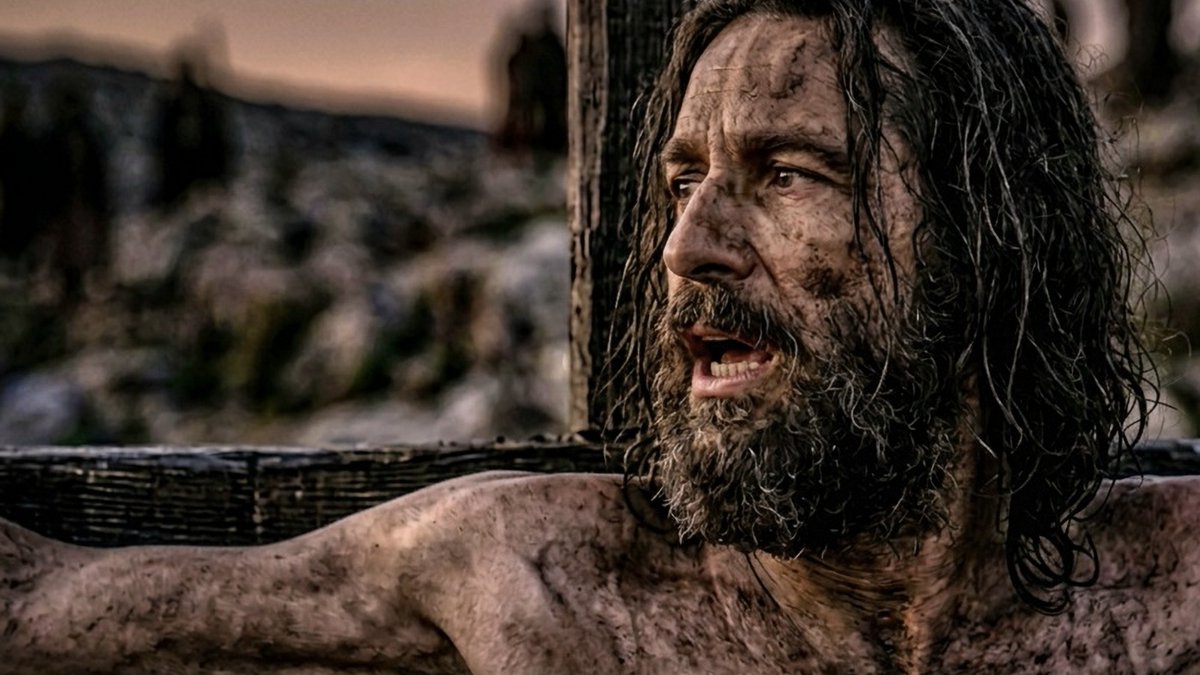


![DavidServantUS's tweet photo. Note: Below is the first of ten Saturday lessons on biblical stewardship that we published today. To receive the lessons in your email inbox over the next nine Saturdays, navigate to davidservant(dot)com/email-sign-up/ .
"Who may ascend into the hill of the Lord?
And who may stand in His holy place?
He who has clean hands and a pure heart,
Who has not lifted up his soul to falsehood
And has not sworn deceitfully.
He shall receive a blessing from the Lord
And righteousness from the God of his salvation" (Ps. 24:3-5).
If there's one hobby that's stayed with me my entire life, it's hiking. I've always been drawn to scenic beauty, and the finest trails deliver it in generous doses, with sweeping mountain vistas along the way. The very best hikes promise a spectacular summit payoff. There is nothing like a breathtaking, panoramic view achieved through determination and perseverance.
A few summers ago, my wife and I were blessed to spend a week exploring some of Western Canada’s iconic national parks. Our most unforgettable hike was the Plain of Six Glaciers Trail in Banff. It begins on the shore of glacier-fed Lake Louise, whose turquoise waters—milky from glacial silt—draw awed visitors from around the world. The shoreline path is usually bustling with tourists, but the crowds thin quickly once the trail begins its ascent up the valley.
Over the next five miles or so, with roughly 1,800 feet of elevation gain, we pressed through pristine alpine forests, anticipation (and weariness) growing with every switchback. Those who, like us, reached the trail’s end found a quiet, rocky perch to sit and absorb the grandeur: close-up views of Victoria Glacier clinging to the peaks, the vast moraine stretching below, and—far in the distance—tiny Lake Louise shimmering like a distant jewel.
There, amid a sacred silence, fellow hikers share a wordless camaraderie. Foot-weary and fatigued, they know they’ve earned a sublime privilege, enjoyed only by those willing to climb.
The Stewardship Journey—on which we are about to embark—parallels that hike in at least three ways. First, only a committed minority chooses to break from the crowds and fix their eyes on a higher aspiration. Second, the ascent isn’t easy—but it's filled with unexpected beauty and surprising revelations along the path. And third, the payoff at the peak is spectacular, and even more so than the overlook of Victoria Glacier. It is heavenly!
With all of that in mind, let’s begin our ascent.
God’s View
The Bible consistently presents all of humanity as divided into two fundamental groups—and often by using stark contrasts in moral, spiritual, and eternal terms.
For example, Scripture speaks of the righteous and the wicked, children of God and children of the devil, believers and unbelievers, spiritual persons and natural persons, those in light and those in darkness (Matt. 13:49; Acts 24:15; 1 John 3:10; 2 Cor. 6:15; 1 Cor. 2:14��15; 2 Cor. 4:6; Eph. 5:8).
Jesus Himself illustrated this same division through parables and a foretelling: wheat and tares, the lost and the found, good fish and bad fish, sheep and goats (Matt. 13:24–43; Luke 15:1–32; Matt. 13:47–50; 25:31–46).
Ultimately, every person falls eternally into one category or the other—welcomed into heaven or cast into hell. There is no middle or third category.
This biblical dichotomy does not deny that there are degrees of righteousness or wickedness; the Bible clearly affirms some variation within each group. Wealthy Job stands out as the most righteous man of his day, of whom God declared, “There is no one like him on the earth, a blameless and upright man, fearing God and turning away from evil” (Job 1:8). Likewise, King Ahab of Israel is singled out for exceptional wickedness: he “did evil in the sight of the Lord more than all who were before him” (1 Kin. 16:30).
Still, Scripture leaves no room for ambiguity: every person falls into one category or the other. We are either wicked or righteous. We are either children of God or children of the devil. The apostle John wrote that it isn’t difficult to determine into which category we, and others, belong:
"By this the children of God and the children of the devil are obvious: anyone who does not practice righteousness is not of God, nor the one who does not love his brother" (1 John 3:10).
The two telling tests are straightforward and unmistakable. They are based on obedience and love. It is so simple that only a theologian could misunderstand. Yet John anticipated that there would be misunderstanding on this very point because of deceptive teachers. Just moments earlier he warned:
"Little children, make sure no one deceives you; the one who PRACTICES RIGHTEOUSNESS IS RIGHTEOUS , just as He is righteous" (1 John 3:7).
This plain teaching, and so many others like it in the New Testament, contradicts the claim that one can somehow be righteous in God's sight through Christ while continuing in unrighteous living. That ancient and modern heresy is soundly debunked throughout the Bible, as we will see.
The Initial Test
The Stewardship Journey starts by determining if we are children of God or children of the devil. To make that determination, we only need to ask ourselves a simple question in light of John’s two tests (referenced above in 1 John 3:10): "Is my life characterized by obedience to God and love for fellow believers?"
If your honest self-examination leads you to answer “yes,” then you pass the test.
This does not mean you must claim perfection. If you are like me, you realize that you still have room to grow. We all could be more obedient and loving. The New Testament’s many admonitions to obedience—directed at believers—imply there is room to improve. That is also why John wrote these reassuring words:
"If we confess our sins, He is faithful and righteous to forgive us our sins and to cleanse us from all unrighteousness" (1 John 1:9).
Righteous people may still need cleansing from occasional unrighteousness. The test in 1 John 3:10 is not about flawless performance but about the direction and pattern of life that separates us from those who have not repented and believed in the Lord Jesus Christ. Writing about his own journey towards perfect obedience that he had not yet attained, Paul wrote:
"Not that I have already obtained it or have already become perfect, but I press on so that I may lay hold of that for which also I was laid hold of by Christ Jesus. Brethren, I do not regard myself as having laid hold of it yet; but one thing I do: forgetting what lies behind and reaching forward to what lies ahead, I press on toward the goal for the prize of the upward call of God in Christ Jesus" (Phil. 3:12-14).
On the other hand, if your honest self-examination based on 1 John 3:10 leads you to answer “no,” then you have failed the test. You can, however, immediately fix that by doing what we all once had to do—repent and believe in the Lord Jesus Christ. If you will, you will be immediately transferred from the category of the wicked to the righteous, because God will not only forgive every sin you’ve ever committed, but He will also deposit His Holy Spirit in you to lead, guide and empower you to obey Him. It’s the best deal you’ve ever been offered. Take it! And then join the rest of us as we ascend together on our Stewardship Journey.
God or Mammon?
Jesus mentioned one other scriptural contrast that divides people—that of serving God or money. According to Him, it is impossible to serve both:
"No one can serve two masters; for either he will hate the one and love the other, or he will be devoted to one and despise the other. You cannot serve God and wealth" (Matt. 6:24).
Let’s carefully consider those two sacred sentences.
First, notice Jesus portrayed God as a master to be loved and devotedly to serve. That is Christianity 101. Any portrayal of God that suggests He is anything less than a master (in fact, The Master) who is worthy to be loved and served is heretical and blasphemous. Anyone who advocates that one can have a relationship with God apart from devoted obedience to Him is a false teacher.
Second, don’t allow the word "wealth," as it is translated in the New American Standard Version, to lead you to think that Jesus was speaking only about large sums of money. Both the NIV and ESV use the word "money" instead of "wealth." The Ancient Greek word Jesus used, mamōnas, is a transliteration of an Aramaic word which, in everyday Aramaic usage simply meant wealth, riches, money, possessions, or material gain.
Jesus personified mamōnas, portraying it as a rival master to God. Obviously, inanimate money does not decree commandments as God does. That being so, the only way money could be considered to be one’s master is if one disobeys any of God’s commandments in relation to money or possessions. That is important to grasp.
For example, because God forbids theft, one who steals money disobeys God, and this reveals that money, not God, is his master.
Or, because God forbids deception, one who deceives in order to gain money disobeys God and reveals that money, not God, is his master.
Both of those examples are also examples of a form of greed, which Paul, taking his cue from Jesus, twice labeled as idolatry (Col. 3:5; Eph. 5:5).
Greed is revealed by any disobedience of God’s commandments regarding money and possessions. All of this will become clearer in future lessons, but for now just remember the formula below that is simply a paraphrase of Jesus’ and Paul’s words that I’ve just referenced above:
Disobeying God in regard to money/possessions = God is not loved and is not master = Money is loved and is master = Greed = Idolatry
Our Stewardship Journey must begin with an examination of ourselves in this regard. If gaining money, whether it be a little or much, requires any moral compromise or disobedience of God, it is idolatrous, because money, not God, is master. This is no small matter. Paul solemnly warned that greedy persons—who are inherently idolatrous—will not inherit God’s kingdom:
"But immorality or any impurity or GREED (Greek noun: "pleonexia") must not even be named among you, as is proper among saints…. For this you know with certainty, that no immoral or impure person or COVETOUS (Greek adjective: "pleonektes") man, who is an idolater, has an inheritance in the kingdom of Christ and God (Eph. 5:3-5, emphasis added).
Note that Paul was warning Christian BELIEVERS, indicating that he not only believed that they could act greedily, but that by being greedy they could forfeit inheriting the kingdom of God. To honest readers, both of those facts are indisputable.
Dishonest preachers, however, often attempt to persuade their gullible audiences that Paul’s warning about not “inheriting God’s kingdom” has nothing to do with heaven or ultimately being saved. Yet in other epistles, Paul undeniably used the phrase “inherit the kingdom” in reference to heaven and ultimate salvation. Here is one example:
"Now I say this, brethren, that flesh and blood cannot INHERIT THE KINGDOM OF GOD; nor does the perishable inherit the imperishable. Behold, I tell you a mystery; we will not all sleep, but we will all be changed, in a moment, in the twinkling of an eye, at the last trumpet; for the trumpet will sound, and the dead will be raised imperishable, and we will be changed. For this perishable must put on the imperishable, and this mortal must put on immortality" (1 Cor. 15:50-53, emphasis added; see also 1 Cor. 6:9; Gal. 5:21).
Jesus also used the phrase “inherit the kingdom” in reference to heaven and ultimate salvation. In His foretelling of the judgment of the sheep and goats, He revealed that He will say to the sheep on His right, “Come, you who are blessed of My Father, INHERIT THE KINGDOM prepared for you from the foundation of the world” (Matt. 25:34, emphasis added). They will inherit “eternal life” (Matt. 25:46).
Some may object with the claim that “salvation is by grace, so there cannot be any behavioral requirement for heaven.” Such people certainly haven’t been reading the New Testament very closely, nor do they understand biblical grace, which is never unconditional, but always conditional. Paul wrote that we are saved “by grace through faith.” This proves that saving grace is conditional. The condition of saving grace is faith. If saving grace was unconditional, not requiring faith, everyone would be automatically saved.
God’s conditional saving grace was illustrated in Jesus’ encounter with the woman caught in the act of adultery as told by the apostle John in his Gospel. Jesus said to her, “I do not condemn you, either. Go. From now on sin no more” (John 8:11). Even though she deserved to die, He graciously gave her an opportunity to repent. She was “saved by grace.” I hope that before she did eventually die that she seized the gracious opportunity she had been offered, because the New Testament warns that no adulterer will inherit God’s kingdom (see 1 Cor. 6:9-10; Gal. 5:19-21; Eph. 5:3-5). The grace that Jesus offered her was conditional, and it was the same grace offered to everyone through the gospel. Paul wrote:
"For the GRACE OF GOD has appeared, bringing salvation to all men, instructing us to deny ungodliness and worldly desires and to live sensibly, righteously and godly in the present age, looking for the blessed hope and the appearing of the glory of our great God and Savior, Christ Jesus, who gave Himself for us to redeem us from every lawless deed, and to purify for Himself a people for His own possession, zealous for good deeds" (Tit. 2:11-14, emphasis added).
If greed can prevent us from inheriting eternal life, self-examination in that regard is certainly in order. So, before you continue to the next lesson, please take time to do that self-examination. I also recommend memorizing and meditating on Jesus’ solemn warning in Matthew 6:24:
"No one can serve two masters; for either he will hate the one and love the other, or he will be devoted to one and despise the other. You cannot serve God and wealth."
The Stewardship Journey begins with making Jesus one’s Master. That requires the forsaking of all other masters, because no one can serve two masters. If Jesus is not your Master, you don’t actually believe in Him yet, because He is both Lord and Master (Jude 4). You may think you believe in Him, but all you have actually done is carved an idol and named it “Jesus.” The apostle Jude warned about “ungodly persons who turn the grace of our God into licentiousness [a license to sin].” In so doing, they “deny our only Master and Lord, Jesus Christ” (Jude 4).
So, you must settle this, and there is no sense taking another step on our journey until you do!
"For to this end Christ died and lived again, that He might be Lord both of the dead and of the living" (Rom. 14:9).
_____________
To join Heaven's Family's Compassion Club, navigate to heavensfamily(dot)org/compassion-club/](https://pbs.twimg.com/media/HDXuAjZXwAA5OTp.jpg)



![DavidServantUS's tweet photo. Bible-readers quickly learn that God is both just and merciful. Regarding the former, Isaiah 61:8 says, “I, the Lord, love justice…. and I will faithfully give them their recompense.” Regarding the latter, Ephesians 2:4 tells us, “God, being rich in mercy, because of His great love with which He loved us…”
Anyone, however, who loves both justice and mercy must hold them in tension, because they are, by their nature, at odds with each other. Justice calls for the punishment deserved while mercy calls for a delay or pardon. If you are both just and merciful you have an inward conflict.
All parents can relate to that inward conflict. When a child deserves discipline, parents debate within themselves: “Do I spank this child now (justice) or just give him a warning (mercy) in hopes he won’t repeat the same behavior?”
If you pay attention to your inward thoughts, you will likely discover that you are frequently caught in that inward tension. When someone says or does something thoughtless and offensive, you inwardly debate about what to do. “Sensitive” and “short-tempered” folks lean towards the side of justice, and they outwardly react, ignoring any inward caution. “Merciful,” long-suffering and “gracious” folks bite their tongues.
Because God is merciful, we can be certain that mercy is a praiseworthy attribute that we should imitate. Indeed, Jesus told us, “Blessed are the merciful” (Matt. 5:7). There is, however, an attribute that is often passed off as mercy, but it is actually not mercy. It is enablement.
Many of us, including me, have been guilty. We convince ourselves that the longer we show mercy, the more loving we must be. But the truth is, we don’t like conflict. So we don’t confront people whom we should confront. Our motive is not actually love for offenders. If it was, we would confront them, in hopes of helping them change. We’re not actually merciful. We’re enablers!
We should remind ourselves that God is wonderfully merciful, but He is never an enabler. He shows mercy for a limited time, in hopes of evoking repentance in order that deserved justice can be avoided. If there is no repentance after extended mercy, justice falls. It can fall in a mild form that is temporary, what we would call “discipline” (something that all of God’s children have experienced) or in a more severe form that is permanent, what we would call “judgment” (that is generally reserved for unbelievers). Of course, if one who deserves justice repents before justice falls, he will enjoy forgiveness, which is a huge dose of mercy!
It is good that most parents are merciful towards disobedient children. They show mercy in hopes that their disobedient children will change their behavior. But they don’t show unending mercy. The small minority who do are enablers who don’t really love their children, just as Scripture teaches us: “He who withholds his rod hates his son, but he who loves him disciplines him diligently” (Prov. 13:24). Enabling parents set their children up for a lifetime of trouble.
And the same principle applies to relationships between adults. It is good to extend mercy, but never to the point of enablement. People who never face the consequences of their unrepentant wrong behaviors have little incentive to change. The same is true for folks whom we always bail out of their self-inflicted problems. As Proverbs 20:30 so bluntly declares, “Stripes that wound scour away evil, and strokes reach the innermost parts.” And as the Psalmist admitted, “It is good for me that I was afflicted, that I may learn Your statutes” (Ps. 119:71). Pain can be purifying, and “faithful are the wounds of a friend” (Prov. 27:6).
The Corinthian Enablers
One scriptural example of enablement disguised as mercy occurred in the Corinthian church. Paul wrote to them:
"It is actually reported that there is immorality among you, and immorality of such a kind as does not exist even among the Gentiles, that someone has his father’s wife. You have become arrogant [or “puffed up” according to a marginal note in the NASB] and have not mourned instead, so that the one who had done this deed would be removed from your midst" (1 Cor. 5:1-2).
Paul didn’t say why they were “puffed up,” but it seems reasonable to think it was because of their toleration. But by their toleration, they were enabling a man who was living in gross sexual immorality to stain the reputation of the entire church, hinder the gospel, and to remain deceived about his dire spiritual state and eternal fate. Paul did not mince any words about what they should do:
"For I, on my part, though absent in body but present in spirit, have already judged him who has so committed this, as though I were present. In the name of our Lord Jesus, when you are assembled, and I with you in spirit, with the power of our Lord Jesus, I have decided to deliver such a one to Satan for the destruction of his flesh, so that his spirit may be saved in the day of the Lord Jesus"" (1 Cor. 5:3-5).
Paul was genuinely motivated by love for the perverse man. He hoped that the action taken by the church would result in his ultimate salvation. And Paul did not believe that Jesus’ prohibition against judging others had any application to the situation. He declared that he had “already judged” the wicked man. And then he went on to again instruct the entire Corinthian church to judge him:
I wrote you in my letter not to associate with immoral people; I did not at all mean with the immoral people of this world, or with the covetous and swindlers, or with idolaters, for then you would have to go out of the world. But actually, I wrote to you not to associate with any so-called brother if he is an immoral person, or covetous, or an idolater, or a reviler, or a drunkard, or a swindler—not even to eat with such a one. For what have I to do with judging outsiders? DO YOU NOT JUDGE THOSE WHO ARE WITHIN THE CHURCH? But those who are outside, God judges. Remove the wicked man from among yourselves"(1 Cor. 5:9-13, emphasis added).
The goal was to administer justice so the wicked man might ultimately receive mercy. That means justice can be an act of love.
I wonder if the Corinthians’ excuse for tolerating the perverse man’s behavior was the same one used by so many modern Christians for their similar toleration, namely, “Jesus told us not to judge!” But that is an obvious misapplication of Jesus’ words in His Sermon on the Mount. He plainly instructed the church to judge its wayward members in Matthew 18:15-17. His words in the Sermon on the Mount only prohibited the hypocritical condemnation of others. Those who have logs in their eyes have no moral right to point out the specs in the eyes of others. But, as Jesus also said in the same passage, those who have first removed the logs from their eyes are then qualified to point out the specs in others (see Matt. 7:1-5).
The Most Common Enablers
During the two decades that I served as a pastor, I came to the conclusion that Christian wives could be the largest group of Christian enablers that exist, but often through no real fault of their own. Having been taught to submit to their husbands, that divorce is never an option, and that Jesus always expects us to “turn the other cheek,” (all of which are biblical, but there are other biblical principles that are relevant to wives who are yoked to abusive husbands), they endure anything and everything. In contrast, their husbands suffer no consequences for verbal, physical, or sexual abuse against them and/or their children, porn use, as well as affairs or substance abuse, because their wives exercise “mercy” that their pastors claim is their biblical duty. I could not disagree more
First, “turning the other cheek” is an expression that makes obvious reference to minor offenses. In order to shame our enemies into repentance, we offer them an opportunity to do twice the harm to us. (That is actually an Old and New Testament principle; see Prov. 25:21; Rom. 12:20). Jesus clearly did not mean that, if your enemy wants to abduct and murder your child, give him a second child. Right? Right.
Beyond that, Jesus was speaking of how you should treat your enemies, not someone who has pledged to love and cherish you for the rest of your life! To “turn the other cheek” to your enemy makes you a merciful person. To “turn the other cheek” to someone who claims to love can make you an enabler.
Food for thought!](https://pbs.twimg.com/media/G9v-CgHXAAMjU3V.jpg)


