@JonnyBird@sodowntownatl While the growth of protected bike paths is awesome to see it will always have limited appeal to the broader population. Unfortunately the owners of Muchacho (and ladybird) have actively opposed connecting Piedmont Park to downtown via the streetcar extension.
Great keynote from Peter Fitzgerald at GHI symposium. Enjoyed being a part of the panel and bringing the engineering perspective to discussion on AI in healthcare.
Tune in on December 6 at 7am ET for our last Grand Rounds of the year! Brian Schuler, MD, Director of EP at @WellSpan speaks on the Power of Advanced Imaging in the cath lab. Click to join! https://t.co/ZLa9u3n5rR
#CardioTwitter#EP#EPeeps#CTangio
@JohnnyCoach These are intravascular ultrasound images acquired from a catheter during cardiac catheterization. So unfortunately requires all the radiation associated with that. CT angiogram is probably the lowest radiation risk I'm aware of for looking at the coronaries
Automated lesion analysis now added to DeepIVUS (v0.4).
* Schematic view provides a quick visual assessment of lumen and plaque area over the entire vessel.
* Critical info including lesion length, minimum lumen area and maximum plaque burden are highlighted within this view
@JohnnyCoach Hey Johnny. The yellow line is the outer wall of the vessel bit it's hard to know exactly what the vessel looks like without plaque. Plaques initially cause vessels to grow outwards before eventually growing inwards and blocking the lumen.
Released a new version of DeepIVUS. Now supporting longitudinal view manipulation. https://t.co/8GA5bT8NlE A more improved model also coming soon! #deepIVUS#CardioTwitter@crfheart@TCTMD
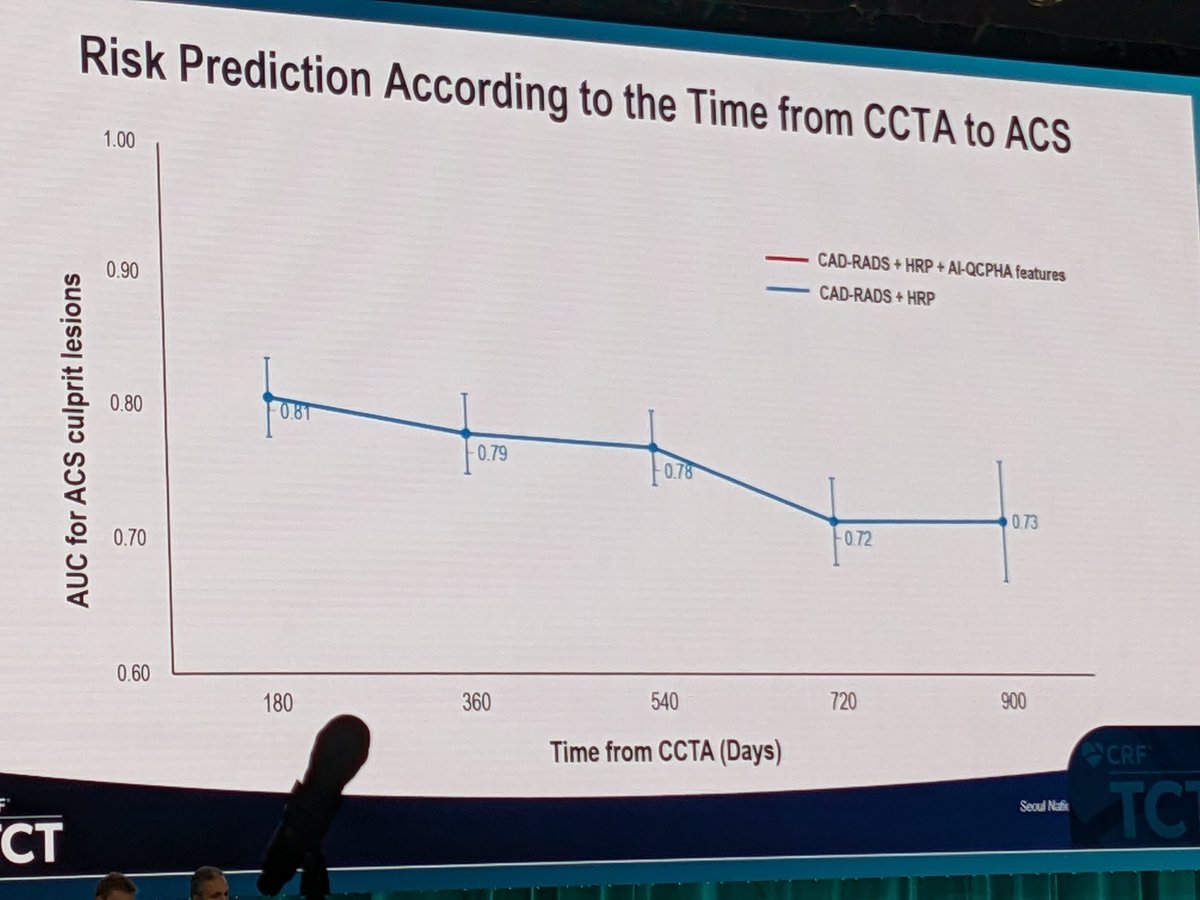
Emerald II study shows evidence for ∆FFR-CT in combination with plaque features for predicting ACS. Not sure what mechanism ∆FFR-CT causes plaque destabilization. Maybe it acts as a surrogate amalgamation of plaque shape and WSS? #tct2023
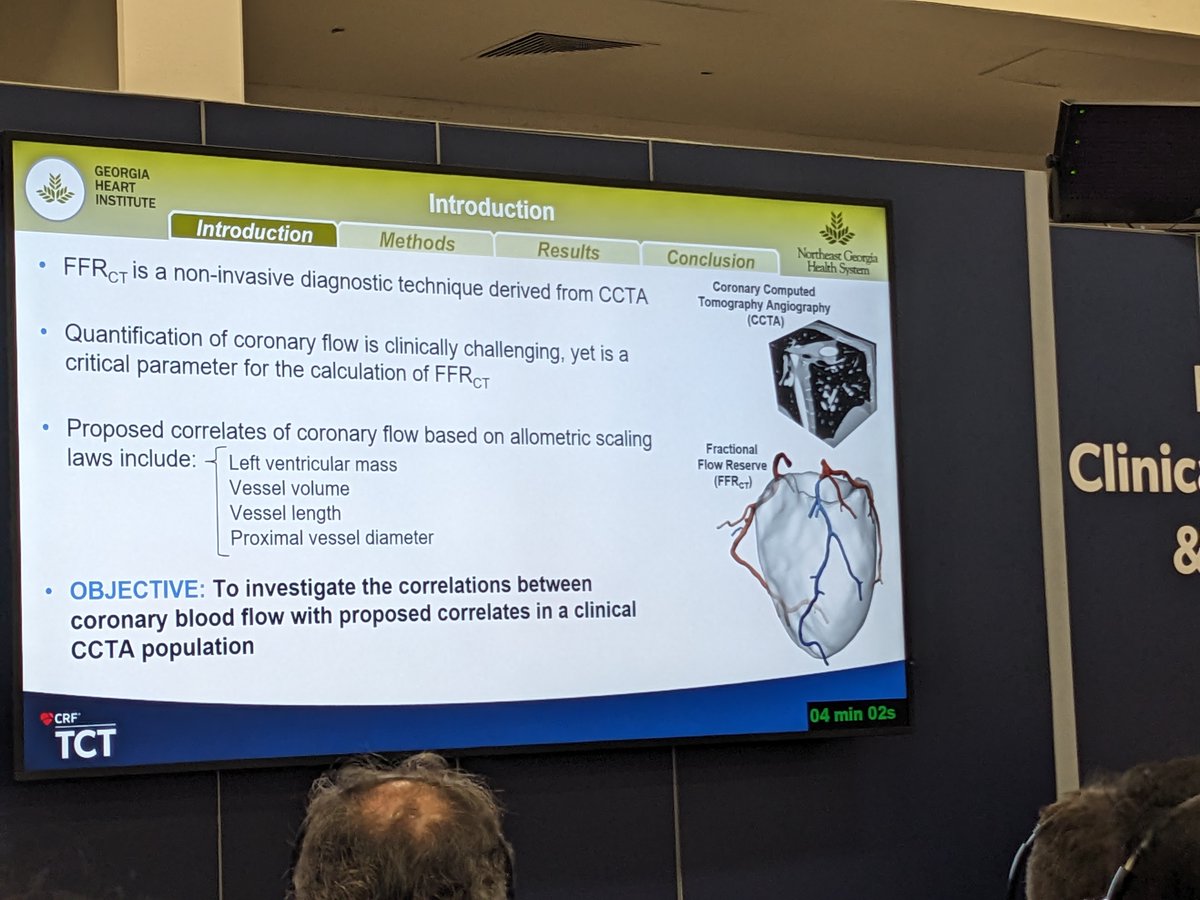
Reported accuracy of several angio based FFR softwares was greatly reduced in this study compared to published trials. Coupled with the UK real world audit study of FFR-CT it seems like computed FFR softwares perform modestly in broader patient populations.
Anonymous comparison of various angiography-derived FFR software with pressure-derived physiological assessment by core lab. Pressure-wire based physiological evaluation still required for specific lesion subsets. https://t.co/WCe0npxEpe
#JACCINT#CardioTwitter#CathLab
Demo I made of FAIRs new Segment Anything Model for segmenting cardiac chambers and arteries. Quite far from task specific trained models but still impressive as no medical images in the training set as far as I know. @MetaAI@ylecun
1/ So many interesting new developments related to large language models (LLMs) in medicine, including the great work of @erichorvitz and team, reviewed in an insightful thread from @heacockmd.
Here are some additional thoughts on the healthcare implications of LLMs:
Join our first #GrandRounds of 2023! @AnwarChahal, Director of the Center for Inherited Cardiovascular Diseases at @WellSpan Healthcare presents this Wednesday, 2/1/23 at 7am EST. Click the link to join!
https://t.co/z6uqGn1TTn
#gaheartinstitute#CardioTwitter