الحمد لله، خلال عام واحد فقط، أُنشئ 18 ألف مسجد في سوريا.
وبحسبة سريعة، إذا قدّرنا تكلفة بناء مسجد بمساحة ألف متر مربع بنحو 300 ألف دولار، فإن إجمالي تكلفة بناء المسا��د التي ذكرها وزير الأوقاف يُقدّر بنحو 5.4 مليارات دولار.
My Language Is My Identity
Tirelessly, Kurdish cities and towns witness repeated incidents placing the Kurdish language under the weight of policies of domination and exclusion.
Recurring attacks, assaults on Kurdish symbols, removal of the Kurdish language from signage on government centers and identification boards, and deliberate desecration of the Kurdish flag.
These are not individual errors; they are the reproduction of a political era that once viewed the Kurdish language as an existential threat and a danger to national security, an era in which Kurds were punished for speaking or writing in their own language.
The most recent of these incidents is the removal of the Kurdish language from the signage of the Palace of Justice in the city of Hasakah, the very place that is supposed to embody the symbol of justice within the state.
The repetition of such incidents across different areas and the removal of the Kurdish language from government building signs are neither a coincidence nor an administrative error. It is a systematic policy seeking to impose a coercive identity upon Kurds and deny them presence in the public sphere.
The Kurdish language is not a request we submit; it is a documented right, recognized in agreements, and written into the history of this land. For us, it is a language of instruction, not a language we learn; an official language, not merely a national one; and a symbol of our political identity, not an incidental cultural activity.
The language that carries our songs, our proverbs, our political memory, and our Kurdish cause inherited from generation to generation, bearing the names of our grandmothers and the dreams of our children, cannot be erased from a sign, and cannot be abolished by a decree or a racist policy.
We call on international partners, donor governments, and human rights mechanisms to:
📷 Making the Kurdish language an official language of the country alongside Arabic
📷 Raise this issue directly in engagement with Damascus
📷 Make linguistic and cultural rights a measurable benchmark in any support framework
📷 Stand with Syria's diversity — not just its stability
#MyLanguageIsMyIdentity #Syria #KurdishRights #SyriaTransition #HumanRightsWatch
Damascus may be closing the military chapter of Syria’s war, but without resolving detainees, displacement, and Kurdish political rights, the harder task of earning trust has only just begun. Click the link 👇 https://t.co/tFKTSayoHl
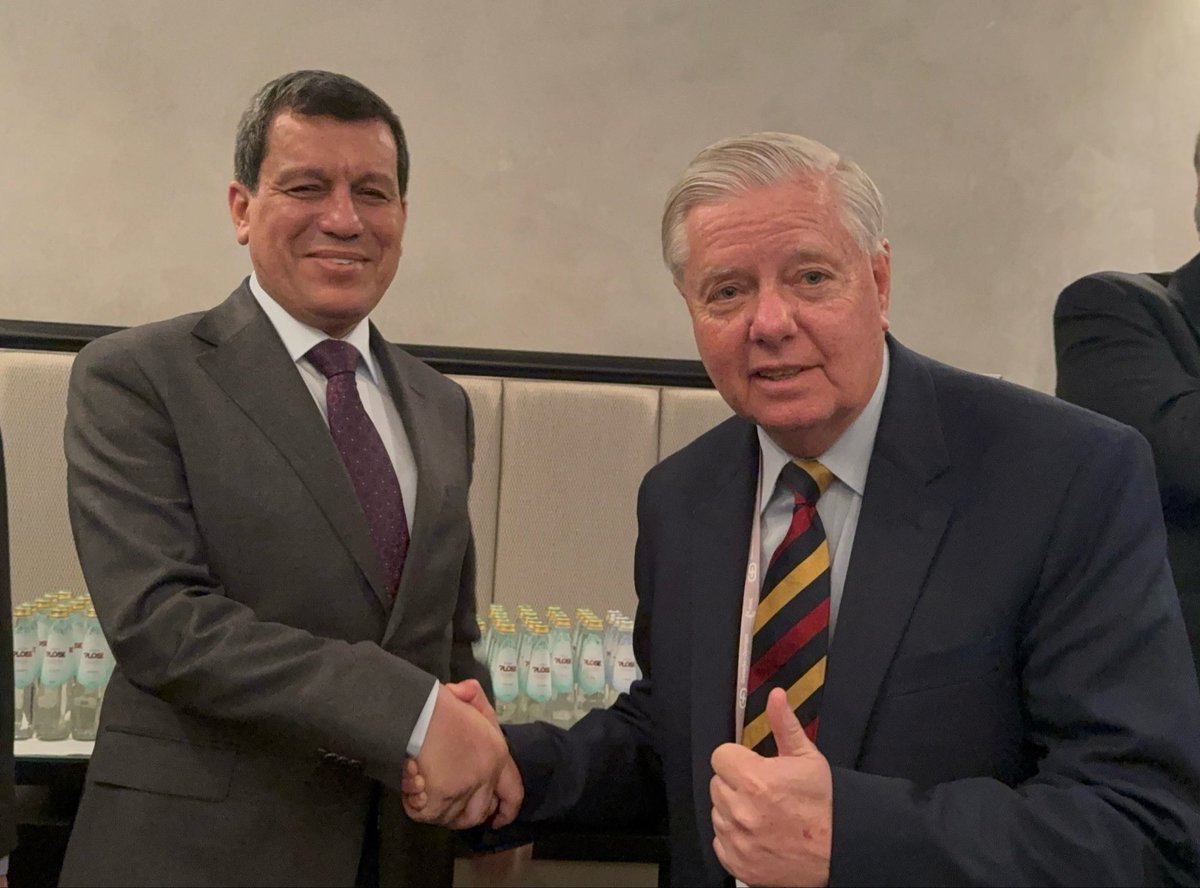
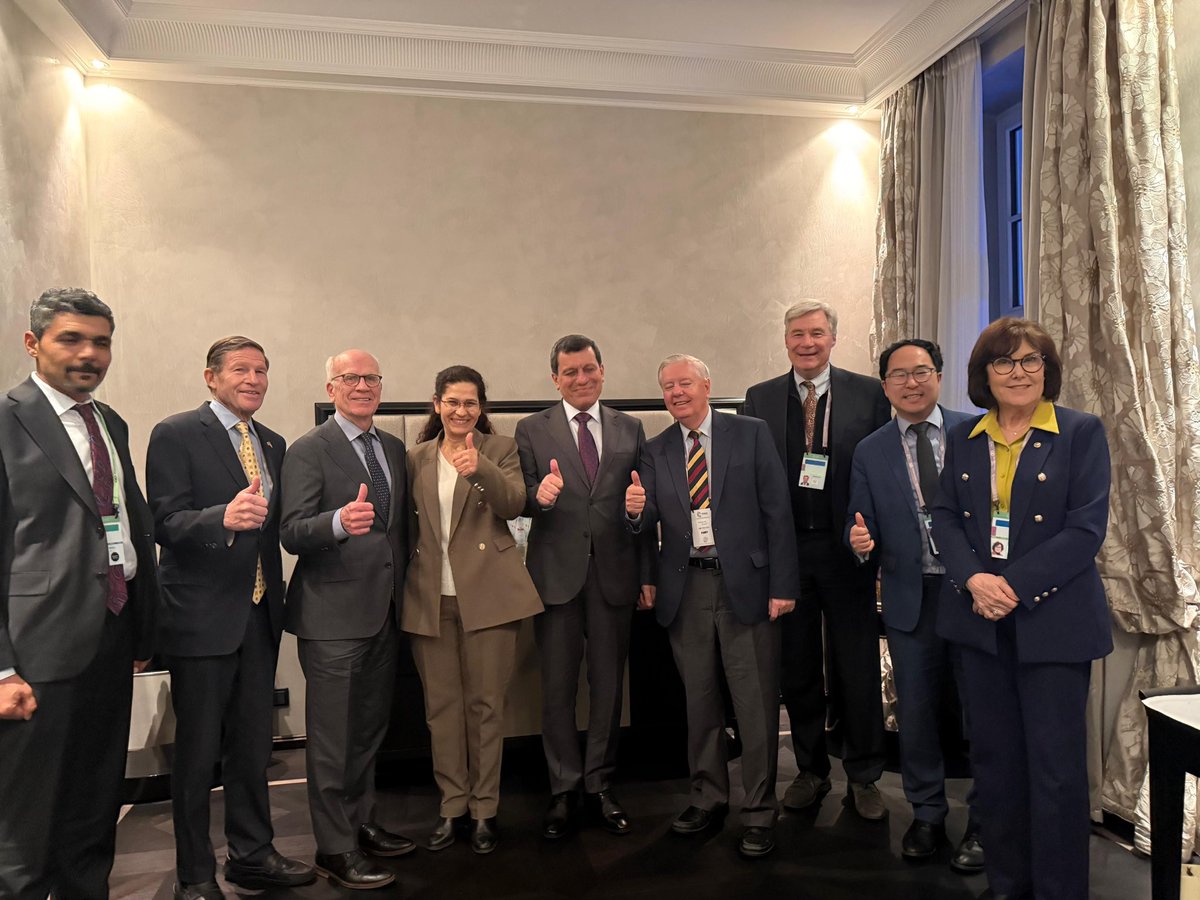
With great honor, we had the opportunity to meet with a delegation of members of the United States Congress, led by Senator @LindseyGrahamSC , and comprising Senators Sheldon Whitehouse, Jacky Rosen, Peter Welch, and Andy Kim, on the sidelines of the Munich Security Conference 2026.
Throughout the past period, these esteemed members, under the leadership of Senator Graham, have been among the most prominent advocates for the rights of our people and our forces. They have maintained constant contact with us, hearing our calls and engaging with the evolving situation on the ground. They have played a crucial role in supporting our cause and have provided tangible support through several initiatives and bills, including “Save The Kurds Act,” a significant step that we cherished.
We extend our sincere gratitude to all of them for their steadfast support of regional stability and their provision of invaluable assistance to Syria and its people during this pivotal moment. These esteemed members have and continue to serve as pivotal partners in the promotion of justice and freedom for our People.
US Senator Mark Kelly tells Rudaw that “the Kurds in Syria should be a priority and need to be protected,” while saying interim authorities in Damascus should be given “some room” to deal with security and economic challenges.
موجات نزوح واسعة نحو شمال شرق سوريا وجهود إغاثية مستمرة في عامودا
في ظل موجات النزوح الكبيرة من الرقة ودير حافر ومسكنة نحو مناطق شمال شرق سوريا، ولا سيما القامشلي وعامودا والدرباسية، تتواصل جهود الاستجابة الطارئة لإيواء النازحين وتلبية احتياجاتهم الأساسية، من خلال تجهيز مراكز إيواء مؤقتة وتقديم معونات عاجلة تشمل الفرشات، البطانيات، السلل الصحية، والمواد الغذائية، إلى جانب نقل العائلات وتأمين الرعاية الصحية للمرضى وكبار السن وال��طفال.
في غضون أيام قليلة، نزح أكثر من 225 ألف شخص، كثيرٌ منهم سبق أن تعرضوا للنزوح المتكرر، مثل أهالي رأس العين "سري كانيه" وعفرين، حيث فرّت العائلات بسبب تدهور الأوضاع الأمنية بحثًا عن الأمان في بلدات يسهل الوصول إليها نسبيًا. وأصبحت بلدة عامودا، كغيرها من المراكز، نقطة استقبال للنازحين القادمين من الرقة وريف الحسكة وعدد من المخيمات، مثل العريشة وتوينا ومخيمي الطلائع وواشوكاني.
نظرًا لحجم النزوح، برزت الحاجة الماسة إلى مساعدات عاجلة لإنقاذ الأرواح، وذلك لمنع تدهور الأوضاع المعيشية للأسر النازحة والضعيفة في بلدة عامودا.
وضمن خطة الاستجابة السريعة، ق��م فريق منظمة آسو، وبشكل تطوعي منذ بداية الأزمة، بتقديم المساعدات التي كان يتلقاها من الأهالي من الألبسة والأغطية والفرش، إلى جانب التنسيق مع بعض الأطباء وأصحاب الصيدليات الشرفاء وأهالي المنطقة لتأمين الطبابة المجانية وتوفير الأدوية اللازمة من الصيدليات المتبرعة للمرضى من كبار السن والأطفال والحوامل، إضافةً إلى المساهمة في توزيع وجبات غذائية بالتعاون مع بعض المنظمات والجهات المحلية.
وفي خطوة أخرى، شاركت منظمة آسو، بالتعاون والتنسيق مع عدد من الأفراد القادمين من أوروبا من الإخوة الإيزيديين الذين جمعوا مبالغ مالية من أبناء الكرد والأوروبيين في الخارج، إضافة إلى أبناء كرد إقليم كردستان العراق، وذلك بحسب ما أعلنوه في إطار الاستجابة السريعة لاحتياجات النازحين. وقد تم تقديم مساعدات نقدية بعد أن قام فريق آسو بجمع بيانات النازحين من مدارس الإيواء وتحديد احتياجاتهم الأساسية، حيث جرى اختيار 12 مدرسة من أصل 15 مدرسة، ضمّت الأسر الأكثر احتياجًا.
وتم تقديم مبلغ وقدره مئة وتسعة وأربعون مليونًا وثمانمائة ألف ليرة سورية (149,800,000 ل.س) لجميع النازحين في مدارس الإيواء التي تم اختيارها، حيث بلغ عدد الأسر التي تم توزيع المساعدات النقدية عليها 291 عائلة، استفاد منها 1456 شخصًا.
كما قام المشرفون على هذه التبرعات بتوزيع مبلغ خمسين مليون ليرة سورية (50,000,000 ل.س) على الإخوة الإيزيديين النازحين من سري كاني
In the Kurdish street, the SDF–Damascus deal is not the end of the story but the beginning of a new chapter. It begins with stopping bloodshed and averting mass displacement, and ends with achieving political decentralisation by political means.
https://t.co/rgxw98TAJM
We are here at the US Congressional Helsinki Commission hearing on Syria, “Securing Syria’s Transformation by Diminishing Russia’s Influence.”
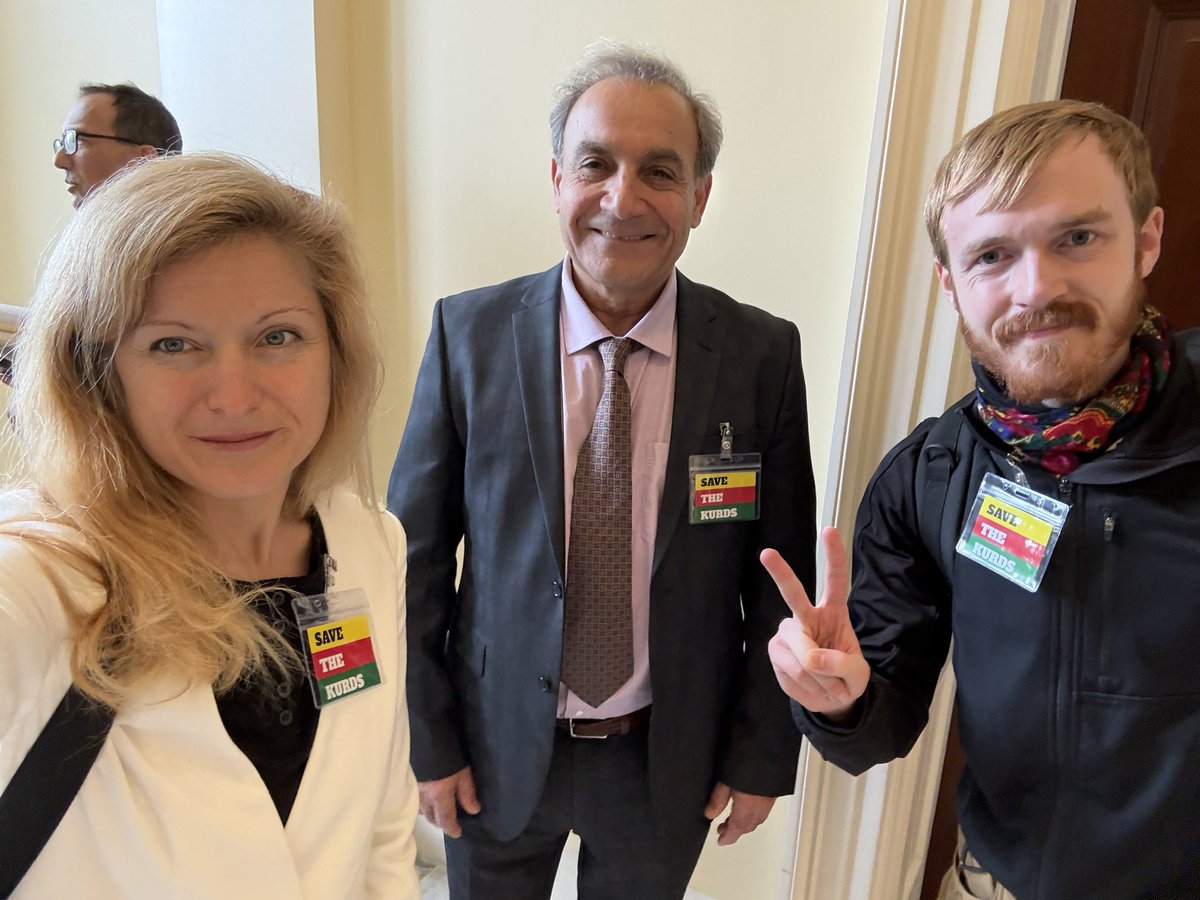
Advocating in Congress for the #SaveTheKurds Act with an ad hoc organization. Millions of dollars and much effort has been committed to lobbying and funding fleecing Congressmembers by Turkey, Qatar, Saudi Arabia, and large companies who see an economic benefit.
It’s not easy for everyday Kurdish Americans and US supporters to go up against these mega-lobbies. But we are here with the truth on our side.
Displacement update in Syria by OCHA:
“Following the recent escalation, IDPTF recorded the displacement of approximately 190,800 individuals from Aleppo, Al-Hasakah, and Ar-Raqqa governorates as of 29 January 2026. The displaced population is currently spread across 190 communities in 23 sub-districts within Aleppo and Al-Hasakah governorates. The majority of IDPs have settled in Qamishlo District (97,900 IDPs), followed by Al-Malikeyyeh District (32,200 IDPs).”
French President @EmmanuelMacron held a telephone call with SDF Commander Gen. Mazloum Abdi, and Syria’s interim President Ahmed al-Sharra, welcoming a permanent ceasefire between Syrian authorities and the SDF. Per the Statement Paris reaffirmed support for full implementation, continued action against Daesh, and a stable, inclusive Syria, including protection of Kurdish rights. https://t.co/Y7eL1Kqj1b
New Jihadist Islamist Militia Linked to ISIS and al-Qaeda Claims Operations Against Kurds in Syria
A militia calling itself “Tawwaq Team= فريق تواق” has released a video showing its participation in recent attacks against Kurds in northeast #Syria. The video was accompanied by a jihadist Islamic chant “Nasheed=نشيد”, indicating the group’s hardline Islamist ideology.
In the footage, the militia claims involvement in:
•An ambush targeting an SDF patrol,
•An attack on an SDF military barracks,
•The planting and detonation of explosives at a fortified military position.
Days earlier, the group released another video glorifying Osama bin Laden. Although “Tawwaq Team” operates an account called “Tawwaq Media,” which could suggest a media-only role, this latest video was explicitly titled “Tawwaq Team in the Field.” The footage shows members directly carrying out combat operations, showing they are fighters themselves, not merely media activists.
📌 According to available information, Tawwaq Media functions as a media outlet for:
•Division 82, largely composed of foreign fighters from ISIS and al-Qaeda remnants,
•The group Ansar al-Tawhid,
•The Tawwaq Team militia itself,
•Along with other extremist jihadist groups.
At the end of the video, the group announced the death of one of its commanders, “Abu Mousa al-Shami,” who appears on screen masked and delivering Islamist rhetoric. They also reported the death of another militant known as “Abu Abdul Rahman Kafr Oweid.”
Analytical Reading of the (SDF – Syrian Government) Agreement: A Kurdish Perspective
Positive Points:
▪️Comprehensive Ceasefire: A full cessation of hostilities is a significant humanitarian gain—if strictly upheld. The population is exhausted, particularly in Al-Hasakah, a socially diverse and fragile region where any renewed clashes could quickly ignite wider social and security tensions.
▪️Ending Attrition: The agreement halts the continued loss of young Kurdish lives in conflicts that do not directly serve Kurdish interests. We have already witnessed how immense sacrifices were made in Raqqa and Deir ez-Zor, only for those areas to turn against us at the first political crossroads.
▪️Preserving SDF Cohesion: Maintaining the SDF as a unified nucleus—through the formation of a division composed of three brigades, including a special brigade for Kobani within Aleppo—rather than fragmenting forces through individual recruitment is a critical achievement. This clause would not have been possible without sustained Kurdish advocacy and international pressure. It marks a fundamental departure from the January 18 agreement, which explicitly stipulated individual integration.
▪️Security Autonomy: Kurdish regions and al-Hasakah province will continue to be protected militarily by SDF forces, even if under a different formal designation. Likewise, internal security will remain in the hands of the Asayish, even if administratively linked to the Ministry of Interior—preserving de facto local control, if not de jure.
▪️Job Security: Protecting the employment status of Autonomous Administration staff during the merger safeguards thousands of families from dismissal or exclusion. This helps prevent displacement scenarios similar to those witnessed in coastal regions and elsewhere.
▪️Return of the Displaced: Although framed in general terms, the commitment to facilitate the return of displaced persons remains a positive and necessary step.
Gaps in the Agreement
▪️Lack of Political Decentralization: The agreement lacks any explicit commitment to political decentralization. This omission leaves the door open for the conflict to resurface—politically in the short term and militarily in the long run.
▪️Lack of Guarantees and Enforcement Mechanisms:
There are no constitutional or supra-constitutional guarantees, nor any clear implementation framework. The agreement lacks international monitoring, a binding timeline, and accountability mechanisms for violations. I hope to be proven wrong on this point.
▪️Security Ambiguity: The provisions regarding Ministry of Interior forces entering urban centers remain vague, with no clear definition of mandates, limits, or chains of command—raising serious concerns about future friction.
▪️Political Marginalization: Kurdish political parties and civil society actors were entirely absent from this process, reinforcing the perception that the future of the region is being decided exclusively by two armed actors, without popular or political representation.
▪️Incomplete Return Mechanisms: The agreement fails to address compensation for damages, the reversal of demographic engineering, or legal guarantees over property and ownership for returning displaced persons.
Demands of the Kurdish Popular Movement
The Kurdish popular movement should advocate clearly and collectively for:
1️⃣ The establishment of an independent international mechanism to monitor the ceasefire.
2️⃣ A defined and transparent timeline for constitutional reform and institutional integration.
3️⃣ The constitutional entrenchment of genuine political decentralization.
4️⃣ A clear and binding security protocol that precisely defines the powers and limits of forces operating within urban areas.
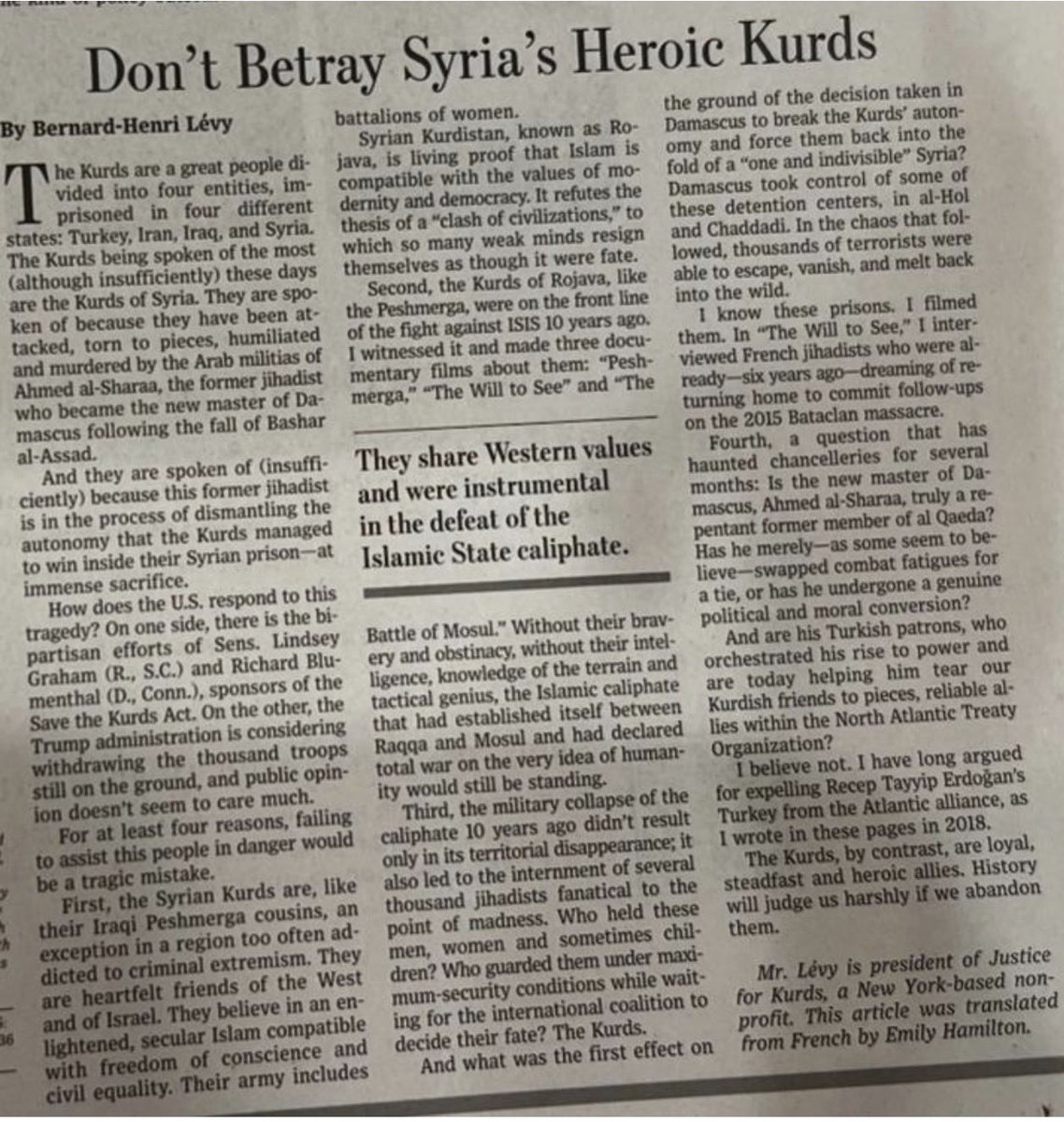
Senator Lindsey Graham Introduces the "Save the Kurds Act" to Congress
Statement on the Introduction of the "Save the Kurds Act"
• A Significant Legislative Step: Today, in collaboration with Senator Blumenthal, I introduced the "Save the Kurds Act," driven by our firm belief in the necessity of honoring our commitments to our allies.
• A Strategic and Reliable Alliance: This initiative enjoys strong bipartisan support; the Kurds in Syria and beyond have been the United States’ most reliable allies. The SDF—with its significant Kurdish component—bore the brunt of the fight to defeat ISIS.
• A Clear Political Vision: Despite the cultural and ethnic complexities of the Syrian landscape, attacking the Kurds diminishes the international standing of the United States and hinders Syria’s potential for stability and national growth.
• A Firm Message: To any countries or groups under the impression that targeting the Kurds in Syria will carry no consequences: You are sadly mistaken.
Today, @SenBlumenthal and I introduced the Save the Kurds Act.
I believe that there is strong bipartisan support for the idea of protecting the Kurds in Syria and beyond because they have been such a reliable ally to the United States. The SDF – with a large Kurdish element – took the brunt of the fight to defeat ISIS in President Trump’s first term.
I realize Syria is complicated culturally, ethnically and politically. However, attacking the Kurds greatly diminishes the United States’ standing and will hinder Syria’s ability to grow as a country.
To those countries or groups who believe it is open season on the Kurds in Syria without consequence, you will be sadly mistaken.
https://t.co/TbwtGe5gu1
Our Kurdish allies in Syria have for years been among our most effective partners in combatting the Islamic State. The United States must continue to stand with our Kurdish partners as we pursue peace in the Middle East. https://t.co/l01OO99DVT
I stand with the Kurdish people. They have fought ISIS in Iraq and Syria since 2014. Kurdish partners fought alongside my unit in northern Iraq in 2003. I witnessed their bravery and commitment firsthand. Their struggle deserves recognition and support. https://t.co/Cm5dJpYU7o
Lindsey Graham
· A call to prevent a potential massacre against Kurdish allies in Syria by working with the U.S. administration and regional partners.
· An emphasis that the time has come for regional actors to change their behavior and assume moral responsibility.
· A reference to efforts to improve relations between Saudi Arabia, the United States, and the region, with acknowledgment of some positive reforms.
· Criticism of Saudi Arabia’s attack on the UAE and its silence regarding the Syrian government’s ongoing assaults on the Kurds.
· A clear statement that Saudi Arabia has influence over the Syrian government and is expected to use it to prevent further chaos in the region.
· A call on Saudi Arabia to act responsibly and contribute to regional stability.
As previously stated, I am trying to work with the administration and regional partners to prevent a bloodbath in Syria against our Kurdish allies. It is now time for the region to change their ways and man up for decency.
To Saudi Arabia: I have tried to work hard to chart a new path for relations between your country, the United States and the region. I have tremendous respect for many of the changes that have been embraced. However, the Kingdom’s attack on the United Arab Emirates and their silence regarding the Syrian government’s constant assault on the Kurds has to change. Please understand that I am smart enough to know that Saudi Arabia has influence on the Syrian government, and I expect them to use it to keep the region from falling further into chaos.
To Saudi Arabia: Thank you for your attention to this matter.