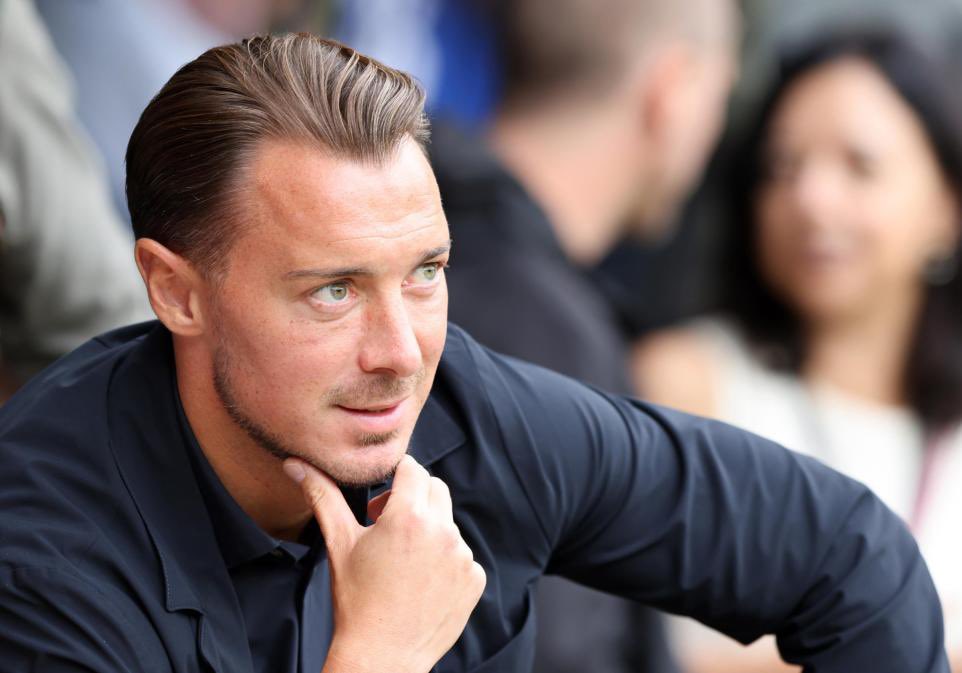
Newcastle United chairman Yasir Al-Rumayyan will attend his first match of the season when champions Arsenal visit St James’ Park on Saturday.
Although sources inside the club insist that Al-Rumayyan is stopping off on Tyneside merely because he wants to take every opportunity to watch the team play and the trip fits alongside his schedule geographically, his presence is always noteworthy.
Last time Al-Rumayyan was in the north east, Newcastle held their annual ‘offsiting’ at Matfen Hall, in Northumberland, and Eddie Howe’s future was a fierce topic of debate following a challenging campaign.
Full story from @ChrisDHWaugh ⬇️
https://t.co/IpldxRfjq4
🤔 I've seen a fair few people asking the question 'why are PIF getting external funds to part pay for the stadium rebuild?' Well it's a fair point and I do spend far too much time reading everything and anything regarding Newcastle United, so here's my 2p worth!
Don't shoot the messenger! 😂
👷🚧🏟️ Seeking outside investment or securitising revenues for a £1.3bn–£1.5bn stadium is standard corporate infrastructure finance rather than a sign of an imminent sale—and crucially, it differs fundamentally from a Glazer-style leveraged buyout.
Several regulatory, financial, and strategic realities explain why PIF is exploring third-party capital despite its ~£1tn+ asset base:
1. Why PIF Doesn’t Just Write a £1.5bn Cheque?
🇸🇦 Capital Allocation & Liquidity: Sovereign wealth funds do not sit on £1tn in idle cash; their capital is tied up in illiquid assets, domestic Vision 2030 giga-projects, global portfolios and so on. Throughout 2026, PIF has actively retooled its sports strategy—including ending direct funding for LIV Golf at the end of the 2026 season—to focus on sustainable, self-funding assets, like us!
💰 Cost of Capital & Risk Sharing: Even the wealthiest institutions use debt or minority partners to fund long-term real estate. Borrowing against future stadium cash flows or bringing in an infrastructure partner allows PIF to keep its own capital deployed elsewhere while building an asset that pays for itself over 20–30 years.
🇪🇺 UEFA & Premier League Rules: While infrastructure spending is currently exempt from Premier League Profitability and Sustainability Rules, UEFA’s Squad Cost Ratio and financial sustainability frameworks scrutinise related-party transactions and club debt service closely. External commercial financing keeps the project cleanly ring-fenced on market terms.
2. Why This Is Not "Glazer-Style" Debt
The comparison to the Glazer takeover of Manchester United misses a critical distinction in how the debt is used:
🇺🇸 Glazer Takeover (Man Utd)
⚽ Purpose of Debt: Loaded onto the club solely to pay for the owners' purchase price.
⚽ Owner Equity: Minimal owner cash put in; value extracted via dividends.
⚽ Revenue Impact: Drained £1bn+ in interest and fees without improving infrastructure.
🇸🇦 #NUFC Stadium Financing
⚽ Raised to construct a revenue-generating physical asset.
⚽ PIF has injected £586.9m in equity across 11 tranches since 2021 (including the £101m in November 2026) with zero dividends taken.
⚽ Designed to unlock £100m+ in extra annual run-rate revenue (pushing turnover toward £500m–£550m and beyond)
🤔 Tottenham took on roughly £850m in debt—later refinanced via long-term bonds—to build their new stadium. While restrictive in the short term, it transformed Spurs' matchday and non-football event revenues without their owners having any intention of immediately flipping the club.
3. The £101m Equity Injection vs. Stadium Debt
The recent £101m equity injection (£95m for the men’s side, £6.3m for Newcastle United Women) is normal operational housekeeping. Under the EPL rules, owners cannot simply hand a club £1.5bn for transfers and wages, so they inject equity periodically to cover cash-flow timing gaps on existing transfer instalments, training ground upgrades, and PSR-permitted losses. Separating day-to-day club equity from long-term stadium project finance is standard practice across top European clubs.
4. Is This Part of an Exit Strategy?
All the evidence points toward value creation rather than an imminent exit:
💵 You don't spend £1.5bn to flip quickly: Major stadium builds take 4–6 years from planning to completion. If PIF wanted a near-term exit, they would sell now while Premier League valuations are high rather than taking on years of construction and planning risk.
📊 Why Minority Stakes Happen: Selling a 10%–25% minority stake to a US private equity firm or sports fund (similar to Arctos Partners buying into PSG or Liverpool)....
🚨 Matthias Jaissle wants to strengthen his strike-force in the January transfer window, as he searches for more goals in his team.
⚽️ The Newcastle boss is eyeing a striker AND a no.10 in the winter window.
💸 But given financial rules, landing a player in one rather than both of those positions appears more likely.
👍🏽 #NUFC do have some financial headroom but the club & Jaissle are aware that January is notoriously difficult to do business, and prices are inflated.
⬆️ The German would also like to add more leadership & experience to his young squad in January.
📺 More on @SkySportsNews Transfer Show around 7.30pm.