CAMHS SAS doctor, Associate Lead go Compassionate and Inclusive Leadership @SomersetFT, RCPSYCH Southwest England Well-being champion @rcpsychbewell @RCPSYCH
A reflection from our recent quarterly meeting: need for connection between teams, departments, and trusts across a region.
In a world where everything is “just a click away”, we often find ourselves operating from our own islands, trying to reach across the gaps. What a paradox!
🌟Meet some of our Wellbeing Champions!🌟
These amazing members from the recent away day are dedicated to supporting wellbeing in psychiatry��
They’re working hard to collect and share resources to ensure wellbeing is at the heart of everything.
We've published Wim’s Protocol, a practical guide to support safe prescribing and monitoring of clozapine. Following an article in the @thetimes the protocol was developed with @campaignkate and others to improve patient safety and reduce avoidable harm. 👇https://t.co/uitTIPFdzH
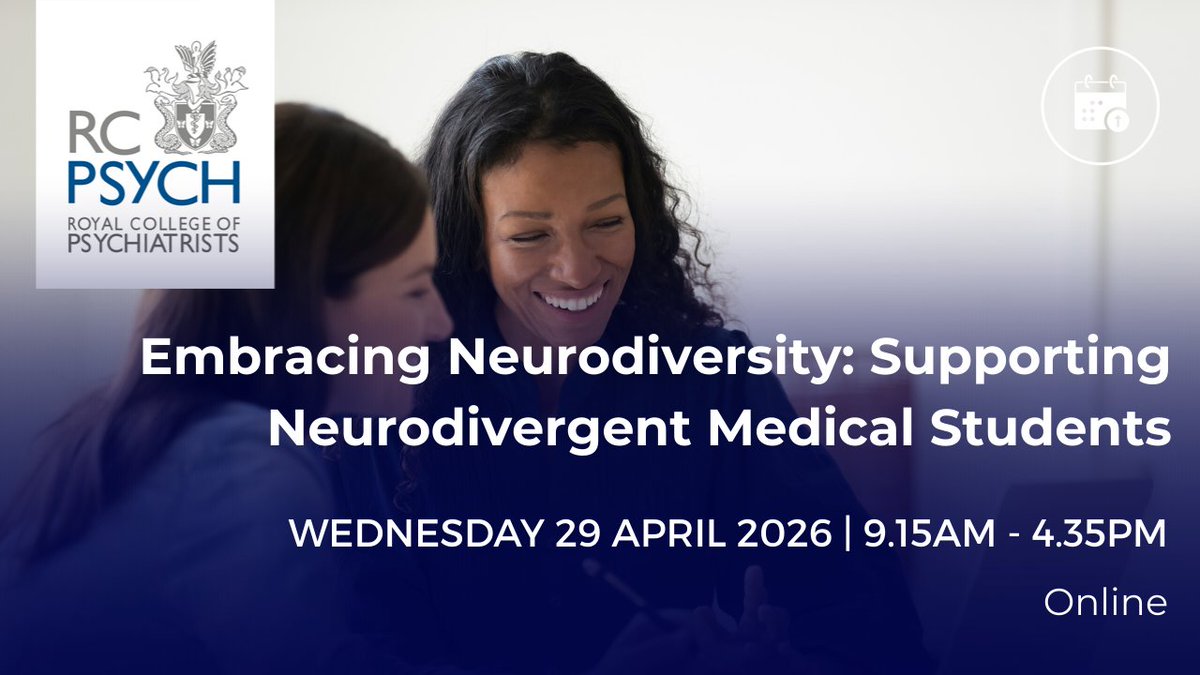
Have you seen the programme for our new online event, Embracing Neurodiversity: Supporting Neurodivergent Medical Students? Highlights include a talk from a GMC perspective, Q&A sessions and panel discussion with our expert speakers.
View the programme: https://t.co/GEOIiZcFnk
Gold QI @SomersetFT
Grateful for all who helped raise this simple but uncomfortable question
How fair & transparent are our medical leadership pathways?
It deepened my respect for compassionate systems where culture, leadership & processes meet
@anna_annabav@petra_jankowska
🌟Supervising Resident Doctors Through Inquests 2026🌟
Join us for an insightful in-person event at the College for supervisors focused on supporting and guiding resident doctors through the inquest process. Scan the QR code below to book yourself on!
"I think our system has to be resilient and flexible, instead of placing that upon the people." - Dr Sarah Beaumont needed to take time off during training after her young son was diagnosed with brain cancer.
Listen to her interview with Dr Ananta Dave, in which she talks about the change needed, as well as some of the challenges in coming back to work, which people don't always talk about.
https://t.co/GQYvjuYxCg
RCPsych President @DrLadeSmith says a new review into rising demand for mental health, ADHD and autism support must “rigorously identify gaps in care and explore which methods of treatment and support already work."
Read our full statement below⬇️
https://t.co/ZQgHMZHzww
🌟Meet some of our Wellbeing Champions!🌟
These amazing members from the recent away day are dedicated to supporting wellbeing in psychiatry💙
They’re working hard to collect and share resources to ensure wellbeing is at the heart of everything.
The Psychiatrists' Support Service (PSS) provides free, rapid, high-quality peer support by telephone to psychiatrists of all grades who may be experiencing personal or work-related difficulties. If you're a psychiatrist who needs support for whatever reason, please get in touch. #ThriveinPsychiatry
🖥➡️ https://t.co/kXh0IQH9Ug
The Medical Training Review Diagnostic Report today makes 4 recommendations to improve postgraduate medical training. I’m very pleased that these all align with priorities I had already set out in my Manifesto for College President at https://t.co/uUV2W6modX. We can do this!
Retaining psychiatrists working in the UK is a College priority.
Today, we're launching The RCPsych Retention Charter, which has 16 actions for Trusts, the College and the wider mental healthcare workforce within the four key domains of:
- Creating a culture of belonging
- Supporting Psychiatrists Mental and Physical Health
- Supporting Psychiatrists’ Career Planning including considering those leaving
- Developing Medical Leadership.
The charter will support healthcare organisations and their leadership to engage and support psychiatrists in the mental health workforce. It provides employers with a structured, practical approach to retaining psychiatrists across the four nations of the UK.
https://t.co/sch29c3wKy
How to say no. A superb article: "In a world that often values compliance over authenticity....we find ourselves entangled in a web of obligations, constantly saying yes to requests that may not align with our true desires or priorities. Yet, buried beneath the layers of societal expectations & internalised guilt lies the power to reclaim our autonomy".
This article explains:
- the reasons why we always say yes
- why we should learn to say no
- how to recognise when not to say yes
- tips for learning how to say no
- different (positive) ways of saying no
- how to deal with unwelcome responses
https://t.co/T4jymB3H4m. By @LauraCopleyLPC. I paired it with a graphic on the same topic by @donnellycss.
@drraja_ I agree completely!!
The difficulty to prove your 8 years experience matches that of a trainee with 3-6 years of training
I understand everything needs standardisation and they need to match the IMGs competence to the curriculum.
But it’s so exhausting!!