Why the Western Term "Stan" Doesn’t Explain "Oshi"
In the West, we have "stans"—obsessive fans born from a shadow of possessiveness. But in Japan, there is "Oshi." It is a cause, not a favorite.
A monk burned Kinkakuji in 1950 because its perfection had become unbearable.
Mishima turned that act into a novel about why excellence can paralyze innovation.
The Temple of the Golden Pavilion is the innovator's dilemma — written by a genius.
https://t.co/th4mF2b0QM
Without the expressway pass: every exit is a calculation.
Is this detour worth ¥1,200?
With the pass: every exit is free. Stop at every service area. Drive the detour. Rejoin freely.
The pass changes how you think about the road →
https://t.co/SXZEfEy8En
Taco rice: born in 1960s Okinawa because tortillas weren't available.
Taco meat.
Lettuce.
Cheese.
Salsa.
On rice.
Now it's in every convenience store in Japan.
Constraints made this dish. Not philosophy.
https://t.co/zxyHyiKDVu
Someone decided a banana needed chocolate.
This decision, once made, could not be undone.
The shell makes the banana taste more like itself.
Why does that work? →
https://t.co/OBL1EizNB3
Slack: 315K daily users in Japan before the official launch — all word-of-mouth.
Snowflake: pursued ISMAP certification before customers asked for it.
Both won by building trust first. The playbook is in the article →
https://t.co/TetjQdPNS4
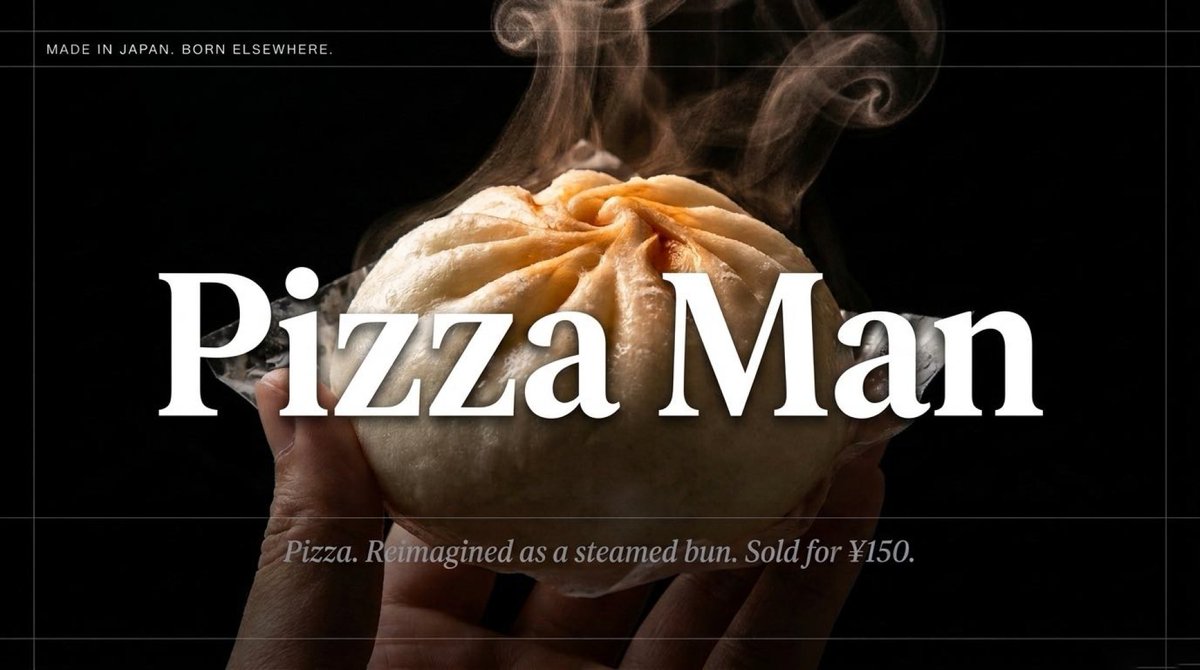
Pizza man: pizza sauce and cheese inside a steamed bun.
Not pizza. Not nikuman. Something else entirely.
150 yen. Hot. Portable.
Format, it turns out, is the real innovation.
https://t.co/q7Few6C2v9
In 1924, a firing squad raised rifles at aikido's founder.
He saw the bullets as light. Moved. Survived.
That mystical moment launched an art of peace—built entirely on a foundation of learning to kill.
The paradox that still defines aikido today.
https://t.co/Cn4mGiFTIh
What are you, without the role? Abe Kōbō's sand pit asks this in its most stripped-down form.
Research on career transition suggests the answer matters — and that the time to find it is before the sand rises. 👇
https://t.co/nYiKGMRJRD
Japan passed its biggest cybersecurity law in history — May 2025.
Most foreign tech vendors haven't noticed.
Compliance is now a sales prerequisite across 15 critical sectors. The article breaks down what changed →
https://t.co/TetjQdQlHC
Japan Expressway Pass mistake that voids the entire plan:
The ETC card must be requested when you book the rental — not at pickup, not after.
At most counters, it cannot be added later.
Request it at booking. Not after →
https://t.co/SXZEfEyGtV
Near the end of "Woman in the Dunes," the rope ladder is left accessible.
Junpei doesn't leave.
Abe refuses to say whether this is freedom or its opposite. Research on choice suggests the answer is more complicated than it looks. 👇
https://t.co/VeWfUpxH3q
WHO told China to share COVID data. China said no. WHO had no power to compel.
This wasn't a bug—it was the design. Sovereignty always trumped science.
When the next pandemic starts, we'll have the same empty stage.
https://t.co/6jezdFchRi
The American Dog was designed for one situation:
Standing crowd. No table. No utensil. Nowhere to put anything down.
One hand. One skewer. Four to six bites.
Finished before you reach the next stall →
https://t.co/OCHl1EWu25
Kafka meets Sartre meets postwar Japan.
Abe Kōbō absorbed both frameworks and wrote Japanese novels in them — asking what transformation always asks: what remains when the organizing structure is gone?
Woman in the Dunes is that question in a sand pit.
https://t.co/rUBGY0GDps
Hokkaido expressway math:
New Chitose → Hakodate round trip: ¥11,060 pay-per-use.
4-day flat-rate pass: ¥7,700.
The pass pays for itself on the first route.
Every exit after that costs nothing →
https://t.co/SXZEfEyGtV
In Japan, choosing a foreign vendor over a domestic one and failing is career-ending.
Choosing a domestic supplier and failing is just a setback.
Your pitch has to make choosing you feel safe — not just smart →
https://t.co/u1uy23ZdVL