The survivorship bias where we are thought to follow the footsteps of successful people or processes doesn't exactly tell the whole story hence a bias .
For example during world War II, mathematician and statistician Abraham wald advised the Allied force against emphaais on reinforcing the hit parts of planes that came back with multiple bullet holes, rather the other parts that could have been hit in non returning planes
. " The other parts not hit are more critical hence why the other planes never returned "
This was a major change in the course of the war and saved many planes and lives
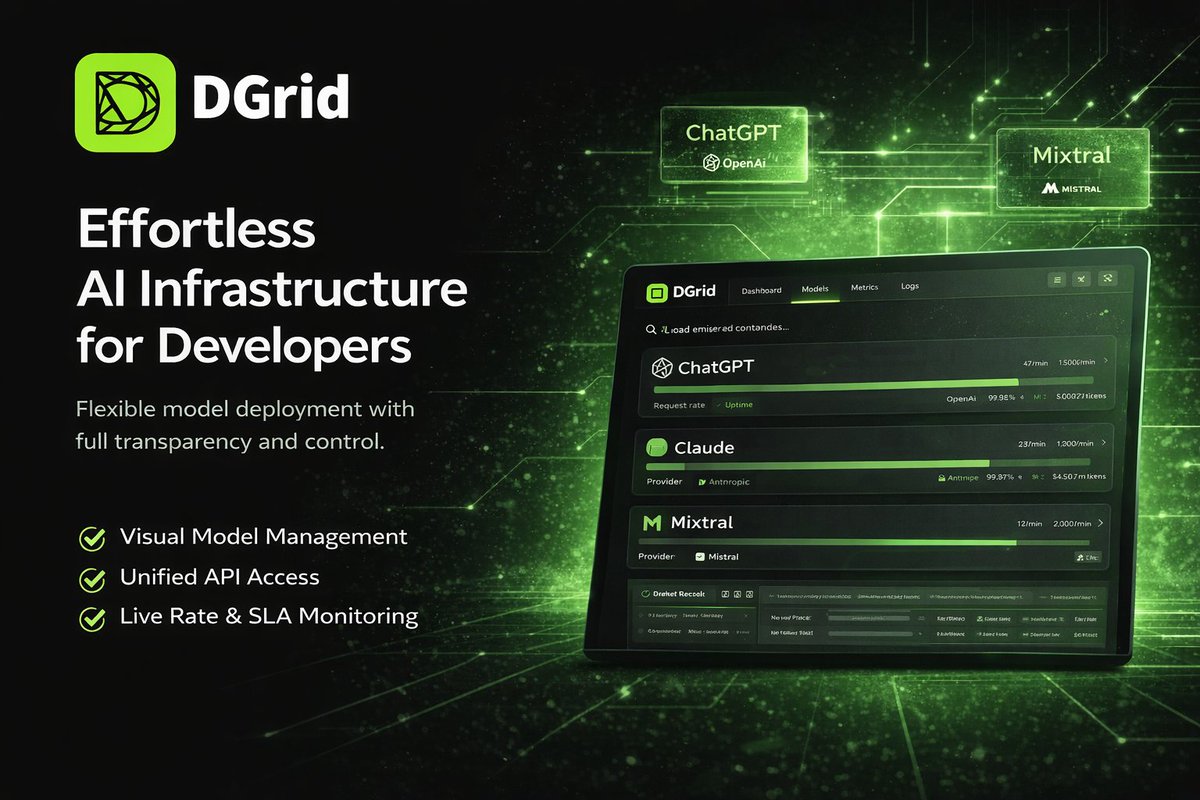
In traditional AI platforms, scaling means higher centralized control.
In @dgrid_ai, scaling means stronger market competition.
More models increase performance diversity.
More compute nodes improve execution efficiency.
More usage sharpens routing intelligence.
For a while, my feed was nothing but triple-digit yields and countdown timers.
That question is what led me to @metasoilverse via @BingXOfficial during #BingXBlast.
It’s a familiar cycle,spike, screenshots, then silence.
So I shifted my focus. Instead of reacting to the numbers, I started dissecting the engine behind them. What is actually producing the return?
What stood out wasn’t a polished RWA narrative. It was the structure underneath it.
Incentives tied to real economic cycles,agriculture, logistics, commodities with activity reflected transparently on-chain. Not circular yield mechanics. Not momentum feeding momentum.
Most platforms are built to survive volatility.
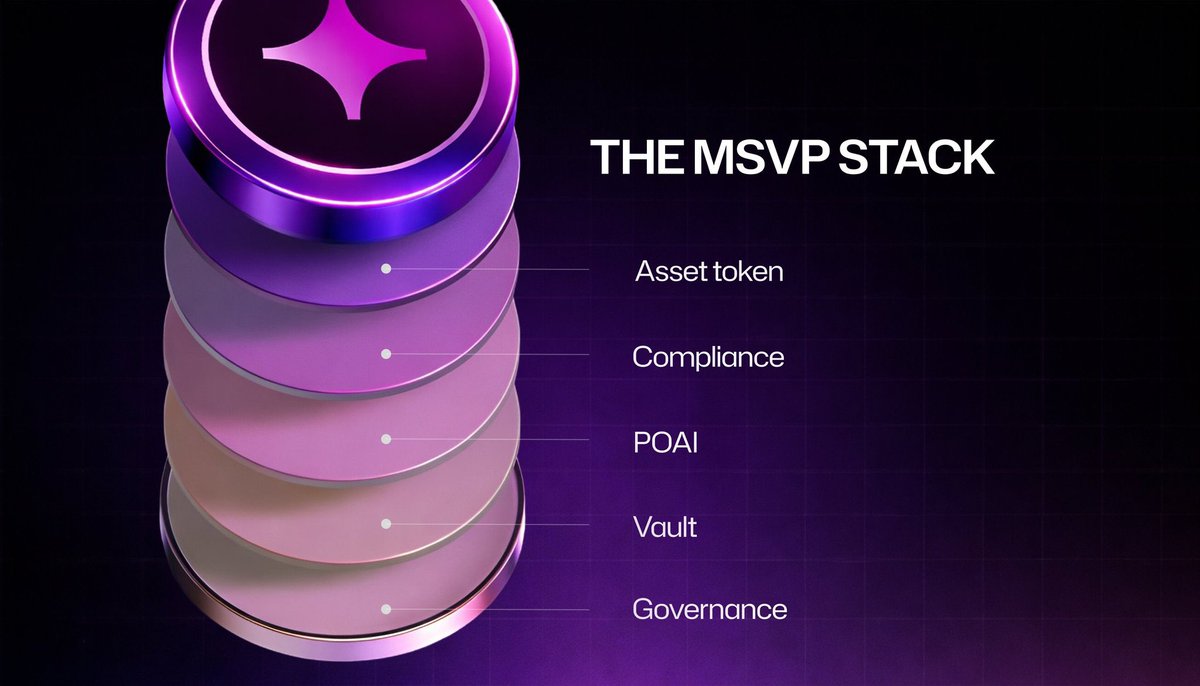
$MSVP feels designed to interpret it,tracking risk, surfacing signals, and recalibrating as conditions shift.
That difference matters.
When returns come from measurable productivity instead of reflexive speculation, the framing changes.
The early participants aren’t chasing noise.
They’re aligning with systems built to stay coherent,even when the market isn’t.
Good morning CT
A lot of people have been joining .@permacastapp lately and honestly, it’s been great to see
Creators are starting to understand the power of permanent media.
Same thing with .@dgrid_ai momentum is building, and the early movers are positioning smartly.
ggs
Another week of consistent building from @dango.
DGrid continues strengthening its core infrastructure, focusing on reliability and long-term scalability the kind of work that actually lasts.
while @permacastapp continues refining permanent content publishing.
Been looking deeper into @0G_labs and I honestly think the @permacastapp airdrop is one of those early ecosystem plays worth paying attention to
0G is building decentralized AI infrastructure and modular data layers which could become a core narrative this cycle
Strong infrastructure projects usually reward the community members who participate early and consistently not just the ones who show up at the end
Permacast encourages real activity engagement interaction and contribution
That is important because most airdrops now track meaningful participation over time not just simple tasks
I am focusing on steady involvement exploring features and positioning before things get crowded
Early effort always has more upside than late hype entries
If you are farming the 0G and Permacast airdrop too let is stay active share insights and maximize the opportunity together
GM friends
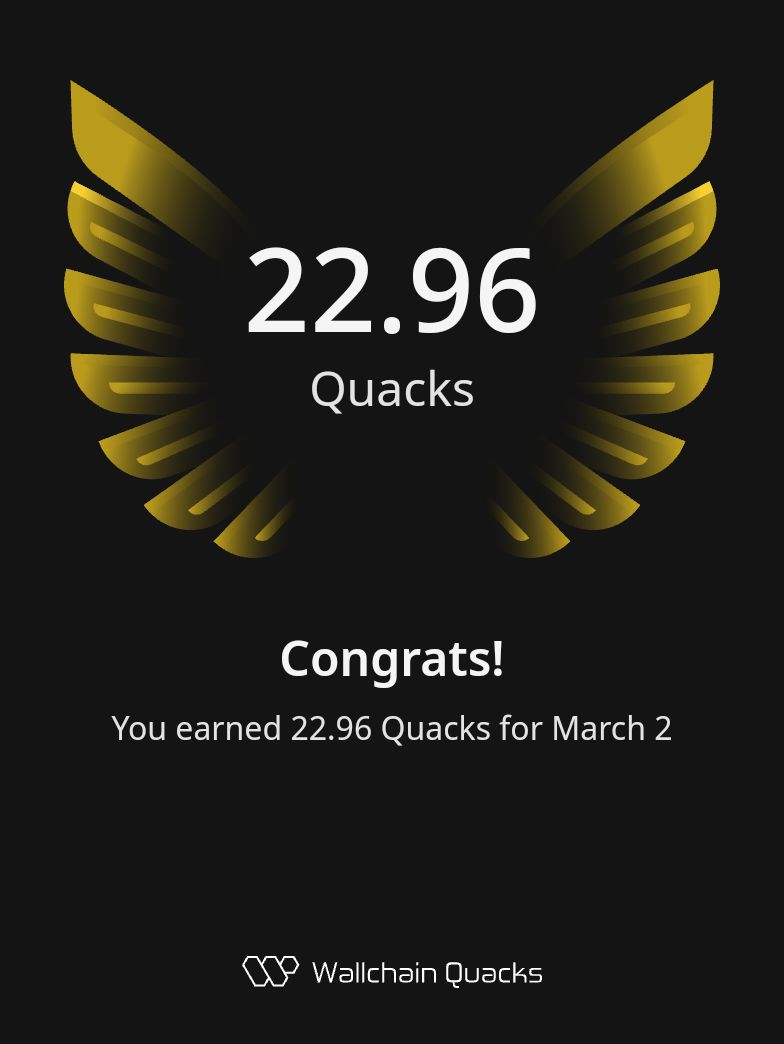
Yesterday I earned 22.96 Quacks on @wallchain
That is not a small number at all The grind is definitely showing results
I am still working consistently on the @beyond__tech network and staying bullish on the long term vision
Only 6 days left and I am pushing hard to secure a solid rank before the campaign ends
Every day counts now so I am staying active engaging more and not slowing down
Momentum is building and I believe consistency will pay off
What do you think will I make the rank in time
Drop your thoughts in the comments
Good morning friends ☀️
Just received 4.15 Lookz Points on @3look_io and the process is still ongoing
There are still plenty of tokens left to earn so this is not the time to slow down
If you stay active and consistent the points can really add up over time
Think about it if the token ever reaches $1 and you have collected 50 tokens
That is $50 mybe Imagine stacking even more while it is still early
Small daily effort can turn into something meaningful later
I am staying focused and continuing to farm as much as possible
Do not miss the chance while rewards are still available
Let is keep grinding and stack those Lookz Points together
An AI-powered permanent media network is one of the implementation of Permaweb_DAO.
You upload content stored on Arweave to make it discoverable, and accessible indefinitely.
This ensures full management for creators, and help preserve the platform from shutdowns or censorship.
Most $MNT farmers are leaving 30–40% of rewards on the table without even realizing it.
I run a cross-chain liquidity loop across @Mantle_Official, Solana, Byreal, Bybit, and Aave that turns my $10K into a high-velocity yield machine.
Here’s how 🧵:
The future evolution of Permaweb DAO governance
If the early phase of Permaweb DAO was about funding builders, the next phase is about architecting resilience inside the Arweave ecosystem.
Governance doesn’t stay static.
It matures.
Here’s what evolution could realistically look like:
1. Smarter Capital Allocation Models
Instead of simple grant approvals, governance may shift toward:
Milestone-based disbursements
Retroactive public goods funding
Quadratic or reputation-weighted voting
Data-driven impact scoring
This reduces capital waste and rewards measurable ecosystem contribution.
Over time, funding becomes less about proposals and more about proof.
2. Delegated & Specialized Governance
As the ecosystem grows, not every voter can deeply understand:
Infrastructure proposals
Indexing architecture
Cryptographic research
Developer tooling roadmaps
Future governance may introduce:
Domain-specific committees
Delegation systems
Expert reviewers with transparent mandates
This increases decision quality without sacrificing decentralization.
3. On-Chain Transparency & Analytics
Because the permaweb is archive-native, governance itself can become fully archived and analyzable.
Imagine:
Historical proposal performance dashboards
Grant impact visualizations
Contributor reputation layers
Governance data becomes a research asset not just a voting record.
That’s uniquely aligned with permanence.
4. Infrastructure Over Incentives
Early ecosystems focus on growth.
Mature ecosystems focus on durability.
Future @Permaweb_DAO strategy may prioritize:
Indexing reliability
Redundancy layers
Archival accessibility tools
Developer onboarding systems
Less hype. More structural strength.
5. Ecosystem Interoperability
As more chains and platforms integrate permanent storage, governance may expand beyond internal funding and toward:
Cross-ecosystem collaborations
Institutional archive partnerships
Public knowledge initiatives
Permaweb DAO could evolve from ecosystem funder to digital memory steward.
That’s a much larger role.
The Bigger Picture
Permaweb governance isn’t just about sustaining projects.
It’s about stewarding permanence in a disposable internet era.
If executed well, it becomes a long-horizon coordination engine one that funds systems designed to outlive trends.
And that’s rare in crypto.
Permanent storage sounds powerful.
But without indexing, it's vault with no map.
Real infrastructure means content is structured, searchable, and machine-readable.
@permacastapp built this layer
With @permacastapp, media is discoverable and usable.
The infrastructure underpinning artificial intelligence has always carried an unspoken contradiction: it is built to empower humanity yet remains stubbornly owned by a narrow elite. Centralized operating systems—whether from hyperscalers or legacy tech giants—concentrate control over the very resources that define modern intelligence: compute cycles, persistent storage, data pipelines, and model governance. This ownership model breeds fragility (single points of failure), opacity (undisclosed changes to behavior), and exclusion (high barriers that sideline most of the world’s builders and thinkers). The deeper harm is structural: when the operating system of intelligence belongs to the few, progress tilts toward their priorities, leaving global potential unrealized and collective agency diminished.
@0G_labs redefines infrastructure by delivering the first decentralized AI operating system explicitly owned by everyone who participates. Its DeAIOS functions as a shared, modular foundation where no single entity holds unilateral control. Storage, data availability, compute marketplaces, execution shards, and alignment nodes are community-operated layers that expand through collective contribution. Participants—validators, GPU providers, alignment node runners—earn economic rewards and governance influence proportional to their input, creating true distributed ownership. The result is an OS that feels like a global commons: transparent in operation, verifiable in every trace, and economically aligned so that value flows outward rather than upward, making intelligence infrastructure a participatory endowment rather than a rented utility.
What distinguishes this as the first truly owned-by-everyone AI OS is the depth of its sovereignty mechanisms. Token-weighted governance, restaking for shared security, and community-run alignment nodes distribute decision-making power across thousands of participants worldwide. Cryptographic primitives—Proof-of-Random-Access for honest storage, VRF quorums for data availability, zero-knowledge/TEE proofs for compute—ensure no central actor can override the network���s invariants. Parallel EVM shards sustain high throughput while the modular design prevents capture by any subgroup. Ownership here is not symbolic; it is embedded in protocol rules that make the system evolve through consensus of sustainers, not fiat of boards.
If the first decentralized AI operating system is now genuinely owned by everyone who helps keep it alive, what becomes possible when the OS of intelligence no longer answers to distant shareholders? How might builders in places like Benin City begin to treat this shared foundation as their own sovereign platform for local innovation? And as ownership shifts from concentrated to collective, do we quietly enter an era where the trajectory of artificial intelligence is no longer dictated by a few, but shaped by the many who choose to steward it together?