High-Energy Physics at CERN. Software and Computing for the CMS experiment at the LHC. Big Data Analytics, {M,D}Learning. University of Bologna, INFN, CERN.
I am alarmed by the proposed cuts to U.S. funding for basic research, and the impact this would have for U.S. competitiveness in AI and other areas. Funding research that is openly shared benefits the whole world, but the nation it benefits most is the one where the research is done.
If not for funding for my early work in deep learning from the National Science Foundation (NSF) and Defense Advanced Research Projects Agency (DARPA), which disburse a good deal of U.S. research funding, I would not have discovered lessons about scaling that led me to pitch starting Google Brain to scale up deep learning. I am worried that cuts to funding for basic science will lead the U.S. — and also the world — to miss out on the next set of ideas.
In fact, such funding benefits the U.S. more than any other nation. Scientific research brings the greatest benefit to the country where the work happens because (i) the new knowledge diffuses fastest within that country, and (ii) the process of doing research creates new talent for that nation.
Why does most innovation in generative AI still happen in Silicon Valley? Because two teams based in this area — Google Brain, which invented the transformer network, and OpenAI, which scaled it up — did a lot of the early work. Subsequently, team members moved to other nearby businesses, started competitors, or worked with local universities. Further, local social networks rapidly diffused the knowledge through casual coffee meetings, local conferences, and even children’s play dates, where parents of like-aged kids meet and discuss technical ideas. In this way, the knowledge spread faster within Silicon Valley than to other geographies.
In a similar vein, research done in the U.S. diffuses to others in the U.S. much faster than to other geographic areas. This is particularly true when the research is openly shared through papers and/or open source: If researchers have permission to talk about an idea, they can share much more information, such as tips and tricks for how to really make an algorithm work, more quickly. It also lets others figure out faster who can answer their questions. Diffusion of knowledge created in academic environments is especially fast. Academia tends to be completely open, and students and professors, unlike employees of many companies, have full permission to talk about their work.
Thus funding basic research in the U.S. benefits the U.S. most, and also benefits our allies. It is true that openness benefits our adversaries, too. But as a subcommittee of the U.S. House of Representatives committee on science, space, and technology points out, “... open sharing of fundamental research is [not] without risk. Rather, ... openness in research is so important to competitiveness and security that it warrants the risk that adversaries may benefit from scientific openness as well.”
Further, generative AI is evolving so rapidly that staying on the cutting edge is what’s really critical. For example, the fact that many teams can now train a model with GPT-3.5- or even GPT-4-level capability does not seem to be hurting OpenAI much, which is busy growing its business by developing the cutting-edge o4, Codex, GPT-4.1, and so on. Those who invent a technology get to commercialize it first, and in a fast-moving world, the cutting-edge technology is what’s most valuable. Some studies (link in original post, below) also show how knowledge diffuses locally much faster than globally.
China was decisively behind the U.S. in generative AI when ChatGPT was first launched in 2022. However, China’s tech ecosystem is very open internally, and this has helped it to catch up over the past two years:
- There is ample funding for open academic research in China.
- China’s businesses such as DeepSeek and Alibaba have released cutting-edge, open-weights models. This openness at the corporate level accelerates diffusion of knowledge.
- China’s labor laws make non-compete agreements (which stop an employee from jumping ship to a competitor) relatively hard to enforce, and the work culture supports significant idea sharing among employees of different companies; this has made circulation of ideas relatively efficient.
While there’s also much about China that I would not want the U.S. to emulate, the openness of its tech ecosystem has helped it accelerate.
In 1945, Vannevar Bush’s landmark report “Science, The Endless Frontier” laid down key principles for public funding of U.S. research and talent development. Those principles enabled the U.S. to dominate scientific progress for decades. U.S. federal funding for science created numerous breakthroughs that have benefited the U.S. tremendously, and also the world, while training generations of domestic scientists, as well as immigrants who likewise benefit the U.S.
The good news is that this playbook is now well known. I hope many more nations will imitate it and invest heavily in science and talent. And I hope that, having pioneered this very successful model, the U.S. will not pull back from it by enacting drastic cuts to funding scientific research.
[Original post, with links: https://t.co/JR3x4O1iVr ]
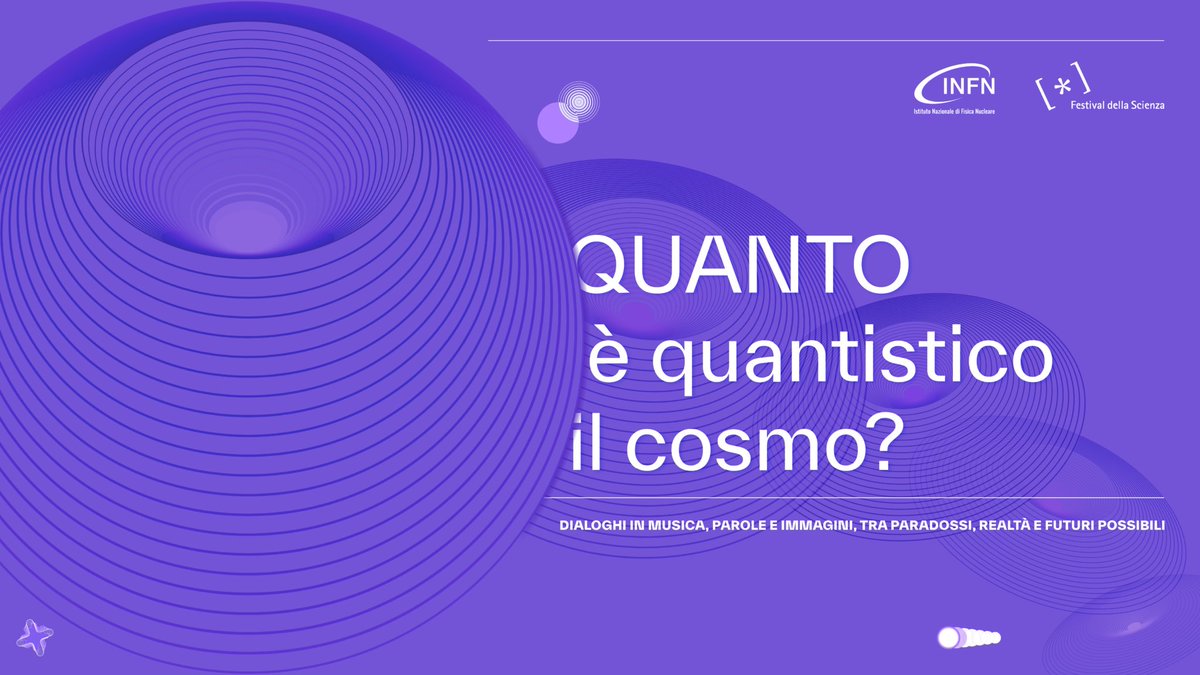
✨ Il mistero della #meccanicaquantistica attraverso il racconto di tre ricercatori, musica dal vivo e letture evocative: questa sera, 25 ottobre, alle 21.00, al Palazzo Ducale di Genova, la conferenza-spettacolo INFN “Quanto è quantistico il cosmo?”.
👉 https://t.co/K0Yho0wgzL
I hate the "not now" view of AI safety. There may be no obvious point at which AI behavior goes from being a "product issue" to a safety one. And a plan where all your safety research just kicks in one day despite no prior integration with development is not a serious one.
In occasione del suo intervento di oggi a @BSBF2024 a Trieste, il presidente @INFN e #ICSC💻 @zoccoli_antonio ha presentato il Centro Nazionale ICSC come esempio di collaborazione tra #industria e #ricerca da seguire anche nell'ambito delle grandi collaborazioni scientifiche.
Volete scoprire quali sono i vantaggi dell'utilizzo del #Supercalcolo nel settore dedicato allo sviluppo di nuovi materiali. Non perdete il terzo webinar dell' #OsservatorioICSC 'l #nuovimateriali'
📅23 settembre
🕑inizio ore 16:00
👉https://t.co/eb6WeDGjEY
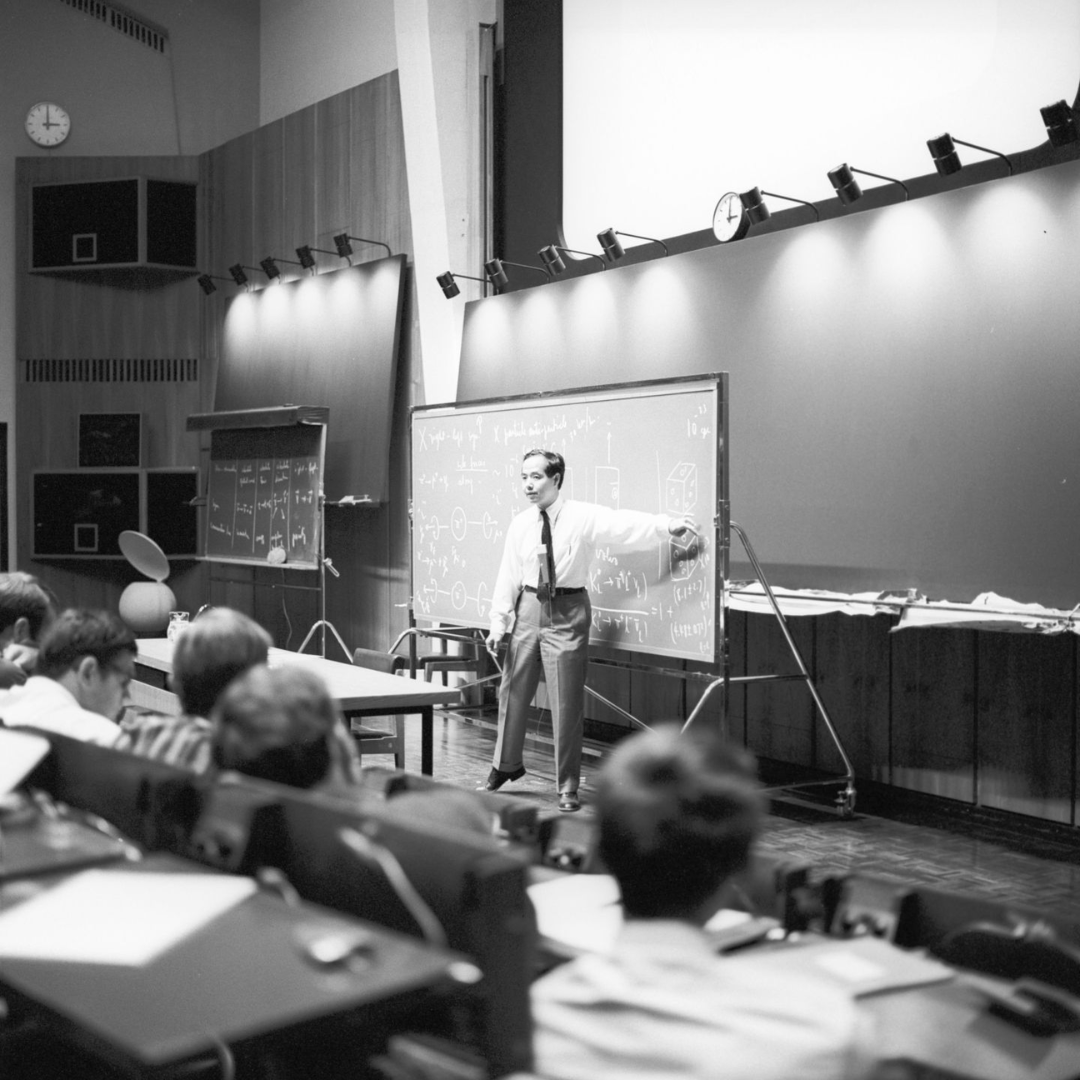
#ThrowbackThursday to the summer of 1968, during a lecture given by Professor T.D. Lee (1926–2024), one of the visiting scientists working at CERN, to the summer students.
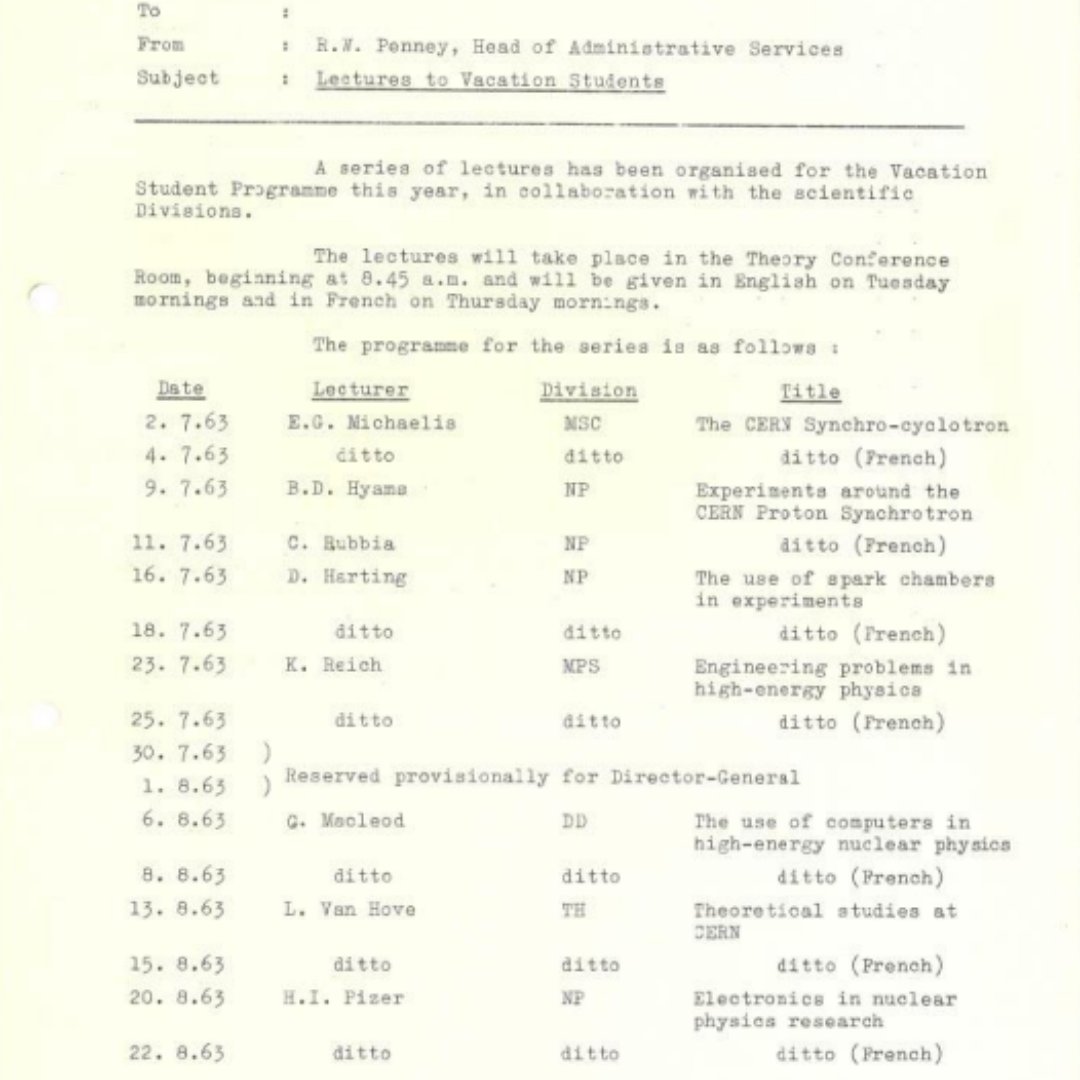
The CERN Summer Student Programme was founded in 1962. Every year, even today, CERN welcomes STEM students from all over the world to take part in the day-to-day work of CERN’s experiments and to develop their own projects.
Images 2-3 show schedules from the first editions, featuring the names of lecturers such as the future Directors-General Carlo Rubbia and Léon Van Hove.
Which lecture would you like to have attended? Let us in the comments below. 👇
#CERNArchives
It is with great sadness that we learned of the passing of Tsung-Dao Lee at the beginning of this month.
T. D. Lee was a #physics@NobelPrize laureate, alongside Chen-Ning Yang, for their work on parity violation in weak interactions. He remains one of the youngest Nobel laureates in the science fields.
Our thoughts are with his family and friends.
Peter Shor wins the 2025 Claude E. Shannon Award! 🏆
♦ Shor is being recognized for his profound contributions to information theory.
Read more: https://t.co/1KzsptLuaA
#algorithm#ClaudeShannonAward#QuantumComputing@MIT
Grazie all’organizzazione di questo importante evento, al Ministro @BerniniAM per il sostegno, al Presidente @sbonaccini e al Sindaco @matteolepore e a colleghi e colleghe intervenuti.
Oggi è stata una grande giornata per guardare al futuro del #Supercalcolo, partendo da Bologna.
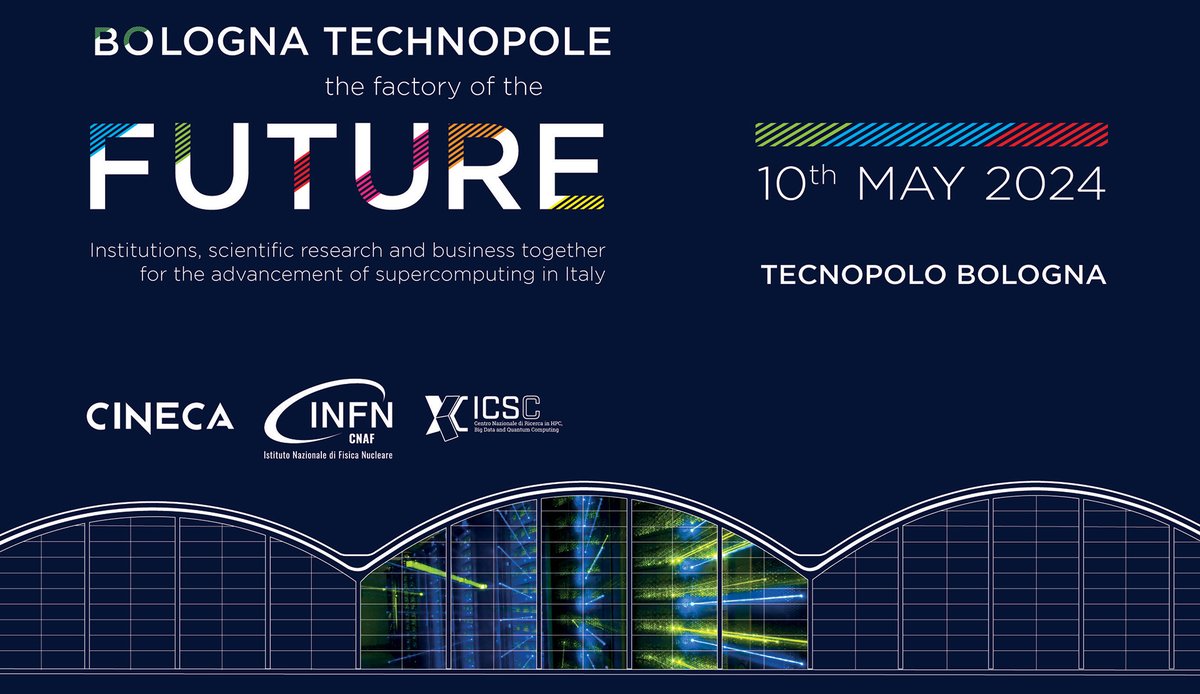
Un momento di confronto tra istituzioni, ricerca e impresa per disegnare il futuro del calcolo in Italia e in Europa: oggi a Bologna, in occasione dell’inaugurazione del nuovo #DataCenter del CNAF-INFN, si è tenuto l’evento “Bologna Technopole. The factory of the future”.
Un nuovo #DataCenter per il CNAF, il Centro Nazionale INFN per ricerca e sviluppo nel campo delle discipline informatiche e telematiche e per la gestione dei relativi servizi per le attività di ricerca dell’Istituto: il 10 maggio a Bologna inaugurerà la nuova struttura INFN.
Un interessante momento di confronto sui diversi aspetti della #Ricerca e sull'#IntelligenzaArtificiale: a Bologna ho partecipato al Kick-off meeting di Research7+, organizzato dal CNR e dedicato alle Organizzazioni di Ricerca e alle Agenzie di Finanziamento dei Paesi G7.
Venerdì 10 maggio il Tecnopolo di Bologna ospiterà l'evento 'Bologna Technopole. The factory of the Future' organizzato da @INFN_@Cineca1969 e #ICSC per porre l’attenzione sulla nascita dell'infrastruttura italiana di #HPC e #BigData, un asset strategico per il #SistemaItalia🇮🇹
Istituzioni, centri di ricerca scientifica e imprese insieme per il progresso del #SuperComputing in Italia: il 10 maggio, in occasione dell'inaugurazione del nuovo Data Center del CNAF dell'INFN, ci sarà l'evento "Bologna Technopole. The factory of the Future". 👇