Every communist state that has ever existed faced the same fatal paradox: the party that promised to liberate the people from the oppressive state ended up building the most oppressive state in human history. This occurred not because communism attracted uniquely evil people, but because the ideology itself demanded the erasure of the line between party and state; once that line was erased, the machinery of governance became a machinery of control from which no society has ever peacefully recovered.
The deep state, a term now thrown around loosely in Western democracies to describe entrenched bureaucratic interests, was not an accident or a corruption of communism. It was communism's central organising principle. Every communist regime, from Moscow to Havana to Pyongyang, deliberately and systematically fused the party with every institution of the state until the two became indistinguishable. Understanding how they did it, and why it destroyed them, is not an exercise in Cold War nostalgia. It is a warning to every country where a ruling party with an overwhelming mandate begins to treat the state as its private property.
The Soviet Union under Lenin and Stalin created the template that every subsequent communist state would follow. The process was methodical and proceeded in identifiable stages.
First, the party captured the security apparatus. The Cheka, later the OGPU, the NKVD, and finally the KGB, was not a state institution that served the republic. It was a party organ that served the Politburo. Its officers were selected not for professional competence, but for ideological loyalty. Its mandate was not to protect citizens from crime, but to protect the party from dissent. By 1934, the NKVD had become so powerful that it operated its own economy, running the Gulag system of forced labour camps that at its peak held over 1.5 million prisoners who produced timber, mined gold, and built canals with slave labour. The security service was not merely a department of the state. It was a state within a state, answering to no court, bound by no law, and accountable to no institution except the party leadership.
Second, the party captured the judiciary. Soviet courts did not administer justice; they administered policy. Judges were party members who received instructions, sometimes explicit, sometimes implicit, on the outcomes expected in politically sensitive cases. The concept of judicial independence did not exist. Andrey Vyshinsky, Stalin's chief prosecutor during the Great Purge, openly theorised that a confession was the "queen of evidence", and confessions were extracted through torture, sleep deprivation, and threats to family members. Between 1936 and 1938, the Soviet judiciary sentenced approximately 750,000 people to death, not through any process recognisable as law, but through show trials designed to demonstrate the party's absolute power over the lives of citizens. The courts were not captured gradually. They were designed from the beginning to serve the party. There was no independent judiciary to capture because the party never permitted one to exist.
Third, the party captured the economy. The Soviet command economy eliminated private enterprise, collectivised agriculture, and placed every factory, farm, mine, and shop under state, meaning party, control. The State Planning Committee (Gosplan) set production targets for the entire economy. Factory managers were party appointees who answered to party officials, not to markets, consumers, or shareholders. The result was an economy that could build nuclear weapons and launch satellites, but could not reliably produce bread, shoes, or toilet paper. By the 1980s, the Soviet economy was spending an estimated 15 to 17 per cent of GDP on defence while its citizens queued for basic consumer goods. The economy served the party's strategic objectives, including military power, ideological prestige, and geopolitical competition, rather than the material welfare of the people it claimed to represent.
Fourth, the party captured information. Pravda, the party newspaper whose name ironically means "Truth", was the instrument through which the party controlled what citizens knew about their own country and the world. Television, radio, publishing, and education were all party-controlled. The information ecosystem was not merely censored; it was manufactured. History was rewritten to serve current political needs. Photographs were altered to remove purged officials. Statistics were fabricated to demonstrate economic progress that did not exist. When the Chernobyl nuclear reactor exploded in April 1986, the Soviet state initially denied the disaster, delayed evacuations, and suppressed information about radiation levels because the party's image mattered more than the lives of citizens living in the fallout zone. The deep state did not merely hide the truth. It replaced the truth with a party-approved alternative reality and punished anyone who pointed out the difference.
The Soviet Union collapsed in 1991, not because it was invaded, and not because its military was defeated, but because the deep state it had built over seven decades had consumed the actual state. The institutions that should have sustained the country, such as the economy, the judiciary, the civil service, and the information systems, had been so thoroughly hollowed out by party capture that when the party lost legitimacy, there was nothing left to hold the country together. The state had been replaced by the party, and when the party fell, the state fell with it.
China under Mao Zedong followed the Soviet blueprint with Chinese characteristics, and with even more devastating consequences. The Great Leap Forward (1958–1962), in which the party ordered the collectivisation of agriculture and the rapid industrialisation of rural China, resulted in the deadliest famine in human history. Estimates range from 15 million to 55 million deaths. The famine was not caused by drought or natural disaster. It was caused by the deep state: by party officials at every level who fabricated grain production figures to please their superiors, who seized food from starving villages to meet impossible quotas, and who punished anyone who reported the truth. When Peng Dehuai, a senior military commander, privately told Mao that the Great Leap Forward was failing, he was purged, imprisoned, and tortured to death during the Cultural Revolution. The system did not merely fail to prevent the famine; the system caused the famine. The fusion of party and state meant that no institution existed to challenge the party's decisions, report accurate information, or protect citizens from the consequences of ideological insanity.
The Cultural Revolution (1966–1976) was the deep state turning on itself. Mao, fearing that the party bureaucracy had become too comfortable and too independent, unleashed the Red Guards, millions of radicalised young people, to attack the very institutions the party had built. Universities were closed. Teachers were beaten, humiliated, and killed. Scientists were sent to labour in rice paddies. Cultural artefacts were destroyed. Party officials who had served the revolution for decades were dragged through the streets, forced to wear dunce caps, and publicly denounced. An estimated 1.5 to 2 million people were killed. The Cultural Revolution demonstrated the ultimate danger of the deep state: when the party is the state, and the party leader decides the state itself is the enemy, there is no institution left to restrain the destruction.
China survived where the Soviet Union did not, but only by making a calculation that would have horrified Marx: it opened the economy to capitalism while keeping the party's monopoly on political power. Deng Xiaoping's reforms after 1978 created a hybrid system, specifically a market economy generating wealth, supervised by a one-party state that retained absolute control over the judiciary, the military, the media, and the security apparatus. China's economic miracle is real, but the deep state remains. The party controls the courts; there is no independent judiciary. The party controls the internet; the Great Firewall blocks information the party considers threatening. The party controls the military; the People's Liberation Army swears allegiance to the party, not to the state or the constitution. And when the party decides that an entire ethnic group poses a threat, the deep state delivers the machinery to intern over a million Uyghurs in camps in Xinjiang with no judicial oversight, no legal process, and no accountability. China's deep state did not disappear with economic reform. It adapted, and its capacity for control is now enhanced by surveillance technology that Stalin could not have imagined.
Cuba under Fidel Castro created a deep state so total that the country has been functionally frozen since 1959. The party controls every institution: the military, the judiciary, the media, the economy, the education system, and the security apparatus. The Committees for the Defence of the Revolution (CDRs), neighbourhood surveillance organisations established on every block of every city and town, ensured that the party's eyes and ears extended into every household. Citizens who expressed dissent were reported by their neighbours, investigated by state security, and imprisoned or exiled.
The result is a country that, despite having one of the highest literacy rates and best doctor-to-patient ratios in the developing world, cannot feed its population, provide basic consumer goods, maintain its infrastructure, or offer its young people any future other than emigration. Cuba's deep state did not fail through a dramatic collapse like that of the Soviet Union. It failed through stagnation: the slow, grinding degradation of a society in which no institution exists to challenge failed policies, no court exists to protect individual rights, and no mechanism exists for peaceful political change. Cuba's buildings are crumbling. Its cars are from the 1950s. Its economy runs on remittances from the diaspora that fled the revolution. The deep state preserved the party, but it destroyed the country the party claimed to serve.
The German Democratic Republic perfected the surveillance dimension of the communist deep state. The Stasi, the Ministry for State Security, employed approximately 91,000 full-time staff and maintained a network of an estimated 189,000 civilian informants in a country of only 16 million people. That means approximately one in every 63 East Germans was reporting on their neighbours, colleagues, friends, and family members to the state security apparatus.
The Stasi did not merely monitor dissidents; it monitored everyone. It opened mail. It tapped telephones. It bugged apartments. It infiltrated churches, universities, sports clubs, and cultural organisations. It developed a practice called Zersetzung ("decomposition"), in which it systematically destroyed the personal lives of targeted individuals through rumour campaigns, career sabotage, disruption of relationships, and psychological harassment, all without the target understanding that the state was responsible. The purpose was not to imprison dissidents; that was too visible. The purpose was to break them invisibly, from the inside.
When the Berlin Wall fell in November 1989, East Germans who accessed their Stasi files discovered that their spouses, their closest friends, and even their own children had been informing on them for years. The deep state had not merely surveilled the population; it had weaponised human relationships themselves, turning trust into a tool of state control. The psychological damage persists to this day, more than 35 years later. Former East Germans report lasting difficulties with trust, intimacy, and social cohesion, which represents the intergenerational trauma of a society in which the party made every human relationship a potential instrument of betrayal.
North Korea represents the final evolution of the communist deep state: a system so total that the distinction between party, state, and reality itself has been abolished. The Kim dynasty, Kim Il-sung, Kim Jong-il, and Kim Jong-un, has achieved what no other communist regime fully accomplished: the complete replacement of objective reality with a party-constructed reality.
North Koreans do not merely live under censorship. They live inside a manufactured universe in which the Kim family possesses supernatural qualities, in which North Korea is the most prosperous and powerful nation on earth, and in which the outside world is a hellscape of poverty, exploitation, and moral degeneracy. The state controls every source of information: there is no internet, no foreign media, no independent publishing, and no uncensored communication with the outside world. Citizens who are discovered consuming foreign media, even South Korean television dramas, face imprisonment in political prison camps, where an estimated 80,000 to 120,000 people are held in conditions the United Nations has compared to Nazi concentration camps.
The deep state in North Korea does not serve any ideology, not even communism, which the regime effectively abandoned decades ago in favour of Juche (self-reliance) and Songun (military-first) doctrines. It serves only the perpetuation of the Kim family's rule. The military consumes an estimated 15 to 24 per cent of GDP while periodic famines kill tens of thousands. The party maintains control through a classification system called Songbun that assigns every citizen to one of three loyalty categories (core, wavering, or hostile) based on the political history of their ancestors. Your grandfather's political reliability in the 1950s determines your access to food, education, housing, and employment today. The deep state does not merely control the present. It has retroactively colonised the past, making every family's history a permanent political verdict from which there is no appeal.
The Khmer Rouge under Pol Pot demonstrated the most extreme consequence of the communist deep state: the point at which the party's capture of the state becomes indistinguishable from the extermination of the population. Between 1975 and 1979, the Khmer Rouge emptied Cambodia's cities, abolished money, closed schools and hospitals, destroyed temples, executed intellectuals, and attempted to create an agrarian utopia through forced labour. An estimated 1.5 to 2 million people, approximately 25 per cent of Cambodia's population, died from execution, starvation, disease, and forced labour.
The deep state under the Khmer Rouge was not bureaucratic. It was eliminationist. The party decided that the existing state, society, and population were all contaminated by capitalism, imperialism, and bourgeois values, and therefore all had to be destroyed and rebuilt from zero. The security apparatus, centred on the S-21 interrogation centre at Tuol Sleng, tortured and executed approximately 17,000 people, including many of the party's own cadres, in a spiralling paranoia of purges that consumed the revolution from within. The deep state's final act was to devour itself, executing its own members on suspicion of disloyalty until the party that had destroyed a quarter of its nation's population began destroying its own leadership.
Every communist deep state, including the Soviet, Chinese, Cuban, East German, North Korean, and Cambodian regimes, followed the same structural logic.
The party captures the security services so that the instruments of force serve the party rather than the law. The party captures the judiciary so that courts deliver political outcomes rather than justice. The party captures the economy so that citizens depend on the party for their livelihoods and cannot build independent economic power. The party captures information so that citizens cannot access the facts they need to evaluate the party's performance. The party captures education so that the next generation is socialised into loyalty rather than critical thinking. And the party captures human relationships themselves, through neighbourhood committees, informant networks, and the weaponisation of trust, so that citizens cannot organise, confide, or build the social solidarity that collective action requires.
The result, in every case, is the same: a state that serves the party rather than the people; an economy that produces what the party wants rather than what the people need; a judiciary that punishes the party's enemies rather than protecting the people's rights; a security apparatus that monitors the people rather than defending them; and an information environment in which the party's version of reality replaces actual reality, until the gap between the two becomes so vast that the system collapses under the weight of its own lies.
Sri Lanka is not a communist country. The NPP/JVP government does not propose to abolish private enterprise, collectivise agriculture, or establish a one-party state. But the JVP's roots are Marxist-Leninist. Its founder, Rohana Wijeweera, was trained in Moscow. Its two insurrections, in 1971 and 1987–1989, attempted to seize the state by force. And the organisational instincts of the party, namely the discipline, the hierarchy, the suspicion of dissent, the conflation of party interests with national interests, and the treatment of critics as enemies rather than citizens, carry the DNA of the movements that built the deep states described above.
When the CIABOC Director General is identified as a former JVP legal division member, that is not a neutral staffing decision. It is the party placing its people inside the state's anti-corruption machinery. When four Supreme Court vacancies are left unfilled while sitting judges' tenures are extended by government legislation, that is the party shaping the judiciary to its advantage. When the CID questions journalists about their tweets, contacts social media platforms to demand content removal, and intelligence officers threaten citizens who participate in UN reviews, that is the party using the state's security apparatus to monitor and silence critics. When pro-government thugs break up an independent farmers' conference, that is the party using extra-state violence to suppress organizing that the party cannot control. When the Agriculture Minister calls protesting farmers "kasippu drinkers," that is the party demonstrating contempt for citizens who challenge its authority.
None of these individual acts constitutes a communist deep state. But taken together, they describe a trajectory: the gradual, incremental fusion of party and state that every communist regime began with before it metastasised into something far worse. The Soviet Union did not start with the Gulag. It started with staffing decisions, loyalty tests, the placement of party members in key institutional positions, the harassment of critics, and the conflation of dissent and treason. The Gulag came later, after the institutions that could have prevented it had already been captured.
The people of Sri Lanka do not need to wait for the Gulag to recognise the pattern. They need to recognise it now: while the institutions that protect them still exist, while the judiciary still has some independence, while the media can still report, while citizens can still organise, while elections still happen, and while the line between government and state has been blurred but not yet erased. Because every country that waited until the line was fully erased discovered the same truth: by then, there was nothing left to fight with, no institution left to appeal to, and no mechanism left for peaceful change. The deep state had consumed the state. And the people, the people in whose name the revolution was always conducted, had nothing left but the party's version of reality and the party's definition of freedom.
That is the lesson of every communist deep state: not that communism attracts bad people, but that the fusion of party and state, regardless of the intentions behind it, inevitably produces a system that serves the party at the expense of the people. Sri Lanka must decide now, not later, whether it will permit that fusion to continue or whether it will defend the independence of the institutions that belong to its citizens, not to any party. The answer to that question will determine whether Sri Lanka remains a democracy with problems or becomes another cautionary tale in the long, bloody history of states that were consumed by the parties that claimed to serve them.
#SriLanka #LKA #DeepState #JVP #NPP
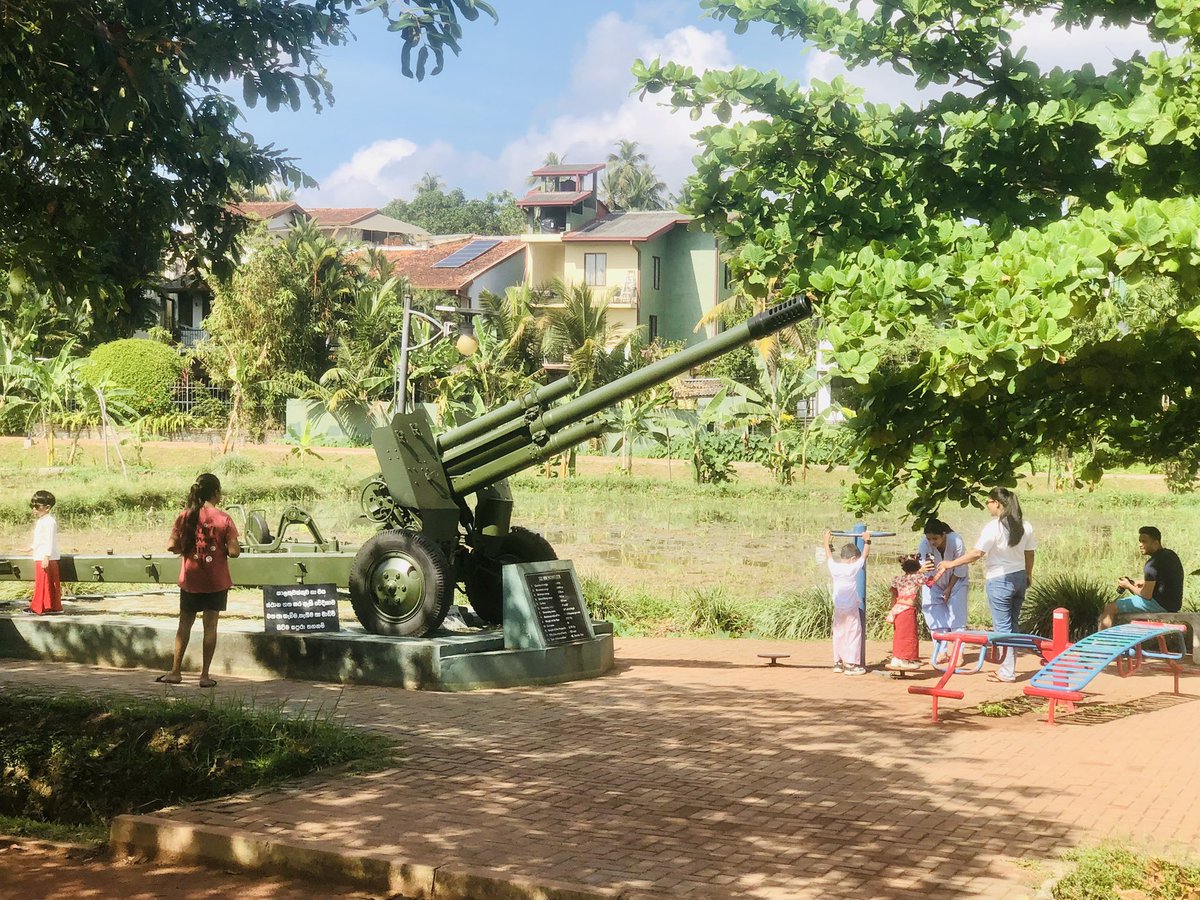
Lest we forget.
Tomorrow there will be many parents whose children they lost to terrorism.
Respect and thoughts with the armed forces who gave everything to their country.
#dD@PresRajapaksa@GotabayaR
Thank you
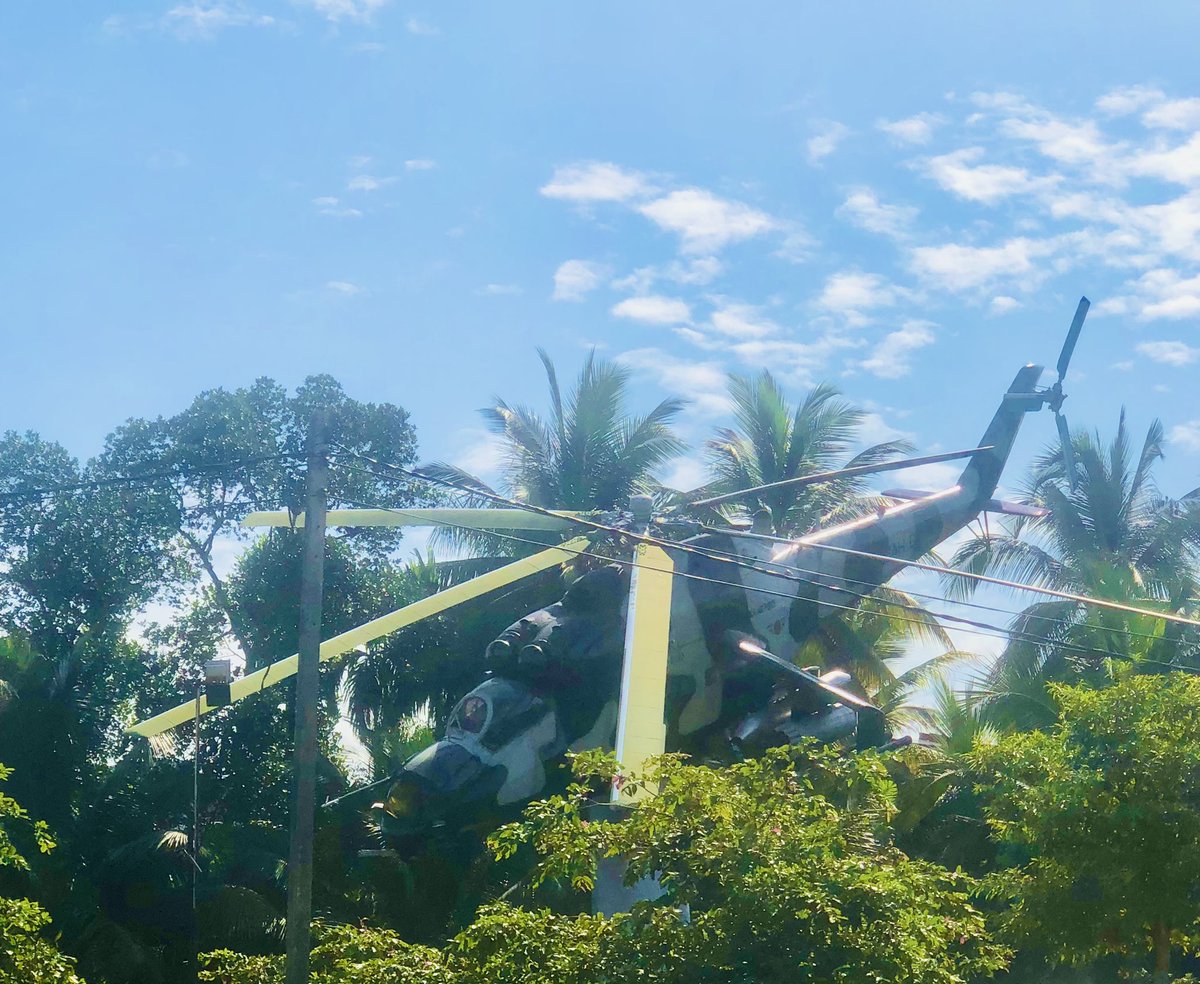
Lest we forget.
Tomorrow there will be many parents whose children they lost to terrorism.
Respect and thoughts with the armed forces who gave everything to their country.
#dD