I have been building things since my days at FUT Owerri, where we launched the university’s first campus FM radio station. In industry, I served as a global lead ASIC design engineer, helping to develop the inertial sensors used in the early versions of the iPhone. I also invented a wafer-level chip-scale packaging technology for inertial sensors. Till today, the US Government has continued to honour royalties for using my PhD research and the patent that came out of it. I am a Nigerian and I build things!
Good People, when we engineered a native blockchain for Contisx Securities Exchange, we saw an opportunity to extend that operating system into a new category of secure communication. That vision led us to build the Contisx Phone, a cryptographically secured blockchain phone designed to deliver superior communication security for individuals, companies and governments.
Yes, blockchain-secured with absolute sovereignty. With ContiSX Phone, you get end-to-end secure communication, across messaging, voice and video , with no eavesdropping or tampering, guaranteed by cryptographic encryption.
The Contisx Phone is now available for preorder, with shipments beginning on October 1, 2026. Preorder yours here: https://t.co/4mx5pVKlL5
Every preorder comes with these benefits:
- One year of complimentary Contisx Network services, including Contisx Mail, Contisx Audio and Contisx Video.
- Zero-rated data access across the Contisx Exchange and CSD ecosystems for one year. Users will incur no telecommunications data charges when accessing core Contisx services.
- Free access to the Tekedia Nigeria Capital Market Masterclass.
- Free access to the Tekedia Mini-MBA.
From semiconductor systems to blockchain infrastructure, we continue to build the technologies of the future. Grow with ContiSX Phone https://t.co/ltrGVqjjQA
Ndubuisi Ekekwe, PhD
Engineer | Inventor | Nigerian & Ovim Village-Boy
For the record, Uber never made or intended to make money in Nigeria. Anyone who is familiar with Uber's core business model knew this since 2015. Uber's business model is to enter a market, set its fares well below those of the existing traditional taxis, burn VC money to absorb the losses while driving taxis out of the market, then raise prices after it becomes a monopoly.
That model needs a large middle market segment to work - people who don't own or drive their own cars but have enough discretionary income to regularly pay for comfy private transport. In Lagos and Abuja, there are only maybe a couple of hundred thousand people within that income segment. People above it who own their own cars and/or have their own personal driver don't need a ride hailing service, and the vast majority below it who don't, generally aren't willing to pay even the VC-subsidised "cheap" fares because what is considered "cheap" in San Francisco is definitely not cheap in Bariga.
In the ideal market, Uber is only competing against the traditional taxi. In the extremely price-sensitive environment of Nigeria, the opportunity cost of taking an Uber in the minds of the addressable market is the cost savings one can make from taking a danfo, BRT bus, korope, keke, okada, or even literally walking instead. All the VC dollars in the world cannot subsidise a trip made in a low-capacity, air-conditioned, 4-wheeled car into ever becoming cheaper than a bus or rickshaw trip over the same distance. The only people who were regularly and predictably using Uber to get around were a small minority of well-heeled, mainly female customers who chose not to own or drive their own vehicle for various reasons - and this was far too small a market segment to build the Uber business model on. The mathematics made no sense from day 1.
Also from a driver and cars POV, Uber is known to operate like a pyramid scheme. It depends on a constant stream of new drivers and cars being onboarded onto the platform to replace the drivers and car owners who drop out in vast numbers everyday after realising that after fuel, repairs and depreciation costs in Nigeria, it is mathematically impossible to make any real money on Uber. The best one can do with it (as I did for 3 months in 2016) is just use it to temporarily get by - but the fuel costs will eat nearly half of whatever you make, the repairs will be expensive and incessant, and your car will be transformed into a pile of moving metal trash with next to no resale value.
There was no real business case for Uber Nigeria, and this was known as far back as 2015 just 1 year after launch. The real reason it stayed another 11 years after the entire initial set of drivers and car owners pulled out citing everything I just said, is that its real business in Nigeria was not ride hailing, but **data gathering.**
Uber is part of the US military industrial complex, like every other thing out of Silicon Valley. Edward Snowden's leaked files already showed us that the American NSA uses Uber, Lyft etc as its "God's Eye" system, giving the US government round the clock surveillance access into where people go, what routes they use, what items they buy, what social relationships they have etc. Thinking of Uber as just a ride hailing app is like thinking of Google as just a search engine.
Over 12 years in Lagos and Abuja, the data Uber has collected would have given whoever gathered it some extremely useful, and possibly dangerous insights into whoever might be a person of interest. The data would include people's home address, work addresses, which Airbnbs they book to meet their side pieces, which takeaway restaurant they order from, what pharmacy they buy condoms or morning after pills from, what routes they take to work and back, where their kids go to school...
I'm willing to bet that the decision to end Uber's presence in Nigeria was not sudden at all, but merely the expiration of whatever US government contract it was executing.
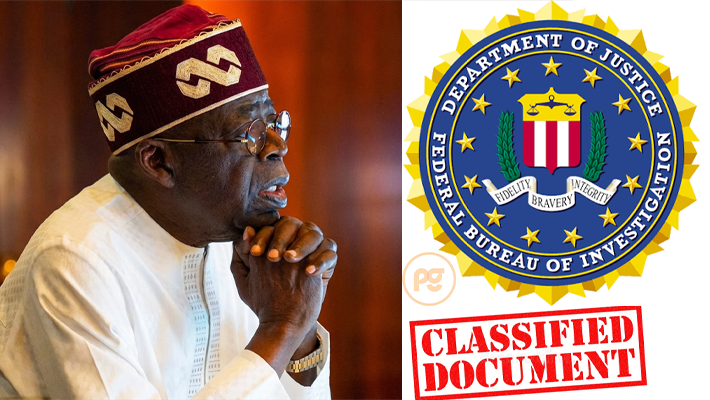
BREAKING: Bola Tinubu Reportedly Offers US Advocacy Firm $3 Million Bribe to End Campaign Concerning Release of His Alleged Heroin-Trafficking Records https://t.co/Q8Xs5FGbN2
Investigative Journalist David Hundeyin Exposes Alleged Capture Of Nigeria’s N400bn Airtime Lending Market By Tinubu Allies, Revealing A Three-Year Corruption Network In Telecom And ICT Sectors https://t.co/CrTugG81lb
Yesternight, the immigration office in Ogbomoso of Oyo State was attacked too and large cache of weapons were stolen from there.
Why are they not talking about this???
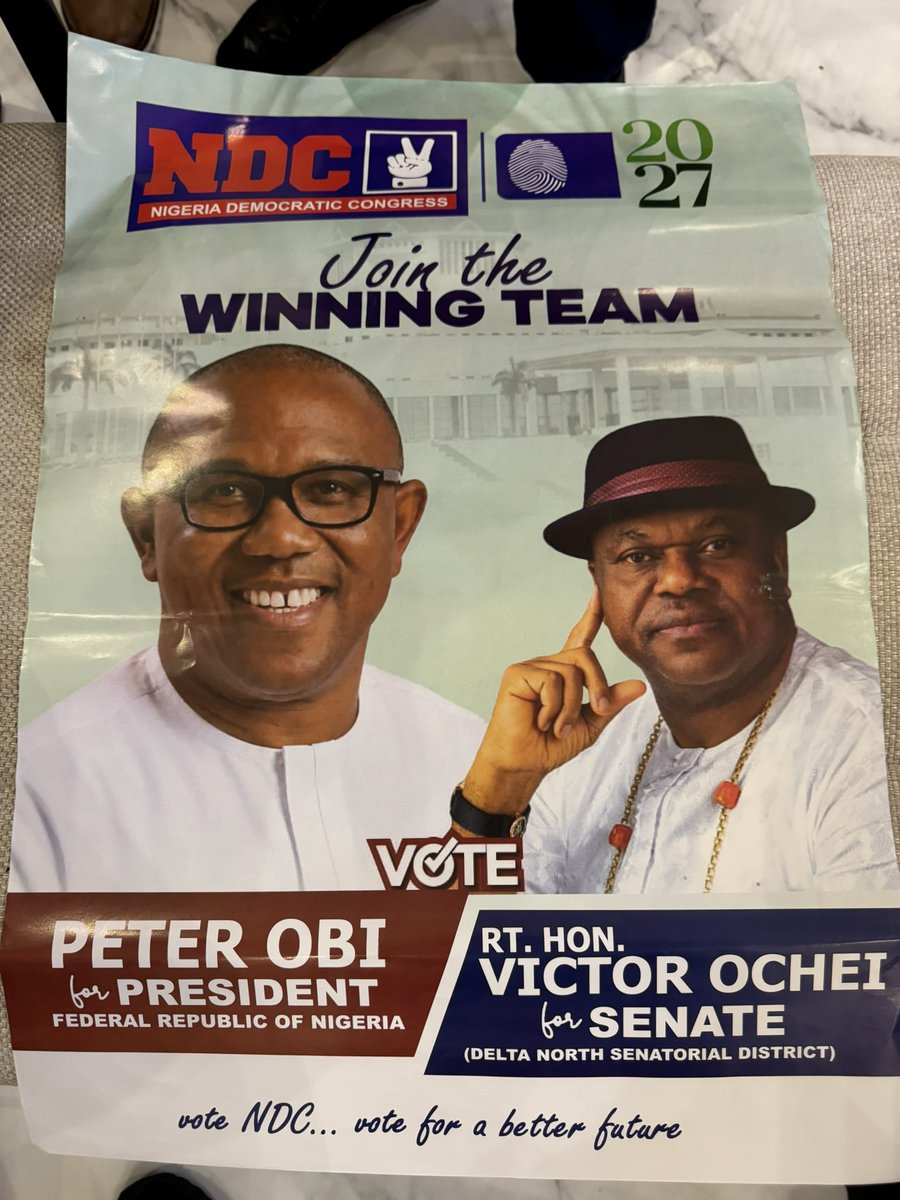
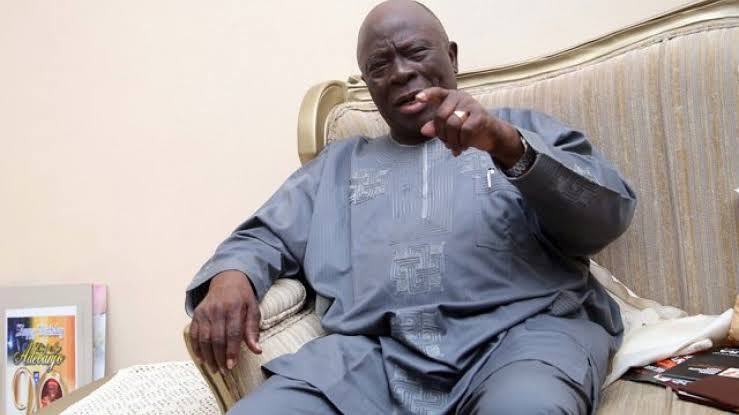
“If you, Nigerians, fail to vote for Peter Obi, and Tinubu mistakenly wins, you will suffer. And I may not be here to suffer with you.”
-Pa Ayo Adebanjo, November 2022.✍️
There are some very powerful people pulling the strings behind the scenes on this legal issue over airtime lending in Nigeria, trying to stick their straw into a market worth an estimated N400b annually. These people are close to the president, and are wielding tremendous power and distorting the entire economy in ways that would have embarrassed a post-Soviet Russian oligarch in 1994.
I’ve been actively aware of this matter for over two years now and the time may have come to tell the full story of how Idris Saliu Alubankudi, and his brother Shamsudeen Saliu 'Shamz' Alubankudi - both very close to Bola Tinubu and his family - have built one of the biggest and most powerful state corruption enterprises
in the entire history of Nigeria.
These men are attempting to capture the systemically important foundations of the entire Nigerian economy - specifically telecoms and ICT - and turn their 3 year-old corruption enterprise into a sort of Nigerian chaebol. You have never seen anything like it before.
You will be hearing the names 'Idris' and 'Shamz' a lot in the coming few days. Also don’t forget their family name 'Saliu Alubankudi.' It's an important part of the story.