FIVE REACTORS WENT CRITICAL THIS SUMMER. CONGRESS JUST HEARD WHY THAT WAS THE “EASY” PART.
WHAT THE FIVE WITNESSES TOLD THE SUBCOMMITTEE
· Joe Hoagland of Oak Ridge National Laboratory testified that criticality confirms core physics but is a threshold rather than an endpoint, and that national laboratory test reactors, hot cells and materials facilities are what will prove whether fuels and components hold up over years of operation.
· Valar Atomics CEO Isaiah Taylor told the subcommittee that China has connected 27 new reactors to its grid since 2016 against two in the United States, and argued that America should compete through mass-manufacturable advanced reactors rather than by replicating large-scale construction.
· Aalo Atomics CEO Matt Loszak said his company reached criticality less than eight months after groundbreaking using standard uranium dioxide fuel and the existing low-enriched uranium supply chain, and asked Congress to extend the Reactor Pilot Program through full-power testing, endurance, burnup and refueling.
· Steven Shannon of NC State testified that the country has roughly 20 standalone nuclear engineering programs today, down from nearly 50 in 1980, against a target of 300 GW of new capacity on top of the existing 100 GW.
· Antares CEO Jordan Bramble said Mark-0 was the first privately developed non-light-water reactor to reach criticality in the United States in more than 40 years, and committed to six months of electricity production at Idaho National Laboratory in 2027 before deployments to Fort Bragg and Joint Base San Antonio in 2028.
Every one of those criticality tests ran at zero or low power, validating neutronics and core geometry rather than power delivery, so the popular framing of reactors "switching on" runs ahead of where the fleet actually sits. The quieter ask in the record may matter more than any of the milestones, which is Loszak's request that safety data generated under DOE authorization be credited in later NRC licensing. Without that bridge, every developer runs the qualification gauntlet twice and this summer's speed stops compounding.
Does the pilot program's legacy end at criticality, or at the first NRC license that reuses its data?
Lebanon is being ethnically cleansed, the genocide in Gaza continues, terrorist settlers are burning people’s homes, and wedding parties and children are being bombed in Iran—all in real-time—while the UN High Commissioner for Human Rights remains silent.
Is there anyone left at the UN who has the courage to at least condemn all of this?
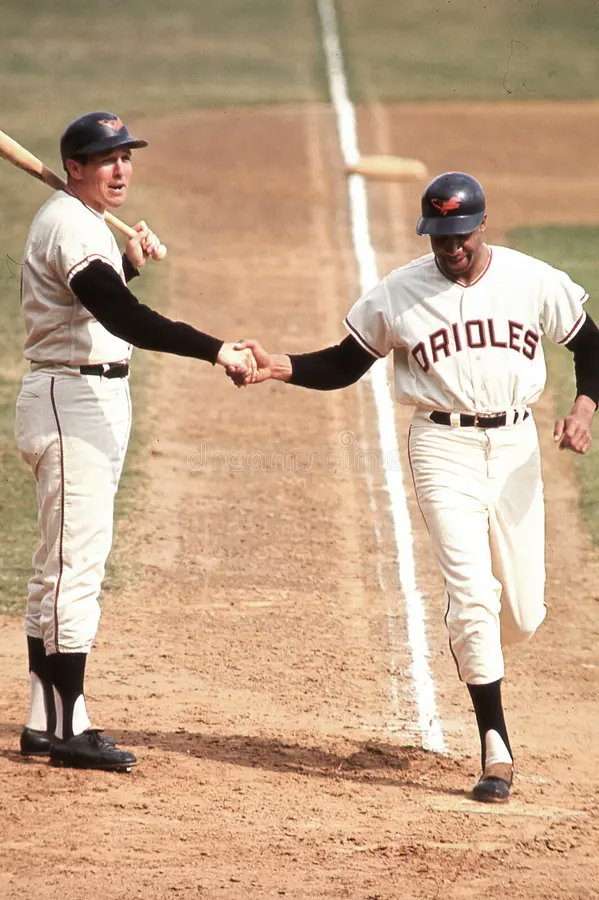
Throwing a absolute laser from right field to third base with literally zero momentum or crow hop. Bo Jackson was built in a lab. What a freakish, unmatched athlete! 🚀🔥
On this day in 1989, Limerick Unit 1 connected to the grid for the first time.
The plant reliably powers more than 2 million homes in Pennsylvania and is part of an @ENERGY project with Constellation to complete the industry’s first fully digital safety system upgrade at the site.
📸: @ConstellationEG
⚛️ #Palisades just started fuel loading. 🇺🇸 The #Michigan plant, shut down in 2022 and headed for decommissioning, is now on track to be the first US #Nuclear plant ever brought back from that path. #Holtec expects restart this year, ahead of its 2027 supply contract.
HOLTEC SAYS THE SMR-300 NEEDED NO NEW TESTING. IT IS BUILDING A 65-FOOT TEST RIG IN IDAHO ANYWAY.
HI-TEST AT IDAHO NATIONAL LABORATORY
· Holtec is erecting HI-TEST at Idaho National Laboratory with USDOE support, a 65-foot, nominally one-third scale representation of the SMR-300 plant, with key test components in fabrication and installation preparations underway.
· The facility consumes more electricity than the lab's installed capacity, forcing INL to bring additional power across the nearby highway, and Holtec has expanded the test plan to cover more operating modes than initially envisaged.
· Holtec states the SMR-300 was already qualified by computational tools and PWR operating experience without the need for new testing, citing a 3D steam generator simulation with roughly 80 million data points.
· The company expects HI-TEST data to support future power uprates at its Pioneer 1&2 project in Michigan by crediting large design margins through a future license amendment.
Testing that a license does not require is testing done for the balance sheet. Quantified margin converts into megawatts through an amendment rather than a redesign, which is the cheapest capacity a reactor vendor can sell, and the expanded test plan suggests Holtec is hunting headroom it has not claimed yet. It also lands while the company's Nasdaq registration statement is still open.
How much of an SMR's real value sits in margin that has not been licensed yet?
A $67B UTILITY MERGER JUST HIT THE NRC. THE HEARING WINDOW IS 20 DAYS.
WHAT MOVES, AND WHAT DOESN'T
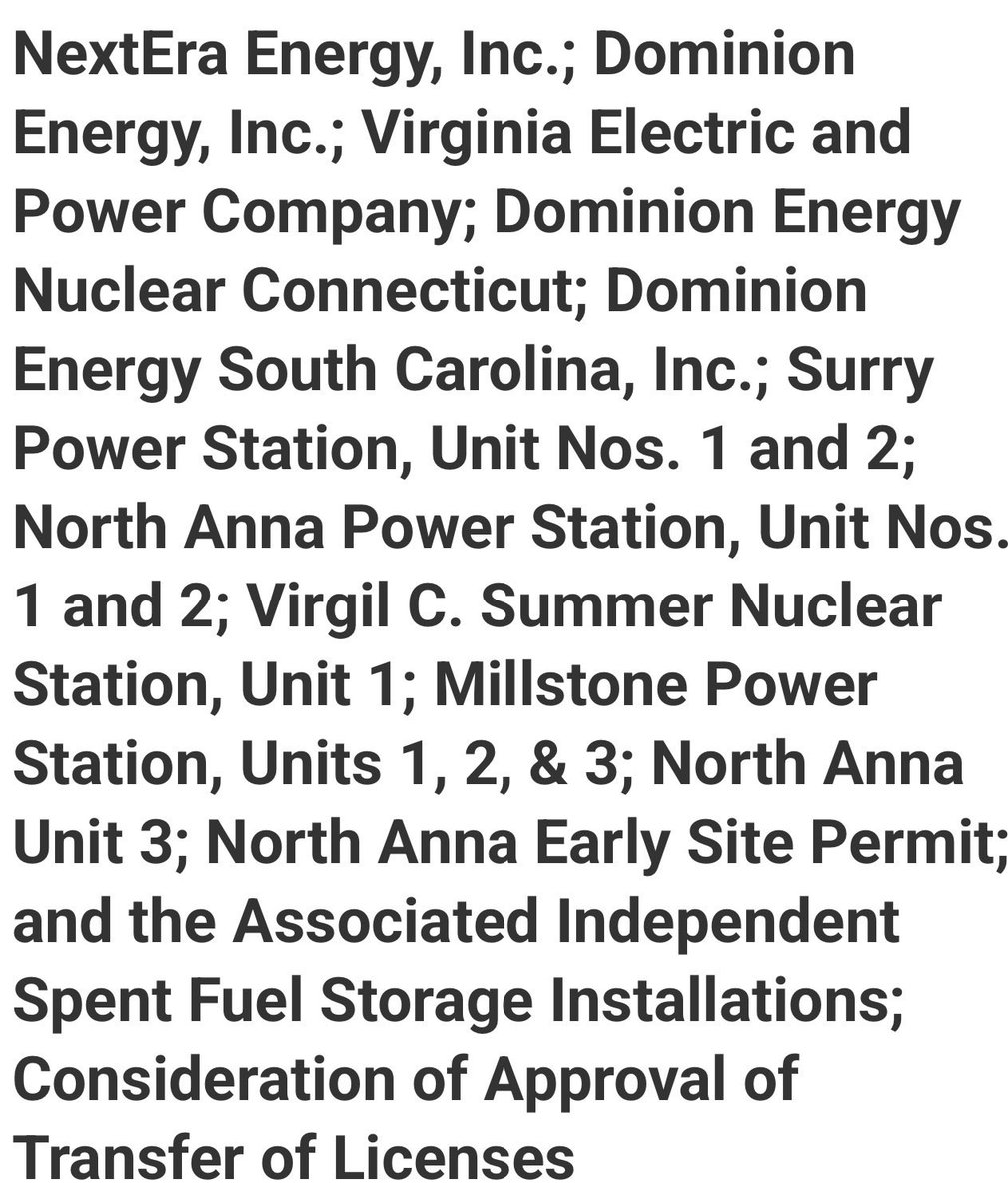
· The application, filed July 15 by NextEra Energy, Dominion Energy, and three Dominion operating subsidiaries, asks the NRC to consent to indirect transfer of control of eight facility operating licenses across Surry, North Anna, V.C. Summer, and Millstone, plus the associated independent spent fuel storage installations.
· Also in the package: Combined License NPF-103 for North Anna Unit 3 and North Anna Early Site Permit No. 003, meaning a new-build authorization changes parent right alongside the operating fleet.
· NextEra would become the ultimate parent holding company, while VEPCO and DESC keep operating as regulated utilities in Virginia and South Carolina and DENC stays a competitive generator in Connecticut, with no physical or operational changes proposed.
· Hearing requests and intervention petitions are due September 16 and comments close September 28, and because the application contains SUNSI, anyone drafting a contention has to negotiate confidentiality access with the applicant first.
The NRC's test here is deliberately narrow. Under 10 CFR 50.80 the Commission asks whether the transfer affects the licensee's qualifications and whether it is otherwise consistent with law, not whether the merger serves the public interest, which is FERC's question and the state commissions' question. The detail worth watching is North Anna Unit 3, a combined license for a unit that was never built, about to land with an owner that has publicly identified 6 GW of SMR co-location opportunity at its own nuclear sites.
If Rockville is the easiest gate in this stack, does that make it the least important one?
$NEE $D $CCJ $GEV
"After surfacing and getting the submarine settled, one of the first tasks they undertook was the organization of the very first baseball game at the North Pole.
But this was no ordinary game!
The field was aligned with the pitcher’s mound as close to the North Pole as possible, which set up some really crazy situations:
If a batter hit a 'homerun,' he would circumnavigate the world as he rounded the bases;
If the ball was hit into right field, it flew into "tomorrow";
A ball hit to left field remained in the same day, but if it was then thrown to first base it entered “tomorrow”;
If the right fielder caught a fly ball, he caught it the next day which meant the batter could not be considered out for another twenty-four hours, but if the ball was caught as a line drive and thrown back towards second or third base, it was being thrown back into yesterday."
Jean Willoz-Egnor.
"Mariner's Museum."
Submariners from the 'USS Seadragon', playing the first ballgame at the North Pole, 1960.
Officers/Chief Petty Officers lost to the Crew 13-10.
Dutch sport of Fierljeppen where people pole vault over water
In a country filled with canals, it’s likely this originated as a way to cross from side to side using a bargepole
The passing of the last Navajo Code Talker marks the end of a remarkable chapter in history, but the legacy he leaves behind will never fade. During World War II, Navajo Code Talkers used their language to create an unbreakable code that helped protect military communications